Source CE Certified Inflatable Airbag for Ship Launching, Cargo Carrying, and Ashoring
Find and compare CE Certified Inflatable Airbag options from 30 verified listings. Evaluate specifications such as rubber material, layer counts, and certification standards like CCS and ABS to select the right solution for ship launching, cargo carrying, and ashoring applications.
Key considerations
Products List


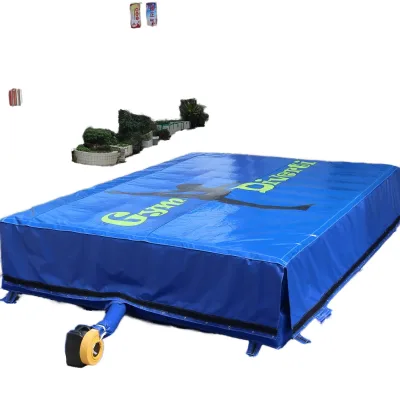


Lightweight and High Buoyancy Inflatable Rescue Floating Bridge Airbag
$1000.00 - $3000.00
MOQ: 1 Pieces

Large Displacement Vessel Launching with End Anti-Burst Design Airbag
$1000.00 - $3000.00
MOQ: 1 Pieces






Comprehensive Sourcing Guide
CE Certified Inflatable Airbag Sourcing Guide
Procuring industrial-grade inflatable airbags requires a disciplined approach to verifying both material integrity and regulatory compliance, particularly when the equipment is intended for heavy-load applications such as ship launching, cargo shifting, or structural lifting. The market for these devices is characterized by a wide variance in construction quality, with products ranging from simple rubber bumpers to complex, multi-layered pneumatic systems designed for high-performance marine and industrial use. Buyers must navigate this landscape by focusing on verifiable technical specifications rather than marketing claims, ensuring that the selected airbags meet the specific load-bearing and environmental demands of their operational context.
This guide provides a structured framework for evaluating suppliers and products in this category, drawing on observed market data and standard industry practices. It emphasizes the importance of cross-referencing supplier-provided certifications with independent verification, understanding the material composition of the airbags, and establishing clear commercial terms that protect against delivery delays and quality disputes. By adhering to these procurement principles, buyers can mitigate risk and secure reliable equipment that performs safely under stress.
Product Scope and Observed Listing Signals
The observed product landscape for inflatable airbags and related marine protection equipment reveals a diverse range of configurations, primarily constructed from natural rubber and reinforced with multiple layers of tire cord. Listings frequently indicate that these products serve dual purposes, functioning as both protective bumpers for vessels and as functional airbags for cargo carrying, ship launching, and ashoring operations. The material composition is a critical differentiator, with high-quality units typically featuring an outer layer of rubber layers and an internal structure composed of three to twelve layers of tyre cord, which provides the necessary tensile strength to handle significant loads without failure.
Market signals also highlight the importance of customization and specific dimensional standards in this sector. Suppliers often offer customized solutions with dimensions ranging from diameters of 0.5 to 3.5 meters and lengths extending up to 24 or 30 meters, depending on the specific model and application requirements. The presence of features such as chain and tire net attachments suggests that many products are designed for secure handling and deployment in marine environments, where wind and water currents pose additional challenges. Buyers should interpret these listing details as indicators of the product's versatility but must verify that the specific configuration matches their operational needs.
Technical Specifications to Verify
When evaluating the technical specifications of inflatable airbags, the working life and structural integrity are paramount. Observed data suggests that high-standard products are designed for a working life of 10 to 15 years, provided they are maintained correctly and used within their specified load limits. The load capacity is a critical metric, with many listed products designed for vessels with a load capacity of less than 1000 TEU, indicating that these airbags are suitable for medium-sized maritime operations rather than ultra-large container ships. Buyers must confirm the exact load-bearing capacity and pressure ratings for each unit, as these figures directly impact safety and operational efficiency.
Another key technical aspect is the standardization of dimensions and construction methods. Products are often categorized by specific models, such as YT-high standard or EVERGREEN, which may correspond to different diameter and length combinations, such as diameters of 0.8 to 3 meters and lengths of 4 to 30 meters. The structure of the airbag, often described as consisting of air bags within a rubber envelope, must be inspected for uniformity and defect-free construction. Buyers should request detailed technical drawings or specifications that outline the layer count, material thickness, and pressure testing protocols to ensure that the product meets the rigorous demands of industrial lifting or marine protection.
Compliance and Safety Documentation
Compliance with international maritime and industrial standards is non-negotiable for inflatable airbags used in critical applications. The market frequently references certifications from major classification societies, including CCS, ABS, LR, BV, and DNV, which serve as third-party validations of the product's quality and safety. Additionally, ISO 9001 certification indicates that the manufacturer adheres to established quality management principles, while specific standards such as CB/T3795 and ISO 14409:2011 provide technical benchmarks for the design and testing of these products. Buyers must verify that the supplier can provide valid, up-to-date certificates for each batch of products, as these documents are essential for insurance and regulatory approval.
Beyond classification society approvals, other safety certifications may be relevant depending on the end-use environment. Some listings mention RoHS, CE, and FDA compliance, which may be pertinent if the airbags are used in contexts involving food-grade materials or specific regional regulatory requirements. However, buyers should exercise caution and not assume that all listed certifications apply to every product variant. It is crucial to request the specific test reports and certification documents for the exact model being purchased, ensuring that the documentation aligns with the product's intended application and the regulatory framework of the destination country.
Cost Drivers and Commercial Terms
The cost of inflatable airbags is influenced by several factors, including material quality, layer count, and the complexity of the manufacturing process. Observed price ranges in the market are broad, reflecting the difference between basic rubber bumpers and high-performance, multi-layered airbags designed for heavy lifting. Buyers should expect prices to vary significantly based on the size and load capacity of the unit, with larger, more robust airbags commanding higher prices. It is essential to obtain detailed quotations that break down the cost by unit, including any additional fees for customization, packaging, or special testing requirements.
Commercial terms also play a significant role in the total cost of ownership. Lead times are typically around 15 days, but this can vary based on the order quantity and the supplier's production schedule. Minimum order quantities (MOQ) can range from 1 piece to 2000 pieces, offering flexibility for both small-scale projects and large-scale procurement. Payment terms such as T/T and L/C are common, and buyers should negotiate terms that provide adequate protection, such as partial payment upon order confirmation and the remainder upon shipment or inspection. Additionally, the availability of samples should be considered, as testing a sample unit can help validate the supplier's claims before committing to a large order.
Supplier Qualification and Quality Control
Supplier qualification is a critical step in ensuring the reliability of inflatable airbag procurement. Buyers should prioritize suppliers who demonstrate a strong track record in manufacturing rubber products and who have established quality control processes in place. The origin of the products, often listed as China or specifically Qingdao, is a common source for these items, but buyers must verify the supplier's manufacturing capabilities and facility standards. Requesting a virtual or physical factory audit can provide valuable insights into the production environment, equipment, and workforce expertise.
Quality control measures should be explicitly defined in the purchase agreement. This includes pre-shipment inspections, pressure testing of each unit, and verification of material certificates. Buyers should also inquire about the supplier's warranty policy and after-sales support, as these factors can impact long-term operational costs. The use of appropriate packaging, such as wooden or plywood packing, is essential to prevent damage during transit, and buyers should ensure that the packaging method is suitable for the destination's handling infrastructure. Establishing a clear communication channel with the supplier for technical support and issue resolution is also recommended.
Long-Term Procurement Checks
Long-term procurement success depends on continuous monitoring of supplier performance and product quality. Buyers should establish a system for tracking the performance of inflatable airbags in service, including any incidents of failure, wear, or degradation. Regular reviews of supplier certifications and compliance status are necessary to ensure that they remain valid and up-to-date. Additionally, staying informed about changes in industry standards and regulations can help buyers anticipate future requirements and adjust their procurement strategies accordingly.
Building a relationship with a reliable supplier can lead to better pricing, priority production, and improved technical support. However, buyers should also maintain a diversified supplier base to mitigate risks associated with supply chain disruptions. Periodic re-evaluation of alternative suppliers can help ensure competitive pricing and access to the latest technological advancements in airbag design and manufacturing. By maintaining a proactive approach to supplier management and quality assurance, buyers can ensure the long-term safety and efficiency of their operations.
FAQs
What certifications do the inflatable airbags hold?
The products hold ISO9001, CCS, ABS, LR, BV, and DNV certifications. These standards ensure compliance for marine parts and cargo carrying applications. Some listings also mention RoHS and SGS certifications for specific rubber components used in the construction.
Can I order samples before placing a bulk order?
Yes, samples are accepted for these inflatable air bags. Buyers can request samples to verify the rubber material quality and working life specifications before committing to larger quantities. This helps ensure the product meets specific ship launching or ashoring requirements.
What is the typical delivery time for these marine parts?
The standard delivery time is 15 days from order confirmation. This lead time applies to new condition products packed in wooden or export packaging. Buyers should note that specific lead times may vary based on the customized requirements and order volume.
Which specifications are available for the rubber air bags?
Available specifications include diameters ranging from 0.5 to 3.5 meters and lengths from 3 to 24 meters. Some models offer sizes up to 30 meters in length with 3 to 12 layers of tire cord. These dimensions support various cargo carrying and salvage applications.
What is the minimum order quantity for these products?
The minimum order quantity is 1 piece for many listings. However, observed ranges extend up to 2000 pieces depending on the specific supplier and product model. This flexibility allows buyers to source small batches for testing or large volumes for industrial use.
How long is the working life of the inflatable air bags?
The working life is estimated between 10 to 15 years under normal conditions. This durability is supported by the natural rubber material and heat-resistant features. Proper maintenance is required to achieve this lifespan during ship launching and landing operations.
Where are these marine parts manufactured and shipped from?
These products originate from China, specifically Qingdao. The manufacturing location supports export packing standards required for international shipping. Buyers can expect the goods to be shipped from this region with documented certifications like CCS and ABS.