Source CE Laboratory Heating Ceramic Oven for School, Hospital, and Lab
Find and compare 30 CE Laboratory Heating Ceramic Oven options from Chinese manufacturers. Evaluate models with PID control, stainless steel interiors, and temperature ranges up to 1600°C for zirconia sintering and general lab drying applications.
Key considerations
Products List


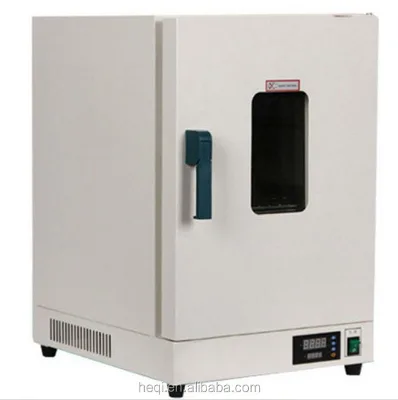


Digital Laboratory Drying Oven Small High-Temperature Industrial Drying Oven
$180.00 - $220.00
MOQ: 1 Pieces


Laboratory High Temperature Drying Oven for Electronic Components Test
$2000.00 - $30000.00
MOQ: 1 set


Comprehensive Sourcing Guide
CE Laboratory Heating Ceramic Oven Sourcing Guide
Sourcing laboratory heating ceramic ovens requires a disciplined approach to align technical performance with regulatory compliance, particularly when targeting markets with strict safety mandates. The term "CE Laboratory Heating Ceramic Oven" typically refers to electrically powered thermal processing equipment designed for precise temperature control in controlled environments such as schools, hospitals, laboratories, and factories. These units are engineered to handle tasks ranging from simple drying and curing to more complex processes like zirconia sintering, depending on the specific model and heating element configuration. Buyers must navigate a landscape where product attributes vary significantly between manufacturers, necessitating a verification process that distinguishes between marketing claims and verifiable engineering specifications.
The procurement strategy for these ovens hinges on understanding the interplay between material construction, control systems, and certification status. While the core function remains thermal regulation, the internal materials—often stainless steel grades such as 304 or 201—and external finishes, which may include powder-coated A3 steel or additional stainless steel cladding, dictate durability and resistance to corrosion. Furthermore, the availability of customization services, including OEM and ODM options, allows buyers to tailor equipment to non-standard requirements. However, this flexibility introduces complexity in quality assurance, requiring buyers to establish clear technical boundaries before committing to orders, especially when dealing with suppliers from major manufacturing hubs like Zhejiang, Guangdong, and Shanghai in China.
Product Scope and Observed Listing Signals
The market for laboratory heating ovens presents a wide spectrum of capabilities, observable through variations in model numbers, temperature ranges, and power configurations. Listings frequently highlight models such as the PN-101A, ZH-KX-1000C, and ZH-RHD-60, each serving distinct operational needs. Temperature ranges observed in available data span from ambient temperature plus 25°C up to 400°C for standard drying applications, while specialized units offer maximum temperatures between 200°C and 1200°C, and even up to 1600°C for high-temperature ceramic processing. These variations are critical for buyers to match their specific thermal profiles, ensuring that the selected oven can withstand the required thermal stress without compromising safety or efficiency.
Power supply and control mechanisms are equally diverse, with options ranging from electronic PID controllers to advanced PLC/programmable control systems. The power input is typically available in AC220V or 380V configurations, accommodating different facility electrical infrastructures. Additionally, features such as programmable remote control enhance operational flexibility, allowing for unattended processing cycles. Buyers should note that while some listings indicate a supply ability of up to 1000 sets per year, others may have different production capacities. The presence of multiple model numbers, such as the DHG series with various chamber dimensions, suggests that manufacturers often offer modular designs where the work room width can be selected from options like 300mm to 800mm, providing scalability for different laboratory footprints.
Technical Specifications to Verify
When evaluating technical specifications, the internal material composition is a primary determinant of longevity and cleanliness. Stainless steel grade 304 is commonly cited for its superior corrosion resistance and ease of cleaning, making it suitable for sensitive laboratory environments. In contrast, stainless steel grade 201 offers a more cost-effective alternative but may have different corrosion resistance properties. Buyers must verify the exact grade specified in the technical datasheet, as this directly impacts the oven's suitability for handling corrosive substances or maintaining high hygiene standards. The external material, often A3 steel sheet with anti-static fine-powder coating, provides structural integrity and aesthetic finish, but its quality can vary based on the coating process and thickness.
Temperature accuracy and heating rates are critical performance metrics that require explicit verification. Some models boast a temperature accuracy of ±1°C, which is essential for precise experimental reproducibility. Heating rates can vary significantly, with some units capable of a maximum rate of 200°C per minute, while others are limited to 40°C per minute. These rates influence the thermal shock resistance of the samples being processed and the overall cycle time. Buyers should also confirm the physical dimensions of the work chamber, as listed sizes such as 420570825mm (LWH) or standard widths like 300mm to 800mm, to ensure compatibility with existing laboratory space and sample sizes.
Compliance and Safety Documentation
Regulatory compliance is a non-negotiable aspect of sourcing laboratory equipment, particularly for the CE mark, which indicates conformity with health, safety, and environmental protection standards for products sold within the European Economic Area. While CE certification is frequently mentioned in product listings, buyers must request the actual technical file and declaration of conformity to verify that the specific model and serial number are covered. The presence of other certifications such as RoHS, FCC, and ISO further indicates a manufacturer's commitment to quality and environmental standards. However, the scope of these certifications should be clarified, as ISO 9001 refers to quality management systems rather than product safety, and FCC compliance is primarily relevant for electromagnetic interference in specific markets.
Safety features and operational standards must be rigorously checked to prevent accidents in the laboratory. Buyers should inquire about over-temperature protection mechanisms, emergency stop functions, and electrical insulation ratings. The standard mentioned in some listings, such as "320360530mm," appears to refer to dimensional standards rather than safety protocols, highlighting the need for buyers to distinguish between physical specifications and regulatory standards. It is advisable to request test reports from accredited laboratories for electrical safety and thermal performance, ensuring that the oven meets the specific safety requirements of the end-user's jurisdiction.
Cost Drivers and Commercial Terms
The cost of laboratory heating ovens is influenced by several factors, including the complexity of the control system, the quality of internal materials, and the level of customization required. Models with PLC controls and high-temperature capabilities typically command higher prices than those with basic PID controllers and lower temperature ranges. The observed price range in the market spans from $1 to $30,000, reflecting the vast difference between simple drying ovens and specialized high-temperature ceramic furnaces. Buyers should be cautious of prices that seem unusually low, as they may indicate compromises in material quality or safety features.
Commercial terms such as MOQ, payment methods, and delivery times also play a significant role in the total cost of ownership. MOQs can range from 1 set to 150 sets, with some suppliers offering flexible terms for single-unit purchases. Payment methods typically include T/T and PayPal, but buyers should negotiate secure payment terms for larger orders. Delivery times vary, with some suppliers offering rapid turnaround of 3 days for standard models, while others may have longer lead times for customized units. Transportation options, including express shipping or custom arrangements, should be discussed early to avoid unexpected logistics costs.
Supplier Qualification and Quality Control
Supplier qualification is essential to ensure that the manufacturer has the capability to produce consistent, high-quality laboratory ovens. Buyers should verify the supplier's production capacity, quality control processes, and after-sales service capabilities. The mention of OEM/ODM services indicates that some suppliers are equipped to handle custom orders, but this requires close collaboration to define technical specifications clearly. Suppliers located in Hangzhou, Zhejiang, Guangdong, and Shanghai are common sources, but buyers should conduct due diligence to assess their reputation and reliability.
Quality control measures should include factory audits and sample testing before mass production. Buyers should request detailed inspection reports for incoming materials, such as stainless steel grades and heating elements, as well as final product testing for temperature uniformity and accuracy. The packaging details, often described as export cartons and wooden packages or wooden cases for export, are crucial for protecting the equipment during transit. Buyers should specify packaging requirements to prevent damage, especially for sensitive electronic components and precision instruments.
Long-Term Procurement Checks
Long-term procurement success depends on establishing a robust relationship with suppliers who can provide consistent quality and support over time. Buyers should implement a periodic review process to assess supplier performance, including on-time delivery rates, product defect rates, and responsiveness to technical queries. Maintaining a list of qualified suppliers and regularly updating technical requirements ensures that the procurement process remains efficient and aligned with evolving laboratory needs.
Continuous monitoring of regulatory changes and industry standards is also vital. As safety and environmental regulations evolve, suppliers must adapt their products to remain compliant. Buyers should stay informed about updates to CE, RoHS, and other relevant standards to ensure that their equipment remains legal and safe to use. By maintaining a proactive approach to supplier management and regulatory compliance, buyers can mitigate risks and ensure the long-term reliability of their laboratory heating equipment.
FAQs
What certifications do these ovens have?
These ovens hold CE, RoHS, FCC, ISO, and SGS Certificates. Some models also carry ISO9001 certification. Buyers should verify specific certificates for their required compliance standards before ordering.
Can I customize the oven specifications?
Yes, customization is available for heating types, controllers, and dimensions. You can select PID or PLC programmable control systems. Non-standard configurations are supported for specific industrial or laboratory needs.
What is the maximum temperature range?
The maximum temperature ranges from 200°C to 1200°C depending on the model. Some specialized units reach up to 1600°C. The standard range typically spans from ambient temperature plus 25°C to 400°C.
Where are these ovens manufactured?
Manufacturing origins include Hangzhou, Zhejiang, Guangdong, and Shanghai in China. Specific models may originate from different cities within these regions. Buyers should confirm the exact place of origin for each item.
What is the minimum order quantity?
The minimum order quantity is 1 set for most models. Some listings indicate an MOQ of up to 150 units depending on the supplier. Single item purchasing is available for many standard configurations.
How long is the delivery time?
Delivery dates can be as short as 3 days for certain models. Supply ability is listed as 1000 sets per year for laboratory drying ovens. Lead times vary based on customization and stock availability.
What materials are used for construction?
Inner materials include SUS 304 Stainless Steel or Stainless Steel Grade 201. External materials feature A3 Steel Sheet with Anti-Static Fine-Powder Coating or SUS 304. Packaging uses wooden cases or export cartons.