Source CHANGAN Car Headlights for headlights, lamps, and lights
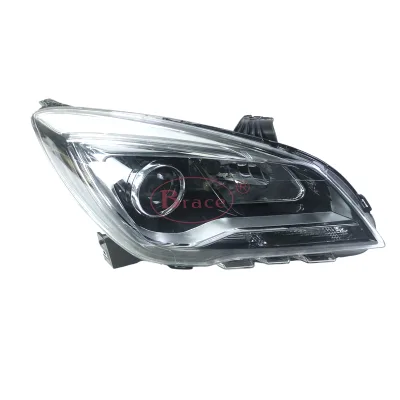
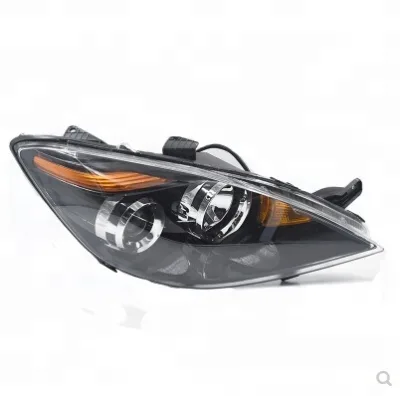
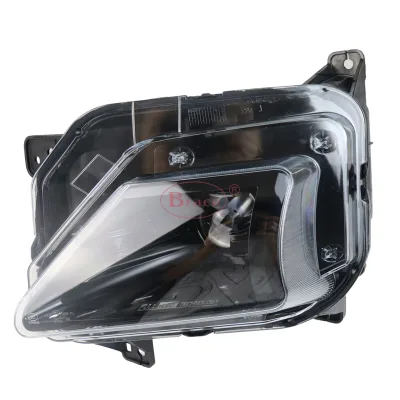
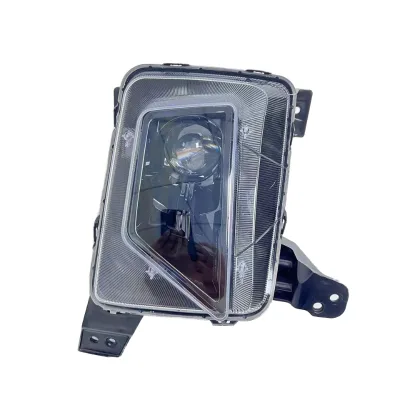
Compare 30 listings for CHANGAN Car Headlights with varying certifications, voltages, and packaging options. Buyers can review specifications including OEM codes, delivery times, and base types to find suitable front position lamps or dipped headlights.
Key considerations
Products List






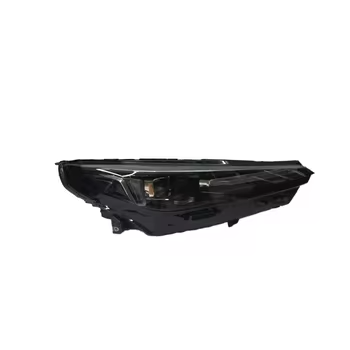


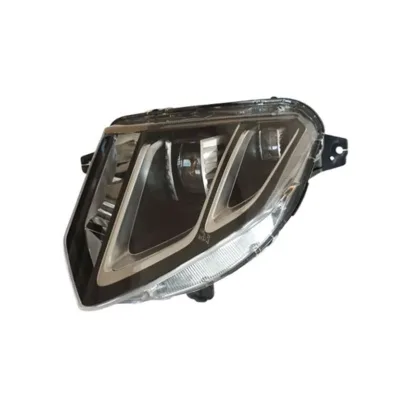


Comprehensive Sourcing Guide
Strategic Sourcing Guide for Changan Automotive Headlight Components
Understanding the Technical Landscape of Changan Headlight Assemblies
When sourcing replacement lighting components for Changan vehicles, buyers must first distinguish between the specific functional requirements of the assembly. The market data indicates a clear segmentation in product attributes, ranging from single-function units to complex assemblies. A primary observation in the current supply pool involves products explicitly labeled as "Dipped Headlight," "High Beam," and "Front Position Lamp." These components often utilize a 12V electrical system, which is the standard for most modern passenger vehicles. However, buyers must exercise caution as some listed items in the broader market are specified for 6V systems, which are typically found in older or specific commercial vehicle models.
The physical interface of the headlight is equally critical. The supply chain shows a prevalence of base types such as W5W and H5W. The W5W base is frequently associated with smaller auxiliary lamps or position lights, while the H5W designation may appear in specific retrofit or older model contexts. For the main headlight assemblies, the model numbers provide the most reliable identification method. Specific OEM references such as S11F2805010305AA and S11F2805010405AA are observed in the market. These alphanumeric codes serve as the primary key for matching parts to specific Changan vehicle chassis and model years. Buyers should not assume interchangeability between these codes without verifying the vehicle's specific wiring harness and housing dimensions.
Furthermore, the physical construction of the units varies. Some listings describe the product as an "LED Headlight Assy," indicating a complete assembly that integrates the light source, reflector, and housing. Others may refer to individual bulbs or smaller components. The material composition is predominantly LED, reflecting the industry shift away from halogen technology. This shift impacts the thermal management and driver circuitry required, necessitating that buyers verify the compatibility of the LED driver with the vehicle's existing electrical architecture to prevent flickering or system errors.
Compliance Verification and Certification Standards
In the automotive aftermarket, compliance is not merely a formality but a prerequisite for legal road use and insurance validity. The observed product listings reveal a diverse array of certifications, including CCC (China Compulsory Certification), E-mark, DOT (Department of Transportation), and GCC (Gulf Cooperation Council) standards. The presence of these certifications suggests that the products are manufactured to meet specific regional safety requirements. However, the mere listing of a certification does not guarantee that every unit in a shipment meets that standard. Buyers must treat these as observations of the supplier's capability rather than automatic attributes of every item purchased.
For the Chinese domestic market, CCC certification is the mandatory baseline. If the procurement is intended for export to the Middle East, GCC certification becomes a critical verification point. Similarly, E-mark and DOT certifications are essential for European and North American markets, respectively. The supply data also mentions SONCAP, which is specific to Nigeria, indicating that suppliers may be catering to a global, multi-regional market. Buyers must explicitly request proof of certification for the specific batch they are purchasing. Relying on a general claim of "CCC, E-mark, DOT" without verifying the certificate number against the specific product model can lead to customs seizures or legal liabilities in the destination country.
Additionally, the "Standard size" and "Universal" designations found in some product descriptions require careful interpretation. While a product may be described as "universal," automotive lighting is rarely truly universal. The "Standard size" likely refers to the physical dimensions of the bulb base or the housing footprint, but it does not guarantee optical compatibility or mounting point alignment. Buyers should verify that the "Standard size" claim aligns with the specific Changan model's requirements, as deviations can lead to improper beam patterns or physical installation failures.
Cost Drivers and Pricing Structure Analysis
The pricing landscape for Changan headlight components is highly variable, with observed ranges spanning from $5 to $900 USD. This wide disparity is driven by several key factors, primarily the complexity of the unit and the level of customization. A basic W5W or H5W position lamp, which is a simple bulb or small assembly, will naturally fall at the lower end of this spectrum. In contrast, a complete "LED Headlight Assy" with integrated electronics, complex housing, and specific OEM branding will command a price closer to the upper limit.
The "Original/OEM" quality designation is a significant cost driver. Products labeled as "Brand-New" and "Original/OEM" often carry a premium over generic aftermarket alternatives. The OEM number, such as S11F2805010305AA, serves as a direct link to the manufacturer's original part, ensuring fit and function but often at a higher cost. Conversely, products offering "Accept OEM Service" or "Customized" packaging may allow for cost optimization through bulk ordering or simplified packaging, though this may come at the expense of the original branding.
Packaging standards also influence the final landed cost. The supply data notes variations from "Neutral Packaging" to "Customized Box" and "Standard Carton Box" with specific dimensions like 503030 cm or 683325 cm. Customized packaging, which may include branding or specific protective inserts, adds to the unit cost. Neutral packaging is generally more economical but may offer less protection during transit. Buyers must weigh the cost of the product against the cost of potential damage during shipping, especially when ordering high-value LED assemblies.
Typical Applications and Model Compatibility
The application of these headlight components is strictly tied to specific vehicle makes and models. The data explicitly links products to "Changan" and "Chery" brands. While Chery is a separate manufacturer, the supply chain often groups these components due to shared platform architectures or similar sourcing strategies in the region. Buyers sourcing for Changan must prioritize listings that explicitly state "For Changan" or list the specific OEM codes associated with Changan vehicles.
The "Left Headlight" designation indicates that the product is side-specific. Automotive lighting systems are often asymmetric to optimize beam patterns for the driver's side and passenger's side. Purchasing a generic "headlight" without specifying left or right can result in a unit that does not fit the mounting brackets or produces an incorrect light distribution pattern. The model number "chang" or "For Chery" suggests that some listings may be generic placeholders or intended for different platforms. It is imperative to cross-reference the specific Changan model year and trim level with the provided OEM numbers to ensure compatibility.
The "In Stock" status of many items suggests that these are replacement parts for a mature vehicle platform, allowing for quicker procurement. However, the "Delivery Time" varies significantly, ranging from "Within 7 Days" to "7-15 days." This variance often depends on the supplier's location, which is listed as "Chongqing, China" or generally "China." Buyers should account for this lead time in their inventory planning, especially for critical repair parts where vehicle downtime is a concern.
Supplier Evaluation and Logistics Management
Evaluating a supplier for automotive lighting components requires a focus on logistics capabilities and communication transparency. The observed shipping methods include major international carriers such as DHL, UPS, TNT, FedEx, Aramex, and EMS, as well as Air Cargo and Sea freight. The availability of these options indicates that suppliers are equipped to handle both urgent, small-batch orders and larger, cost-sensitive shipments. However, the choice of shipping method directly impacts the lead time and the risk of damage.
The "MOQ" (Minimum Order Quantity) is another critical factor in supplier evaluation. The data shows a wide range, from 1 PC to 50 units, with specific instances of 10 PCS and 2 Piece requirements. This flexibility allows buyers to test the market with small orders or scale up for fleet repairs. Suppliers with a low MOQ of 1 PC are ideal for one-off replacements, while those requiring 50 PCS may be better suited for bulk procurement or distribution. Buyers should verify if the supplier offers tiered pricing for larger quantities, as this can significantly reduce the unit cost.
Packaging integrity is paramount for lighting components, which are fragile and sensitive to moisture. The "Waterproof" and "Shock-Resistant" attributes of the products themselves are irrelevant if the external packaging fails. The supply data mentions "Neutral Box/Customized Box" and "Standard Carton Box" with specific dimensions. Buyers should request photos of the actual packaging used for the specific order to ensure that the internal cushioning and external box strength are sufficient to protect the LED assemblies during transit.
Quality Control and Long-Term Procurement Considerations
Quality assurance in the automotive lighting sector extends beyond the initial inspection of the product. The "100% Tested" claim found in some listings is a positive indicator, but buyers should seek detailed information on the testing protocols. What specific tests are performed? Are they functional tests, burn-in tests, or optical alignment checks? The "Quality: Original/OEM" label suggests a high standard, but without third-party verification, this remains a supplier assertion.
Long-term procurement considerations involve the stability of the supply chain and the consistency of the product. The "Customization" attribute suggests that suppliers are willing to adapt products to buyer needs, which is beneficial for private labeling or specific market requirements. However, customization can introduce variability in quality. Buyers should establish clear quality control checkpoints before shipment, such as requesting pre-shipment inspection reports or video evidence of the testing process.
The "Brand-New" condition is a standard expectation, but buyers must be vigilant against refurbished units being sold as new. The presence of OEM numbers like S11F2805010305AA helps in tracing the origin, but buyers should verify the manufacturing date and batch number to ensure the product is not an old stock item. Additionally, the "Standard size" and "Universal" claims should be validated against the specific vehicle requirements to avoid returns and disputes.
In summary, sourcing CHANGAN Car Headlights requires a meticulous approach that balances technical specifications, certification verification, and logistics planning. By focusing on the specific OEM numbers, understanding the certification landscape, and rigorously evaluating supplier capabilities, buyers can secure high-quality components that meet the demanding standards of the automotive industry. The wide range of prices and MOQs offers flexibility, but it also demands careful due diligence to ensure that the chosen supplier can deliver consistent quality and reliable service over the long term.
FAQs
What certifications are available for CHANGAN Car Headlights?
Available certifications include CCC, E-mark, DOT, and GCC. Some listings also mention SONCAP for Nigeria. Buyers must verify specific batch certificates rather than assuming all units meet every standard.
Which base types are used for CHANGAN Car Headlights?
Common base types observed are W5W and H5W. These are typically used for position lamps or auxiliary lights. Main assemblies may vary, so cross-reference the OEM number for exact fitment.
How long is the delivery time for CHANGAN Car Headlights?
Delivery times range from within 7 days to 7-15 days depending on the supplier. Many items are listed as in stock in Chongqing, China, but lead times vary by vendor capacity.
Can I customize the packaging for CHANGAN Car Headlights?
Customized packaging is available for many listings. Options include neutral boxes, customized boxes, or standard cartons with specific dimensions. This allows for branding or specific protective needs.
What is the minimum order quantity for CHANGAN Car Headlights?
Minimum order quantities vary from 1 piece to 50 pieces. Some suppliers require 10 pieces or 2 pieces as a minimum. This flexibility supports both single replacements and bulk fleet orders.
Which OEM numbers identify genuine CHANGAN Car Headlights?
Specific OEM numbers include S11F2805010305AA and S11F2805010405AA. These codes link directly to Changan vehicle chassis. Verify these numbers against your vehicle model to ensure compatibility.
What voltage systems are supported by CHANGAN Car Headlights?
Most products operate on a 12V system, which is standard for modern vehicles. Some listings specify a 6V system, typically for older or specific commercial models. Confirm the voltage before purchasing.