Source Chicken Plucker Machine for Poultry and Livestock
Find 30 Chicken Plucker Machine options for poultry and livestock processing. Compare semi-automatic models with 304 stainless steel construction, varying voltages, and capacities up to 400 pieces per hour to select the right defeathering equipment for your operation.
Key considerations
Products List


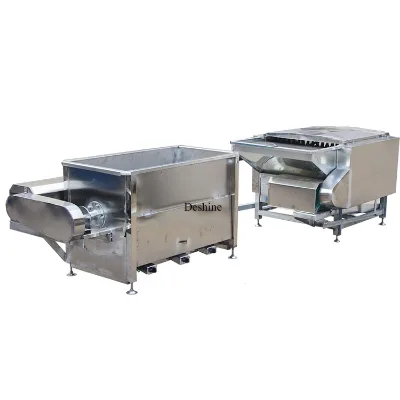


Reliable Automatic Chicken Plucker Machine with English Instructions Included
$350.00 - $500.00
MOQ: 1 Sets


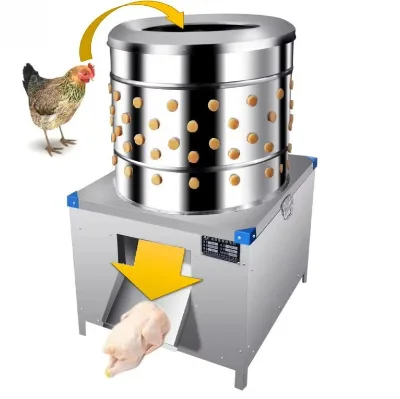
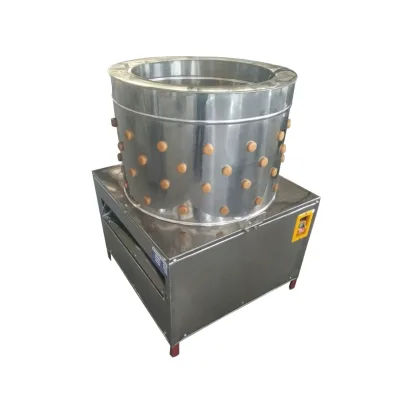
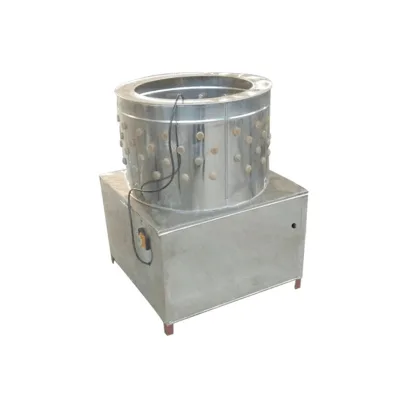
Good Price Chicken Poultry Depilator Equipments Chicken Plucker Machine
$300.00 - $800.00
MOQ: 2 Pieces




Comprehensive Sourcing Guide
Chicken Plucker Machine Sourcing Guide
Sourcing poultry defeathering equipment requires a careful balance between operational efficiency, material durability, and regulatory compliance. The Chicken Plucker Machine is a specialized piece of industrial machinery designed to remove feathers from poultry carcasses, including chickens, ducks, and geese, with minimal manual labor. Buyers must navigate a market where specifications vary significantly based on automation levels, voltage requirements, and intended throughput. This guide provides a structured approach to evaluating suppliers, verifying technical claims, and ensuring that the selected equipment aligns with your facility’s specific slaughter line requirements.
The procurement process for these machines is not merely about selecting a single unit but integrating it into a broader processing workflow. Factors such as the machine’s footprint, power consumption, and maintenance needs directly impact your facility’s layout and operational costs. By focusing on verified attributes like material grade, motor quality, and plucking efficiency, buyers can mitigate the risk of purchasing underperforming equipment. This guide emphasizes evidence-based decision-making, relying on observable listing signals and standard industry practices to help you make informed procurement choices.
Product Scope and Observed Listing Signals
The market for chicken plucker machines presents a wide range of options, with observed listing prices spanning from approximately $80 to $90,000 USD. This broad spectrum reflects differences in capacity, automation level, and build quality. Some listings indicate a minimum order quantity (MOQ) of just one unit, suggesting availability for small-scale operations or pilot testing, while others may cater to larger industrial contracts. Buyers should interpret price variations as indicators of scale and feature sets rather than direct comparisons of identical units. A lower price point may correspond to semi-automatic models or smaller footprints, whereas higher prices often reflect fully automatic systems with higher throughput capacities.
Observed product attributes highlight key differentiators among available models. Many machines are described as semi-automatic and customizable, allowing for adjustments to meet specific production needs. The voltage requirements vary, with common options including 220V and 380V, which is a critical factor for facility compatibility. Applications extend beyond chickens to include ducks, geese, and in some cases, cattle, sheep, and pigs, indicating a versatility in design. The core function remains consistent: efficient feather removal. Buyers should look for listings that clearly specify the target poultry type and the machine’s ability to handle the specific volume of their operation.
Technical Specifications to Verify
Material construction is a primary technical consideration, with many suppliers specifying food-grade 304 stainless steel for contact surfaces. This material choice is essential for hygiene, corrosion resistance, and compliance with food safety standards. The overall weight of the machine can be substantial, with some models weighing around 200 kg, indicating a robust build designed to withstand continuous operation. Dimensions also vary, with some units measuring approximately 1600x1200x1000 mm, while others are more compact at 33x33x50 cm. Buyers must verify these dimensions against their available floor space to ensure proper installation and maintenance access.
Performance metrics such as plucking rate and time are critical for evaluating efficiency. Some listings claim a plucking rate of 99% and a processing time of around 45 seconds per chicken, which are significant indicators of effectiveness. The number of rollers, often cited as seven pieces, plays a crucial role in the plucking mechanism’s performance. Additionally, the core component, typically the motor, should be of high quality to ensure durability and consistent power delivery. Buyers should request detailed specifications regarding motor power, roller material, and the machine’s overall capacity, which may range from 300 to 400 pieces per hour for certain models.
Compliance and Safety Documentation
Regulatory compliance is a non-negotiable aspect of sourcing industrial food processing equipment. Listings often reference standards such as ISO, CE, CO, and CCC, which indicate adherence to international and regional safety and quality benchmarks. The CE mark, in particular, is a mandatory certification for products sold within the European Economic Area, signaling that the machine meets EU health, safety, and environmental protection requirements. Buyers must verify the authenticity and scope of these certifications, ensuring they cover the specific model and configuration being purchased.
Safety documentation should also include machinery test reports and warranty terms. While some listings indicate that machinery test reports are not available, a reputable supplier should be able to provide evidence of performance testing. A standard warranty period of one year is common, offering protection against manufacturing defects. Buyers should clarify the terms of the warranty, including coverage for core components like the motor, and understand the process for claiming repairs or replacements. Additionally, video outgoing-inspection services provided by some suppliers can offer visual confirmation of the machine’s condition before shipment, adding an extra layer of assurance.
Cost Drivers and Commercial Terms
Several factors influence the total cost of ownership for a Chicken Plucker Machine. The primary cost driver is the machine’s capacity and automation level, with higher throughput models commanding a premium. Material quality, such as the use of 304 stainless steel versus lower-grade alternatives, also impacts price. Packaging details, often involving export-standard wooden cases, add to the initial cost but are essential for protecting the machine during transit. Buyers should consider the total landed cost, including shipping, insurance, and import duties, rather than focusing solely on the unit price.
Commercial terms such as supply ability and lead times are important for planning purposes. Some suppliers indicate a supply ability of 200 to 300 sets per month, which can be relevant for large-scale procurement projects. The port of dispatch, often listed as Shanghai, Qingdao, or Guangzhou, affects shipping logistics and costs. Buyers should negotiate clear terms regarding payment schedules, delivery timelines, and responsibilities for customs clearance. Understanding these commercial details helps in budgeting accurately and avoiding unexpected expenses during the procurement process.
Supplier Qualification and Quality Control
Evaluating supplier qualifications is crucial for ensuring the reliability of the purchased equipment. Buyers should verify the supplier’s place of origin, with many manufacturers located in Zhengzhou, Henan, China, a hub for agricultural machinery. The brand name, such as Deshine, may indicate a specific manufacturer with a track record in the industry. However, buyers should not rely solely on brand recognition; instead, they should assess the supplier’s overall reputation, production capacity, and quality control processes. Requesting references or case studies from previous clients can provide valuable insights into the supplier’s performance.
Quality control measures should be integrated into the procurement process. Buyers should request detailed product descriptions, including model numbers like WSTP-60 or DE-TZ-2, to ensure they are receiving the exact specifications they ordered. The advantage of customized machines should be leveraged to meet specific operational needs, but buyers must ensure that customizations do not compromise the machine’s structural integrity or performance. Video inspections and pre-shipment checks are valuable tools for verifying quality. Buyers should also inquire about the supplier’s after-sales support, including technical assistance and spare parts availability, to ensure long-term operational success.
Long-Term Procurement Checks
Long-term procurement success depends on establishing a sustainable relationship with the supplier and ensuring the machine’s ongoing performance. Buyers should monitor the machine’s performance over time, tracking metrics such as plucking efficiency, maintenance frequency, and energy consumption. Regular maintenance is essential to prolong the machine’s lifespan and maintain optimal performance. Buyers should develop a maintenance schedule that includes cleaning, lubrication, and inspection of key components like the motor and rollers.
Continuous improvement in the procurement process involves staying informed about industry trends and technological advancements. As the poultry processing industry evolves, new features and efficiencies may become available. Buyers should remain open to upgrading or replacing equipment as needed to maintain competitiveness. Additionally, maintaining open communication with the supplier can facilitate timely support and potential future collaborations. By focusing on these long-term checks, buyers can ensure that their investment in chicken plucker machines delivers consistent value and supports their operational goals.
FAQs
What is the plucking rate for this Chicken Plucker Machine?
The plucking rate reaches 99% for efficient feather removal. This high efficiency is achieved using rubber fingers on the rollers, which gently yet effectively strip feathers from poultry like chickens, ducks, and geese within approximately 45 seconds per batch.
Which voltage options are available for the Chicken Plucker Machine?
The machine supports both 220V and 380V voltage configurations to suit different power grids. Buyers can select the appropriate voltage based on their local electrical infrastructure, ensuring safe and reliable operation for continuous poultry processing tasks.
Can the Chicken Plucker Machine be customized for specific needs?
Yes, customization is available to meet specific production requirements. The manufacturer offers tailored solutions including different capacities and specifications, allowing buyers to adapt the equipment for various scales of poultry slaughter lines or unique operational constraints.
What material is used to construct the Chicken Plucker Machine?
The machine is constructed from food-grade 304 stainless steel for durability and hygiene. This material ensures the equipment meets food safety standards while resisting corrosion, making it suitable for wet environments typical in poultry processing facilities.
How many rollers are included in the Chicken Plucker Machine?
The standard model features seven rollers designed for effective feather removal. These rollers work in tandem to handle various poultry types, ensuring a consistent plucking process that minimizes damage to the skin while maximizing the removal of feathers.
What is the warranty period for the Chicken Plucker Machine?
The machine comes with a one-year warranty covering core components like the motor. This warranty provides buyers with assurance regarding the quality and reliability of the equipment, offering support for potential mechanical issues during the initial year of operation.
Which certifications does the Chicken Plucker Machine hold?
The machine holds ISO, CE, CO, and CCC certifications for quality and safety compliance. These standards verify that the equipment meets international requirements for manufacturing and electrical safety, ensuring it is suitable for export and use in regulated markets.