Source China Countertop for Hotel, Kitchen, and Bathroom
Compare 30 granite and marble options for hotel, kitchen, and bathroom applications. Find China Countertop suppliers offering custom sizes, various finishes, and heavy load-bearing capacities with MOQs starting from 1 unit.
Key considerations
Products List


$400.00 - $600.00
MOQ: 100 Square Meters


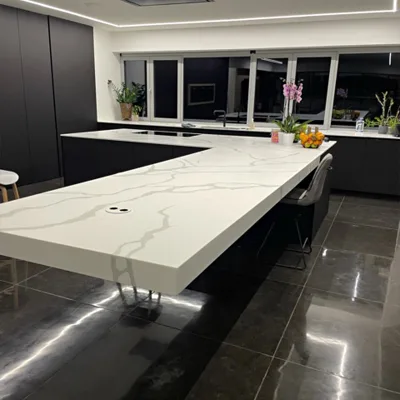


Anti-Scratch Elegant Quartz Slab Quartz Stone Work Top Luxury Hotel Countertop
$20.00 - $69.00
MOQ: 150 Square Meters


Quartz Slabs Manufacturer Kitchen Countertop Quartz Surface Countertop
$20.00 - $50.00
MOQ: 50 Square Meters


Prefab Worktops Counter Top Home Panda White Marble Countertops Kitchen Countertops
$38.00 - $188.00
MOQ: 50 Square Meters


Wholesale Price White Acrylic Solid Surface Countertop Manufacturer in China
$30.00 - $50.00
MOQ: 1 Pieces



Comprehensive Sourcing Guide
Strategic Sourcing Guide for China Countertop Procurement
The global demand for natural stone countertops has positioned China as a pivotal hub for procurement, offering a diverse array of materials ranging from granite to marble. For B2B buyers, navigating this market requires a disciplined approach that distinguishes between observed product attributes and generalized market claims. The following guide synthesizes verified product data and industry knowledge to assist procurement teams in evaluating suppliers, understanding technical specifications, and managing the complexities of international stone trade.
Technical Specifications and Material Variability
Understanding the technical specifications of stone products is the first step in defining a procurement strategy. The market offers a wide spectrum of granite and marble options, each with distinct physical properties. Observed data indicates that suppliers frequently list materials such as Granite, Marble, and Natural Stones. Specific product models identified in the market include "Chinese Granite," "Baltic Brown Granite," "Blue Bahia Granite," "Viscount White Granite," and "Elba Blue Marble." These models suggest a broad inventory covering various color profiles, including White, Blue, and Grey.
Thickness is a critical dimension that varies significantly based on the application. For granite countertops, observed thickness specifications range from 18mm to 50mm, with common listings including 20mm, 30mm, 40mm, and 50mm. Some suppliers specifically note a standard thickness of 2cm (20mm) for slab forms. For vanity tops, dimensions are often standardized, with sizes such as 25"x22", 31"x22", 37"x22", 49"x22", and 60"x22" appearing in product listings. Slab sizes are equally variable, with observed ranges starting from 2400mm x 1200mm up to 2600mm x 1600mm.
The physical form of the product is another key specification. Products are frequently categorized as "Big Slab" or "Slab," with specific dimensions like 24"x96", 26"x96", 28"x96", and 28"x108" being common standard offerings. Custom sizes are widely available, allowing for tailored solutions for specific architectural projects. The density of the granite is observed to be between 2 and 3 g/cm³, a metric that influences the weight and structural requirements for installation.
Surface Finishing and Edge Profiles
The aesthetic and functional finish of the countertop is determined by the surface treatment and edge profiling. Surface finishing processes observed in the market include Polished, Honed, Brushed, and Leathered finishes. Some suppliers offer "Customized Polished" options, indicating flexibility in the final texture. The choice of finish impacts the visual appeal and the slip resistance of the surface, which is particularly relevant for commercial applications.
Edge profiles are equally diverse, with "Beveled," "Eased," "Bullnose," "Ogee," "Cove," and "Laminated" edges being standard options. Some listings specifically mention "different edges for choice," suggesting that buyers can select profiles that match the design intent of the project. The edging process is often listed as a distinct attribute, with "Beveled" and "Eased" being the most frequently cited observations. These profiles are not merely decorative; they affect the structural integrity of the stone and the ease of cleaning around the perimeter.
Application Scenarios and Load-Bearing Requirements
The intended application of the countertop dictates the selection of material and thickness. Observed usage scenarios span residential and commercial sectors, including Home, Hotel, Bathroom, Kitchen, Commercial spaces, Malls, Office Buildings, and Apartments. Specific product usages extend beyond countertops to include Floor, Wall, Stair, Column, and Table applications.
Load-bearing capacity is a crucial technical consideration. The market data distinguishes between products with "Heavy" load-bearing capabilities and those rated for "Medium" loads. Heavy-load products are typically associated with granite countertops intended for kitchen islands or commercial bar tops, where durability and resistance to impact are paramount. Medium-load products may be suitable for bathroom vanities or decorative wall cladding. The "Multi-Function" attribute of certain products suggests versatility, allowing a single material to serve multiple roles within a building project, such as serving as both a countertop and a stair tread.
Cost Drivers and Minimum Order Quantities
Procurement costs in the stone industry are influenced by material rarity, processing complexity, and logistics. The observed price range for these products spans from $10 to $600 USD, reflecting the vast difference between standard tiles and custom, high-end slabs. However, buyers must be cautious when interpreting unit prices, as they often depend on the specific model, thickness, and finishing requirements.
Minimum Order Quantities (MOQ) vary significantly across suppliers. The observed MOQ range is from 1 unit to 300 units. A specific high-confidence fact notes a "Mini Order" requirement of 300 square meters for certain bulk granite transactions. This indicates that while some suppliers may accommodate small custom orders, large-scale projects often require adherence to substantial volume thresholds to achieve viable pricing. The "Customization" attribute is available across the market, but customization often incurs additional costs and may affect the MOQ requirements.
Packaging, Origin, and Logistics
Logistics and packaging are critical components of the procurement process, particularly for heavy stone materials. The primary origin for the majority of observed products is China, with specific mentions of Guangdong as a production hub. However, some listings indicate origins in Sri Lanka, highlighting the need for buyers to verify the specific country of origin for each order to ensure compliance with trade regulations and to manage shipping costs accurately.
Packaging standards are designed to protect the stone during transit. Common packaging methods include "Wooden Crates" and "Wooden Bundlefoam Plastic + Strong Wooden Crates." The use of wooden crates is standard for slab shipments to prevent breakage. The "Natural" technics attribute implies that the stone is processed directly from quarries without synthetic alteration, which influences the handling requirements. Buyers should verify that the packaging is robust enough to withstand international shipping conditions, especially for fragile edge profiles like Ogee or Bullnose.
Supplier Evaluation and Quality Assurance
Evaluating suppliers requires a focus on their technical capabilities and after-sales support. The market data indicates that suppliers offer "Online Technical Support," "Onsite Installation," "Onsite Training," "Onsite Inspection," and "Free Spare Parts." These services are vital for large commercial projects where installation errors can lead to significant financial losses. The availability of "Material samples" upon request is a standard practice that allows buyers to verify color consistency and texture before committing to a large order.
When assessing quality, buyers should look for consistency in the "Granite Surface" and "Granite Countertops Thickness" specifications. Variations in thickness or surface finish can lead to installation issues. The "Heavy" and "Medium" load-bearing classifications should be matched against the specific project requirements to ensure structural safety. Additionally, the "Customization" capability of the supplier should be verified to ensure they can meet unique design specifications without compromising the integrity of the stone.
Long-Term Procurement Considerations
Sourcing stone countertops is a long-term investment that requires careful planning regarding maintenance and lifecycle management. The "After-sale Service" options provided by suppliers, such as onsite inspection and training, are essential for ensuring the longevity of the installation. Buyers should consider the specific usage environment; for instance, "Hotel" and "Commercial" applications may require more durable finishes and higher load-bearing capacities than "Home" applications.
The standardization of sizes, such as the "24"x96"" or "26"x96"" dimensions, can streamline the procurement process for standard projects, while "Custom Sizes" offer flexibility for unique architectural designs. However, custom orders may involve longer lead times and higher costs. Buyers should also verify the "prod_standard" to ensure that the product meets the required dimensional tolerances.
In conclusion, successful procurement of China countertops involves a meticulous analysis of technical specifications, material properties, and supplier capabilities. By leveraging the observed data on thickness, edge profiles, and load-bearing capacities, buyers can make informed decisions that align with their project requirements. The availability of customization and after-sales support further enhances the value proposition of sourcing from this market, provided that buyers conduct thorough due diligence on supplier reliability and product consistency.
Comparative Overview of Product Attributes
To facilitate quick decision-making, the following table summarizes the key attributes observed in the market for granite and marble countertops.
| Attribute Category | Observed Specifications | Notes for Procurement |
|---|---|---|
| Material Type | Granite, Marble, Natural Stones | Verify specific model (e.g., Baltic Brown, Viscount White) for color consistency. |
| Thickness | 18mm, 20mm, 30mm, 40mm, 50mm | 20mm is common for standard slabs; thicker options for heavy-duty use. |
| Surface Finish | Polished, Honed, Brushed, Leathered | Select based on slip resistance and aesthetic requirements. |
| Edge Profiles | Beveled, Eased, Bullnose, Ogee, Cove | Custom edges available; ensure structural integrity for complex profiles. |
| Dimensions | 24"x96" to 28"x108"; Custom Sizes | Standard sizes reduce lead time; custom sizes require higher MOQs. |
| Load Bearing | Heavy, Medium | Match to application (e.g., Kitchen Island vs. Bathroom Vanity). |
| Origin | China (Guangdong), Sri Lanka | Verify origin for shipping costs and trade compliance. |
| Packaging | Wooden Crates, Foam + Crates | Essential for preventing breakage during transit. |
| MOQ | 1 to 300 units; 300 Sqm for bulk | Confirm minimum order requirements before negotiation. |
| Support | Onsite Installation, Training, Spare Parts | Critical for large commercial projects. |
This comparative overview serves as a reference point for buyers to ensure that all critical specifications are addressed during the sourcing process. By adhering to these guidelines, procurement teams can mitigate risks and secure high-quality stone countertops that meet the rigorous demands of modern construction and design projects.
FAQs
What thickness options are available for granite countertops?
Granite countertops are available in thicknesses ranging from 18mm to 50mm, with common options including 20mm, 30mm, 40mm, and 50mm. Buyers can also find standard slab thicknesses of 2cm, while vanity tops often come in specific dimensions like 25x22 inches.
Which edge profiles can be selected for the stone surfaces?
Buyers can choose from various edge profiles including Beveled, Eased, Bullnose, Ogee, Cove, and Laminated edges. Some suppliers offer customized edging options to match specific design requirements for both residential and commercial applications.
Can I find granite countertops with heavy load-bearing capacity?
Yes, heavy load-bearing granite countertops are available for demanding applications like kitchen islands and commercial bar tops. These products are designed to withstand significant weight and impact, ensuring durability in high-traffic hotel and office environments.
What are the standard slab sizes for granite countertops?
Standard slab sizes include dimensions like 2400mm by 1200mm up to 2600mm by 1600mm. Common countertop sizes also feature lengths of 96 inches, 108 inches, and 120 inches, with custom sizes available for unique project needs.
How is the granite surface finished before delivery?
The granite surface is typically finished using Polished, Honed, Brushed, or Leathered processes. Suppliers may offer customized polished finishes, allowing buyers to select the texture that best suits their aesthetic and functional requirements for the installation.
What packaging methods are used for shipping the stone slabs?
Stone slabs are shipped in wooden crates or strong wooden crates combined with foam plastic and bundles. This robust packaging is designed to prevent breakage during international transit, especially for fragile edge profiles like Ogee or Bullnose.
Are material samples available for verification before ordering?
Material samples are available upon request to help buyers verify color consistency and texture. This service allows procurement teams to confirm the quality of granite or marble before committing to large orders for home or commercial projects.