Source CNC Computer Server for Manufacturing, Design, and Engineering
Source a CNC Computer Server from 25 available models to support your industrial computing needs. Compare specifications for rack and workstation configurations, including Intel Xeon processors and hybrid storage options, to find the right fit for your enterprise or entry-level applications.
Key considerations
Products List


Enhanced PC Workstation Server Computer Server for Web Development Projects
$799.00 - $1699.00
MOQ: 1 Pieces


Robust Desktop Workstation Server Computer Server for Software Development
$850.00 - $999.00
MOQ: 1 Pieces




Comprehensive Sourcing Guide
CNC Computer Server Sourcing Guide
Procuring a CNC Computer Server requires balancing high-performance computing needs with industrial reliability. These systems serve as the central nervous for precision manufacturing, handling complex toolpath calculations and real-time motion control. Buyers must prioritize processors with high single-thread performance and robust multi-core capabilities to ensure smooth operation of CAD/CAM software. The server’s architecture must support low-latency communication with CNC machines, making network interface quality and processor frequency critical evaluation points during the sourcing process.
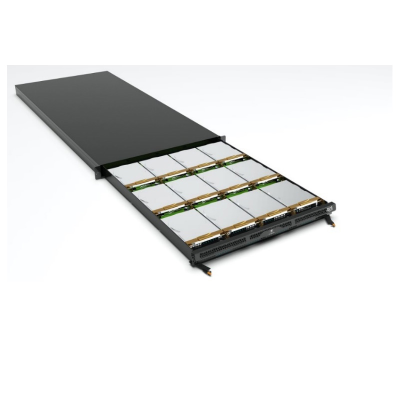
Beyond raw processing power, the physical form factor and thermal management of the server are paramount. Rack-mounted units offer space efficiency for data centers, while workstation-style servers provide flexibility for shop floor integration. Cooling solutions, such as air cooling with hot-swappable fans, ensure continuous operation under heavy computational loads. Buyers should verify that the chosen server model supports the specific operating systems and virtualization environments required by their CNC ecosystem, ensuring seamless integration with existing infrastructure.
Product Scope and Observed Listing Signals
The current market for CNC computer servers includes a diverse range of rack and workstation configurations. Listings often feature Intel Xeon processors with main frequencies around 2.0GHz, tailored for customized industrial applications. These servers typically support hybrid storage solutions, combining HDDs for large dataset retention with SSDs for rapid access to critical toolpath files. The presence of specific models like the R6900 G3 and Poweredge R670 indicates a market segment focused on enterprise-level reliability and scalability for manufacturing environments.
Observed product attributes reveal a strong emphasis on modularity and customization. Many suppliers offer optional security bezels, varied hot-swappable power supplies ranging from 800W to 1500W, and multiple PCIe slots for expansion cards. Networking options often include OCP NIC 3.0 cards, facilitating high-speed data transfer essential for cloud-based CNC management. Buyers should note that while some listings specify 1U or 2U form factors, others describe desktop workstations, requiring careful alignment with the physical constraints of the target installation site.
Technical Specifications to Verify
Processor architecture and instruction sets are foundational to CNC server performance. Buyers must verify that the system supports the X86 architecture and compatible instruction sets for their specific software stack. The maximum number of CPUs and supported RAM capacity, such as 32GB or higher, directly impact the server’s ability to run multiple virtual machines or heavy simulation tasks. It is crucial to confirm that the processor type, whether Intel Core or Xeon, aligns with the computational demands of the CNC control software to prevent bottlenecks during complex machining operations.
Storage and connectivity specifications require rigorous validation to ensure data integrity and speed. The server should support Boss-N1 controllers for reliable boot drives and offer extensive PCIe slots for adding specialized network or storage controllers. Buyers must check the compatibility of the management interface, such as iDRAC, for remote monitoring and maintenance. Additionally, verifying the GPU capabilities, which may support up to three low-power cards, is essential if the CNC workflow involves 3D rendering or advanced visualization tasks alongside standard control operations.
Compliance and Safety Documentation
Security features are non-negotiable for industrial servers handling sensitive manufacturing data. Buyers should verify the presence of TPM 2.0 modules to ensure hardware-based security for encryption keys and system integrity. Optional security bezels add physical protection against unauthorized access, which is vital in shared manufacturing environments. Documentation must confirm that the server meets relevant cybersecurity standards for industrial control systems, protecting against potential threats that could disrupt production lines or compromise proprietary design files.
Environmental and operational safety standards also require attention. While specific certifications like ISO 9001:2015 may be referenced in supplier backgrounds, buyers must independently verify that the hardware complies with local electrical and safety regulations. The server’s cooling options and power supply redundancy should be documented to ensure compliance with facility safety protocols. Buyers should request test results or compliance certificates for electromagnetic compatibility (EMC) to guarantee that the server does not interfere with sensitive CNC machine electronics.
Cost Drivers and Commercial Terms
Pricing for CNC computer servers varies significantly based on configuration and customization levels. Observed price ranges can span from entry-level workstations to high-end rack servers, reflecting differences in processor power, storage capacity, and expansion options. Buyers should anticipate higher costs for systems with customized processors, extensive PCIe expansion, and redundant power supplies. Understanding the total cost of ownership, including potential upgrades for RAM and storage, is essential for accurate budgeting and avoiding unexpected expenses during deployment.
Minimum order quantities (MOQ) and lead times are critical commercial factors for procurement planning. Listings often indicate MOQs ranging from single units to larger batches, depending on whether the server is off-the-shelf stock or requires customization. Buyers must clarify lead times for customized configurations, such as specific processor types or private mold requirements, to align with production schedules. Payment terms and warranty coverage should be explicitly defined in the contract to mitigate financial risk and ensure support availability during the server’s operational lifecycle.
Supplier Qualification and Quality Control
Supplier verification is the first step in mitigating procurement risk. Buyers should assess the supplier’s manufacturing capabilities, particularly their ability to handle customized orders and private mold requirements. Checking for established quality management systems, such as ISO 9001:2015, provides confidence in consistent product quality. However, buyers must not rely solely on these claims; instead, they should request recent audit reports or third-party verification to confirm the supplier’s adherence to rigorous manufacturing standards and quality control processes.
Quality control procedures should extend to the final product inspection before shipment. Buyers must ensure that the supplier conducts thorough testing of processors, memory, and storage components to identify defects early. Documentation of the packing process, whether standard cartons or customized packaging, is essential to prevent damage during transit. Establishing clear acceptance criteria and inspection protocols allows buyers to reject non-conforming units and ensures that only fully functional servers enter the manufacturing environment, reducing downtime and operational risks.
Long-Term Procurement Checks
Sustainability and end-of-life management are increasingly important considerations for industrial hardware. Buyers should inquire about the server’s energy efficiency and the availability of eco-friendly disposal options for components like batteries and power supplies. Understanding the supplier’s policy on component obsolescence and long-term availability of spare parts is crucial for maintaining server uptime over many years. Proactive planning for hardware refresh cycles ensures that the CNC infrastructure remains competitive and secure against evolving technological threats.
Continuous monitoring of supplier performance and product reliability is essential for long-term success. Buyers should establish key performance indicators (KPIs) for server uptime, support response times, and defect rates to evaluate supplier reliability over time. Regular reviews of firmware updates and security patches provided by the supplier help maintain system integrity. By maintaining open communication channels and conducting periodic audits, buyers can foster a resilient supply chain that supports the continuous operation of their CNC manufacturing processes.
FAQs
What server form factors are available for CNC Computer Server applications?
Rack servers and desktop workstations are the primary form factors available. Rack options include 1U and 2U configurations suitable for data centers. Desktop workstations provide entry-level solutions for specific workstation tasks. These form factors support various processor types and storage configurations to meet diverse operational needs.
Can I customize the specifications of a CNC Computer Server?
Yes, customization is available for many server models. Buyers can select specific processor types, storage controllers, and cooling options. Optional features like security bezels and hot-swappable power supplies allow tailored configurations. This flexibility ensures the hardware aligns precisely with unique operational requirements and performance expectations.
What processor options are supported by these cnc computer servers?
Servers support Intel Xeon and Intel Core processors with frequencies around 2.0GHz. Customized processor types are available to match specific workload demands. These processors drive the system architecture, ensuring reliable performance for demanding computational tasks. The choice depends on the required balance between processing power and energy efficiency.
How much RAM and storage capacity do these servers provide?
Systems typically offer 32GB RAM and storage capacities exceeding 1TB. Hard disk options include 1TB, 2TB, 4TB, or 6TB configurations. Hybrid storage combining HDDs and SSDs is available for balanced performance. These specifications ensure sufficient memory and data handling capabilities for enterprise-level applications and workstations.
What networking and management interfaces are included in these servers?
Servers feature iDRAC management interfaces for remote administration. Networking options include 25GbE connectivity and optional OCP NIC 3.0 cards. PCIe slots provide expansion capabilities for additional hardware. These interfaces ensure robust network performance and simplified management for IT administrators overseeing complex server environments.
Are these cnc computer servers in stock and ready to ship?
Yes, many models are listed as stock items ready for immediate dispatch. Minimum order quantities range from 1 to 100 units. Standard or customized packaging is available for secure transport. This availability ensures quick deployment for urgent projects without long waiting periods for manufacturing or assembly.