Source Cold Pressing Hydraulic Oil Press for Beans, Seeds, and Nuts
Compare 30 Cold Pressing Hydraulic Oil Press options featuring vertical and horizontal designs with capacities up to 300kg/h. These machines offer high efficiency, precision, and automation for squeezing oil from various raw materials.
Key considerations
Products List


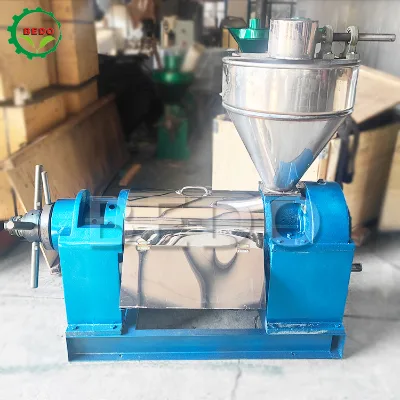
Cold Press Oil Extraction Machine Hydraulic Peanut Oil Pressing Machine
$1950.00 - $2100.00
MOQ: 1 Pieces


Comprehensive Sourcing Guide
Strategic Sourcing Guide for Cold Pressing Hydraulic Oil Press Equipment
Procuring industrial-grade hydraulic oil press machinery requires a rigorous approach that balances technical performance with compliance verification. For buyers targeting cold pressing hydraulic oil presses, the primary objective is to secure equipment capable of extracting oil from seeds like beans while maintaining product integrity and operational efficiency. The market offers a diverse array of configurations, ranging from vertical to horizontal designs, with varying capacities and power requirements. This guide outlines the critical factors for evaluating suppliers and specifications based on observed industry data, ensuring that procurement decisions are grounded in verifiable facts rather than speculative claims.
Technical Specifications and Operational Capabilities
The core functionality of a hydraulic oil press is defined by its mechanical design, power consumption, and throughput capacity. Buyers must scrutinize the specific configuration of the machine, as the market presents distinct variations in appearance and series classification. Observed data indicates that these units are available in both vertical and horizontal appearances, allowing facilities to select a layout that fits their existing floor plans. The "Press Series" attribute varies significantly across listings, with observations ranging from the Second to the Fifth series, suggesting different generations or capacity tiers of technology.
Power consumption is a critical metric for operational cost analysis. Available data points to electric energy sources with power ratings such as 15kw and options ranging from 7.5kw to 11kw. These figures represent specific observations and should be treated as examples of the range available rather than universal standards. The capacity of these machines also varies widely; some models are rated for high-volume processing at 300kg/h, while others are designed for smaller batch operations with capacities between 12kg and 120kg per hour. For buyers requiring specific throughput, verifying the exact capacity against the intended production volume is essential.
The mechanical core of the press often involves a screw mechanism. Specifications indicate screw diameters such as 117mm and shaft speeds ranging from 30 to 40rpm. These parameters directly influence the extraction efficiency and the quality of the oil produced. The work pressure is another vital technical specification, with observed ranges between 55 and 60MPa. This pressure level is necessary to ensure effective oil extraction without damaging the structural integrity of the machinery. Additionally, the operating temperature is a key factor; some units are designed to operate within a range of 70 to 90 degrees Celsius, supporting both hot and cold pressing capabilities depending on the specific model configuration.
Compliance, Certification, and Material Standards
In the B2B machinery sector, compliance with international standards is non-negotiable for ensuring safety and market access. The primary certifications observed in the product data include ISO9001 and CE. ISO9001 indicates that the manufacturer adheres to quality management systems, while CE certification confirms compliance with European health, safety, and environmental protection standards. Buyers should verify that the specific unit they are purchasing carries these certifications, as they are not guaranteed for every listed product. Furthermore, a Certificate of Origin issued by a Chamber of Commerce is a documented attribute that may be required for customs clearance and trade compliance.
Material quality is equally critical, particularly for equipment that comes into direct contact with food products. The product data highlights the use of 304 stainless steel as a standard material for certain components. This grade of stainless steel is widely recognized for its corrosion resistance and suitability for food processing applications. Buyers must confirm that the contact surfaces of the hydraulic press are constructed from this material to prevent contamination and ensure hygiene. The standard for the product itself is often defined by customer customization, meaning that specific material and dimensional requirements should be explicitly agreed upon in the purchase order.
Cost Drivers and Pricing Structures
Understanding the cost structure of hydraulic oil presses is essential for budgeting and financial planning. The observed price range for these units spans from 1,000 to 113,800 USD. This vast disparity is driven by several factors, including the machine's capacity, power rating, level of automation, and the extent of customization. High-capacity models with advanced automation features and precision engineering will naturally command prices at the upper end of this spectrum. Conversely, smaller, semi-automated units suitable for lower-volume production will fall toward the lower end.
The Minimum Order Quantity (MOQ) is another significant cost driver, with observed ranges from 1 to 200 units. Buyers seeking to test the market or establish a small-scale operation may find suppliers with an MOQ of 1 unit, whereas large-scale industrial deployments might require bulk purchasing. The packaging method also influences logistics costs; products are typically shipped in wooden cases, with specific options for fumigation-free wooden cases or wooden boxes. These packaging standards are crucial for international shipping to prevent pest infestation and ensure the machinery arrives in pristine condition. Buyers should factor in the cost of specialized packaging and the potential need for custom crating for oversized units.
Typical Applications and Yield Performance
The application of hydraulic oil presses is primarily focused on the extraction of oil from various seeds, with beans cited as a specific usage example. The versatility of these machines allows them to process a wide range of oilseeds, making them suitable for diverse agricultural and food processing industries. The oil yield rate is a performance metric that directly impacts the economic viability of the operation. Observed data suggests an oil yield rate between 60% and 80%, indicating the efficiency of the extraction process. However, buyers should treat this as an observation of specific models rather than a guaranteed baseline for all equipment.
The ability to perform both hot and cold pressing is a significant functional advantage. Cold pressing is particularly valued in the production of high-quality, unrefined oils where flavor and nutrient retention are paramount. The machine's design, including the screw diameter and shaft speed, plays a crucial role in achieving the desired temperature profile during extraction. For buyers targeting premium oil markets, verifying that the specific model supports cold pressing without excessive heat generation is a key requirement. The application scope extends beyond simple extraction to include the processing of various seeds, requiring the machine to be adaptable to different raw material characteristics.
Supplier Evaluation and After-Sales Support
Selecting a reliable supplier is as important as selecting the right machine. The product data highlights that customization is available, allowing buyers to tailor the machine to their specific production needs. This includes customizing the standard dimensions, which can be as large as 205018001750mm for certain models. Buyers should engage suppliers who demonstrate flexibility in accommodating these customizations. The origin of the machinery is predominantly China, with specific mentions of Henan as a manufacturing hub. While this provides context for the supply chain, buyers should focus on the supplier's track record and reliability rather than just the geographic location.
After-sales service is a critical component of the procurement decision. The data confirms that engineers are available to service machinery overseas, a vital feature for international buyers who may not have local technical support. A warranty period of 12 months is a standard offering observed in the market, providing a baseline for protection against manufacturing defects. Buyers should clarify the scope of this warranty, including what components are covered and the response time for service requests. The condition of the machines is listed as "New," ensuring that buyers receive fully functional, unused equipment. However, the term "Customized" also appears, indicating that some units may be built to order, which requires careful coordination between the buyer and the manufacturer to ensure all specifications are met.
Quality Control and Long-Term Procurement Considerations
Quality control extends beyond the initial purchase to the long-term operational reliability of the equipment. The weight of the machines varies significantly, with observations ranging from 580kg to 1150kg. Heavier units often imply a more robust construction, which can contribute to longevity and stability during high-pressure operations. Buyers should consider the installation requirements, including floor load capacity and space allocation, based on the specific weight and dimensions of the chosen model.
Long-term procurement considerations include the availability of spare parts and the potential for future upgrades. Given the high-efficiency and precision features of these machines, maintaining optimal performance requires regular maintenance and the replacement of wear parts. The "High Efficiency" and "Automation" features listed in the product attributes suggest that these machines are designed for continuous operation, but this necessitates a proactive maintenance strategy. Buyers should inquire about the supplier's policy on spare parts availability and the lead times for delivery. Additionally, the "Second" through "Fifth" press series distinctions may indicate different levels of technological maturity; buyers should assess whether a newer series offers significant advantages in energy efficiency or maintenance requirements compared to older models.
Summary of Key Procurement Metrics
To facilitate a comparative analysis during the sourcing process, the following table summarizes the key technical and commercial metrics observed in the market. This data serves as a reference point for buyers to benchmark potential suppliers and ensure that their requirements are met.
| Metric Category | Observed Data Points | Verification Requirement |
|---|---|---|
| Product Name | Hydraulic Oil Press, Spiral Oil Press | Confirm exact model designation |
| Appearance | Vertical, Horizontal | Match with facility layout |
| Power | 15kw, 7.5kw, 11kw | Verify electrical compatibility |
| Capacity | 12-120kg/h, 200kg/h, 300kg/h | Align with production targets |
| Certification | ISO9001, CE, SGS | Request valid certificates |
| Material | 304 Stainless Steel | Confirm contact surface grade |
| Work Pressure | 55-60MPa | Validate against safety standards |
| Oil Yield | 60%-80% | Request performance test data |
| Warranty | 12 Months | Review terms and conditions |
| Origin | China (Henan) | Verify supplier location |
| Packaging | Wooden Case, Fumigation-Free | Confirm shipping requirements |
| Customization | Available | Define specific requirements |
By adhering to these structured evaluation criteria, buyers can navigate the complexities of sourcing hydraulic oil press equipment with confidence. The focus must remain on verifying specific attributes against the actual product offerings, ensuring that the final procurement decision aligns with both technical needs and business objectives.
FAQs
What certifications do cold pressing hydraulic oil presses typically have?
These machines typically hold ISO9001 and CE certifications. Some listings also mention SGS approval. Buyers should verify specific certificates for each unit to ensure compliance with safety and quality standards.
How much does a Cold Pressing Hydraulic Oil Press cost?
The price range spans from 1,000 to 113,800 USD. Costs vary based on capacity, power rating, and automation levels. High-capacity models with precision engineering command higher prices than smaller units.
Can these machines handle both hot and cold pressing?
Yes, many models support both hot and cold pressing operations. The specific capability depends on the machine configuration and screw design. Buyers should confirm the temperature range and pressing mode for their intended application.
What is the typical capacity of a Cold Pressing Hydraulic Oil Press?
Capacities vary widely, ranging from 12 to 300 kg per hour. Some models process 120 kg/h while others reach 300 kg/h. Select the capacity that aligns with your specific production volume requirements.
How long is the warranty period for this equipment?
The standard warranty period is 12 months. This covers manufacturing defects and ensures operational reliability. Buyers should review the specific terms to understand what components are included in the coverage.
What material is used for the contact surfaces of these presses?
Contact surfaces are often constructed from 304 stainless steel. This material ensures corrosion resistance and food safety. Verify the material grade to confirm hygiene standards for your oil extraction process.
Do suppliers offer overseas engineering support for these machines?
Yes, engineers are available to service machinery overseas. This support is crucial for international buyers lacking local technical teams. Confirm the service scope and response times before finalizing the purchase.