Source Commercial Electric Convection Steam Oven for Bread Pizza Cake
Find 30 Commercial Electric Convection Steam Oven models from China with options for bread, pizza, and cake production. Compare specifications including voltage, power, and capacity to select the right industrial convection oven for your bakery needs.
Key considerations
Products List


Commercial Equipment Baking Electric Cooker with Steam Electric Oven
$2218.00 - $2465.00
MOQ: 1 Pieces


Hot Sale Commercial Rotary Rack Oven Hot Air Convection Oven Electric Oven 16 Trays
$5000.00 - $8000.00
MOQ: 1 Pieces


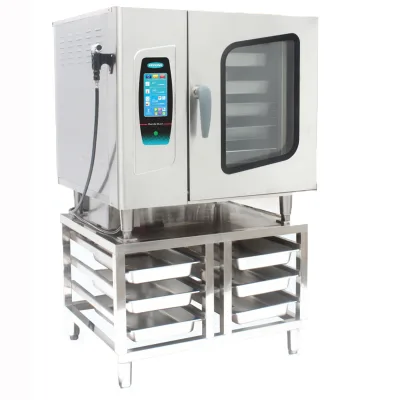
Multifunctional Commercial 6 Trays Convection Steamer Oven With Steamer
$3480.00 - $3580.00
MOQ: 1 units

Comprehensive Sourcing Guide
Strategic Sourcing Guide for Commercial Electric Convection Steam Ovens
Understanding Technical Specifications and Power Requirements
When sourcing a Commercial Electric Convection Steam Oven, the primary technical differentiator lies in the power configuration and voltage compatibility. The market presents a distinct split between standard single-phase units and heavy-duty three-phase industrial models. Based on observed product attributes, buyers must verify whether the unit operates on 220V or 380V systems. The 380V configuration is frequently associated with higher power consumption ratings, such as 15kW, 14kW, or 18.3kW, which are necessary for high-volume commercial kitchens requiring rapid heat recovery and consistent steam generation.
The physical dimensions of the oven are equally critical for facility planning. Standardized footprint data indicates specific model dimensions, such as 595530570mm for certain compact units, while larger rotary convection models can reach dimensions of 90512801520mm or 90512801720mm. These measurements often include the external casing and must be compared against the available kitchen floor space and ceiling height. Furthermore, the internal capacity is a key performance metric. Some units are rated for specific tray configurations, such as 10 trays of 400600mm or 10 trays of 600400mm. Buyers should not assume that all units with similar external dimensions share the same internal capacity, as tray orientation and rack spacing vary by manufacturer design.
The material composition of the oven body directly impacts durability and thermal efficiency. The industry standard for commercial units often specifies Stainless Steel construction. Observations indicate variations in steel grades, with some units utilizing SS 201 for the entire body, while others may specify 301 Stainless Steel for critical components. The choice of material affects resistance to corrosion, particularly in high-humidity steam environments. Additionally, the inclusion of a timing device is a standard feature in modern electric convection steam ovens, allowing for precise control over baking cycles. The power source is explicitly electric in the majority of these commercial units, though some legacy or hybrid descriptions may mention gas compatibility; buyers must strictly confirm the electric nature of the unit to ensure compatibility with their facility's electrical infrastructure.
Compliance, Certification, and Safety Standards
In the commercial food service sector, compliance with international safety and quality standards is non-negotiable. When evaluating potential suppliers, the presence of recognized certifications serves as a primary indicator of product reliability. The CE certification is a documented attribute for several commercial oven models, signifying conformity with health, safety, and environmental protection standards for products sold within the European Economic Area. Buyers should request valid certification documentation for the specific model under consideration, as the presence of a CE mark on one model does not automatically extend to all variants from the same supplier.
Beyond electrical safety, the construction standards of the oven must align with local fire and building codes. The product standards observed in the market often include specific dimensional tolerances, such as 595530570mm or 8478361119mm, which may be linked to specific safety clearances or rack positioning requirements. It is essential to verify that the oven's electrical rating, such as 380V 50Hz, matches the local grid frequency and voltage. Mismatches in frequency or voltage can lead to equipment failure or safety hazards.
The packaging standards also play a role in compliance during transit. Units are often shipped in export-standard packages, including plywood cases or export cartons designed to protect the stainless steel finish. For heavy units, such as those with a net weight of 250kg and a gross weight of 290kg, the packaging must meet international shipping regulations to prevent damage during logistics. Buyers should ensure that the supplier's packaging protocols include moisture protection and secure strapping to maintain the integrity of the oven's sensitive electronic components and heating elements during the shipping process from the origin, which is typically China.
Cost Drivers and Pricing Variables
The pricing of commercial electric convection steam ovens is influenced by a complex matrix of factors, including power rating, material grade, and capacity. The observed price range in the market spans from approximately $149 to $26,425, a variance that reflects the difference between small-scale units and large industrial rotary systems. Several key drivers contribute to this spread. First, the power consumption rating is a significant cost factor; units rated at 18.3kW or 15kW generally command a higher price point than lower-power models due to the cost of high-grade heating elements and transformers.
Second, the material specification directly impacts the unit cost. Ovens constructed with 301 Stainless Steel or higher-grade alloys will be more expensive than those using SS 201, as the former offers superior resistance to corrosion and higher tensile strength. Third, the complexity of the control system, such as the inclusion of advanced timing devices or digital interfaces, adds to the manufacturing cost. The capacity of the oven, measured in the number of trays it can hold (e.g., 10 trays), also correlates with price, as larger units require more robust structural support and larger heating chambers.
Minimum Order Quantity (MOQ) is another variable that affects the total cost of acquisition. The market data indicates an MOQ range of 1 to 5 units. For small businesses or single-unit replacements, an MOQ of 1 allows for direct procurement without the need for bulk purchasing. However, for large-scale installations requiring multiple units, negotiating an MOQ of 5 or more may offer volume discounts. Buyers should be aware that the "Customized" attribute is frequently available, which can introduce additional costs for tailored dimensions, specific voltage configurations, or unique internal rack layouts. The weight of the unit, ranging from 100kg to 290kg, also influences shipping costs, which are a hidden component of the total landed cost.
Typical Applications and Operational Versatility
Commercial electric convection steam ovens are designed for high-volume food production across various sectors, including bakeries, pizzerias, and catering facilities. The primary applications observed for these units include the baking of bread, pizza, and cakes. The versatility of these ovens is enhanced by their ability to handle a wide range of products, such as biscuits, which require precise humidity control to achieve the desired texture. The steam function is particularly beneficial for bread production, as it helps in crust formation and oven spring, while the convection feature ensures even heat distribution for consistent baking results.
The capacity of the oven determines its suitability for different operational scales. Units with a capacity of 10 trays (600400mm) are ideal for medium-sized bakeries or hotels that require steady production without the footprint of a massive industrial line. Conversely, larger rotary convection ovens with dimensions around 9051280*1520mm are better suited for large-scale commercial operations or industrial bakeries. The specific usage profile, whether for bread, pizza, or cake, dictates the required temperature range and steam injection capabilities. Buyers should match the oven's capacity and features to their specific production volume and product mix.
The "Industrial Convection Oven Commercial" designation often implies a robust design capable of continuous operation. The inclusion of a timing device allows for automated baking cycles, reducing the need for constant human supervision. This feature is particularly valuable in high-throughput environments where consistency and speed are paramount. The material construction, typically stainless steel, ensures that the oven can withstand the harsh conditions of a commercial kitchen, including frequent cleaning and exposure to steam and heat.
Supplier Evaluation and Origin Verification
Evaluating suppliers for commercial electric convection steam ovens requires a thorough assessment of their manufacturing capabilities and origin. The majority of the observed products originate from China, a global hub for industrial kitchen equipment manufacturing. Buyers should verify the supplier's location and ensure that the origin matches the product specifications provided. The "Customized" and "Customization: Available" attributes suggest that many suppliers offer flexible manufacturing options, allowing buyers to request specific modifications to standard models.
When evaluating a supplier, buyers should look for evidence of consistent product quality and adherence to the stated specifications. The presence of specific model numbers, such as EB-8C, EB-1AE, EH-4C, or SY-CNV5QH8F, indicates a structured product line. Buyers should request detailed datasheets for each model to confirm the voltage, power, and dimensions. The "Export Standard Package" and "Export Carton or Plywood Cases" attributes suggest that reputable suppliers are experienced in international logistics and understand the requirements for protecting heavy machinery during transit.
It is crucial to avoid relying solely on marketing claims and instead focus on verifiable data. Buyers should request references from previous international clients and ask for proof of the supplier's ability to meet the specific technical requirements of the order. The availability of certifications, such as CE, should be confirmed with valid documentation. Additionally, the supplier's ability to provide after-sales support, including spare parts and technical assistance, is a critical factor in the long-term success of the procurement.
Quality Control and Long-Term Procurement Considerations
Ensuring the quality of commercial electric convection steam ovens involves a multi-step verification process. Buyers should implement a quality control protocol that includes pre-shipment inspections to verify the material grade, dimensional accuracy, and electrical safety. The use of stainless steel, whether SS 201 or 301, must be confirmed through material test reports. The dimensions of the oven, such as 595530570mm or 90512801520mm, should be measured against the ordered specifications to ensure compliance.
Long-term procurement considerations extend beyond the initial purchase price. Buyers should evaluate the energy efficiency of the unit, as higher power ratings like 18.3kW will result in higher operational costs. The durability of the heating elements and the reliability of the timing device are also critical factors. The weight of the unit, ranging from 100kg to 290kg, impacts the installation requirements and the structural integrity of the kitchen floor. Buyers should ensure that the installation site can support the weight of the oven and that the electrical infrastructure can handle the power load.
Maintenance and repair are ongoing costs that should be factored into the procurement decision. The availability of spare parts and the ease of cleaning the stainless steel interior are important for maintaining food safety standards. The "Export Standard Package" ensures that the oven arrives in good condition, but the long-term durability depends on the quality of the materials and the construction. Buyers should inquire about the warranty period and the supplier's policy on repairs and replacements. By focusing on these long-term factors, buyers can ensure that their investment in a Commercial Electric Convection Steam Oven delivers consistent performance and value over its operational lifespan.
Comparative Analysis of Key Model Attributes
To facilitate a clearer understanding of the market offerings, the following table summarizes the key attributes observed across different model series. This comparison highlights the variations in power, dimensions, and capacity that buyers must consider when selecting the right unit for their specific needs.
| Attribute | Model Series EB/EA | Model Series SY (Rotary/Convection) | Model Series SY (Compact) |
|---|---|---|---|
| Voltage | 220V / 380V | 380V / 380V 50Hz | 380V |
| Power | Variable | 15kW / 14kW / 18.3kW | Variable |
| Dimensions (mm) | 595530570 | 90512801520 / 1720 | 595530570 |
| Capacity | Variable | 10*(400*600mm) | 10 Trays (600*400mm) |
| Material | Stainless Steel | SS 201 / 301 Stainless Steel | Stainless Steel |
| Weight (kg) | Variable | 250kg (Nw) / 290kg (Gw) | 100kg |
| Certification | CE | CE | CE |
| Packing | Plywood | Export Standard / Plywood | Export Carton / Plywood |
| Usage | Bread, Pizza | Bread, Pizza, Cake, Biscuit | Bread, Pizza, Cake |
This table illustrates that while the core functionality remains consistent, the specific configuration of power, size, and capacity varies significantly. Buyers must carefully match these attributes to their operational requirements to ensure optimal performance and efficiency. The presence of CE certification across multiple series indicates a baseline level of safety compliance, but the specific power and dimension requirements must be verified for each individual model to avoid installation issues.
FAQs
What voltage options are available for these ovens?
Available voltage options include 220V and 380V systems. The 380V configuration is typically associated with higher power ratings like 15kW or 18.3kW for industrial use.
Which materials are used for the oven body construction?
The oven bodies are constructed from stainless steel. Specific grades observed include SS 201 for the entire body and 301 stainless steel for critical components.
Can these ovens be customized for specific needs?
Yes, customization is available for these units. Buyers can request tailored dimensions, specific voltage configurations, or unique internal rack layouts to fit their facility.
What is the typical capacity for tray configurations?
Typical capacity includes 10 trays with dimensions of 400x600mm or 600x400mm. This capacity suits medium to large-scale commercial baking operations effectively.
Are timing devices included in the standard features?
Yes, the ovens come equipped with timing devices. This feature allows for precise control over baking cycles and reduces the need for constant human supervision.
What certifications do these commercial ovens hold?
Some models hold CE certification for safety and environmental compliance. Buyers should request valid documentation for the specific model to ensure adherence to standards.
How are these heavy units packaged for shipping?
Units are shipped in export standard packages, including plywood cases or export cartons. This packaging protects the stainless steel finish and sensitive components during transit.