Source Commercial Electric Muffin Maker for Bakeries, Hotels, and Cafes
Source a Commercial Electric Muffin Maker from 30 verified listings. Compare models with varying power, voltage, and plate configurations to find the right fit for your bakery, hotel, or cafe operations; compare the available evidence and request quotations based on your requirements.
Key considerations
Products List


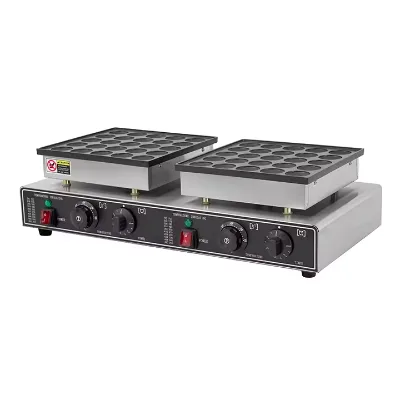
Commercial Electric Double Head Egg Waffle Maker Round Waffle Rectangle
$243.00 - $304.00
MOQ: 1 Pieces


Professional Biscuit Maker with Full Auto Functionality for Easy Baking
$2650.00 - $3050.00
MOQ: 1 Sets


Comprehensive Sourcing Guide
Commercial Electric Muffin Maker Sourcing Guide
The Commercial Electric Muffin Maker market presents a diverse array of units ranging from compact countertop models to heavy-duty industrial machines. Buyers must distinguish between semi-automatic and fully automatic grades, as the observed data indicates a split between mechanical timer controls and advanced automatic pop-up mechanisms. Understanding this distinction is critical for matching equipment to production volume, as high-efficiency units often feature robust stainless steel housings designed for continuous operation in busy bakeries or catering environments.
Procurement decisions should also account for the specific plate configurations available, which include options for waffles, sandwiches, and specialized shapes like shells or triangles. The observed listings reveal that some units offer multi-function capabilities with interchangeable plates, while others are dedicated to single-purpose baking. Buyers need to verify whether the power supply requirements align with their facility's electrical infrastructure, noting that voltage ranges can vary significantly from standard 110V to universal 110-240V systems depending on the model origin.
Product Scope and Observed Listing Signals
Listing signals indicate a wide spectrum of product capabilities, with some units designed for specific applications like ice cream or chocolate processing alongside traditional baking. The observed product names and descriptions suggest that many suppliers offer customized solutions, allowing buyers to tailor dimensions and features to their specific operational needs. This flexibility is often reflected in the availability of custom packaging and the option to select specific plate types, such as omelet or grill plates, which may be integrated into the same chassis for versatile menu planning.
Buyers should carefully analyze the physical specifications provided in listings, as dimensions and weights vary substantially across different models. For instance, some units are compact enough for limited counter space, while others are heavy industrial machines weighing over 11 kilograms. The presence of features like non-stick coating cooking plates and the absence of dust caps or baking racks in certain models highlights the need to scrutinize the exact configuration before purchase to ensure the equipment meets the intended workflow requirements without unnecessary bulk or missing components.
Technical Specifications to Verify
Technical verification must begin with the power source and consumption ratings, as observed listings show a discrepancy between low-wattage units and high-power commercial models. Buyers should confirm whether the equipment operates on 1.6W, 0.9W, or significantly higher ratings like 750W or 1+1 Kw, as these figures directly impact energy costs and circuit load requirements. Ensuring the voltage compatibility with the local grid, particularly for units imported from regions like Guangdong, China, is essential to prevent operational failures or safety hazards during installation.
The mechanical and structural specifications are equally critical, requiring a detailed review of the automatic grade and control systems. While some models feature mechanical timers and lack automatic pop-up functions, others are fully automatic with advanced control interfaces. Buyers must verify the plate size, such as the observed 18cm diameter, and the housing material, which is frequently stainless steel for durability. Additionally, checking the carton dimensions and packing standards helps logistics planners determine storage needs and shipping costs, ensuring the physical footprint aligns with the facility's layout.
Compliance and Safety Documentation
Compliance verification is a non-negotiable step in the procurement process, as the observed data confirms the presence of various certifications including CE, EMC, LFGB, and RoHS. Buyers must request valid certificates for each specific model to ensure the equipment meets the safety and environmental standards of their target market. The presence of these certifications indicates that the manufacturer has undergone testing for electrical safety, electromagnetic compatibility, and material safety, which is particularly important for food contact surfaces in commercial kitchens.
Safety documentation should also cover the operational standards and testing results that validate the equipment's reliability under load. Buyers should verify that the thermal processing capabilities meet the necessary food safety protocols and that the electrical components are rated for continuous commercial use. It is vital to ensure that the product standards, such as the specific dimensions and weight limits observed in listings, are backed by rigorous quality control processes. Without proper documentation, the risk of regulatory non-compliance and potential liability in the event of an equipment failure increases significantly.
Cost Drivers and Commercial Terms
Cost drivers in this category are heavily influenced by the level of automation, material quality, and the complexity of the plate configurations. Units with stainless steel housings, non-stick coatings, and multi-function capabilities typically command higher prices than basic models with simple mechanical controls. The observed price range, which spans from low-cost entry units to high-end industrial machines, reflects these variations in build quality and functional complexity, requiring buyers to balance budget constraints with long-term durability needs.
Commercial terms such as Minimum Order Quantity (MOQ) and lead times are critical factors that affect the total cost of ownership. The observed MOQ range of 1 to 4000 pieces suggests that suppliers offer flexibility for both small retailers and large distributors, but buyers must negotiate terms that align with their inventory strategy. Additionally, the packaging standards, ranging from simple cartons to gift boxes, can impact shipping costs and the final retail presentation. Buyers should clarify whether customization fees apply and how these costs are structured to avoid unexpected expenses during the procurement cycle.
Supplier Qualification and Quality Control
Supplier qualification requires a thorough assessment of the manufacturer's production capabilities and quality assurance protocols. Given that the observed products originate from regions like Guangdong, China, buyers should verify the supplier's track record in producing commercial-grade equipment and their adherence to international standards. The presence of certifications like CE and RoHS is a positive indicator, but buyers must also request evidence of consistent quality control measures to ensure that every unit meets the specified performance criteria.
Quality control checks should extend beyond the initial product inspection to include ongoing monitoring of production batches. Buyers should inquire about the supplier's process for handling defects, their return policies, and their ability to provide replacement parts for long-term maintenance. The observation of specific models like TA-H50 and JW-106 indicates a diverse product line, and buyers must ensure the supplier has the capacity to maintain consistency across different models. Establishing a clear communication channel for technical support and after-sales service is essential for minimizing downtime in commercial operations.
Long-Term Procurement Checks
Long-term procurement success depends on establishing a reliable supply chain that can adapt to changing market demands and operational requirements. Buyers should regularly review the supplier's ability to maintain stock levels and deliver products within the agreed lead times, as delays can disrupt business operations. The observed variety in product models and specifications suggests that a flexible supplier is better equipped to provide upgrades or replacements as technology evolves or as business needs shift.
Sustainability and lifecycle management are also key considerations for long-term procurement strategies. Buyers should evaluate the durability of the equipment, the availability of replacement parts, and the energy efficiency of the units over their operational lifespan. The observation of high-efficiency claims and durable construction materials indicates that some models are designed for extended use, but buyers must verify these claims through performance data and user feedback. Building a strategic partnership with a qualified supplier ensures access to ongoing support and innovation, securing the business's operational continuity for years to come.
FAQs
What certifications are available for commercial electric waffle makers?
Available certifications include CE, EMC, LFGB, and RoHS. These ensure compliance with international safety and environmental standards. Buyers should verify specific certificates for their target market to guarantee regulatory approval and product safety for commercial use.
Can these waffle makers be customized for specific needs?
Yes, customization is available for commercial electric waffle makers. Buyers can request specific modifications to meet unique operational requirements. This flexibility allows businesses to tailor equipment to their exact production workflows and branding needs.
What is the typical MOQ for ordering these units?
The minimum order quantity is typically 10 pieces. This low MOQ allows buyers to test the market or start with smaller inventory. It reduces initial investment risk while ensuring consistent supply for commercial kitchen operations.
How does the power supply voltage affect usage?
The voltage range is 110-240V at 50-60Hz. This wide compatibility supports global usage without needing transformers. Buyers can deploy these units in various regions with different electrical standards, ensuring reliable performance in commercial settings.
What materials are used for the housing and plates?
The housing is made of stainless steel for durability. Plates feature non-stick coatings for easy food release and cleaning. This combination ensures long-term reliability and hygiene, which are critical for high-volume commercial food preparation environments.
Which models offer specific plate types like sandwich or waffle?
Models like JW-106 offer versatile plates including sandwich, waffle, shell, and grill options. This variety allows businesses to prepare multiple product types with one machine. Buyers can select models based on their specific menu requirements and space constraints.