Source Commercial Multifunctional Blender for Powder, Liquid, and Granule Processing
Find and compare 30 Commercial Multifunctional Blender options for industrial applications. Evaluate models with varying capacities, motor powers, and mixing types to identify the right equipment for your production needs.
Key considerations
Products List


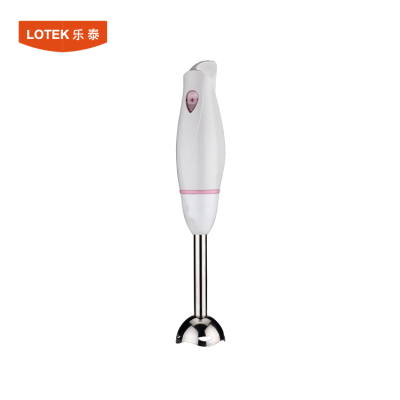
New Various Speeds Multifunction Stainless Steel Handheld Portable Blender
$4.80 - $5.20
MOQ: 1000 pieces


Comprehensive Sourcing Guide
Commercial Multifunctional Blender Sourcing Guide
Sourcing commercial-grade blending equipment requires a clear distinction between consumer-grade appliances and industrial machinery designed for high-volume, continuous operation. The market offers a wide spectrum of devices, ranging from compact countertop units with plastic housings to heavy-duty horizontal mixers built for pharmaceutical or feed applications. Buyers must first define their operational volume and material viscosity to avoid over-specifying or under-specifying their procurement needs. Understanding the fundamental differences in motor power, drum geometry, and control interfaces is essential for aligning equipment capabilities with specific production workflows.
This guide focuses on the technical and commercial realities of acquiring multifunctional blenders, drawing from observed market data and standard industry practices. It addresses the critical verification steps required to ensure that selected units meet safety, performance, and durability standards. By examining product scope, technical specifications, compliance documentation, cost structures, supplier qualifications, and long-term maintenance factors, procurement teams can mitigate risk and secure equipment that delivers consistent operational value.
Product Scope and Observed Listing Signals
The current market landscape for commercial blenders exhibits significant variability in form factor, material composition, and intended application. Observed listings reveal a broad price range, extending from approximately $1.50 to $500,000 USD, which reflects the disparity between simple auxiliary components and fully integrated industrial mixing systems. Minimum order quantities (MOQs) also vary widely, typically ranging from single units for pilot testing to batches of 2,000 for large-scale distribution. This variance indicates that buyers must carefully assess whether they are sourcing individual machines for specific production lines or bulk inventory for resale, as the procurement strategy and supplier engagement will differ substantially between these two scenarios.
Product attributes observed in the market highlight distinct operational modes, including button-controlled and touchpad interfaces, which cater to different user preference and automation levels. Materials range from standard plastic housings for lighter-duty units to stainless steel constructions for environments requiring strict hygiene, such as pharmaceutical or food processing. Some units are explicitly designed for powder and liquid applications, while others, such as horizontal ploughshare mixers, are optimized for granules and dry powders. Buyers should note that "multifunctional" claims often encompass additional capabilities like drying or coating, particularly in conical mixer designs, which require verification of the specific mechanical actions involved.
Technical Specifications to Verify
When evaluating technical specifications, the rated capacity and net weight are primary indicators of a machine’s throughput and structural robustness. For instance, observed models show rated capacities ranging from 1.2 liters to 2.5 liters for smaller units, with net weights between 4.70 kg and 8.0 kg, suggesting these are suitable for batch processing in smaller commercial kitchens or labs. In contrast, larger industrial mixers, such as the WSX-80 model, feature a capacity of 80 kg per 8 minutes and weigh 130 kg, indicating a high-volume, continuous operation capability. Buyers must verify that the stated capacity aligns with their peak production demands, as underestimating volume requirements can lead to bottlenecks, while overestimating may result in unnecessary capital expenditure.
Motor power and stirring type are critical determinants of performance, particularly when processing viscous or dense materials. Observed data includes motors ranging from 1.5 kW to 4 kW, with stirring mechanisms varying from spiral agitators to horizontal ploughshare designs. The WSX-80, for example, utilizes a 4 kW motor with a horizontal layout, suitable for high-speed mixing of animal feed or similar dense powders. Conversely, conical mixers with 1.5 kW motors may be better suited for gentle blending or coating applications in the pharmaceutical sector. Buyers should also verify the power supply requirements, as some units support customized voltages (110~660V) and frequencies (50/60Hz), which is essential for ensuring compatibility with local electrical infrastructure.
Compliance and Safety Documentation
Compliance with international safety and quality standards is non-negotiable for commercial equipment, particularly when used in food, pharmaceutical, or industrial settings. Certifications such as CE and ISO are frequently cited in product listings, serving as baseline indicators that the manufacturer adheres to specific regulatory frameworks. The CE mark, for instance, confirms conformity with health, safety, and environmental protection standards for products sold within the European Economic Area. Buyers must request valid certification documents and verify their authenticity, as the presence of a logo alone does not guarantee ongoing compliance or that the specific model purchased has undergone rigorous testing.
Safety features and operational controls are equally important components of the compliance landscape. Units with touchpad controls or cycle-operating mechanisms often include interlocks and emergency stop functions to protect operators during high-speed mixing processes. Additionally, the construction material, such as stainless steel for main components, plays a role in hygiene compliance, particularly in industries governed by strict sanitary standards. Buyers should ensure that the equipment’s design facilitates easy cleaning and maintenance, reducing the risk of contamination. Verifying that the manufacturer provides comprehensive operation manuals and safety guidelines is also crucial for ensuring that staff are trained to use the equipment safely and effectively.
Cost Drivers and Commercial Terms
The total cost of ownership for commercial blenders is influenced by several factors beyond the initial purchase price, including customization options, packaging, and shipping logistics. Customization is frequently available, allowing buyers to tailor power supplies, control interfaces, or drum geometries to their specific needs. However, customized orders often incur higher MOQs and longer lead times, which can impact cash flow and production scheduling. Buyers should carefully evaluate whether the benefits of customization outweigh the additional costs and potential delays, particularly for standard applications where off-the-shelf models may suffice.
Packaging and origin also play significant roles in determining the final landed cost. Products are typically packed in plastic bags with foam protection, gift boxes, or standard exporting wooden cases, depending on the size and fragility of the unit. Origin locations, such as Shunde in Guangdong or Zhengzhou in Henan, can affect shipping costs and delivery times due to their proximity to major ports or industrial hubs. Buyers should request detailed quotations that include all freight, insurance, and customs duties to avoid unexpected expenses. Additionally, warranty terms, such as the one-year warranty observed in some listings, should be clearly defined to understand the scope of post-purchase support and potential repair costs.
Supplier Qualification and Quality Control
Supplier qualification is a critical step in mitigating procurement risk, requiring a thorough assessment of the manufacturer’s production capabilities and quality management systems. Buyers should verify the supplier’s physical presence and operational history, as origins like Liaoning or Zhengzhou indicate established industrial clusters with varying levels of expertise. Requesting factory audits or third-party inspection reports can provide insights into the supplier’s adherence to quality standards and their ability to maintain consistent production quality. Suppliers with ISO certification, for example, are likely to have more robust quality control processes in place, reducing the risk of defects in delivered units.
Quality control measures should extend beyond the final product inspection to include raw material verification and in-process testing. For stainless steel components, buyers should confirm the grade of steel used, as this affects durability and corrosion resistance. Similarly, for plastic housings, the type of polymer and its resistance to heat and impact should be verified. Buyers should also inquire about the supplier’s testing protocols for motor performance and mixing efficiency, ensuring that these tests are conducted under conditions that simulate real-world usage. Establishing clear quality acceptance criteria in the purchase agreement is essential for resolving disputes and ensuring that delivered equipment meets the specified standards.
Long-Term Procurement Checks
Long-term procurement success depends on the availability of spare parts, technical support, and the supplier’s ability to provide ongoing maintenance guidance. Buyers should assess the supplier’s inventory of critical components, such as motors, blades, and control boards, to minimize downtime in the event of equipment failure. Suppliers that offer comprehensive warranty services and readily available spare parts are preferable, as they reduce the total cost of ownership and ensure continuous operation. Additionally, buyers should verify the supplier’s responsiveness to technical inquiries and their ability to provide troubleshooting assistance, which is crucial for resolving operational issues quickly.
Regular maintenance and performance monitoring are also key to extending the lifespan of commercial blenders. Buyers should establish a preventive maintenance schedule based on the manufacturer’s recommendations, including regular lubrication, inspection of wear parts, and calibration of control systems. Monitoring key performance indicators, such as mixing time and energy consumption, can help identify potential issues before they lead to costly breakdowns. Furthermore, buyers should stay informed about any updates or recalls issued by the manufacturer, ensuring that their equipment remains compliant with evolving safety and performance standards. By proactively managing these aspects, procurement teams can maximize the value and reliability of their commercial blender investments.
FAQs
What certifications are available for commercial multifunctional blenders?
CE certification is available for these units. Some models also carry ISO certification. Buyers should verify specific documentation for each product model before placing an order to ensure compliance with local regulations.
Which customization options exist for commercial multifunctional blenders?
Customization is available for these machines. Buyers can request specific power supply voltages ranging from 110 to 660V. Additional capabilities like drying or coating may also be tailored to specific industrial needs.
How is the packaging handled for commercial multifunctional blenders?
Packaging varies by product type. Some units use plastic bags with foam and gift boxes, while larger mixers are shipped in standard exporting wooden cases. Heavy industrial models may require wooden packaging for protection during transit.
What is the warranty period for commercial multifunctional blenders?
A one-year warranty is provided for these machines. This coverage applies to new condition units. Buyers should confirm specific terms with the supplier to understand what components are included in the warranty period.
Can commercial multifunctional blenders handle both powder and liquid applications?
Yes, these units can process both powder and liquid materials. Specific models are designed for high-speed mixing or convection mixing. The application area often includes pharmaceutical or animal feed industries depending on the configuration.
What is the typical weight range for commercial multifunctional blenders?
Weights vary significantly by model and capacity. Smaller units may weigh around 4.70kg, while larger industrial mixers can reach 300kg. Buyers should check the net weight specification for the exact model they intend to purchase.