Source Compostable Heatable Paper Salad Bowl for Catering, Events, and Retail
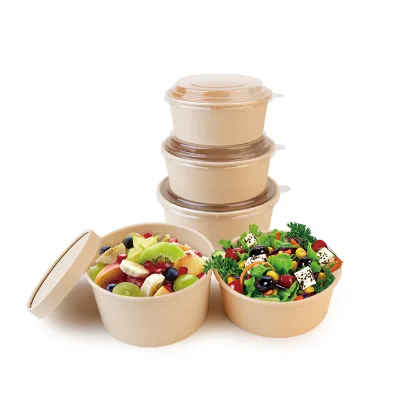
Compare 30 listings for the Compostable Heatable Paper Salad Bowl from verified Chinese manufacturers. Buyers can evaluate customization options, material types like bamboo and PLA, and packaging details to find the right supplier for food service needs.
Key considerations
Products List




Comprehensive Sourcing Guide
Sourcing Guide for Compostable Heatable Paper Salad Bowls
Understanding Product Specifications and Material Composition
When sourcing compostable heatable paper salad bowls, buyers must first distinguish between the various material compositions and structural designs available in the current market. The core product category encompasses bowls designed for both cold and hot food applications, ranging from simple salad containers to complex soup and noodle packaging. Based on observed market data, the primary materials utilized include paper, bamboo, wood, and PLA (Polylactic Acid). Each material offers distinct thermal and mechanical properties that influence the bowl's suitability for specific food types.
Paper-based bowls are frequently cited as the standard for disposable salad and soup containers. These products often feature a capacity range spanning from 500ml to 2300ml, with specific models available in sizes such as 8oz, 12oz, 16oz, 26oz, and 32oz. The structural integrity of these bowls is critical when handling hot liquids like soups, instant noodles, or porridge. Some specifications indicate a "folded" construction method, which may enhance rigidity or facilitate flat storage prior to use. Additionally, the inclusion of lids is a common feature, particularly for universal packaging applications where leakage prevention is essential.
Bamboo and wood materials represent a more premium segment of the market, often marketed for their natural aesthetic and eco-friendly profile. These materials are typically associated with unicolor finishes, though multicolor options are also observed in the marketplace. The standard capacity for bamboo and wood variants often mirrors the paper range, with specific model numbers like S03, S06, and SS indicating different design iterations. Buyers should note that while these materials are marketed as eco-friendly, the specific compostability and heat resistance depend heavily on the manufacturing process and any coatings applied.
The following table summarizes the observed specification ranges for these products:
| Specification Category | Observed Ranges and Options |
|---|---|
| Material Types | Paper, Bamboo & Wood, PLA |
| Capacity Range | 500ml to 2300ml (e.g., 500ml, 650ml, 750ml, 1000ml, 1100ml, 1300ml) |
| Common Sizes | 8oz, 12oz, 16oz, 26oz, 32oz |
| Construction | Folded, Unicolor, Multicolor |
| Accessories | With Lid, Without Lid |
| Packing | In Boxes, Carton Packing, 50*6 configuration |
Compliance and Certification Verification
Compliance is a non-negotiable aspect of sourcing food-contact packaging, especially for products intended to hold hot foods. Buyers must rigorously verify that suppliers possess valid certifications that align with the target market's regulatory requirements. The observed market data highlights several key certifications, including CE/EU compliance, FDA approval, SGS testing, ISO9001 quality management, and BRC (British Retail Consortium) standards. These certifications are critical indicators that the manufacturing facility adheres to strict hygiene and safety protocols.
For compostable products, the verification of biodegradability and eco-friendly claims requires specific attention. While the term "Eco-Friendly" is a common attribute, buyers should request documentation proving that the product meets recognized compostability standards. The context mentions ASTM D6400 as a relevant standard, though this should be treated as a background reference rather than a guaranteed attribute of every listed product. Buyers must confirm whether the specific model they intend to purchase has undergone testing against ASTM D6400 or equivalent regional standards to ensure it will break down effectively in industrial composting facilities.
Furthermore, the distinction between "compostable" and "biodegradable" is vital. While many products are labeled as biodegradable, true compostability implies the material breaks down into non-toxic organic matter within a specific timeframe under specific conditions. Suppliers should be able to provide test reports from accredited laboratories confirming these claims. The presence of FDA and SGS certificates suggests a baseline of safety for food contact, but buyers should not assume these cover compostability without explicit confirmation. The origin of the products, often cited as China or specific regions like Hunan, does not inherently dictate compliance; therefore, the certification documents must be reviewed on a per-supplier basis.
Cost Drivers and Pricing Dynamics
The pricing structure for compostable heatable paper salad bowls is influenced by a complex interplay of material costs, customization requirements, and order volume. The observed market data indicates a significant variance in Minimum Order Quantities (MOQ), ranging from 10 units to as high as 100,000 units. This wide range suggests that the cost per unit is highly sensitive to the scale of the order. Small MOQs, often available for sample purposes or initial market testing, typically carry a higher unit price compared to bulk orders that leverage economies of scale.
Material selection is another primary cost driver. Bowls made from pure paper may be priced differently than those incorporating bamboo, wood, or PLA linings. The addition of features such as lids, specific printing techniques (Flexo & Offset), and custom logos will inevitably increase the final cost. Suppliers offering OEM/ODM services and accepting custom models (such as S03 or S06) often charge premiums for the tooling and setup required to produce non-standard items.
The observed price range in the market data is noted as 0-0.5 USD, which likely represents a snapshot of bulk pricing or specific promotional tiers. However, buyers should be cautious when interpreting such ranges without context regarding the specific unit size or material. A 500ml paper bowl will naturally cost less than a 2300ml bamboo composite bowl. Additionally, the "Freely" sample availability mentioned in the data suggests that initial sampling costs may be waived, but shipping and handling fees are often the responsibility of the buyer.
Typical Applications and Usage Scenarios
The versatility of compostable heatable paper salad bowls makes them suitable for a diverse array of food service applications. The primary usage categories identified include food packaging, tableware, and specific culinary applications such as soups, instant noodles, and porridges. The "Heatable" aspect of the core keyword is particularly relevant for hot food service, where the bowl must maintain structural integrity without leaching chemicals or becoming soggy.
In the salad sector, these bowls serve as the primary vessel for fresh produce, dressings, and mixed ingredients. The "Freshness Preservation" feature is a key selling point, ensuring that the food remains crisp and fresh until consumption. For hot food applications, the bowls are designed to withstand temperatures associated with soups and noodles. The inclusion of lids is crucial for these applications to prevent spills and maintain thermal retention.
Beyond standard food service, these products are also utilized in pharmaceutical packaging, gift packaging, and universal packaging scenarios. The "All" age group designation indicates that these bowls are safe for use by children and adults alike, provided they meet the relevant food safety standards. The "Disposable" nature of the product aligns with the fast-paced requirements of modern food delivery services, quick-service restaurants, and catering events where sanitation and waste management are priorities.
Supplier Evaluation and Customization Capabilities
Evaluating a supplier for compostable heatable paper salad bowls requires a deep dive into their customization capabilities and production flexibility. The market data indicates that customization is widely available, with suppliers accepting OEM/ODM requests and custom logo printing. This flexibility allows buyers to brand their products effectively, which is essential for private label operations. The printing techniques available, such as Flexo and Offset printing, offer different levels of detail and color fidelity, which should be matched to the buyer's branding needs.
When evaluating suppliers, buyers should verify their ability to produce specific model numbers and sizes. The existence of standardized models like S03, S06, and SS suggests that some suppliers have established production lines for these designs. However, the "Accept Customization" attribute for models implies that bespoke designs are also possible. Buyers must assess the supplier's lead times and production capacity to ensure they can meet demand spikes, especially given the high MOQs observed in some segments of the market.
The origin of the products, often China, provides access to a vast manufacturing ecosystem, but buyers should verify the specific location and facility standards. For instance, some products originate from Hunan, China, while others may come from different regions. The "Carton Packing" and "In Boxes" options indicate varying levels of packaging sophistication, which can impact shipping efficiency and product protection. A reliable supplier should offer clear communication regarding their production timeline, quality assurance processes, and ability to handle custom orders without compromising on the eco-friendly attributes of the product.
Quality Control and Long-Term Procurement Considerations
Ensuring consistent quality in compostable heatable paper salad bowls requires a robust quality control (QC) framework. Buyers should implement a multi-stage QC process that includes raw material inspection, in-process monitoring, and final product testing. The "Eco-Friendly" and "Biodegradable" claims must be backed by consistent testing results, as variations in the manufacturing process can affect the compostability of the final product. The presence of certifications like ISO9001 and BRC suggests that the supplier has a formalized quality management system, but buyers should still conduct their own audits or third-party inspections.
Long-term procurement considerations involve building a sustainable supply chain that can adapt to changing market demands and regulatory landscapes. As environmental regulations tighten, the demand for truly compostable materials will likely increase. Buyers should prioritize suppliers who are proactive in adopting new technologies and materials, such as advanced PLA blends or improved paper coatings. The "Customized" standard attribute indicates that the market is moving towards more tailored solutions, and suppliers who can offer flexible, long-term partnerships will be better positioned to support buyers.
Furthermore, buyers should consider the end-of-life management of the products. While the bowls are marketed as compostable, the actual compostability depends on the local waste infrastructure. Buyers should educate their customers on proper disposal methods to ensure the environmental benefits are realized. The "Folded" feature and specific packing configurations (e.g., 50*6) can also impact logistics costs and storage efficiency, which are critical factors in long-term procurement planning. By focusing on these aspects, buyers can ensure a reliable, high-quality, and sustainable supply of compostable heatable paper salad bowls.
FAQs
What certifications do compostable heatable paper salad bowls have?
These bowls often carry CE, FDA, SGS, ISO9001, and BRC certifications. Buyers must verify specific test reports for each model to confirm compliance with target market regulations before placing bulk orders.
Which material types are available for compostable heatable paper salad bowls?
Available materials include paper, bamboo, wood, and PLA. The choice depends on required heat resistance and eco-friendly goals, with paper being the standard for hot soups and bamboo offering a premium natural finish.
Can I customize the logo and model for these disposable bowls?
Yes, customization for logos and models is acceptable for most suppliers. Buyers can request specific sizes like 500ml to 2300ml and use flexo or offset printing to apply custom branding on the product surface.
What is the typical minimum order quantity for these paper bowls?
Minimum order quantities range widely from 10 to 100,000 pieces depending on the supplier. Bulk orders typically require higher volumes like 50,000 pieces to achieve lower unit prices and utilize standard production lines.
How are these compostable heatable paper salad bowls packed for shipping?
Products are commonly packed in boxes or cartons with configurations like 50 pieces per pack. Specific packing details vary by manufacturer, so buyers should confirm carton dimensions and stacking limits to optimize shipping costs.
Which sizes are available for compostable heatable paper salad bowls?
Sizes range from 500ml to 2300ml, including specific options like 8oz, 12oz, and 16oz. Some models offer specific capacities such as 650ml, 750ml, 1000ml, and 1300ml to suit different food serving needs.
Are samples available for testing compostable heatable paper salad bowls?
Free samples are often available for potential buyers to evaluate quality and features. While the sample itself may be free, buyers usually need to cover shipping costs and confirm lead times before receiving the items.