Source Compression Spring Ball Point Pen for Office, School, and Business
Find a range of 28 Compression Spring Ball Point Pen options for office, school, and business applications. Buyers can compare specifications including material, size, and customization features to select the right supplier.
Key considerations
Products List


Comprehensive Sourcing Guide
Strategic Sourcing Guide for Compression Spring Ball Point Pens
Understanding the Product Category and Technical Variability
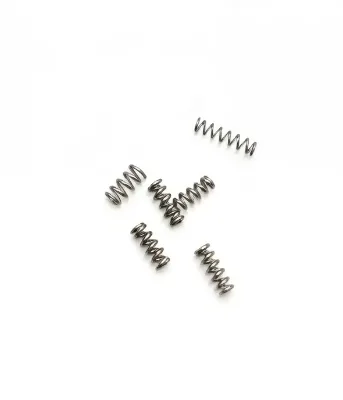
When sourcing compression spring ball point pens, buyers must first recognize that this category encompasses a diverse range of components rather than a single uniform product. The core function of these items is to provide a mechanical restoring force, typically found in the retractable mechanisms of writing instruments. Based on observed market data, the primary material composition varies significantly between suppliers, with Stainless Steel and general Steel being the most prevalent options. The choice of material directly influences the spring's resistance to corrosion, its fatigue life, and its suitability for specific environmental conditions.
The production process is another critical differentiator. While some manufacturers utilize Cold Roll processes to achieve high tensile strength and precise dimensional tolerances, others may employ Hot Roll methods, which can affect the grain structure and hardness of the metal. The shape of the spring is consistently observed as a Coil, often described as a Spiral or Twist style depending on the specific manufacturing technique. For ball point pens, the "Compression" load type is the defining characteristic, ensuring the mechanism returns to its extended or retracted state upon release of pressure.
Buyers should also note the variation in hardness ratings. Observed specifications indicate a "Medium Soft" hardness profile for certain promotional variants, which is suitable for frequent, low-force actuation. However, for industrial-grade applications or heavy-use office environments, the hardness specification must be verified against the expected actuation frequency. The surface treatment is equally vital; Zinc Plating is a common finish observed in the market, providing a barrier against oxidation. When evaluating a potential supplier, the buyer must confirm whether the spring is designed for "Restoration" and "Pressed" functions, as these terms indicate the specific mechanical action the component is engineered to perform within the pen assembly.
Material Specifications and Dimensional Standards
The physical attributes of the compression spring are the foundation of its performance in a ball point pen. The material selection dictates the baseline durability. Stainless Steel is frequently cited for its superior corrosion resistance, making it ideal for pens that may be exposed to moisture or varying humidity levels. Conversely, standard Steel offers a cost-effective alternative but requires robust surface treatments like Zinc Plating to prevent rust. The distinction between these materials is not merely cosmetic; it impacts the long-term reliability of the pen's retractable mechanism.
Dimensional specifications are often customized to fit the internal geometry of the pen barrel. Observed data points to a standard length range of 13 to 15 cm for the overall pen assembly, though the spring itself will be significantly smaller. The spring's diameter and wire thickness must be precisely matched to the pen's internal tube to ensure smooth operation without binding. Suppliers frequently offer "Customized Size" options, allowing for tailored solutions for unique pen designs. The standard range for the spring's specifications is noted as 0.2 to 12, likely referring to wire diameter or coil count, though this requires direct verification with the manufacturer.
Packaging and logistics also play a role in the physical handling of these components. The single package size can vary, with observations ranging from 30x30x30 cm to 50x40x30 cm depending on the order volume and packaging density. For smaller orders, individual pens or small batches may be packed in leak-proof bags to protect the ink and the spring mechanism from moisture. Larger industrial orders often utilize carton palletizing to facilitate efficient shipping. The single gross weight is another variable, with observed values ranging from 0.100 kg to 1.000 kg, reflecting the difference between a single unit and a packaged batch. Buyers must ensure that the packaging method aligns with their inventory management systems and storage capabilities.
Cost Drivers and Pricing Dynamics
The pricing structure for compression spring ball point pens is influenced by a complex interplay of material costs, production complexity, and order volume. The observed price range in the market is notably low, spanning from 0 to 2 USD per unit. This low price point is typical for high-volume promotional items or standard office supplies. However, buyers should be cautious not to equate low cost with low quality, as the margin between a functional spring and a failing one can be subtle.
Material costs are a primary driver. Stainless Steel is inherently more expensive than standard steel due to the inclusion of chromium and other alloying elements. Consequently, springs made from stainless steel will command a higher price per unit. The production process also affects cost; Cold Roll processes generally require more precise machinery and tighter quality control than Hot Roll methods, potentially increasing the unit price. Customization is a significant cost factor. While "Customized Color" and "Customized Size" are available, these options often incur additional setup fees or higher per-unit costs compared to standard off-the-shelf models.
Order volume, represented by the Minimum Order Quantity (MOQ), is the most critical variable in determining the final price. The observed MOQ range is vast, extending from 1 unit to 50,000 units. For buyers seeking small quantities for testing or specific niche applications, the per-unit cost will be higher. Conversely, purchasing at the upper end of the MOQ range can drastically reduce the cost per unit. The "Selling Units" are typically listed as "Single Item," but bulk pricing tiers are usually available for larger orders. Buyers must balance their immediate needs with the economic benefits of larger orders to optimize their procurement budget.
Typical Applications and Functional Requirements
Compression spring ball point pens serve a variety of applications beyond simple writing. While the primary use is for "Daily Writing" in "Office & School" settings, the versatility of these components allows for broader industrial and promotional use. The "Core Uses" section highlights their role in business gifts and promotional pens, where the reliability of the retractable mechanism is essential for brand perception. A pen that fails to retract smoothly can damage a company's image, making the quality of the compression spring a critical brand asset.
In industrial settings, these pens may be used for logging data, marking materials, or other tasks requiring durable writing instruments. The "Usage" category includes "Industrial" and "Home Appliance" applications, suggesting that the springs are robust enough to withstand environments beyond the standard office. The "Leak-Proof Design" is a key feature for pens intended for travel or use in varying temperatures, ensuring that the ink does not spill due to pressure changes or mechanical failure. The "Anti-Slip Rubber Grip" is an additional design element that enhances user comfort and control, particularly during extended writing sessions.
The customization options available, such as "Logo Printing" and "Customized Color," make these pens highly adaptable for corporate branding. The ability to print a logo on the pen or the spring housing allows companies to create unique promotional items. The "Ink Capacity" of 0.5 to 1 ml is a standard specification that balances writing duration with pen size. Buyers should verify that the spring's compression force is sufficient to actuate the pen mechanism without causing excessive wear on the ink cartridge or the pen body.
Supplier Evaluation and Verification Protocols
Evaluating a supplier for compression spring ball point pens requires a rigorous approach to verifying their capabilities and reliability. The "Service" offered is often "Customized OEM," indicating that the supplier can tailor products to specific buyer requirements. However, buyers must confirm the supplier's ability to deliver on these customizations consistently. The "Production Process" should be clearly defined, with a preference for Cold Roll for higher precision and Hot Roll for cost-effective bulk production.
Geographic location is another factor to consider. Suppliers are often located in regions known for manufacturing, such as Zhejiang or Anhui in China. While these locations offer competitive pricing and established supply chains, buyers should verify the specific factory's capabilities and quality control measures. The "Delivery Time" is typically 7 to 25 working days, but this can vary based on order complexity and customization requirements. Buyers should establish clear expectations regarding lead times to avoid production delays.
Certification and compliance are critical for ensuring product safety and quality. While specific certification statuses like ISO 9001:2015 or RoHS are mentioned in background data, buyers should not assume these apply to every listed product without verification. It is essential to request current certification documents from the supplier to confirm that their manufacturing processes meet international standards. The "Standard" for the product may be listed as "CUSTIOMIZED" or a specific numerical range, requiring direct confirmation from the supplier to ensure it meets the buyer's technical specifications.
Quality Control and Long-Term Procurement Strategy
Quality control is paramount when sourcing compression spring ball point pens, as the failure of the spring can render the entire pen unusable. Buyers should implement a robust quality assurance plan that includes sampling and testing. The "Single Gross Weight" and "Single Package Size" should be verified to ensure consistency across batches. Variations in these metrics can indicate inconsistencies in the manufacturing process or packaging.
Long-term procurement considerations involve building a relationship with a reliable supplier who can scale with the buyer's needs. The "Customization" feature allows for ongoing product development, but it requires clear communication and documentation of specifications. Buyers should establish a standard for "Hardness" and "Surface Treatment" to ensure that all future orders meet the same performance criteria. The "Special Function" of being leak-proof and the "Additional Design" of an anti-slip grip should be consistently maintained to protect the brand's reputation.
Finally, buyers should monitor the market for changes in material costs and production processes. The "Material" and "Process" attributes can shift over time, affecting the final product quality and cost. By maintaining a flexible yet disciplined approach to sourcing, buyers can ensure a steady supply of high-quality compression spring ball point pens that meet their specific operational and branding needs. The ability to adapt to changes in supplier capabilities and market conditions is key to a successful long-term procurement strategy.
Comparison of Key Product Attributes
To facilitate decision-making, the following table summarizes the key attributes observed in the market for compression spring ball point pens. This comparison highlights the variability in specifications that buyers must navigate during the sourcing process.
| Attribute Category | Observed Option A | Observed Option B | Observation Notes |
|---|---|---|---|
| Material | Steel | Stainless Steel | Stainless offers better corrosion resistance; Steel is cost-effective. |
| Production Process | Cold Roll | Hot Roll | Cold Roll provides higher precision; Hot Roll is common for bulk. |
| Surface Treatment | Zinc Plating | None Listed | Zinc plating is critical for rust prevention in standard steel. |
| Hardness | Medium Soft | Not Specified | Medium soft is suitable for standard office use; verify for heavy duty. |
| Packaging | Carton Palletizing | Inner Plastic Bag | Packaging varies by order size; leak-proof bags protect ink. |
| Origin | Zhejiang, China | Anhui, China | Both are major manufacturing hubs; verify factory specifics. |
| Customization | Available | Available | Logo printing and color customization are standard offerings. |
| Delivery Time | 7-25 Working Days | 7-25 Working Days | Lead times vary based on order volume and customization. |
This table serves as a reference for buyers to compare different supplier offerings. It is crucial to note that not every product will satisfy all attributes listed; buyers must verify each specification against their specific requirements. The variability in these attributes underscores the importance of detailed communication with suppliers to ensure the final product meets the intended application standards. By carefully evaluating these factors, buyers can make informed decisions that balance cost, quality, and performance.
FAQs
What materials are used for compression spring ball point pens?
Compression springs for these pens are typically made from Steel or Stainless Steel. Stainless Steel offers superior corrosion resistance, while standard Steel is a cost-effective alternative that often requires Zinc Plating for protection against rust.
How are these pens customized for branding purposes?
Customization is available for color, size, and logo printing. Buyers can request specific dimensions and colors, and the pens often include logo printing services to support corporate branding and promotional gift strategies.
What is the typical delivery time for these orders?
The standard delivery time ranges from 7 to 25 working days. This lead time applies to both standard and customized orders, though specific timelines may vary based on the complexity of the customization and current production capacity.
Which production processes are used for manufacturing these springs?
Manufacturers utilize Cold Roll or Hot Roll processes depending on the required specifications. Cold Roll is often used for higher precision, while Hot Roll methods may be employed for different material properties and cost considerations.
Can buyers find suppliers with specific packaging requirements?
Yes, packaging options include Inner Plastic Bag and Outer Carton or Carton Palletizing. Individual pens may be packed in leak-proof bags, while larger orders often use carton palletizing to ensure efficient shipping and storage.
What is the minimum order quantity for these pens?
The minimum order quantity ranges from 1 to 50,000 units depending on the supplier. Buyers can source single items for testing or place large bulk orders to benefit from lower per-unit costs and optimized logistics.
Where are these products typically manufactured?
These products originate from manufacturing hubs in China, specifically regions like Zhejiang and Anhui. Suppliers in these locations offer competitive pricing and established supply chains for industrial and promotional writing instruments.