Source Cone Crusher for Mining Quarry Metallurgy
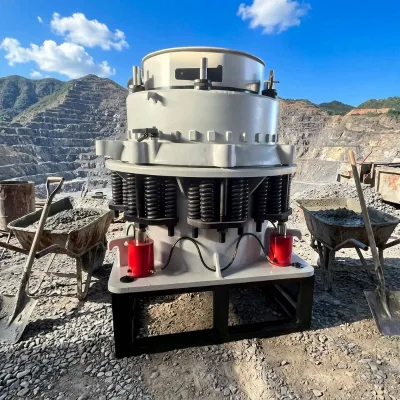
Compare 30 Cone Crusher units from verified Chinese manufacturers. Buyers can evaluate specifications like crushing capacity, motor power, and feeding size for applications in mining, quarry, and metallurgy sectors.
Key considerations
Products List


Large Capacity Cone Crusher Machine from Reliable mobile Cone Crusher Suppliers
$20000.00 - $50000.00
MOQ: 1 Pieces


Cone Crusher Manufacturer with Competitive Pricing for Global Buyers
$19000.00 - $25000.00
MOQ: 1 Sets


Comprehensive Sourcing Guide
Strategic Sourcing Guide for Cone Crusher Procurement
Selecting the right Cone Crusher is a critical decision for any operation within the mining, quarrying, or metallurgy sectors. The equipment serves as the backbone of secondary and tertiary crushing circuits, directly influencing downstream processing efficiency, product shape, and overall operational costs. For procurement professionals, the market presents a complex array of options ranging from standard models to highly customized industrial solutions. This guide synthesizes available product data and industry best practices to provide a disciplined framework for evaluating potential suppliers and specifications. Buyers must navigate a landscape where attributes such as motor power, feed size, and material composition vary significantly between models. The following sections detail the technical parameters, compliance requirements, and strategic considerations necessary for a successful procurement cycle.
Technical Specifications and Model Variations
The technical landscape of cone crushers is defined by specific operational parameters that dictate their suitability for different stages of the crushing process. Based on observed market data, the core mechanical attributes vary considerably between models. For instance, specific units are identified by model numbers such as S75DC, ZSW1350, and the PYB, PYD, and PYZ series. These designations often correlate with distinct crushing capacities and feeding mechanisms. A critical observation in the current market is the variation in crushing capacity, which ranges from 100 to 500 tons per hour (t/h) depending on the specific configuration. This wide range necessitates a precise calculation of the required throughput before engaging with suppliers.
Motor specifications are another primary differentiator. The data indicates that AC motors are standard, with specific units listed with a motor power of 75kw. However, procurement teams must verify that the motor power aligns with the specific ore hardness and the desired reduction ratio. The feeding size is equally critical; observed specifications show a feeding size range of 300-500 mm for certain models, while others may feature a feeding opening of 185 mm. The discharge opening is equally variable, with minimum discharge openings observed at 19 mm for coarse settings.
Furthermore, the structural integrity of the machine relies on the materials used. Limestone is frequently cited as a material context, but the internal components often utilize high-manganese steel, particularly for parts like the adjustment ring or counterweights. The weight of the machinery is a significant logistical factor, with observed weights ranging from 5,500 kg to 11,200 kg. For example, specific standard models like the PYB900 are noted to weigh approximately 11.2 tons. Buyers must ensure that their site infrastructure can support these loads. The type of machinery also varies; while some units are classified strictly as cone crushers, others are described as compound cone crushers or motor vibrating feeders, indicating a need to distinguish between the primary crushing unit and its auxiliary feeding systems.
Compliance, Certification, and Manufacturing Standards
In the global B2B market, compliance with international standards is non-negotiable for ensuring safety, reliability, and resale value. The provided data highlights several key certifications and standards that buyers should verify. ISO 9001 is a recurring certification mentioned in the context of manufacturing processes, indicating a commitment to quality management systems. Additionally, CE certification is frequently observed, which is essential for equipment intended for use in European markets or regions requiring strict safety compliance.
Manufacturing processes also play a vital role in compliance. The data points to casting as a primary process for producing components such as the adjustment ring and counterweights. The surface treatment for these parts is often specified as polishing, which can impact wear resistance and longevity. Buyers should request documentation proving that the casting process adheres to the claimed standards, particularly regarding the "High manganese" standard mentioned for specific components. This material specification is crucial for durability in abrasive environments.
It is important to note that while "ISO9001" and "CE" appear in background data, the specific certification status of a supplier must be verified through official documentation rather than assumed. The presence of these certifications on a product page suggests a baseline of compliance, but the buyer must confirm that the specific unit being purchased carries the valid, current certification. Furthermore, the "Free Engineering Solutions" attribute suggests that some suppliers offer design support, which can be a valuable component of compliance if it includes structural integrity calculations or safety audits.
Cost Drivers and Pricing Dynamics
Understanding the cost structure of cone crushers is essential for budgeting and total cost of ownership (TCO) analysis. The observed price range in the market is exceptionally broad, spanning from $1 to $1,000,000. This vast discrepancy indicates that price is not a linear function of the equipment size alone but is heavily influenced by customization, motor power, and the inclusion of auxiliary systems. A unit with a 75kw motor and a capacity of 500t/h will naturally command a higher price than a smaller, single-item unit.
Several factors drive these costs. First, the material composition significantly impacts price. Components made from high-manganese steel or those requiring extensive polishing and casting processes are more expensive. Second, the level of customization available is a major cost variable. The market data confirms that customization is available, which allows buyers to tailor the machine to specific feed sizes or discharge requirements but inevitably increases the unit cost. Third, the inclusion of core components such as the engine and motor adds substantial value. Buyers should distinguish between the base machine cost and the cost of these integrated high-value components.
Logistics and packaging also contribute to the final cost. While some suppliers offer "Nude Packing" or "Standard Packing," others may provide "Export Standard Packing" or custom packaging as per customer needs. The weight of the unit, ranging from 5.5 to 11.2 tons, makes transportation a significant line item. Additionally, the "Free Delivery Services" mentioned for some models may be a marketing term that requires clarification regarding the scope of delivery (e.g., factory gate vs. site delivery). Buyers must scrutinize the "Selling Units" attribute, which is listed as "Single Item," to ensure they are not inadvertently purchasing a partial kit that requires additional expensive components to function.
Typical Applications and Operational Fit
Cone crushers are versatile machines designed for a wide array of industrial applications. The data explicitly lists applications in quarry, mining, metallurgy, and construction sectors. This versatility makes them suitable for processing various hard materials, including limestone and other aggregates used in energy and mining industries. The specific model selection depends heavily on the application's requirements. For instance, a model with a feeding size of 300-500 mm is better suited for primary or secondary crushing in large-scale mining operations, whereas a unit with a 185 mm feeding opening might be ideal for tertiary crushing or specific quarry applications requiring finer output.
The "High Performance" advantage cited in the product attributes suggests that these machines are optimized for efficiency. However, the actual performance is contingent on the match between the machine's capacity and the feed material. A crusher with a capacity of 150-500t/h must be paired with a feed mechanism that can sustain this rate. The data mentions a "Vibratory Type" feeding mechanism, which is a common and effective method for ensuring consistent material flow into the crusher. Buyers should verify that the feeding mechanism is compatible with their existing plant layout and the specific characteristics of their raw material.
Furthermore, the "Applicable Industries" listed as Energy & Mining indicate that these crushers are built to withstand the rigors of heavy industrial use. The "New" condition of the products ensures that buyers are acquiring machinery with full operational life, rather than refurbished units. However, the "Application" attribute also notes that these machines are used in metallurgy, implying a need for robust construction to handle the abrasive nature of metal ores.
Supplier Evaluation and Verification Protocols
Evaluating a supplier requires a rigorous approach to verifying their claims and capabilities. The location of the manufacturers is a key factor, with data pointing to origins in Guangdong and Jiangsu, China. While these regions are known for heavy machinery manufacturing, buyers should not rely solely on the country of origin. Instead, they must verify the specific factory's capacity and history. The "Factory Visit: Warmly Welcomed" attribute is a positive indicator, suggesting transparency and confidence in their manufacturing facilities. Buyers should take advantage of this opportunity to inspect the casting processes, quality control measures, and assembly lines firsthand.
The "Video Outgoing-Inspection" and "Machinery Test: Provided Report" attributes are critical for remote evaluation. These services allow buyers to verify the machine's condition and performance before shipment. A "Provided Inspection" report should include detailed data on the machine's operation, including motor performance, vibration levels, and crushing efficiency. Buyers must ensure that these reports are comprehensive and not merely generic marketing materials. The "Machinery Test" report should specifically address the "Core Components" such as the engine and motor to ensure they meet the specified power and performance requirements.
Additionally, the "Engineering Solutions: Free" offer can be a significant differentiator. A supplier that provides free engineering support demonstrates a commitment to the buyer's success and can help optimize the crusher's integration into the existing plant. However, buyers should clarify the scope of these solutions to ensure they include necessary design modifications or site-specific adaptations. The "Global" market reach suggests that the supplier has experience exporting and handling international logistics, but buyers must still confirm their ability to handle specific regional compliance requirements.
Quality Control and Long-Term Procurement Considerations
Ensuring long-term reliability requires a focus on quality control (QC) and after-sales support. The "Process: Casting" and "Surface Treatment: Polishing" are standard QC steps, but buyers should demand evidence of these processes, such as metallurgical reports or surface roughness measurements. The "Standard Packing" or "Export Standard Packing" ensures that the machine arrives in good condition, but the "Nude Packing" option requires careful planning for protective measures during transit.
Lead times are a critical procurement consideration. The data indicates a delivery time of 30-45 days, which is a standard window for heavy machinery. However, this timeline can be affected by customization requests. Buyers should factor in the time required for the "Customization: Available" options, as tailored specifications may extend the production schedule. The "MOQ" (Minimum Order Quantity) range of 1-12 units suggests flexibility for small-scale buyers, but larger orders may benefit from volume discounts or prioritized production slots.
Finally, the "Product Name" and "Model" consistency must be maintained throughout the procurement process. Discrepancies between the ordered model (e.g., S75DC, ZSW1350) and the delivered unit can lead to operational failures. Buyers should establish a clear specification sheet that includes the "prod_model," "prod_standard," and "prod_packing" details. The "Advantage: High Performance" claim should be backed by the "Machinery Test: Provided Report" to ensure that the performance expectations are met. By adhering to these rigorous verification steps, buyers can mitigate risks and secure a Cone Crusher that delivers consistent value over its operational lifespan.
Comparative Analysis of Key Attributes
To facilitate decision-making, the following table summarizes the key attributes observed in the market data. This comparison highlights the diversity of options available and the specific parameters that buyers must align with their operational needs.
| Attribute Category | Observed Values | Procurement Verification Focus |
|---|---|---|
| Model Series | S75DC, ZSW1350, PYB/PYD/PYZ, ch440 | Confirm model matches required capacity and feed size. |
| Crushing Capacity | 100-500 t/h | Verify capacity against peak demand and material hardness. |
| Motor Power | 75kw (AC Motor) | Ensure power rating matches the specific crushing application. |
| Feeding Size | 185 mm, 300-500 mm | Check compatibility with upstream crushing or stockpile size. |
| Material Composition | Limestone, High Manganese Steel | Verify material grades for wear resistance and durability. |
| Weight | 5,500 kg - 11,200 kg | Confirm site foundation requirements and transport logistics. |
| Certifications | ISO, CE, ISO 9001 | Request valid certificates and verify scope of coverage. |
| Delivery Time | 30-45 Days | Account for customization lead times and shipping duration. |
| Packing | Nude, Standard, Export Standard | Assess packaging needs for long-distance transport. |
| Inspection | Video Outgoing, Machinery Test Report | Review test reports for performance validation. |
This table serves as a checklist for buyers to ensure that all critical parameters are addressed during the sourcing process. By systematically comparing these attributes against project requirements, buyers can make informed decisions that balance cost, performance, and reliability. The diversity of options underscores the importance of a detailed specification sheet and rigorous supplier evaluation to avoid mismatches that could compromise the entire crushing circuit.
FAQs
What certifications do Cone Crusher manufacturers hold?
Many manufacturers hold ISO 9001 and CE certifications for their cone crushers. These certifications indicate compliance with international quality management and safety standards, ensuring the equipment meets global requirements for mining and quarry operations.
How much does a Cone Crusher cost?
The price for a Cone Crusher ranges widely from one dollar to one million dollars depending on specifications. Costs vary significantly based on motor power, crushing capacity, and whether the unit includes customization or specific core components like engines.
Which models are available for mining applications?
Available models include the S75DC, ZSW1350, and the PYB, PYD, and PYZ series for mining applications. These units offer varying capacities from 100 to 500 tons per hour and are designed to handle materials like limestone in heavy industrial settings.
Can I customize the Cone Crusher specifications?
Yes, customization is available for cone crushers to meet specific operational needs. Buyers can request tailored feeding sizes, discharge openings, or packaging options, though this may impact the final unit cost and lead time for delivery.
What is the typical lead time for delivery?
The typical delivery time for these machines is between 30 to 45 days. This timeframe accounts for manufacturing, quality testing, and preparation for export, though specific schedules may vary based on the supplier's location and current production capacity.
How is the machinery tested before shipment?
Machinery testing is provided with a report and video outgoing inspection before shipment. This ensures the core components like motors and engines function correctly and verifies the machine meets the specified performance standards for the intended application.
Where are the Cone Crusher factories located?
Factories producing these cone crushers are located in Guangdong and Jiangsu, China. These regions are known for heavy machinery manufacturing, and buyers are often welcomed to visit the facilities to inspect the casting and polishing processes firsthand.