Source Cordless Industrial Impact Drill for construction, manufacturing, and DIY
Explore 30 listings of Cordless Industrial Impact Drill options from verified suppliers. Compare specifications like voltage, torque, and battery capacity to find the right tool for building and industrial applications.
Key considerations
Products List


China Factory Power Drill Impact Cordless Driver Drill 12V Cordless Drill
$10.00 - $12.00
MOQ: 500 Pieces


Multi Function Power Tool Cordless Impact Hammer Drill for Industrial Jobs
$18.99 - $23.99
MOQ: 100 Sets

Multi Function Cordless Electric Impact Drill for Industrial Construction Use
$18.99 - $23.99
MOQ: 100 Sets


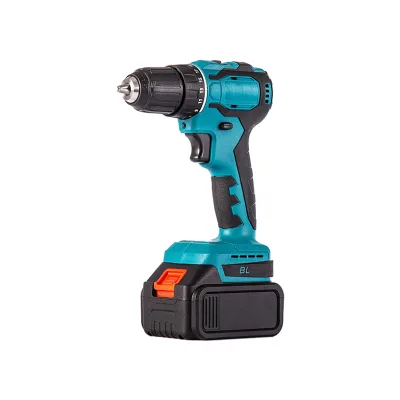


Cordless Electric Power Tools Portable 20V Cordless Brushless Impact Drill
$29.00 - $29.50
MOQ: 50 Pieces


Professional Industrial Cordless Impact Wrench and Drill with 3 in 1 Functions
$26.00 - $28.00
MOQ: 500 Pieces


18V Handheld Electric Drill Rechargeable Lithium Impact Electric Drill Cordless Drill
$13.00 - $15.00
MOQ: 100 Pieces


Impact Drill Cordless Electric Hand Power Tools Electrical Hammer Drill
$7.50 - $20.90
MOQ: 200 Pieces


Comprehensive Sourcing Guide
Strategic Sourcing Guide for Cordless Industrial Impact Drills
Understanding the Product Category and Technical Variations
The global market for cordless industrial impact drills is characterized by a diverse range of specifications tailored to distinct operational needs. When sourcing these tools, buyers must first recognize that the term "Cordless Industrial Impact Drill" encompasses several distinct configurations rather than a single uniform product. Based on observed market data, the primary classification for these tools is the "Cordless Drill," often featuring an "Impact Drill Head" that can be either a fixed "Ball-type" structure or an "Adjustable Drill" mechanism. The physical form factor is consistently described as having a "Round" drill shape, designed for ergonomic handling during prolonged industrial use.
A critical technical differentiator lies in the power source and voltage ratings. The supply chain currently offers units with varying rated voltages, including specific instances of 12V, 16.8V, and 21V systems. The 21V models often align with higher torque requirements, while 12V units may serve lighter-duty applications. Battery capacity is another pivotal specification; observed data indicates a standard capacity of 4.0Ah for certain models, which directly influences runtime and performance consistency. The motor type is frequently listed as "Other" in generic listings, necessitating deeper technical verification to determine if the motor is brushless or brushed, as this significantly impacts longevity and efficiency.
Speed and torque capabilities vary widely across the product range. Buyers should expect to encounter units with no-load speeds ranging from 0-350 to 0-1400 RPM, with some specific models offering a load speed of 1800r/Min. Torque output is equally variable, with observed maximum torque ratings reaching up to 60nm. The drilling capacity is another area of variation, with drill bit sizes and maximum drilling diameters listed as 10mm, 13mm, or categorized broadly as "Other." Understanding these specific technical parameters is essential before initiating a procurement cycle, as a mismatch between the tool's rated capacity and the intended application can lead to premature tool failure or safety hazards.
Compliance, Certification, and Safety Standards
In the industrial sector, compliance with safety and quality standards is non-negotiable. While specific certification statuses for individual listings may vary, the market generally operates under the expectation of adherence to international safety protocols. Buyers must verify that the products they source meet the necessary electrical safety standards for their target markets. Although some background information suggests the existence of CE certification as a common benchmark, this should not be assumed for every listed product without direct verification from the supplier.
The "prod_standard" attribute often appears in product data with specific physical or weight metrics, such as a standard weight of 1.1kg including the battery pack, or volume standards like 0.1m³ for packaging. These figures serve as reference points for logistics and handling but do not replace formal safety certifications. When evaluating a potential supplier, procurement teams must explicitly request documentation proving compliance with relevant regional standards, such as CE for Europe, UL for North America, or other local equivalents.
Furthermore, the "grade" of the product is often categorized as "Diy" or "Industrial." This distinction is crucial for compliance purposes. An "Industrial" grade tool implies a higher build quality and safety margin suitable for continuous professional use, whereas "Diy" grade tools may not withstand the rigors of a construction site. Buyers must ensure that the product documentation explicitly states the intended application grade. Relying on a tool rated for DIY applications in a heavy industrial setting can void insurance policies and compromise worker safety. Therefore, the verification of the "Industrial" classification through official test reports and certification documents is a mandatory step in the sourcing process.
Cost Drivers and Pricing Dynamics
The pricing of cordless industrial impact drills is influenced by a complex interplay of technical specifications, customization options, and packaging requirements. The observed market price range for these tools spans from 6 to 48 USD, a significant variance that reflects differences in battery technology, motor efficiency, and build materials. Lower-priced units often correspond to basic configurations with lower voltage ratings or smaller battery capacities, while higher-priced models typically feature advanced features such as brushless motors, higher torque outputs, and premium battery packs.
Customization is a major cost driver in this sector. The availability of "OEM" (Original Equipment Manufacturer) and "Customized" services allows buyers to brand the tools or modify specific attributes, such as color or packaging. However, these services often come with Minimum Order Quantity (MOQ) requirements. The observed MOQ range is broad, spanning from 4 to 1000 units. Small orders may incur a higher per-unit cost due to the setup fees for customization, whereas bulk orders can leverage economies of scale to reduce the unit price. Buyers must carefully balance their volume requirements against their budget constraints to optimize the total cost of ownership.
Packaging also plays a role in the final cost. Observed packaging types include "BMC Packing," "BMC+Color Box," "Carton," "Maritime Packaging," and specific measurement-based packaging like "Measurement 5238.525cm." More elaborate packaging, such as color boxes or specialized maritime packaging designed for long-distance shipping, adds to the overall cost but may be necessary for retail presentation or to protect the product during transit. Additionally, the inclusion of accessories, such as extra batteries or specific drill bits, can further influence the price. Buyers should request a detailed breakdown of costs to understand how much of the price is attributed to the tool itself versus the packaging and accessories.
Typical Applications and Operational Requirements
Cordless industrial impact drills are designed for a wide array of applications, primarily within the "Building and Industrial" sectors. The versatility of these tools makes them suitable for tasks ranging from light assembly work to heavy-duty drilling in concrete and masonry. The "Impact Drill Head" mechanism, whether ball-type or adjustable, is specifically engineered to deliver high torque with rotational impact, making it ideal for driving fasteners and drilling into hard materials.
The "No Load Speed" and "Load Speed" specifications are critical for determining the tool's suitability for specific tasks. For instance, a model with a no-load speed of 0-1400 RPM is generally suitable for drilling in wood and metal, while lower speeds are better for driving screws to prevent stripping. The "Rated Voltage" of 21V or 16.8V suggests these tools are capable of handling demanding applications where corded tools might be impractical due to power source limitations. The "Battery Capacity" of 4.0Ah ensures sufficient runtime for extended periods of use without frequent recharging, which is essential for maintaining productivity on large construction sites.
Buyers should also consider the "Condition" of the tools, which is typically listed as "New." This ensures that the tools are in optimal working condition and have not been previously used or refurbished, which could affect their performance and lifespan. The "Selling Units" are often listed as "Single item," indicating that these tools are sold individually, though bulk purchasing options may be available for large-scale projects. Understanding the specific operational requirements of the intended application is vital for selecting the right tool configuration.
Supplier Evaluation and Customization Capabilities
Evaluating suppliers for cordless industrial impact drills requires a thorough assessment of their capabilities, particularly regarding customization and quality control. The "Customization" attribute is marked as "Available" for many products, indicating that suppliers are willing to tailor the tools to meet specific buyer requirements. This can include custom branding, color adjustments, or modifications to the packaging. The "OEM" attribute further confirms that suppliers are equipped to produce tools under the buyer's brand name.
When selecting a supplier, buyers should verify the "prod_origin," which is consistently listed as "Zhejiang, China" or simply "China." This region is a known hub for power tool manufacturing, offering a robust supply chain and competitive pricing. However, the concentration of suppliers in this area also means that buyers must conduct due diligence to ensure they are partnering with reputable manufacturers rather than intermediaries. Buyers should request factory audits or third-party inspection reports to verify the supplier's production capabilities and quality control processes.
The "prod_packing" and "prod_model" attributes provide insight into the supplier's attention to detail. Models such as "STCID-2011BL," "STCD-1202," and "CYDZ0002" indicate a diverse product portfolio. Buyers should ensure that the supplier can consistently produce the specific model required for their needs. Additionally, the "Color" attribute is listed as "Customerized," suggesting that suppliers can accommodate color preferences, which is important for brand consistency. However, buyers should confirm the lead time and minimum order quantities associated with these customizations to avoid delays in the procurement process.
Quality Control and Long-Term Procurement Considerations
Ensuring the quality of cordless industrial impact drills is paramount for maintaining operational efficiency and safety. Buyers should implement a robust quality control (QC) strategy that includes pre-shipment inspections and post-delivery testing. Key areas to focus on during QC include the structural integrity of the "Impact Drill Head," the reliability of the battery pack, and the accuracy of the speed and torque settings. The "Maximum Torque" and "No Load Speed" specifications should be verified against the actual performance of the tools to ensure they meet the advertised standards.
Long-term procurement considerations involve building a sustainable relationship with suppliers that can guarantee consistent quality and supply. Buyers should establish clear communication channels and define quality expectations in the purchase agreement. Regular performance reviews and feedback loops can help identify any issues early and facilitate continuous improvement. Additionally, buyers should consider the availability of spare parts and after-sales support, as these factors are crucial for minimizing downtime and extending the lifespan of the tools.
The "standard" attribute, such as "machine+battery" or specific weight and volume standards, should be included in the quality control checklist to ensure that the delivered products match the agreed-upon specifications. Buyers should also verify the "Condition" of the tools upon delivery to ensure they are indeed "New" and free from defects. By prioritizing quality control and long-term supplier relationships, buyers can mitigate risks and ensure a steady supply of high-performance cordless industrial impact drills for their operations.
Comparative Analysis of Key Specifications
To facilitate informed decision-making, the following table summarizes the key technical specifications observed in the market for cordless industrial impact drills. This comparison highlights the variability in voltage, speed, torque, and battery capacity, which are critical factors in selecting the right tool for specific applications.
| Specification | Observed Range/Values | Typical Application Context |
|---|---|---|
| Rated Voltage | 12V, 16.8V, 21V | 12V for light duty; 21V for heavy industrial use |
| Battery Capacity | 4.0Ah (observed) | Determines runtime; higher capacity for extended use |
| No Load Speed | 0-350 / 0-1400 RPM | Lower speeds for screw driving; higher for drilling |
| Load Speed | 1800r/Min (observed) | Indicates performance under load |
| Maximum Torque | Up to 60nm (observed) | Critical for driving large fasteners or drilling hard materials |
| Drill Bit Size | 10mm, 13mm, Other | Matches the material being drilled |
| Impact Drill Head | Ball-type, Adjustable | Ball-type for stability; Adjustable for versatility |
| Product Condition | New | Ensures optimal performance and safety |
| Customization | Available (OEM, Color) | Allows for branding and specific design requirements |
| Origin | Zhejiang, China / China | Indicates manufacturing hub and supply chain logistics |
This comparative analysis underscores the importance of aligning technical specifications with operational needs. Buyers should use this data as a baseline for evaluating potential suppliers and ensuring that the selected tools meet the specific demands of their industrial applications. By carefully considering these factors, buyers can make informed decisions that optimize performance, safety, and cost-effectiveness in their procurement strategies.
FAQs
What voltage options are available for cordless industrial impact drills?
Available rated voltages include 12V, 16.8V, and 21V systems. Higher voltage models like the 21V unit typically offer greater torque for demanding industrial tasks, while 12V versions suit lighter applications.
Can buyers request customization for these cordless industrial impact drills?
Yes, customization is available for branding, color, and packaging. Suppliers offer OEM services and can adjust attributes like color, though specific minimum order quantities may apply for custom runs.
Which battery capacity is standard for these cordless industrial impact drills?
A 4.0Ah battery capacity is observed for certain models in the supply chain. This capacity supports extended runtime, which is essential for maintaining productivity during prolonged construction or industrial operations.
How is the impact drill head structured in these cordless industrial impact drills?
The impact drill head features either a ball-type structure or an adjustable mechanism. This design delivers high torque with rotational impact, making the tool suitable for drilling into hard materials like concrete.
What is the typical price range for cordless industrial impact drills?
The observed price range spans from 6 to 48 USD. Lower prices often reflect basic configurations with lower voltage, while higher prices correspond to advanced features like brushless motors or larger battery packs.
Where are these cordless industrial impact drills typically manufactured?
Products originate from Zhejiang, China, or generally from China. This region is a known manufacturing hub offering a robust supply chain and competitive pricing for power tools.