Source Cotton-Padded Lace Jacket for Winter, Spring, and Casual Wear
Explore 30 listings for a cotton-padded lace jacket featuring varied materials like down and polyester, with options for customization and windproof features. Buyers can compare sizes, styles, and supplier services to find the right fit for their needs.
Key considerations
Products List


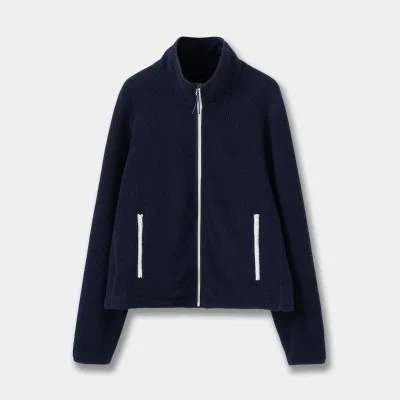

Outdoor Stand Collar Lady Padded Jacket Loose Fit Winter Wears Down Jacket
$19.00 - $23.00
MOQ: 500 Pieces

Women's Winter Hooded Long Style Green Padded/Quilted Coat Down Jacket
$19.00 - $23.00
MOQ: 500 Pieces

Women's Long Sleeve Coat with Full-Zip Hooded Quilted Padded Down Jacket
$19.00 - $23.00
MOQ: 500 Pieces
Comprehensive Sourcing Guide
Strategic Sourcing Guide for Cotton-Padded Lace Jackets
Understanding Product Definitions and Material Variations
When initiating a procurement strategy for a cotton-padded lace jacket, buyers must first navigate the complex landscape of material definitions and construction methods. The core keyword suggests a garment combining a cotton base with padding for insulation and lace detailing for aesthetic appeal. However, market data indicates that product attributes can vary significantly between suppliers. While the specific search term highlights cotton, observed inventory reveals a diverse range of materials including down, polyester, and blends of spandex and cotton. This discrepancy underscores the necessity for buyers to verify the exact composition of the fabric before finalizing orders.
The padding component, often referred to as "cotton-padded" in marketing, may utilize different insulating technologies. Some listings explicitly mention down as the filling material, while others specify polyester fleece or unlined constructions. The presence of lace detailing is not universally confirmed in all available product specifications; some items are described as having a quilted pattern or a plain open-front style. Therefore, the term "lace jacket" in a B2B context should be treated as a design variable rather than a guaranteed standard feature. Buyers must scrutinize product descriptions to confirm whether the lace is a structural element, an overlay, or a decorative trim, as this distinction impacts both the manufacturing process and the final cost.
Technical Specifications and Design Parameters
Technical specifications form the backbone of any successful procurement agreement. For cotton-padded lace jackets, several critical parameters define the product's utility and market fit. Seasonality is a primary differentiator; observed data shows products categorized for both winter and spring/fall use. This suggests that the weight of the padding and the density of the cotton or synthetic fill are adjustable based on the intended climate. Buyers should specify the desired thermal performance, as a jacket designed for winter may be too heavy for transitional seasons.
Size and fit are equally critical. The market offers a wide spectrum of sizing standards, ranging from specific measurements like S, M, L, XL, and 2XL to "Free Size" or "One Size" options. Some listings indicate a "Medium" length, while others specify "Long Sleeve" or specific model numbers like HL0473 and JS041. The closure type is another vital specification; while some jackets feature buttons, others may utilize zippers or open-front designs. The collar type, often observed as a "High Collar," provides additional protection against wind, which is a common feature in padded jackets.
The following table summarizes the observed technical variations in the current market to assist buyers in defining their requirements:
| Specification Category | Observed Variations | Procurement Consideration |
|---|---|---|
| Material Composition | Down, Polyester, Cotton, Spandex/Cotton Blend | Verify the percentage of cotton vs. synthetic fill for warmth and weight. |
| Seasonality | Winter, Spring/Fall | Define the target climate to ensure appropriate insulation levels. |
| Size Standards | S, M, L, XL, 2XL, 3XL, Free Size, L, S, XL | Confirm if the supplier offers a full size run or limited sizing. |
| Length | Medium, Long Sleeve | Determine the desired silhouette and coverage area. |
| Closure Type | Buttons, Open Front | Ensure the closure mechanism aligns with the design aesthetic and function. |
| Lining | Polyester, Unlined | Check if a lining is required for comfort or if the outer fabric is sufficient. |
| Style | Hoody, Padding Jacket, Casual Clothes, Quilted | Clarify the specific style to avoid receiving a generic padded coat instead of a lace design. |
Compliance, Certification, and Safety Standards
In the realm of B2B textile procurement, compliance and safety standards are non-negotiable, yet the data available presents a mixed picture regarding certifications. While some background information references standards such as CE and EN 17092, these should be treated as potential benchmarks rather than confirmed attributes of every listed product. Buyers must actively verify that any supplier claims compliance with relevant safety regulations for the destination market.
For garments intended for adult wear, the absence of specific certification data in the product listing does not imply non-compliance, but it does require due diligence. Buyers should request test reports for flammability, chemical safety (such as AZO dyes or formaldehyde content), and fiber content accuracy. The "Windproof" and "Waterproof" features observed in some listings often require specific testing protocols to validate. If a supplier claims a jacket is windproof, the buyer should ask for the methodology used to test this claim, such as air permeability tests. Similarly, claims regarding "Anti-Static" or "Breathable" properties need empirical evidence to be reliable.
It is crucial to distinguish between marketing claims and verified standards. For instance, while a product may be labeled as "Windproof," this attribute must be confirmed against the specific performance criteria required by the buyer's target market. In the absence of explicit certification data in the provided facts, the procurement strategy must include a clause requiring the supplier to provide third-party test results prior to shipment. This ensures that the product meets the necessary safety and quality thresholds before it enters the supply chain.
Cost Drivers and Pricing Dynamics
Understanding the cost structure of cotton-padded lace jackets is essential for budgeting and negotiation. The observed price range in the market spans from $0 to $55 USD, a wide variance that reflects differences in material quality, complexity of design, and order volume. The lower end of this spectrum likely corresponds to basic polyester or unlined options, while the higher end may include down-filled, custom-designed, or heavily detailed lace garments.
Several factors drive the final cost. Material selection is the primary driver; down is generally more expensive than polyester or cotton blends. The complexity of the lace detailing also adds to the production cost, as intricate embroidery or appliqué work requires more labor and time. Additionally, customization options, such as custom logos, specific colorways, or unique packaging, will increase the unit price. The Minimum Order Quantity (MOQ) is another significant cost factor. The observed MOQ range is between 2 and 2000 units. Buyers ordering small quantities may face higher per-unit costs, while larger orders can leverage economies of scale to reduce the price.
Packaging requirements also influence the total cost. Standard packaging is often listed as 1PC/Polybag with 10PCS/CTN, but some suppliers offer customized packaging solutions. If a buyer requires specific carton dimensions, such as 40x30x10cm, or custom branding on the packaging, this will add to the overall expense. Furthermore, the origin of the product, typically China, affects logistics costs, which should be factored into the landed cost calculation.
Supplier Evaluation and Service Models
Selecting the right supplier is a critical step in the sourcing process. The market offers a variety of service models, including OEM (Original Equipment Manufacturer) and ODM (Original Design Manufacturer) services. Some suppliers explicitly state they offer "ODM Service," allowing buyers to leverage existing designs, while others provide "OEM Service," enabling buyers to create custom products from scratch. The choice between these models depends on the buyer's design capabilities and time constraints.
When evaluating suppliers, buyers should look for transparency in their production capabilities. The availability of customization, such as customized logo printing and tailored packing, indicates a flexible manufacturing process. However, the presence of these features does not guarantee quality; it merely suggests the supplier has the infrastructure to handle custom orders. Buyers should assess the supplier's ability to meet specific requirements, such as the "Free Size" or specific model numbers like WLC-05 and JS042.
It is also important to verify the supplier's location and logistics capabilities. Most observed products originate from China, which is a major hub for textile manufacturing. Buyers should confirm the supplier's ability to handle sea transportation, as indicated in some product listings, and ensure they have the necessary experience in exporting to the buyer's region. The "Supply Type" being listed as OEM or ODM should be matched with the buyer's strategic goals, whether they prioritize cost reduction through existing designs or differentiation through custom development.
Quality Control and Long-Term Procurement
Quality control is paramount when sourcing cotton-padded lace jackets, especially given the variability in materials and construction. Buyers should implement a robust quality assurance plan that includes pre-production samples, in-process inspections, and final random inspections. The inspection criteria should cover stitching quality, especially around lace details, to prevent unraveling. The padding distribution must be even to ensure consistent warmth and appearance.
Long-term procurement considerations involve building a sustainable relationship with suppliers. This includes establishing clear communication channels for design changes and quality feedback. Buyers should also consider the environmental impact of their sourcing decisions, particularly regarding the use of synthetic materials like polyester versus natural fibers like cotton. The "Unlined" or "Polyester" lining options observed in the market may have different environmental footprints, which could be a factor for buyers targeting eco-conscious markets.
Furthermore, buyers should plan for scalability. The wide range of MOQs (2 to 2000) allows for flexibility, but buyers must ensure that the supplier can scale production up or down based on market demand. Lead times and production capacity should be discussed early in the negotiation process to avoid delays. Finally, maintaining a buffer stock of critical components, such as specific lace trims or buttons, can help mitigate supply chain disruptions. By focusing on these long-term strategies, buyers can ensure a steady supply of high-quality cotton-padded lace jackets that meet their market needs.
FAQs
How is the jacket packed for shipment?
The standard packing is one piece per polybag with ten pieces per carton. Some suppliers offer customized packaging dimensions like 40 by 30 by 10 cm or specific carton counts like thirty pieces per carton depending on the order.
What materials are used for the lining?
Lining options vary between polyester and unlined constructions. Buyers must verify the specific product listing to confirm if a polyester lining is included or if the jacket is designed without an inner layer.
Which sizes are available for this jacket?
Available sizes range from S to 3XL including specific options like L, XL, and S. Some listings also offer a free size option, so buyers should check the specific model number for the exact size run.
Can the jacket be customized with a logo?
Yes, customized logo printing is available for many suppliers. This service often accompanies OEM or ODM options, allowing buyers to add branding to the garment or packaging according to their specific design requirements.
What is the minimum order quantity for this item?
The minimum order quantity ranges from two units up to two thousand units. Buyers should confirm the specific MOQ with the supplier as it varies significantly between different manufacturers and product models.
How does the jacket perform in wind?
Some models are explicitly designed to be windproof to protect against cold air. Buyers should verify if the specific product listing claims windproof, waterproof, or breathable features before relying on them for extreme weather conditions.
Where are these jackets manufactured?
The products originate from China based on the observed product data. Buyers should expect the manufacturing location to be China and consider this when calculating shipping costs and lead times for international orders.