Source Cotton Printed Pajama Set for Home, Hotel, and Office
Explore 30 listings for the Cotton Printed Pajama Set, comparing features like material, style, and packaging from suppliers in China. Buyers can evaluate options for indoor sleeping, daily leisure, and home office use with customizable designs and various MOQs.
Key considerations
Products List


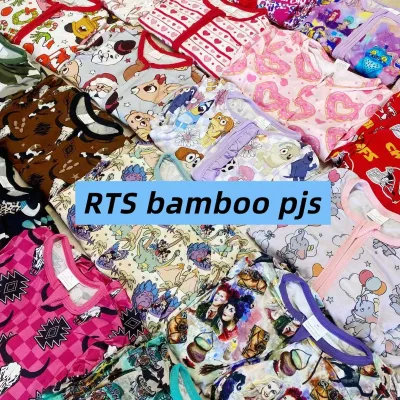

Factory Wholesale Cotton Pajamas Cotton Pajamas Women's Set 100 Cotton Pajamas
$9.90 - $11.50
MOQ: 50 Pieces

Comprehensive Sourcing Guide
Strategic Sourcing Guide for Cotton Printed Pajama Sets
Understanding Product Specifications and Material Integrity
When sourcing cotton printed pajama sets, the primary objective is to align material composition with performance expectations. The core material for this category is cotton, often specified as 100% Cotton to ensure breathability and comfort. In the current market, buyers encounter variations in fabric weight, which directly influences the garment's drape and thermal properties. Observed specifications indicate a thickness range of 141-160GSM (grams per square meter). This weight class is generally suitable for spring and autumn seasons, providing a balance between warmth and breathability without being overly heavy for indoor sleeping or daily leisure.
The construction method is equally critical. The weave type observed in high-quality listings is knitting, which offers superior stretch and recovery compared to woven fabrics. This is particularly important for pajama sets that require a relaxed fit. The neckline style is frequently observed as a scoop neck, contributing to the casual design style preferred by adult consumers. Furthermore, the product type is often categorized specifically as a cotton pajama set or bundle, sometimes including items like nightgowns with long lengths.
Buyers must verify the specific dimensions and standard sizes provided by suppliers. While some data points reference a standard dimension of 20.00cm * 20.00cm * 20.00cm, this likely refers to packaging or a specific sample unit rather than the garment size itself. For the actual garment, the length is typically long, and the trouser length varies between short pants and long pants depending on the model number, such as Z0013, Z0018, Z0019, Z0022, Z0025, or TIF Sleepwear series. The pattern type can range from solid to patterned, with color options often described as colourful. It is essential to confirm that the "printed" aspect of the keyword aligns with the supplier's capability for custom printing requests, as many manufacturers offer logo customization and specific print designs.
Compliance, Certification, and Safety Standards
In the realm of textile procurement, compliance is a non-negotiable aspect of the supply chain. While specific certification statuses like GOTS (Global Organic Textile Standard) are mentioned in background data, buyers should not assume that every listed product automatically holds this certification. Instead, the procurement strategy must involve a rigorous verification process. Buyers should explicitly request proof of certification for any organic or eco-friendly claims made by the supplier.
The origin of the product is a significant factor in compliance. The majority of observed listings indicate production in China, with specific mentions of Zhejiang province. This geographic concentration allows for a robust supply chain but requires careful vetting of local labor and environmental standards. Suppliers should be able to demonstrate adherence to international safety standards regarding chemical usage, particularly in the printing process. Since the material is cotton, the risk of residual pesticides or harmful dyes must be mitigated through proper testing.
Buyers should also consider the "Product Category" and "Type" classifications to ensure regulatory alignment. For instance, if the product is categorized as a "Bundle" or "Nightgowns," different regulatory frameworks may apply depending on the destination market. The "Leadership Type" of "Translation Leader" mentioned in some data suggests that language barriers and clear communication of technical requirements are vital. Ensuring that all safety data sheets (SDS) and compliance certificates are translated accurately and match the target market's legal requirements is a critical step. Without verified documentation, the risk of shipment rejection or legal liability increases significantly.
Cost Drivers and Pricing Dynamics
The pricing structure for cotton printed pajama sets is influenced by several interconnected variables. The observed price range in the market spans from 0.5 to 95 USD, a wide disparity that reflects differences in material quality, design complexity, and order volume. The Minimum Order Quantity (MOQ) is a primary driver of unit cost. Data indicates an MOQ range of 5 to 2000 units, with specific instances showing an MOQ of 100 units and others requiring 500 pieces.
When the MOQ is set at 500 pieces, the unit price typically stabilizes, offering better economies of scale. Conversely, lower MOQs, such as 5 or 100 units, often come with a premium per unit due to the fixed costs of setup and production line adjustments. The "Supply Type" is predominantly OEM (Original Equipment Manufacturer), which implies that the cost includes the manufacturing of goods to the buyer's specifications. This customization, including "Customizable" branding and "Custmo Accepatable" (custom acceptable) logos, adds value but also increases the base cost compared to generic stock items.
Packaging and logistics also contribute to the final landed cost. Observed packing methods include OPP bags and cartons, with shipping options ranging from DHL, UPS, FedEx, EMS, TNT, to sea freight. The choice of shipping method significantly impacts the total cost. For example, air freight via DHL or FedEx is faster but more expensive, while sea freight is cost-effective for large volumes but requires longer lead times. The weight of the product, noted as 0.8kg in some specifications, affects freight charges. Buyers must calculate the total cost of ownership, including the unit price, MOQ constraints, packaging fees, and shipping, rather than focusing solely on the listed unit price.
Typical Applications and Market Segmentation
Cotton printed pajama sets serve a diverse range of applications, driven by their functional attributes. The "Multi-Scene Functions" identified include indoor sleeping, daily leisure, home office, and outdoor activities. This versatility makes the product suitable for various market segments. The "Applicable Scenarios" further refine this, listing outdoor, home, and hotel environments. In the hospitality sector, hotels often seek branded pajama sets for guests, requiring high-quality cotton that is durable and comfortable for short-term use.
The "Season" specification of Spring/Autumn suggests that these sets are designed for transitional weather, though the "Feature" list includes "Warmth," "Cool," and "Comfortable," indicating a broad temperature tolerance. The "Design Style" is consistently casual, appealing to consumers who prioritize comfort over formal aesthetics. The "Age Group" is specified as adults, targeting a demographic that values quality sleepwear and loungewear.
The following table outlines the key functional attributes and their corresponding applications:
| Attribute | Observation | Primary Application |
|---|---|---|
| Material | 100% Cotton | Breathable loungewear, sensitive skin |
| Function | Warmth, Cool, Comfortable | All-season indoor use, travel |
| Style | Casual, Scoop Neck | Daily leisure, home office |
| Scenarios | Outdoor, Home, Hotel | Guest amenities, personal wear |
| Length | Long, Short Pants | Seasonal preference, comfort |
Buyers should note that the "Feature" of "Quick Dry" is also observed, which is beneficial for products intended for travel or humid environments. The "Pattern" can be solid or patterned, allowing for customization to match specific brand identities or seasonal trends. Understanding these applications helps in selecting the right product variant for the intended market, whether it is for retail resale, corporate gifting, or hospitality supply.
Supplier Evaluation and Verification Protocols
Evaluating suppliers for cotton pajama sets requires a multi-faceted approach that goes beyond simple price comparison. The "Supply Type" being OEM indicates that the supplier must have the capacity for custom production. Buyers should verify the supplier's ability to handle "Customized" designs and "as Your Request" printing. The availability of samples is a critical indicator of supplier reliability, as most data points confirm that samples are available. Requesting a physical sample allows the buyer to verify the "Thickness" (141-160GSM), the "Weave" (knitting), and the quality of the print.
The "Product Origin" is predominantly China, with specific mentions of Zhejiang. While this region is a major textile hub, buyers should conduct due diligence on the specific factory's capabilities. The "MOQ" of 500 pieces for some models suggests a higher level of commitment, while lower MOQs might indicate a trading company or a smaller workshop. Buyers should assess whether the supplier can scale production to meet demand without compromising quality.
Communication is another key factor. The presence of "Translation Leader" attributes suggests that language proficiency is a potential hurdle. Ensuring that the supplier has a dedicated team capable of clear communication in the buyer's language is essential to avoid misunderstandings regarding specifications like "prod_model" (e.g., Z0013 vs. Z0019) or "prod_packing" requirements. Additionally, the "Logo" customization capability must be confirmed, as "Custmo Accepatable" implies flexibility but requires clear guidelines on placement and color.
Quality Control and Long-Term Procurement Strategy
Maintaining consistent quality is paramount in the sleepwear industry. The "Feature" list includes "Quick Dry," "Breathable," and "Warmth," which must be validated through testing. Buyers should establish a quality control plan that includes pre-production sample approval, in-process inspections, and pre-shipment inspections. The "prod_packing" of 1 PC/OPP Bag or Carton must be verified to ensure that the packaging protects the product during transit, especially given the "Standard" of 0.8kg weight.
For long-term procurement, building a relationship with a supplier who offers "Customizable" options is beneficial. The ability to adapt to changing trends, such as shifting from "Solid" to "Patterned" designs, ensures the product remains relevant. The "Design" being customizable allows for brand differentiation. However, buyers must be wary of "Low-confidence background" data regarding certifications. Do not assume GOTS or other certifications are present without written verification.
The "Lead Time" is a critical factor in supply chain planning. While specific lead times are not provided in the data, the "Sample: Available" status suggests that the initial phase can be managed quickly. For bulk orders, buyers should negotiate clear timelines based on the "MOQ" and "Supply Type." The "prod_model" variations (Z0013, Z0019, etc.) indicate a need for precise order management to avoid mixing up styles.
In conclusion, sourcing cotton printed pajama sets requires a balanced approach that considers material specifications, compliance, cost dynamics, and supplier capabilities. By focusing on verified facts such as the 100% cotton composition, the 141-160GSM thickness, and the OEM supply model, buyers can make informed decisions. The wide price range and MOQ variability necessitate a strategic approach to negotiation and volume planning. Ultimately, the goal is to secure a supply chain that delivers high-quality, comfortable, and compliant products that meet the diverse needs of the adult market for indoor and outdoor leisure.
FAQs
What material is used for these pajama sets?
The product is made of 100% Cotton to ensure breathability and comfort. Some listings specify a fabric thickness between 141 and 160 GSM suitable for spring and autumn seasons.
Can I customize the logo and design?
Yes, the logo is customizable and the design can be tailored to your request. Suppliers offer OEM services with options for specific printing and branding requirements.
What is the minimum order quantity for this item?
The minimum order quantity varies, with observed values ranging from 5 to 500 pieces depending on the specific model. Some listings require 100 units while others start at 500 pieces.
Where are these pajama sets manufactured?
The products originate from China, with specific mentions of Zhejiang province as the production location. This region is a major hub for textile manufacturing and supply.
How are the pajama sets packed for shipping?
Items are typically packed in OPP bags or cartons, with one piece per bag. Shipping options include DHL, UPS, FedEx, EMS, TNT, and sea freight for bulk orders.
What styles and lengths are available?
The sets feature a casual design with scoop necks and come in long pants or short pants lengths. Styles include solid and patterned options suitable for indoor and outdoor use.