Source Crankshaft for Trucks, Excavators, and Engines
Find 30 Crankshaft options from suppliers in China, Japan, and Korea. Compare diesel and gasoline engine models with various certifications and packaging details to find the right part for your needs.
Key considerations
Products List


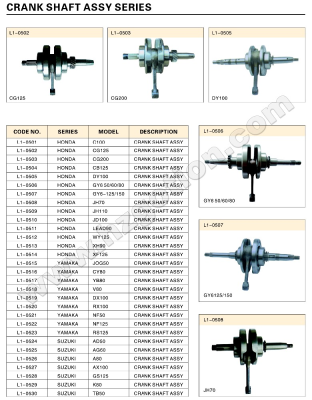


High Efficiency Large Inventory Reliable Performance Crank Shaft Crankshaft
$6.60 - $98.50
MOQ: 1 Pieces


$15.00 - $20.00
MOQ: 100 Pieces


$10.00 - $100.00
MOQ: 10 Pieces
Comprehensive Sourcing Guide
Strategic Sourcing Guide for Industrial Crankshafts
Navigating the global market for industrial crankshafts requires a disciplined approach that balances technical precision with rigorous supplier verification. The Crankshaft is a critical rotating component in internal combustion engines, converting the linear motion of pistons into rotational motion. Given the high-stakes nature of engine performance and the diversity of applications ranging from heavy-duty trucks to agricultural machinery, buyers must rely on verified product attributes rather than marketing claims. This guide synthesizes observed market data and technical specifications to provide a framework for sourcing reliable Crankshaft components.
Technical Specifications and Material Composition
The foundation of a successful procurement strategy lies in understanding the specific technical requirements of the Crankshaft. Market observations indicate a clear divergence in manufacturing techniques, primarily between forging and casting. Forged crankshafts, often constructed from forged steel, are generally preferred for high-stress applications such as heavy-duty trucks and excavators. The forging process aligns the grain structure of the metal, enhancing tensile strength and fatigue resistance. In contrast, cast crankshafts, typically made from iron, are frequently utilized in smaller engines, such as single-cylinder units found in agricultural machinery or light-duty generators.
Buyers must verify the specific material grade and production method for their intended application. The observed data highlights "Forged Steel" as a material for high-performance units, while "Iron" is associated with casting techniques. The model numbers provided in the market range widely, from specific engine series like "186fa," "X170F," and "ZH1125" to complex multi-cylinder applications labeled under "MAN," "DAIHATSU," and "YANMAR." Additionally, specific designations such as "A+ steel Crankshaft" or "Crankshaft Dt75" suggest specialized variants tailored for particular engine architectures.
The physical dimensions and tolerances are equally critical. Some listings specify packaging standards that imply weight constraints, such as "1kg" or "202020" dimensions, while others denote heavy-duty standards. The "Deck" attribute, noted as "Single" in some contexts, further defines the engine block compatibility. When evaluating a supplier, procurement teams should request detailed engineering drawings that confirm the material composition, forging ratio, and dimensional accuracy against the specific engine model, whether it is a "CG/YBR/V./BAJAJ" series or a generic single-cylinder unit.
Compliance, Certification, and Quality Standards
In the industrial sector, compliance is not merely a formality but a prerequisite for operational safety and longevity. The supply chain for crankshafts is dominated by manufacturers originating from China, with significant hubs in Jiangsu, Shijiazhuang, and general coastal regions. However, the market also includes products from Japan, Korea, and Australia, indicating a diverse global supply base.
Certification verification is a primary step in the evaluation process. Observed product attributes frequently cite "ISO" and "CE" certifications. Specifically, the combination of "ISO" with "Engine Type: Diesel" suggests that the manufacturer adheres to international quality management systems relevant to diesel engine components. It is essential for buyers to confirm that the certification is current and applies to the specific product line being purchased, rather than being a generic company-wide claim. The presence of "Standard Component" designations implies adherence to baseline industry norms, but these should be cross-referenced with specific customer requirements.
Furthermore, the "Standard Package" and "Export Packing" attributes indicate that the supplier is aware of international shipping requirements. However, buyers should not assume that all listed products meet the same rigorous standards. The distinction between "Standard Package" and "Pallet" or "Ply-Wood Box" packaging suggests varying levels of protection during transit. For high-value forged steel crankshafts, the packaging must be robust enough to prevent surface damage, which could lead to premature failure. Verification of the "Standard Component" status and the specific "prod_standard" values, such as "Heavy duty" or "1SET," is necessary to ensure the product meets the intended load-bearing requirements.
Cost Drivers and Pricing Dynamics
The pricing of crankshafts is influenced by a complex interplay of material costs, manufacturing complexity, and order volume. The observed market lists a price range spanning from 1 to 10,000 USD, reflecting the vast difference between small single-cylinder engine parts and large, heavy-duty components for excavators or trucks. This wide variance underscores the importance of defining the exact application before seeking quotes.
Material cost is a primary driver. Forged steel crankshafts command a higher price point due to the energy-intensive forging process and the superior mechanical properties of the steel. Conversely, cast iron crankshafts for agricultural or light-duty engines are generally more affordable. The "Customization" attribute plays a significant role in pricing as well. Listings indicate that customization is "Available" for some suppliers, while others state "No." Customized crankshafts, which may require unique machining or specific model adaptations like "Dt75," will inevitably incur higher unit costs and potentially longer lead times.
Order volume is another critical factor. The observed Minimum Order Quantity (MOQ) ranges from 1 to 1000 units. Buyers purchasing single items or small batches for repair purposes will face higher per-unit costs compared to those placing bulk orders. The "Selling Units" attribute, often listed as "Single item," suggests that suppliers are flexible for low-volume needs, but economies of scale are realized at higher volumes. Additionally, the "Port of dispatch" being "Ningbo" for many suppliers indicates that logistics costs from this major Chinese hub may be competitive, but buyers should factor in shipping variables based on their specific location.
Typical Applications and Industry Segmentation
Crankshafts serve a multitude of industries, and the correct selection depends heavily on the application environment. The data reveals a clear segmentation between heavy industrial use and agricultural machinery.
For heavy-duty applications, the Crankshaft must withstand extreme torque and vibration. Attributes such as "Application: Truck, Excavator" and "Standard: Heavy duty" point to components designed for the mining, construction, and logistics sectors. These units often utilize forged steel and are built to rigorous standards to ensure reliability under continuous operation. The "Warranty: 12 Months" offered on some products suggests a confidence in durability for these high-stress environments.
In the agricultural sector, the requirements differ slightly. The "Usage" attributes list "Tillage, Planting and Fertilization, Harvester, Agricultural Products Processing," and "Grain Threshing." These applications often involve single-cylinder engines with models like "186fa," "X170F," and "ZH1125." The "Technics: Casting" and "Material: Iron" attributes are common here, as these engines typically operate at lower speeds and loads compared to heavy machinery. The "Condition: New" attribute is standard for all new procurement, but buyers should verify the "Advantages" such as "Excellent Material" and "Reliable Performance" to ensure the component can handle the cyclic loading of agricultural tasks.
Supplier Evaluation and Geographic Considerations
Evaluating suppliers requires a focus on their origin, capabilities, and logistical readiness. The majority of the observed supply originates from China, with specific mentions of Jiangsu and Shijiazhuang as production hubs. These regions have established ecosystems for engine component manufacturing. However, the presence of origins in "China, Japan, Korea, Austra" indicates that buyers should be prepared to evaluate international suppliers as well.
When assessing a potential partner, buyers should look for transparency in the "prod_origin" and "Port of dispatch." A supplier based in Shijiazhuang or Jiangsu with a dispatch port in Ningbo is likely well-versed in export procedures. The "Packaging Details" of "Standard product carton" or "Corrugated Box" should be scrutinized to ensure they meet the protection needs of the specific Crankshaft type. For heavy-duty forged steel units, a "Ply-Wood Box" or "Pallet" is often necessary to prevent damage.
Furthermore, the "Customization" capability is a key differentiator. Suppliers offering "Available" customization can adapt to specific engine models like "CG/YBR/V./BAJAJ" or "MAN, DAIHATSU, YANMAR." Those with "No" customization are limited to standard off-the-shelf inventory. Buyers should prioritize suppliers who can demonstrate a track record of meeting specific model requirements, especially for older or niche engine platforms where standard parts may be scarce.
Quality Control and Long-Term Procurement Strategy
Ensuring long-term supply chain stability requires a robust quality control (QC) framework. The "Condition: New" attribute is a baseline, but buyers must go further to verify the manufacturing process. The distinction between "Forging" and "Casting" is not just a technical detail but a quality indicator. Forged crankshafts generally offer superior fatigue life, making them the preferred choice for critical applications.
Buyers should implement a verification process that includes requesting material test reports and dimensional inspection certificates. The "Certification" of "ISO" and "CE" should be validated against the specific batch of goods. Additionally, the "Warranty: 12 Months" provides a safety net, but it should be accompanied by clear terms regarding defect liability.
For long-term procurement, establishing a relationship with suppliers who offer "Export Packing" and consistent "Standard Package" quality is vital. The variability in packaging, from "Corrugated Box" to "Ply-Wood Box," suggests that buyers must specify their packaging requirements clearly in purchase orders to avoid damage during transit. Furthermore, understanding the "Lead time" and "MOQ" is essential for inventory planning. While the observed MOQ ranges from 1 to 1000, buyers should negotiate terms that align with their production cycles, potentially leveraging the "Single item" selling option for emergency repairs while securing bulk contracts for regular maintenance.
Summary of Key Sourcing Parameters
To facilitate a structured comparison during the sourcing process, the following table summarizes the critical parameters observed in the market. This data serves as a checklist for buyers to ensure all necessary attributes are verified before finalizing a purchase.
| Parameter Category | Observed Attributes & Variations | Verification Requirement |
|---|---|---|
| Material & Technics | Forged Steel (Forging), Iron (Casting) | Confirm material grade and process suitability for application load. |
| Certification | ISO, CE, Standard Component | Validate current certification status and scope of coverage. |
| Origin & Logistics | China (Jiangsu, Shijiazhuang), Japan, Korea | Verify port of dispatch (e.g., Ningbo) and shipping terms. |
| Packaging | Standard Package, Pallet, Ply-Wood Box, Corrugated Box | Ensure packaging matches product weight and fragility. |
| Customization | Available, No | Determine if specific model adaptation is required. |
| Warranty | 12 Months | Review warranty terms and defect liability clauses. |
| Application | Truck, Excavator, Agricultural Machinery | Match component specs to specific engine model and usage. |
By adhering to these evidence-based guidelines, buyers can navigate the complexities of the Crankshaft market with confidence. The focus must remain on verifying technical specifications, validating certifications, and understanding the cost drivers associated with material and customization. This disciplined approach ensures the acquisition of high-quality components that meet the rigorous demands of modern industrial and agricultural operations.
FAQs
What materials are used for Crankshaft manufacturing?
Crankshafts are primarily made from forged steel or iron depending on the application. Forged steel is used for heavy-duty trucks and excavators, while cast iron is common for single-cylinder agricultural engines.
Which certifications do Crankshaft suppliers typically hold?
Suppliers often hold ISO and CE certifications for their diesel engine components. Buyers should verify that these certifications apply specifically to the product line being purchased rather than just the company.
How does customization affect Crankshaft pricing and availability?
Customization is available for some suppliers but not others, impacting both cost and lead time. Customized units like specific model variants will generally cost more than standard off-the-shelf inventory.
What is the typical minimum order quantity for crankshafts?
The minimum order quantity ranges from one unit to one thousand units depending on the supplier. Single item purchases are possible for repairs, while bulk orders yield better economies of scale.
Can I find Crankshaft suppliers in China and other regions?
Yes, most suppliers originate from China with hubs in Jiangsu and Shijiazhuang, though some come from Japan, Korea, and Australia. Buyers should verify the specific origin and port of dispatch for logistics planning.
What packaging standards are used for shipping crankshafts?
Packaging varies from standard cartons and corrugated boxes to pallets and plywood boxes for heavy-duty items. Export packing is common, but the level of protection depends on the product weight and fragility.
Which engine types are compatible with these Crankshaft models?
Compatible engine types include diesel and gasoline variants found in trucks, excavators, and agricultural machinery. Specific models range from single-cylinder units to complex series like MAN, DAIHATSU, and YANMAR.