Source Custom Color Wall Socket for Home, Hotel, and Office
Compare 30 listings for Custom Color Wall Socket options featuring various certifications and current ratings. Buyers can evaluate specifications like 13A to 16A capacity, PC plastic shells, and switch types for residential or commercial projects.
Key considerations
Products List


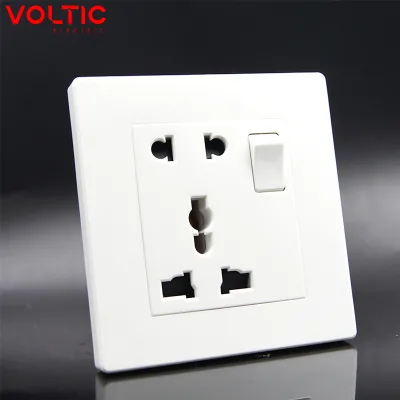


Wall Socket and Switch Waterproof Switch Outdoor Socket Waterproof Sockets
$0.30 - $5.50
MOQ: 500 pieces
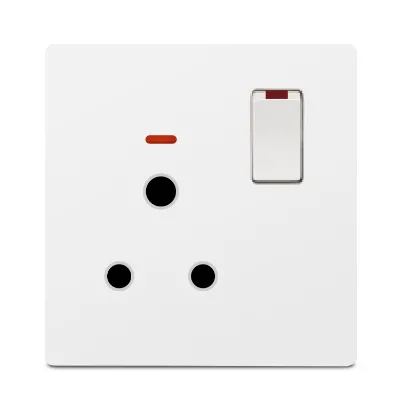
Comprehensive Sourcing Guide
Strategic Sourcing Guide for Custom Color Wall Sockets
Understanding Product Specifications and Variability
When sourcing custom color wall sockets, buyers must first navigate a complex landscape of technical specifications that vary significantly between manufacturers. The core product is an ordinary socket, yet the available configurations range from standard residential units to specialized commercial and industrial applications. A critical observation in the current market is the variability in the number of holes, which are often described as porous, indicating specific internal contact arrangements that affect compatibility with different plug types. The electrical ratings are equally diverse; observed data points to maximum voltage ratings typically falling within the 220-250V range, while current capacities fluctuate between 13A, 15A, and 16A depending on the specific model and intended load.
The physical construction of these sockets is defined by the shell material, which is predominantly Flame Retardant PC Plastic, ensuring safety against fire hazards. However, some variants utilize a composite of Bakelite, Copper, and Nylon, suggesting different durability profiles for specific environments. The presence of a switch is another pivotal differentiator; the market offers both "With Switch" and "Without Switch" options, with some advanced models featuring double control switches for enhanced functionality. Furthermore, the integration of USB capabilities is becoming a notable trend, with certain models combining ordinary socket functions with USB charging ports, catering to the modern demand for multi-functionality in a single unit.
The mechanical life of the product is a crucial specification for long-term reliability. Data indicates that high-quality units can withstand up to 40,000 operations, a metric that buyers should verify against their specific usage intensity. The structure of the switch mechanism itself varies, with some units employing a capacitive principle for touch-free operation, while others utilize a traditional rocker feature or a single-pole on-off switch design. These mechanical differences directly influence the user experience and the longevity of the product in high-traffic areas.
Compliance Standards and Certification Verification
Navigating the regulatory landscape is essential for any procurement strategy involving electrical components. The market contains products adhering to specific regional standards, such as the BS1363 standard, which is critical for sockets intended for the UK market. Buyers must also be aware of other dimensional standards, such as those specifying dimensions of 50.533.519.5mm or 118*75mm, which dictate the physical footprint and mounting requirements. It is imperative to verify that the supplier provides documentation confirming compliance with these standards before placing an order.
Certification status is a primary indicator of product safety and quality. The observed market includes products certified under CCC (China Compulsory Certification) and CE (Conformité Européenne) standards. Some listings also reference ISO certifications, which, while less specific than product safety marks, indicate a commitment to quality management systems. However, buyers should treat these certifications as observations of specific listings rather than universal guarantees for all products in the category. The presence of a "Type c Contact" suggests compatibility with modern USB-C standards, but this must be explicitly confirmed for each model to ensure it meets the buyer's technical requirements.
When evaluating compliance, buyers should look for explicit statements regarding the IP rating, although the provided data contains ambiguous entries like "IPNumber of Holes:Porous." This ambiguity highlights the need for rigorous verification. A reliable supplier should provide clear IP ratings (e.g., IP44, IP54) to confirm the socket's resistance to dust and water ingress, which is vital for applications in bathrooms, kitchens, or outdoor environments. Relying on generic claims without specific test reports can lead to compliance failures and potential safety hazards in the final installation.
Cost Drivers and Pricing Dynamics
The pricing structure for custom color wall sockets is influenced by a multitude of factors, creating a wide observed range from $0.04 to $18 per unit. This significant variance is not arbitrary but is driven by the complexity of the design, the quality of materials, and the level of customization required. The base cost is heavily influenced by the shell material; Flame Retardant PC Plastic is generally more cost-effective than composites involving Bakelite or specialized copper alloys. Additionally, the inclusion of a switch, particularly a double control switch or a capacitive touch mechanism, adds to the manufacturing complexity and cost.
Customization is a major cost driver in this sector. While the "Color" attribute is listed as customizable, the extent of this customization impacts the price. Standard white sockets are typically the most economical, whereas custom colors require dedicated tooling, color mixing, and potentially longer production runs to justify the setup costs. The Minimum Order Quantity (MOQ) also plays a critical role in unit pricing, with observed ranges spanning from 100 to 100,000 units. Buyers ordering at the lower end of the MOQ spectrum will likely face higher per-unit costs due to the fixed costs of setup and production line changeovers.
Packaging requirements further influence the final cost. Standard packaging might be as simple as 1PC/Poly Bag, while more robust options include 10PCS/Inner Box and 100PCS/Outer Carton configurations. Custom branding, such as a customized logo, adds another layer of cost. Buyers must balance the desire for aesthetic customization with budget constraints, understanding that premium features like USB integration, specific IP ratings, and high mechanical life ratings will inevitably push the price toward the higher end of the observed spectrum.
Typical Applications and Usage Scenarios
The versatility of custom color wall sockets allows them to be deployed across a wide array of sectors. The primary application is residential, where the aesthetic flexibility of custom colors allows homeowners to match the sockets with their interior design schemes. In this context, the "Ordinary Socket" function is paramount, but the addition of USB ports and switch controls adds significant value for modern living spaces. The "Home Appliance" and "Lighting" applications further expand the utility of these products, making them suitable for smart home integrations where remote control or touch activation is desired.
Commercial and industrial applications demand higher durability and stricter safety compliance. The "Commercial, Industrial, Residential/General-Purpose" classification indicates that these sockets are designed to withstand the rigors of public spaces, hotels, and office environments. In hotels, for instance, the ability to customize the color to match the room's decor while ensuring a high mechanical life of 40,000 operations is a key selling point. The "Durable" protection feature mentioned in the data suggests that these units are built to resist wear and tear in high-traffic areas.
Specific industrial applications may require specialized features such as the "Capacitive" principle for touch-free operation in environments where hygiene is critical, or the "Retro-reflective Mode" detection method for integration with automated systems. The "Control Button" usage and "Power Built-in Type" structure indicate that these sockets are not merely passive outlets but active components in larger electrical systems. Buyers must carefully match the product's application rating to the specific environment to ensure safety and performance.
Supplier Evaluation and Sourcing Strategy
Evaluating suppliers for custom color wall sockets requires a meticulous approach to verifying their capabilities and reliability. The geographic origin of the products is a significant factor, with Wenzhou, Zhejiang, China, emerging as a primary hub for manufacturing. While this location is known for its electrical component industry, buyers should verify the specific factory capabilities rather than relying solely on the general region. The "prod_origin" attribute confirms the Chinese origin, but the specific factory's track record in handling custom orders is what matters most.
Buyers should prioritize suppliers who demonstrate transparency in their production process. The availability of customization for color and logo is a standard feature, but the quality of the execution varies. A reliable supplier will provide samples for color matching and logo application before mass production. Additionally, the packaging specifications, such as the "Carton Packaging" or "100pcs/caton" options, should be discussed to ensure that the logistics chain is secure and that the products arrive in perfect condition.
The supplier's ability to handle large MOQs is another critical evaluation point. With observed MOQs ranging up to 100,000 units, buyers need to ensure that the supplier has the capacity to scale production without compromising quality. The "Mechanical Life" of 40,000 times is a benchmark that should be consistently met across all batches. Buyers should request test reports or third-party verification to confirm that the supplier's quality control processes are robust enough to maintain these standards over time.
Quality Control and Long-Term Procurement Considerations
Implementing a rigorous quality control (QC) protocol is essential for mitigating risks associated with custom color wall sockets. The first step is to verify the material composition, ensuring that the shell is indeed Flame Retardant PC Plastic or the specified composite material. Buyers should also test the electrical ratings, confirming that the maximum voltage and current specifications match the product description. The "Wiring" configuration, specifically the "Null Line and Live Line" setup, must be inspected to ensure proper installation and safety.
Long-term procurement considerations extend beyond the initial purchase. The "Mechanical Life" of the switch is a key metric for longevity, and buyers should establish a protocol for periodic testing of samples from production batches. The "Customized" logo and color must be durable and resistant to fading or peeling, especially in environments exposed to sunlight or frequent cleaning. The "Protection" feature, described as "Durable," should be validated through impact and wear tests to ensure the product can withstand the intended usage over its lifespan.
Finally, buyers should consider the supply chain resilience. With lead times and production capacities varying, it is advisable to maintain a relationship with multiple suppliers to mitigate the risk of shortages. The "prod_packing" specifications should be standardized to ensure consistency in logistics and storage. By focusing on these quality control measures and long-term planning, buyers can secure a reliable supply of custom color wall sockets that meet their specific technical and aesthetic requirements while adhering to safety and compliance standards.
Comparative Analysis of Product Attributes
To facilitate informed decision-making, the following table summarizes the key attributes observed in the market for custom color wall sockets. This comparison highlights the variability in specifications that buyers must navigate.
| Attribute Category | Observed Variations | Key Considerations for Buyers |
|---|---|---|
| Voltage Rating | 220-250V | Verify compatibility with local grid standards. |
| Current Capacity | 13A, 15A, 16A | Match to the expected load of connected appliances. |
| Switch Type | With Switch, Without Switch, Double Control | Determine if user control is required for safety or convenience. |
| Shell Material | Flame Retardant PC Plastic, Bakelite/Copper/Nylon | Assess fire resistance and durability needs. |
| Certification | CCC, CE, ISO (Variable) | Ensure compliance with target market regulations. |
| Customization | Color, Logo, Model (B16, E777, etc.) | Confirm feasibility and cost of specific custom requests. |
| Mechanical Life | Up to 40,000 Times | Evaluate suitability for high-traffic commercial use. |
| Application | Residential, Commercial, Industrial, Hotel | Select models designed for the specific environment. |
This table serves as a reference point for buyers to compare different product listings and identify the specific attributes that align with their project requirements. By systematically evaluating these factors, buyers can make data-driven decisions that optimize both cost and performance.
FAQs
Can I customize the color of the wall socket?
Yes, the color can be customized to match your specific design requirements. This option is available for most models, allowing you to select from standard white or other custom shades depending on the manufacturer's capabilities.
What certifications are available for these sockets?
Products are available with CCC and CE certifications to ensure safety compliance. Some listings also reference ISO standards, but buyers should verify specific documentation for each model before placing a large order.
Which material is used for the socket shell?
The shell is typically made from Flame Retardant PC Plastic for fire safety. Some variants may use a composite of Bakelite, Copper, and Nylon, offering different durability profiles for specific industrial or residential environments.
What is the maximum current rating for these units?
Maximum current ratings vary by model, with observed values of 13A, 15A, and 16A. Buyers must check the specific product model to confirm the exact rating suitable for their intended electrical load.
How many times can the switch operate mechanically?
High-quality units feature a mechanical life of up to 40,000 operations. This metric indicates the durability of the switch mechanism and is a key factor for long-term reliability in high-traffic areas.
What is the minimum order quantity for customization?
The minimum order quantity ranges from 100 to 100,000 units depending on the supplier and customization level. Lower MOQs may result in higher per-unit costs due to setup and production line changeovers.
Where are these products manufactured?
Products originate from Wenzhou, Zhejiang, China, which is a primary manufacturing hub for electrical components. Buyers should verify specific factory capabilities within this region to ensure quality and customization standards are met.