Source Custom Creative Playing Cards for home games, promotions, and events
Explore 30 listings for Custom Creative Playing Cards with options for various sizes, materials like cardboard and paper, and customizable logos. Buyers can compare specifications, packaging types, and lead times to find suitable suppliers for home use, chess rooms, or promotional events.
Key considerations
Products List


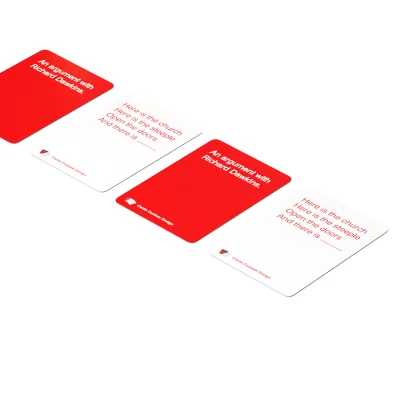
Wholesale Custom Playing Card Advertising Cards Game Playing Card for Fun
$0.40 - $1.00
MOQ: 1000 Sets




Comprehensive Sourcing Guide
Strategic Sourcing Guide for Custom Creative Playing Cards
Understanding Technical Specifications and Material Variations
When sourcing Custom Creative Playing Cards, the primary objective is to align product specifications with the intended application, whether for promotional giveaways, home entertainment, or professional gaming. The market offers a diverse range of technical attributes that define the tactile and visual experience of the final product. Buyers must first distinguish between the core material composition, as this dictates durability and printing quality. Available data indicates that the primary materials utilized in this sector include Cardboard and Paper, with some specialized variants incorporating a Paper-Plastic composite. The specific weight of the paper is a critical determinant of the card's stiffness and feel. Observed specifications list paper weights ranging from 280g to 410gms, with common options including 280, 290, 300, 310, 330, and 410gms. These are often available in Blue or Black paper bases, which can influence the final color profile of the custom artwork.
Beyond material, the physical dimensions of the cards are a standardization point that varies by model and intended use. The industry observes several standard size configurations, including 5787mm, 6388mm, and 59115mm. Some manufacturers offer a "poker size" standard, which typically aligns with the 6388mm specification, while others provide fully customized sizing to meet unique branding or game mechanics requirements. The model numbers associated with these specifications, such as FL-BG0010, WM-311, WM-325, WM-339, WM-332, WM-440, and cards-130, serve as internal references for suppliers but do not inherently guarantee a specific quality tier. Buyers should treat these model numbers as identifiers for specific production lines rather than absolute performance metrics.
The packaging structure is equally vital for protecting the product during transit and enhancing the unboxing experience. Options range from simple Paper Boxes to more robust Plastic Cases, Tin Boxes, and Gift Boxes. For bulk shipments, the outer packing is typically a Shipping Carton, which may contain 200 pieces per box, with 5 or 10 boxes consolidated into a single carton. Some suppliers offer custom packing solutions involving Plastic and Cotton materials to ensure the cards remain pristine. The choice of packaging should be evaluated based on the target audience; for instance, a Tin Box or Gift Box is more appropriate for high-end promotional items, whereas a standard Paper Box suffices for mass-market distribution.
Compliance, Certification, and Standard Verification
In the realm of B2B procurement for recreational products, verifying compliance and adherence to standards is essential for mitigating risk, particularly when products are marketed to children or intended for international distribution. While specific certification statuses such as ISO 9001, ISO 14001, or EN 71 are often cited in general market knowledge, buyers must treat these as verification targets rather than guaranteed attributes of every listed product. The provided data indicates that product standards can be "customized," meaning the supplier may not adhere to a single rigid international standard but rather tailor the production process to the buyer's specific requirements.
Buyers should explicitly request documentation regarding the safety of materials used, especially given that the target age range for these products often spans from "Above 2 Years Old" to "All Ages" and "Adult." For products intended for younger demographics, verifying that the inks and paper treatments meet relevant safety standards is non-negotiable. The "New" condition of the products listed implies they are manufactured to current standards, but the absence of explicit certification claims in the source data necessitates a proactive approach from the buyer. Procurement teams should require suppliers to provide test reports or certificates of compliance for the specific batch being ordered, rather than relying on general company claims.
Furthermore, the origin of the products, primarily identified as China with specific mentions of Chengdu, implies a need for careful scrutiny of export compliance. While the supply chain is established, the specific regulatory environment of the destination market must be matched against the supplier's capabilities. Buyers should verify if the supplier has experience exporting to their specific region and if they can provide the necessary documentation for customs clearance. The "Standard" field in product data often lists dimensions or customization options, but it does not inherently confirm regulatory compliance. Therefore, the verification process must include a direct inquiry into the supplier's quality management systems and their ability to meet the specific regulatory frameworks of the buyer's target market.
Cost Drivers and Pricing Dynamics
The pricing structure for Custom Creative Playing Cards is influenced by a complex interplay of factors, including material selection, customization complexity, order volume, and packaging requirements. The observed price range in the market spans from $0.01 to $2.90 USD per unit, a wide variance that reflects the diversity of product configurations. The lower end of this spectrum likely corresponds to basic paper cards with minimal customization and standard packaging, while the higher end encompasses premium materials like thicker cardstock, plastic composites, and elaborate packaging such as Tin or Gift Boxes.
Order volume is a significant driver of unit cost. The Minimum Order Quantity (MOQ) ranges from 50 to 10,000 units, indicating that suppliers are flexible but may adjust pricing tiers based on the scale of the order. Small orders are accepted, which is beneficial for startups or promotional campaigns with limited budgets, but the per-unit cost will likely be higher compared to bulk purchases. Buyers should anticipate that customizations, such as unique logos, specific color schemes, or non-standard dimensions, will incur additional costs. The "Customization" attribute is listed as available, but the extent of this customization directly impacts the final price.
Lead times also play a role in cost dynamics. The observed delivery times range from 7-15 days for samples to 15-30 days for bulk production. Rush orders or expedited shipping methods, such as Air freight via UPS, TNT, or FedEx, will add to the overall procurement cost. Conversely, Sea freight is a more economical option for large volumes but requires longer lead times. Buyers must balance the urgency of their project with the budget constraints, understanding that faster delivery often comes at a premium. Additionally, the "Grem Weight" (likely referring to grammage or weight) of 100-300g can influence shipping costs, as heavier products incur higher freight charges.
Typical Applications and Market Segmentation
Custom Creative Playing Cards serve a broad spectrum of applications, extending beyond traditional gaming to include marketing, education, and corporate branding. The data highlights several key application areas: Home entertainment, Chess-and-Card Rooms, and promotional events. For home use, the focus is often on durability and aesthetic appeal, with products suitable for "All Ages" or "Adults" being preferred. In the context of chess and card rooms, the cards must meet specific performance standards, such as consistent size and smooth handling, which are often achieved through precise manufacturing processes.
Promotional applications represent a significant segment of the market. Companies utilize custom playing cards as branded giveaways, leveraging the high utility and frequent handling of the product to maximize brand exposure. The "Teaching Mode" of "Instructions" suggests that these cards can also be used in educational settings, where they might serve as tools for learning or skill development. The "Member" count of 4-10 indicates that these cards are designed for group activities, making them ideal for team-building exercises or social gatherings.
The versatility of the product is further enhanced by the ability to customize the design, logo, and packaging. This flexibility allows businesses to tailor the product to specific campaigns or events. For example, a company might order cards with a specific logo for a product launch, while a school might request cards with educational content for a classroom activity. The "Time" attribute of ">2H" suggests that these products are intended for extended engagement, reinforcing their suitability for long-duration events or sustained marketing efforts.
Supplier Evaluation and Selection Criteria
Selecting the right supplier for Custom Creative Playing Cards requires a rigorous evaluation process that goes beyond price comparisons. Buyers should assess the supplier's capability to handle customization, as this is a core requirement for the product. The availability of "Customization" for models, logos, and packaging is a positive indicator, but the buyer must verify the supplier's actual capacity to execute these requests with high quality. The "Sample Product" support and "Sample Time" of 7-15 days are critical metrics; a supplier that offers samples allows the buyer to physically inspect the quality before committing to a large order.
The supplier's location, primarily in China, should be considered in the context of logistics and communication. While the distance may pose challenges, the established supply chain in regions like Chengdu suggests a mature manufacturing ecosystem. Buyers should evaluate the supplier's communication efficiency and their ability to provide clear updates on production progress. The "Delievery Time" of 15-30 days is a standard benchmark, but the supplier's track record for meeting these deadlines is essential.
Additionally, the supplier's experience with different packaging types and materials should be verified. A supplier that offers a wide range of options, from Paper Boxes to Tin Boxes, demonstrates versatility and a commitment to meeting diverse client needs. The "Small Orders: Accepted" attribute indicates flexibility, which is beneficial for buyers with varying order sizes. However, buyers should also consider the supplier's scalability; can they handle a jump from 50 units to 10,000 units without compromising quality or lead times?
Quality Control and Long-Term Procurement Considerations
Maintaining consistent quality is paramount in the procurement of custom playing cards, as even minor defects can significantly impact the user experience. Buyers should implement a robust quality control (QC) protocol that includes pre-production sample approval, in-process inspections, and final random inspections. The "Condition: New" attribute implies that the products should be free from defects, but this must be verified through physical inspection. Key quality metrics include the uniformity of card size, the accuracy of printing, the durability of the material, and the integrity of the packaging.
Long-term procurement considerations involve building a sustainable relationship with the supplier. This includes establishing clear communication channels, defining quality standards, and agreeing on a process for handling disputes or returns. The "Customized" standard suggests that the supplier is willing to adapt to the buyer's needs, which is a positive sign for long-term collaboration. However, buyers should ensure that the customization process is well-documented to avoid misunderstandings in future orders.
Sustainability is another emerging consideration in the playing card industry. While the provided data does not explicitly mention eco-friendly materials, buyers should inquire about the environmental impact of the paper and inks used. The "Paper-Plastic" composite and various paper weights offer opportunities for innovation, but the buyer must assess whether these materials align with their corporate sustainability goals. Additionally, the packaging options, such as the use of Tin Boxes or Plastic Cases, should be evaluated for their recyclability and environmental footprint.
In conclusion, sourcing Custom Creative Playing Cards requires a balanced approach that considers technical specifications, compliance, cost, applications, supplier capabilities, and quality control. By adhering to a structured evaluation process and maintaining open communication with suppliers, buyers can secure high-quality products that meet their specific needs and contribute to their long-term business objectives. The flexibility of the market, with its wide range of materials, sizes, and customization options, provides ample opportunity for innovation and brand differentiation.
FAQs
What materials are used for Custom Creative Playing Cards?
These cards are primarily made from Cardboard, Paper, or a Paper-Plastic composite. Buyers can select from paper weights ranging from 280 to 410 grams, often available in blue or black bases to suit specific printing needs.
Which packaging options are available for bulk orders?
Suppliers offer various inner packings including Paper Boxes, Plastic Cases, Tin Boxes, and Gift Boxes. For shipping, items are consolidated into Shipping Cartons, with options like 200 pieces per box and 5 to 10 boxes per carton.
Can I order small quantities for promotional events?
Yes, small orders are accepted with a Minimum Order Quantity starting as low as 50 units. This flexibility supports promotional campaigns and startups, though unit costs may be higher compared to bulk purchases of up to 10,000 units.
What are the standard dimensions for these playing cards?
Standard sizes include 57x87mm, 63x88mm, and 59x115mm, with some models matching the poker size standard. Custom dimensions are also available upon request to meet unique branding or game mechanics requirements.
How long does it take to receive samples and bulk orders?
Sample products are supported with a production time of 7 to 15 days. Bulk delivery typically takes 15 to 30 days, depending on the shipping method chosen, such as air freight via UPS or sea freight.
Is customization available for logos and product models?
Customization is available for logos, product models, and packaging designs. Suppliers can tailor specifications like the model number FL-BG0010 or WM-311 to match specific buyer requirements for promotional or home use.
What is the age range for these custom playing cards?
The products are suitable for All Ages, including children above 2 years old and adults. They are designed for applications in homes, chess-and-card rooms, and educational settings with a teaching mode of instructions.