Source Custom Fashion Rhinestone Baseball Caps for events, sports, and retail
Explore 30 listings of Custom Fashion Rhinestone Baseball Caps with options for embroidery, printing, and various closures. Buyers can compare styles, materials, and customization features to find the right caps for team uniforms, promotional events, or retail collections.
Key considerations
Products List

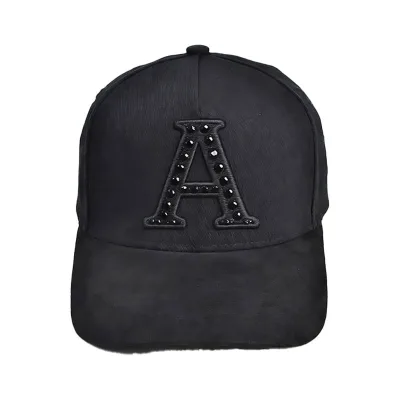
Custom Unisex Black Canvas Baseball Cap Fashion Vintage Rhinestone R Baseball Cap
$1.90 - $4.90
MOQ: 100 Pieces


Comprehensive Sourcing Guide
Strategic Sourcing Guide for Custom Fashion Rhinestone Baseball Caps
Understanding Product Specifications and Design Variability
When sourcing Custom Fashion Rhinestone Baseball Caps, buyers must first navigate a complex landscape of technical specifications that define the final product's aesthetic and functional integrity. The core product category, often identified under departmental tags like "Baseball Cap" or "Ball Cap," encompasses a wide array of structural and material variations. A critical observation in the current market is the diversity in crown construction; while some units are defined by a "With Crown" structure, others may vary in panel count, with "6 Panels" being a standard configuration for maintaining the classic silhouette. The brim is another pivotal specification, frequently observed as "With Brim" and often featuring a "Curved" visor design, though flat visors exist in specific fashion-forward sub-segments.
Material composition is a primary differentiator in this sector. The supply chain offers products constructed from "Polyester/Cotton" blends, which balance durability with breathability, as well as options made from "100% Cotton" for a more premium, natural feel. Other fabric variations include "Acrylic," "Canvas," and specific weaves like "Dobby" or "Jersey." The choice of material directly influences the cap's weight, drape, and suitability for different seasons. While some listings specify "Spring / Autumn" as the ideal usage window, others extend applicability to "Winter" and "Summer," suggesting that thermal properties and lining (such as "Cotton" sweatbands) are key variables to evaluate.
The customization aspect is central to the "custom fashion" keyword. Buyers should expect a wide spectrum of color options, ranging from standard hues like "Black," "White," "Navy," and "Gray" to vibrant "Multicolor," "Camouflage," and "Army green" selections. The surface treatment is equally diverse, with "Embroidered," "Printed," "Striped," and "Plain" patterns available. For the specific "rhinestone" requirement, the application method is critical. The market supports various logo and graphic techniques including "Silicone," "Patch Logo," "Printing," and "Applique embroidery." However, the specific inclusion of rhinestones often requires verifying if the supplier utilizes "Hot-fix" techniques or specialized "Sequined" processes, as these are distinct from standard flat embroidery.
Technical Standards and Compliance Verification
Compliance and certification are non-negotiable elements in B2B procurement, particularly for fashion accessories that come into direct contact with the skin. In the observed market data, specific standards such as "SGS" are cited as product standards, indicating that third-party verification is a common expectation for quality assurance. Buyers must verify that the supplier can provide current test reports from recognized bodies like SGS to confirm that materials meet safety requirements for textiles. The "Standard Specifications or Customized" tag suggests that while some baseline standards exist, many suppliers operate on a custom basis where the buyer must explicitly define the required compliance metrics.
Beyond general safety, specific functional standards are often relevant for fashion caps. Attributes like "UV Resistant," "Sun Protection," and "Antimicrobial" properties are frequently claimed. However, without specific test data provided in the listing, buyers should treat these as potential features rather than guaranteed specifications. The "SGS" standard mentioned in the context likely covers physical and chemical safety, but buyers should explicitly request documentation regarding the durability of the rhinestone application, ensuring that the stones do not contain harmful substances like lead or cadmium, which are common concerns in fashion jewelry components.
Furthermore, the "prod_standard" field in some listings shows values like "58cm," which appears to be a size specification rather than a formal standard. This highlights a common confusion in product data where physical dimensions are mislabeled as standards. Buyers must rigorously distinguish between size specifications (e.g., "56-60cm" or "Customized" sizing) and actual compliance certifications. For international markets, verifying adherence to regional textile regulations, such as REACH in Europe or CPSIA in the United States, is essential, even if the supplier's primary listing only mentions "SGS" or "Standard Specifications."
Cost Drivers and Pricing Dynamics
The pricing structure for Custom Fashion Rhinestone Baseball Caps is influenced by a confluence of material costs, labor intensity, and customization complexity. The observed price range in the market spans from $0.55 to $5.00 USD, a wide variance that reflects differences in material quality, decoration techniques, and order volume. The lower end of this spectrum typically corresponds to basic polyester or cotton caps with simple printed or embroidered logos, while the higher end encompasses premium materials like 100% cotton, complex multi-panel structures, and extensive rhinestone embellishment.
Labor is a significant cost driver for rhinestone applications. Unlike standard embroidery or screen printing, which can be highly automated, the placement of rhinestones often requires manual labor or specialized machinery that operates at a slower pace. The density of the rhinestone pattern, the size of the stones, and the complexity of the design directly impact the unit cost. Additionally, the "Customized Logo" and "Customized" size specifications introduce variable costs. Suppliers may charge setup fees for creating new molds or digitizing unique designs, which are amortized over the order quantity.
Minimum Order Quantity (MOQ) also plays a pivotal role in the final cost per unit. The observed MOQ range extends from 0 to 1000 units. While some suppliers may accept very low quantities for prototyping or small batch runs, the cost per unit will be significantly higher. To achieve the lower end of the price range, buyers typically need to commit to larger volumes, often in the hundreds or thousands. The "25PCS/Polybag/Inner Box, 200PCS/CTN" packing specification suggests that efficient logistics and bulk shipping are prerequisites for cost-effective procurement. Buyers should negotiate based on the total landed cost, including packaging and shipping, rather than focusing solely on the unit price.
Typical Applications and Market Segmentation
The versatility of Custom Fashion Rhinestone Baseball Caps makes them suitable for a broad spectrum of applications, from corporate branding to high-fashion retail. The "Applicable Scene" is frequently listed as "Outdoor," indicating their utility for events, sports, and casual wear. However, the "Fashion" attribute and "Unisex" gender classification expand their use case to include promotional campaigns, team uniforms, and streetwear collections. The "Game Used" and "Ponytail Hole" features suggest a niche market for athletes and active users who require both style and functionality.
In the realm of brand retail, these caps serve as powerful marketing tools. The "Usage" tag of "Brand Retail" confirms their role in creating brand identity. The ability to apply "Customized Logo" via "Embroidery," "Patch," or "Silicone" allows companies to integrate their branding seamlessly into the fashion statement. The "Promotional office products" and "Promotional electronic products" keywords indicate that these caps are often used as corporate gifts or trade show giveaways, where the visual impact of rhinestones can differentiate a brand from competitors.
The "Applicable User" is primarily "Adults," though the "Unisex" nature ensures broad appeal. The "Plus size" feature in some listings suggests that sizing inclusivity is becoming a standard expectation. For fashion retailers, the "European and american style," "Hip hop," and "Vintage" style tags highlight the cap's adaptability to various aesthetic trends. Buyers should align their product selection with the specific demographic they aim to serve, ensuring that the chosen style, color, and decoration method resonate with the target audience's preferences.
Supplier Evaluation and Quality Control Protocols
Evaluating suppliers for Custom Fashion Rhinestone Baseball Caps requires a rigorous assessment of their production capabilities and quality control systems. The "prod_origin" is predominantly "China," with specific mentions of "Guangdong, China," a major hub for textile manufacturing. Buyers should verify the supplier's facility capabilities, specifically their ability to handle delicate rhinestone applications without damaging the fabric or compromising the structural integrity of the cap. The "Process" technology, such as "Flat Embroidery," is standard, but the integration of rhinestones requires specialized expertise.
Quality control should focus on several key areas. First, the durability of the rhinestone attachment must be tested to ensure stones do not fall off during normal wear or washing. The "Washable" attribute implies that the caps should withstand cleaning, but the method of attachment (e.g., glue vs. sewing) must be verified. Second, the consistency of the "Pattern" and "Color" is critical. With options like "Embroidered," "Printed," and "Multicolor," buyers must request physical samples to verify color accuracy and pattern alignment. Third, the "Good Quality" attribute, often described as "Fashion," should be validated through a review of the supplier's past work and customer feedback.
Buyers should also assess the supplier's flexibility regarding "Customized" specifications. The ability to offer "Standard Packaging or Customized" and "Standard Specifications or Customized" indicates a supplier capable of adapting to unique buyer requirements. However, this flexibility must be balanced with the supplier's ability to maintain consistent quality across large batches. Requesting a pre-production sample is a standard best practice to ensure that the final product meets the buyer's expectations before mass production begins.
Long-Term Procurement and Supply Chain Considerations
Sourcing Custom Fashion Rhinestone Baseball Caps is not merely a transactional activity but a strategic partnership that requires long-term planning. The "prod_packing" specifications, such as "Each PC in a Polybag" and "Paper Carton," highlight the importance of packaging in protecting the product during transit. For long-term contracts, buyers should negotiate packaging standards that minimize damage and reduce waste, potentially exploring eco-friendly options if sustainability is a brand value.
Lead times and production capacity are critical factors for maintaining inventory levels. While specific lead times are not universally defined in the provided data, the "MOQ" range and "Customized" nature of the products suggest that production times may vary. Buyers should establish clear timelines for design approval, sampling, and mass production to avoid delays. The "Stocked" attribute in some listings indicates that suppliers may have ready-to-ship inventory for standard designs, which can be leveraged for urgent orders, while custom orders will require a dedicated production schedule.
Finally, the "Feature" list, which includes "Eco-friendly," "Sustainable," and "Anti-uv," suggests a growing market demand for responsible manufacturing. Buyers should inquire about the supplier's sustainability practices, such as the use of recycled materials or ethical labor standards, to align with corporate social responsibility goals. Building a relationship with a supplier who can adapt to changing market trends and regulatory requirements will ensure a stable and competitive supply chain for Custom Fashion Rhinestone Baseball Caps.
| Feature Category | Key Considerations | Verification Method |
|---|---|---|
| Material | Cotton, Polyester, Blends, Canvas | Request material composition certificates |
| Decoration | Rhinestones, Embroidery, Printing | Physical sample inspection for durability |
| Compliance | SGS, Safety Standards | Review third-party test reports |
| Packaging | Polybag, Carton, Custom | Inspect packaging for damage protection |
| Customization | Logo, Size, Color | Confirm design files and approval process |
| Logistics | MOQ, Lead Time, Origin | Review production schedule and shipping terms |
FAQs
How are custom logos applied to these caps?
Logos are applied using embroidery, patch logos, printing, or silicone methods. The specific technique depends on the design complexity and material chosen, with flat embroidery being a common process for durable results.
What materials are used for these baseball caps?
Caps are constructed from polyester, cotton, acrylic, or canvas blends. Some options feature 100% cotton for a premium feel, while others use blends to balance durability with breathability for various seasons.
Which closure types are available for these caps?
Available closures include brass buckles and plastic buckles. The choice depends on the specific model and desired aesthetic, with adjustable features ensuring a comfortable fit for adult users.
Can these caps be customized for specific sizes?
Yes, sizes can be customized or selected from standard ranges like 56-60cm. Buyers should verify specific model requirements, as some listings offer standard specifications while others allow for fully custom sizing.
What certifications do these products typically meet?
Products often meet SGS standards for quality and safety verification. Buyers should request current test reports to confirm compliance with textile safety requirements before placing large orders.
How are these caps packaged for shipment?
Standard packaging includes individual polybags with inner boxes, often packed 200 pieces per carton. Custom packaging options are also available to meet specific branding or logistical needs.
What is the typical price range for these caps?
The observed price range spans from 0.55 to 5 USD per unit. Final pricing depends heavily on material quality, decoration complexity, and order volume, with lower costs typically associated with larger quantities.