Source Custom Stacking Sterling Silver Rings for Gifts
Explore 30 listings for Custom Stacking Sterling Silver Rings suitable for wedding decorations and daily wear. Compare options featuring 925 silver, various platings, and round shapes to find the right fit for your needs; compare the available evidence and request quotations based on your requirements.
Key considerations
Products List
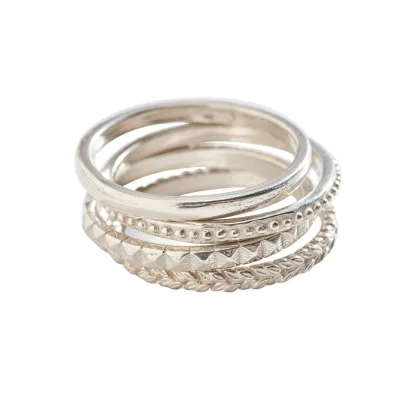


Fashion Classic Design Gold Plated S925 Silver Custome Ring with Shining Stone
$10.30 - $10.80
MOQ: 30 pieces



Comprehensive Sourcing Guide
Custom Stacking Sterling Silver Rings Sourcing Guide
Procuring custom stacking rings requires a clear definition of the target aesthetic and functional requirements before engaging with manufacturers. The observed market data indicates a strong preference for round shapes and specific fabrication processes like polishing and casting, which directly influence the final tactile feel and visual weight of the jewelry. Buyers must verify that the supplier can consistently execute these specific techniques to ensure the rings stack neatly without gaps or misalignment.
Commercial viability often hinges on the ability to customize materials and finishes to match current fashion trends. Listings show a wide range of plating options including platinum, gold, and rhodium, alongside base materials like 925 sterling silver. Sourcing teams should prioritize suppliers who explicitly offer ODM and OEM services, as this flexibility allows for the creation of unique designs that stand out in a competitive market while maintaining the structural integrity required for daily wear.
Product Scope and Observed Listing Signals
The product scope for custom stacking rings encompasses a diverse array of styles, ranging from simple bands to intricate inlaid designs. Observed listings highlight specific models such as R2753 and Tysr0007, which demonstrate the variety in available configurations. These items are frequently marketed for multiple occasions, including weddings, general decoration, and gift-giving, suggesting that the product line must be versatile enough to appeal to both male and female demographics simultaneously.
Visual attributes play a critical role in the initial selection process, with color options like silver, white, and gold being prominently featured. The availability of customizable stones and the option to change stone settings indicate a high degree of personalization potential. Buyers should note that while some products are packaged in simple OPP bags, others utilize cartons, which may signal different tiers of quality or intended retail presentation. Understanding these listing signals helps in filtering suppliers who can meet specific branding and packaging requirements.
Technical Specifications to Verify
Technical verification begins with confirming the material purity, as the core keyword specifies sterling silver. Buyers must demand proof of 92.5% silver content, often verified through hallmarking or third-party assay reports, to ensure the rings meet the standard for 925 sterling silver. The observed data lists a standard of 6MM, which likely refers to band width, but this dimension should be treated as a reference point rather than a fixed requirement for all custom orders.
Dimensional consistency is equally vital for stacking rings to ensure they sit flush against one another. Specifications such as length variations of 40cm, 45cm, and 60cm suggest that sizing flexibility is a key technical parameter, though these measurements may refer to necklace lengths in some contexts and require clarification for ring sizing. Additionally, the fabrication process of polishing and casting must be scrutinized to ensure the final product is free from rough edges or casting defects that could compromise comfort or durability during extended wear.
Compliance and Safety Documentation
Compliance documentation is essential for international trade, particularly when dealing with jewelry containing precious metals and potential plating materials. The HS code 7117190000 is a critical identifier for non-precious metal jewelry, yet sourcing sterling silver items requires careful classification to ensure accurate duty assessment and regulatory adherence. Buyers should verify that the supplier can provide the correct documentation to support the declared material composition and origin, specifically noting the Qingdao and China origins observed in the listings.
Safety standards regarding skin contact and material toxicity must be rigorously checked, especially for items plated with gold, rhodium, or platinum. While the listings do not explicitly state specific safety certifications, the nature of the product implies a need for compliance with international safety regulations regarding heavy metals and allergens. Procurement teams should request material safety data sheets or compliance certificates to confirm that the plating and base metals do not contain harmful substances that could cause allergic reactions or violate import regulations in the destination market.
Cost Drivers and Commercial Terms
Cost drivers for custom stacking rings are heavily influenced by the choice of material, specifically the premium of 925 sterling silver over base metals, and the complexity of the plating process. The observed price range of 0.8 to 300 USD reflects significant variance based on design intricacy, stone inclusions, and the specific plating metals used. Buyers must understand that custom designs and specific plating requests like rhodium will inherently increase the unit cost compared to standard silver finishes.
Commercial terms such as MOQ and lead times are critical factors in the procurement strategy, with observed MOQs ranging from 1 to 1000 units. This wide range suggests that suppliers may offer flexible terms for prototyping versus bulk production, but buyers must negotiate these terms clearly to avoid unexpected financial commitments. Additionally, shipping options like FedEx, UPS, and EMS indicate that logistics costs can vary significantly, and these should be factored into the total landed cost calculation before finalizing any purchase order.
Supplier Qualification and Quality Control
Supplier qualification should focus on their demonstrated capability for customization and their history of delivering consistent quality. The availability of logo services and custom design options indicates that the supplier is equipped to handle bespoke requests, but buyers must verify their quality control processes to ensure these customizations do not result in defects. The presence of specific model numbers like CG20R0588B and AS21R0681S suggests a structured production system, which is a positive indicator of operational maturity.
Quality control checks must include a rigorous inspection of the polishing and casting finishes to ensure there are no visible imperfections. Since the product is intended for gifts and weddings, the aesthetic finish is paramount, and any deviation from the polished standard could lead to returns or brand damage. Buyers should implement a pre-shipment inspection protocol that specifically targets the plating adhesion, stone setting security, and overall dimensional accuracy to ensure the final product meets the agreed-upon specifications.
Long-Term Procurement Checks
Long-term procurement success relies on establishing a reliable supply chain that can adapt to changing market trends and design requirements. The observed data shows a variety of styles and colors, indicating that the market is dynamic and suppliers must be agile enough to pivot production accordingly. Buyers should maintain open communication channels with suppliers to ensure they can quickly respond to new design requests or changes in material availability without disrupting the supply schedule.
Continuous monitoring of supplier performance is necessary to maintain high standards over time. This includes tracking the consistency of the 92.5% silver purity and the durability of the plating over repeated use. Since the product is suitable for both male and female customers, the supplier must be able to maintain quality across different sizing and design variations. Regular audits and feedback loops will help ensure that the partnership remains productive and that the custom stacking rings continue to meet the evolving expectations of the end consumer.
FAQs
What customization options are available for Custom Stacking Sterling Silver Rings?
Custom Stacking Sterling Silver Rings can be customized with your own design, and logo service is typically offered for branding. Stone changes are possible on inlaid styles, and size can be produced to specification. Plating choices commonly include platinum, gold, or rhodium finishes. Confirm design files, logo format, and size requirements with the supplier before sampling so production matches your brand needs.
Can the stone on a custom stacking sterling silver ring be changed?
Yes, the stone can be changed on listed ring styles where stone change is specified as an attribute. You should provide the desired stone type and setting requirements during the inquiry stage so the factory can confirm feasibility. Stone changes may affect tooling, unit pricing, and sample time, so request an updated quotation and sample approval before confirming a bulk order.
What plating finishes are offered for Custom Stacking Sterling Silver Rings?
Platinum, gold, and rhodium plating are offered on listed sterling silver ring styles. The listed attribute notes the product does not fade, though actual wear resistance depends on plating thickness and daily use. Rhodium gives a bright white finish, while gold suits warmer fashion looks. Ask the supplier which finishes apply to your chosen model and whether additional plating tests are available.
How are Custom Stacking Sterling Silver Rings packed for shipping?
Packing varies by product: some items list OPP bag packing, while others use carton packing. Custom packing is also available on listed products, so you can request branded or retail-ready packaging. Confirm the per-piece packing method, inner box counts, and carton dimensions before production. Specify your preferred option in the purchase order to avoid default packing being applied to your shipment.
What material purity is used in these sterling silver stacking rings?
Listed stacking rings are made from 925 sterling silver with a stated purity of 92.5%, which is the standard sterling silver composition. Some models may use stainless steel instead, so check the material field on each specific product page. For silver items, request confirmation of purity documentation if your market requires it, and verify the base material applies to every model in your order.
Can I order Custom Stacking Sterling Silver Rings with a low minimum quantity?
Yes, minimum order quantities across listed products range from 1 to 1000 pieces, so low-quantity options exist. MOQ often depends on the model, customization level, and stone or plating choices. ODM and OEM orders are welcomed on listed items, and simple logo changes may carry lower MOQs than fully custom molds. State your target quantity early so the supplier can match suitable models.
Which shipping methods are available for custom sterling silver ring orders?
Listed shipping options include FedEx, UPS, EMS, Loomis, and Malca-Amit, giving both express and specialized delivery choices. Express carriers suit small sample or trial orders, while larger shipments may be quoted differently by weight and destination. Confirm available carriers, freight cost, and dispatch time with the supplier for your specific order size before arranging payment or shipping.
How long will the plating color last on a sterling silver stacking ring?
The listed product attribute states the rings do not fade, reflecting the casting and polishing craftsmanship and plated finishes used. Real-world durability still depends on wear frequency, contact with water, cosmetics, and plating thickness. To maximize longevity, store pieces separately and avoid abrasion. If long-term wear matters for your market, discuss heavier plating options with the supplier during customization.