Source Custom Sport Steering Wheel for Racing, Tuning, and Daily Upgrades
Source a Custom Sport Steering Wheel from 30 verified listings. Compare options featuring aluminum construction, universal fitment, and customizable colors like pink or black. Evaluate specifications such as 350mm diameter and included accessories to find the ideal fit for your vehicle.
Key considerations
Products List


Car Steering Wheels Gaming Wheel Sport Steering Wheels for Car Accessories
$5.00 - $199.50
MOQ: 10 Pieces
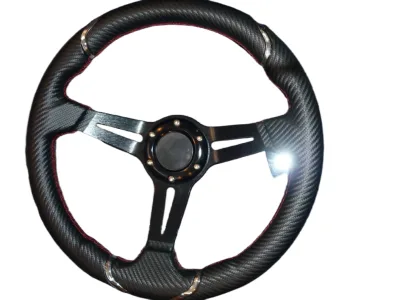

$8.30 - $10.00
MOQ: 1 Pieces

$8.30 - $10.00
MOQ: 1 Pieces


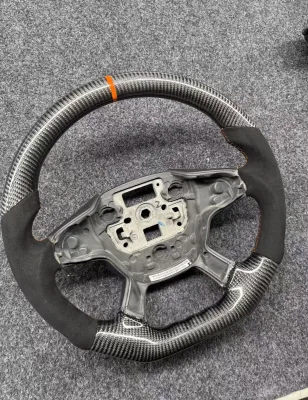

Custom Carbon Fiber Steering Wheel Suitable for Various Vehicle Models
$210.00 - $220.00
MOQ: 1 Pieces

$2000.00 - $2500.00
MOQ: 1 Pieces

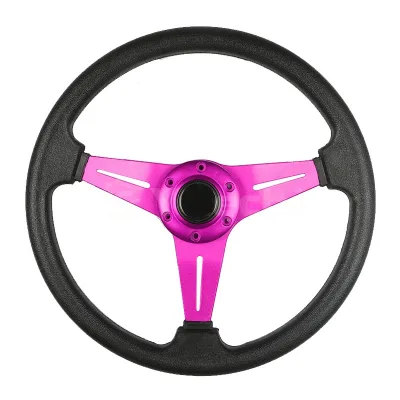
Comprehensive Sourcing Guide
Custom Sport Steering Wheel Sourcing Guide
Sourcing a Custom Sport Steering Wheel requires a careful balance between aesthetic personalization and critical safety compliance. The market offers a wide variety of options, ranging from universal fitment accessories to specialized components designed for specific vehicle architectures. Buyers must navigate a landscape where "customization" often refers to cosmetic upgrades, such as color, material, and branding, rather than fundamental changes to the steering column interface. Understanding the distinction between a decorative cover and a functional replacement is the first step in defining procurement requirements. This guide outlines the essential verification steps, technical parameters, and commercial considerations necessary to secure a reliable supply chain for these automotive components.
The procurement process for steering wheels involves evaluating multiple variables, including material composition, mounting specifications, and accessory inclusion. While many listings advertise universal compatibility, the actual fitment often depends on precise measurements of the steering column bracket and airbag module. Buyers should approach product listings with a critical eye, recognizing that observed attributes like color options or included hardware do not guarantee compatibility with every vehicle model. Establishing clear technical boundaries before engaging with suppliers prevents costly errors and ensures that the final product meets both functional and regulatory standards for the target market.
Product Scope and Observed Listing Signals
The current market for custom sport steering wheels displays a diverse range of product configurations, primarily driven by aesthetic preferences and material choices. Observed listings indicate a strong emphasis on visual customization, with available colors spanning from standard black and pink to premium finishes like gold, rose gold, and silver. Materials frequently cited include aluminum and wood, suggesting a focus on tactile quality and visual appeal rather than purely structural reinforcement. These products are often marketed as "universal" fitment, implying they are designed to adapt to a broad spectrum of vehicle models, though this claim requires rigorous verification against specific vehicle architectures.
In addition to the main wheel structure, suppliers often bundle essential accessories to facilitate installation and enhance functionality. Commonly included items are horn buttons, horn covers, screws, wiring harnesses, and installation wrenches. This comprehensive packaging approach simplifies the procurement process for buyers who need to source all necessary components in a single transaction. However, the inclusion of these accessories does not automatically ensure seamless integration with every vehicle’s electrical system. Buyers must verify that the provided wiring and horn mechanisms are compatible with their specific vehicle’s voltage and signal protocols to avoid post-installation issues.
Technical Specifications to Verify
Technical verification is paramount when sourcing steering wheels, particularly regarding dimensional accuracy and mounting compatibility. Key specifications to scrutinize include the diameter, which typically ranges around 350mm or 345mm in observed listings, and the bracket depth and thickness, which are critical for ensuring the wheel sits correctly relative to the dashboard and airbag module. Observed data points to bracket depths of 45mm or 50mm and thicknesses of 4mm or 5mm. These measurements must be cross-referenced with the vehicle’s steering column specifications to prevent interference with airbag deployment or ergonomic discomfort for the driver.
The model numbers and product codes associated with these items often vary significantly between suppliers, reflecting different design iterations or regional market adaptations. Buyers should treat these codes as internal identifiers rather than universal standards. Additionally, the single package dimensions and gross weight provide insights into the product’s physical bulk and shipping requirements. For instance, packages measuring approximately 35x35x11cm or 36x36x11cm with weights ranging from 1.4kg to 2.0kg indicate a substantial product that requires careful handling and accurate freight calculation. Verifying these logistical details early in the sourcing process helps in planning storage and distribution strategies effectively.
Compliance and Safety Documentation
Safety compliance is the most critical aspect of steering wheel procurement, as these components are directly linked to vehicle control and occupant protection. Any steering wheel intended for road use must comply with stringent safety regulations, particularly concerning airbag compatibility and structural integrity. Buyers must request documentation proving that the product does not interfere with the deployment of the vehicle’s airbag system. In many jurisdictions, modifying or replacing the steering wheel can void vehicle insurance or fail safety inspections if proper certifications are not in place.
Certifications such as CE marking indicate that the product meets certain European health, safety, and environmental protection standards, but they do not automatically certify automotive safety compliance. Buyers should verify whether the supplier has conducted specific crash tests or structural integrity assessments relevant to automotive applications. It is essential to distinguish between general product certifications and automotive-specific safety approvals. Without explicit evidence of safety testing, the risk of liability in the event of an accident remains a significant concern for both the supplier and the end-user.
Cost Drivers and Commercial Terms
The cost of custom sport steering wheels is influenced by several factors, including material quality, customization complexity, and order volume. Observed minimum order quantities (MOQs) vary widely, ranging from single units for sample purchases to bulk orders of 50 or 100 pieces. This flexibility allows buyers to test product quality before committing to large-scale purchases. However, higher customization levels, such as specific color matching or branded horn buttons, may incur additional setup fees or higher per-unit costs. Understanding the pricing structure relative to order volume is crucial for budgeting and margin calculation.
Payment terms and delivery times are also key commercial considerations. Standard payment methods typically include Telegraphic Transfer (T/T), Letter of Credit (L/C), and Western Union, providing flexibility for international transactions. Delivery times are generally estimated at 7-15 days, but this can vary based on production schedules and shipping logistics. Buyers should clarify whether these timelines include manufacturing, quality control, and shipping, or if they represent only the production lead time. Clear communication regarding these terms helps in managing inventory levels and meeting customer delivery expectations without unexpected delays.
Supplier Qualification and Quality Control
Evaluating supplier reliability is essential to ensure consistent product quality and service. Buyers should prioritize suppliers who demonstrate transparency in their manufacturing processes and provide detailed product specifications. The presence of customization options and sample availability indicates a supplier’s willingness to accommodate specific buyer requirements, which is a positive sign of flexibility and customer focus. However, buyers must verify the supplier’s ability to maintain consistent quality across batches, especially when dealing with custom colors or materials.
Quality control measures should be explicitly discussed during the sourcing process. Buyers should inquire about the supplier’s inspection protocols, including pre-shipment checks and defect rates. Requesting samples before placing bulk orders is a critical step in validating the product’s build quality, material finish, and fitment accuracy. Additionally, verifying the supplier’s origin, such as manufacturing in Zhejiang, China, can provide context regarding the regional supply chain and potential logistical advantages. Establishing a strong relationship with a qualified supplier ensures long-term stability and reduces the risk of supply chain disruptions.
Long-Term Procurement Checks
Sourcing custom sport steering wheels is not a one-time transaction but an ongoing process that requires continuous monitoring and evaluation. Buyers should regularly review supplier performance metrics, including on-time delivery rates, product defect rates, and responsiveness to issues. Maintaining open communication channels with suppliers allows for timely resolution of any quality or logistical problems that may arise. Additionally, staying informed about changes in automotive safety regulations and market trends ensures that the sourced products remain compliant and relevant to customer needs.
As the automotive industry evolves, particularly with the rise of electric vehicles and advanced driver-assistance systems, the requirements for steering wheels may change. Buyers should be prepared to adapt their sourcing strategies to accommodate these shifts, such as seeking suppliers who can provide steering wheels compatible with new vehicle architectures or safety technologies. Regularly updating product specifications and re-evaluating supplier qualifications helps in maintaining a competitive edge and ensuring that the procurement process remains efficient and effective in the long term.
FAQs
What customization options are available for the steering wheel?
Customization is available for color and design to meet specific buyer needs. The product offers customizable colors including pink, black, and multicolor options. Buyers can also request specific dimensions like 350mm diameter or 345mm standard sizes depending on the model selected.
How long is the delivery time for these steering wheels?
The standard delivery time ranges from 7 to 15 days after order confirmation. This timeframe applies to the production and shipping process for the custom sport steering wheels. Buyers should plan their procurement schedule accordingly to ensure timely receipt of goods.
What is the minimum order quantity for this product?
The minimum order quantity varies by specific model, ranging from 1 piece to 50 pieces. Some listings require 50 pieces while others allow orders as low as 1 or 5 pieces. Buyers must check the specific model details to confirm the exact MOQ before placing an order.
Which certifications does the steering wheel product hold?
The product holds CE certification to ensure compliance with relevant safety standards. This certification indicates that the steering wheel meets specific regulatory requirements for the market. Buyers can rely on this documented standard when evaluating product safety and quality for their sourcing needs.
Can I get a sample before placing a bulk order?
Yes, samples are available for buyers who wish to evaluate the product quality first. This option allows purchasers to verify specifications like the 350mm diameter or material composition before committing to a larger purchase. Buyers should contact the supplier to arrange sample acquisition details.
What payment methods are accepted for this transaction?
Accepted payment methods include L/C, D/P, T/T, Western Union, and Money Gram. These options provide flexibility for international buyers to complete their transactions securely. Buyers should coordinate with the supplier to select the most suitable payment method for their specific financial situation.
What is the origin location of the steering wheel manufacturer?
The product originates from Zhejiang, China, which is a known manufacturing hub. This location indicates the geographical source of the goods and may influence shipping logistics and lead times. Buyers can expect the products to be dispatched from this specific region in China.