Source Customizable Headless Wood Screws for Furniture, Construction, and DIY
Compare 30 Customizable Headless Wood Screws from verified Chinese manufacturers. Options include round and hex heads, various grades, and zinc finishes. Find suitable fasteners for furniture assembly, construction projects, and general DIY applications with OEM support; compare the available evidence and request quotations based on your requirements.
Key considerations
Products List


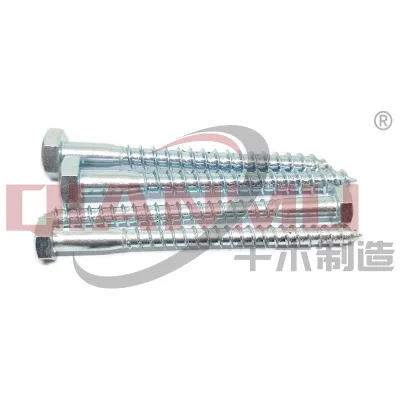


Stainless Steel Flat Head Self Tapping Screw Cross Flat Tail Self Tapping Screws
$0.00 - $0.00
MOQ: 50000 Pieces
Comprehensive Sourcing Guide
Customizable Headless Wood Screws Sourcing Guide
Procuring Customizable Headless Wood Screws requires a precise understanding of the specific fastener geometry and surface treatments available in the current market. Buyers must distinguish between products featuring cross-shaped grooves and those with special shapes, as these drive types directly impact installation torque and tool compatibility. The observed product range includes threaded heads and hexagon head variants, indicating that "headless" in this context often refers to a low-profile design rather than a complete absence of a driving feature.
Sourcing decisions should prioritize suppliers who explicitly offer customization services for dimensions and finishes, as standard inventory rarely meets unique structural requirements. The market data indicates a wide range of available specifications, from M4 to M8 threaded sizes and lengths extending up to 70mm, alongside inch-based options. Buyers should verify that the supplier can accommodate specific material grades, such as 8.8 or 9.8 class steel, to ensure the fastener meets the shear and tensile strength demands of the intended assembly.
Product Scope and Observed Listing Signals
The current market listings reveal a diverse array of fastener types, including hex cap screws and tapping screws, which may serve as alternatives to traditional headless designs depending on the application. Listings frequently specify a yellow zinc galvanized finish or a plain zinc finish, suggesting that corrosion resistance is a primary differentiator for these components. The presence of both metric and inch measurement systems in the data highlights the need for buyers to clearly define their preferred system to avoid compatibility issues during assembly.
Buyers should note that observed listing signals include specific packing configurations like buckets, cartons, and pallets, which influence logistics planning and storage requirements. The availability of single-item selling units alongside bulk pallet options suggests flexibility in order quantities, though minimum order quantities can vary significantly from one unit to tens of thousands. It is critical to confirm whether the "headless" description applies to the specific head style, such as a hex washer head or a standard threaded head, to ensure the fastener fits the design constraints of the project.
Technical Specifications to Verify
Technical verification must begin with the thread type and pitch, as the data shows options ranging from standard threads to specific models like M6-1.0x4.5*70mm. Buyers need to confirm the exact thread size, which can range from #2 to #8 in imperial units or M4 to M12 in metric, to ensure proper engagement with the wood substrate. The grade of the material, observed as 8.8 or 9.8, is a critical factor in determining the load-bearing capacity, and this must be matched against the structural requirements of the joint being created.
Surface treatment and head geometry are equally vital for functional performance, with options including cross-shaped grooves or special shapes that dictate the driving mechanism. The connection type, whether drilling screws or hex washer head wood screws, determines the installation method and the resulting clamping force. Buyers should explicitly request samples to verify the finish quality, ensuring that the zinc plating or stainless steel material provides the necessary durability against environmental exposure without compromising the mechanical integrity of the screw.
Compliance and Safety Documentation
Compliance verification is essential when sourcing fasteners for international markets, as the observed data lists certifications such as RoHS and CE, which are critical for electronic and general industrial applications. Buyers must ensure that the supplier can provide valid documentation for these certifications, as they confirm the product meets specific environmental and safety standards regarding hazardous substances. The presence of ISO certification in the listings further indicates a commitment to quality management systems, which is a strong indicator of consistent manufacturing processes.
In addition to product certifications, buyers should verify adherence to recognized industry standards like DIN, GB, JIS, and ANSI, which govern the dimensional and mechanical properties of the screws. The data indicates that suppliers may adhere to multiple standards simultaneously, so it is necessary to specify the exact standard required for the project to avoid non-compliance. Documentation should also include material test reports that confirm the steel grade and tensile strength, ensuring that the fasteners will not fail under the expected operational loads.
Cost Drivers and Commercial Terms
Cost drivers for Customizable Headless Wood Screws are heavily influenced by the material grade, surface treatment complexity, and the degree of customization required. Higher grades like 9.8 or specialized finishes such as yellow zinc galvanization typically command a premium over standard carbon steel options. Buyers should anticipate that custom dimensions or non-standard thread pitches will increase the unit price due to the setup costs and reduced production efficiency associated with bespoke manufacturing runs.
Commercial terms observed in the market include payment via T/T and delivery times ranging from 7 to 30 working days, which must be factored into the overall procurement timeline. Minimum order quantities can vary widely, with some listings starting at 1000 pieces while others may require significantly larger volumes to achieve cost-effective pricing. Buyers should negotiate clearly on packaging requirements, such as the 25kg per carton or pallet configurations, to optimize shipping costs and minimize handling expenses during the supply chain.
Supplier Qualification and Quality Control
Supplier qualification should focus on verifying their manufacturing capabilities and their ability to deliver consistent quality across large production runs. The data indicates that suppliers are located in regions like Zhejiang and Hebei, China, which are known for their hardware manufacturing clusters, but buyers must still assess the specific factory's quality control protocols. It is advisable to request evidence of their OEM/ODM service capabilities to ensure they can adapt their production lines to meet specific design modifications without compromising quality.
Quality control measures must include rigorous inspection of the final product for defects in the thread, head shape, and surface finish. Buyers should implement a sampling plan based on the observed MOQ ranges to verify that the delivered goods match the agreed-upon specifications for grade, size, and standard. Regular audits of the supplier's production process and a review of their defect rates are essential to maintain high standards, especially when dealing with custom orders that require precise adherence to technical drawings.
Long-Term Procurement Checks
Long-term procurement success depends on establishing a reliable supply chain that can adapt to changing project requirements and volume fluctuations. Buyers should maintain open communication channels with suppliers to monitor lead times and ensure that the 7-30 day delivery window remains consistent as order volumes increase. Regular reviews of the supplier's performance against key metrics, such as on-time delivery and defect rates, will help identify potential risks before they impact production schedules.
It is also crucial to periodically re-evaluate the market for new materials or finishes that might offer better performance or cost efficiency. As the industry evolves, suppliers may introduce new standards or certifications that could provide a competitive advantage. Buyers should stay informed about updates to standards like DIN or ISO and ensure that their long-term contracts include clauses that allow for adjustments in specifications to accommodate these advancements without incurring significant penalties or delays.
FAQs
What customization options are available for headless wood screws?
Customization is available for these screws, including head style, drive type, groove shape, thread size, and surface finish. Buyers can request round or hexagon heads, cross or special-shape grooves, and zinc or yellow zinc galvanized finishes. Provide your specification drawings or samples, and suppliers typically confirm feasibility and pricing before production begins.
How can I verify the quality of Customizable Headless Wood Screws before ordering?
Check the material grade, certification, and finish stated by the supplier. Listings commonly show grades such as 8.8, 9.8, or Class 4 steel, with RoHS, CE, and ISO certification. Request samples to test drilling and holding performance, and confirm the applicable standard, such as DIN, GB, JIS, ANSI, or ISO, before placing a bulk order.
What sizes and thread specifications are typically offered?
Listed specifications cover M4 up to M8, models such as M6-1.0x4.5*70mm and M12X80, and diameters from 5mm to 20mm or 3/16 to 3/4 inch. Thread sizes commonly include #2, #4, #6, and #8. Both inch and metric measurement systems are supported, so confirm your exact model with the supplier before ordering.
Can I order a small quantity for sampling before bulk purchase?
Yes, minimum order quantities vary by product, with some listings starting at a single item and others requiring 1000 pieces or more. Sampling lets you verify fit, finish, and performance. Ask the supplier for sample availability and the MOQ for your customized specification, since customization requirements often raise the minimum quantity.
How are headless wood screws packaged for shipping?
Common packaging options include buckets, cartons, and pallets. Some listings specify approximately 25kg per carton with 36 cartons per pallet. Carton and pallet packing suits bulk shipments, while buckets work well for retail distribution. Confirm the packing format you need when requesting a quote, especially for customized specifications.
What is the typical delivery time after an order is confirmed?
Delivery times of 7 to 30 working days are listed, depending on order quantity, customization level, and production schedule. Standard specifications ship faster than fully customized orders. Confirm the exact lead time with the supplier before payment, and factor in shipping transit time to your destination when planning inventory.
What surface finishes are available and when should I choose each?
Available finishes include zinc plating and yellow zinc galvanizing. Zinc finishes provide basic corrosion resistance for interior applications, while yellow zinc galvanizing offers enhanced protection for damp or outdoor environments. Choose the finish based on exposure conditions, and confirm the coating thickness and treatment process with the supplier for your application.
Which payment terms and service options do suppliers usually support?
Listed payment terms include T/T, and suppliers commonly offer OEM and ODM services for customized orders. Payment schedules typically involve a deposit with balance before shipment, though exact terms should be confirmed directly. For customized headless wood screws, discuss tooling requirements, drawings, and production timelines together with payment conditions.