Source Customizable Galvanized Steel Bungalow for Workshop, House, Platform
Compare 30 listings for Customizable Galvanized Steel Bungalow structures designed for workshops, residential housing, and industrial platforms. Options include semi-detached villas and frame structures with ISO and CE certifications, featuring hot-dip galvanized anti-rust grades and bolt connections for durable, long-lasting construction.
Key considerations
Products List


Customizable Prefabricated Galvanized Steel Buildings, Durable Materials
$33.00 - $40.00
MOQ: 50 Square Meters


Customizable Prefabricated Villa with Steel Structure for Various Applications
$25.00 - $45.00
MOQ: 100 Square Meters


Prefabricated Steel Structure Bungalow with Custom Stainless Steel Frame.
$35.00 - $70.00
MOQ: 200 Square Meters


Wholesale China Factory Pre Fabricated Steel Structure Livestock Shed Prefab Bungalow
$35.00 - $70.00
MOQ: 200 Square Meters

Have Good Product Quality Steel Structure Prefab Bungalow Frame
$35.00 - $70.00
MOQ: 200 Square Meters


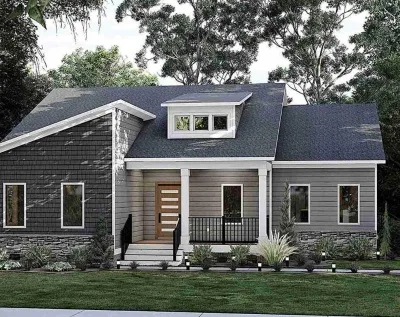

Customized Light Steel Structure Made Prefab Steel Villa with High Quality
$50.00 - $90.00
MOQ: 10 Square Meters


Pre-Engineered Steel Building with Custom Span and Height Options
$25.00 - $40.00
MOQ: 200 Square Meters


Bungalow New Fast Installation Prefab Steel Villa with Competitive Price for Private Living
$233.00 - $299.00
MOQ: 300 Square Meters
Comprehensive Sourcing Guide
Customizable Galvanized Steel Bungalow Sourcing Guide
Procuring a Customizable Galvanized Steel Bungalow requires distinguishing between generic prefabricated units and structures engineered for specific site conditions. The observed market offers products ranging from simple workshops to semi-detached villas, all utilizing steel columns and beams as primary structural members. Buyers must verify that the "galvanized" designation refers to the specific anti-rust grade, such as Hot DIP Galvanized, which is critical for longevity in varying climates.
The customization capability allows for tailored dimensions and cladding options, including fiberglass rockwool or sandwich panels, to meet thermal and acoustic needs. However, the term "bungalow" in this context often overlaps with steel structure workshops or fabricated houses, necessitating a clear definition of the intended use case. Understanding whether the structure is designed for residential occupancy or industrial application dictates the necessary load calculations and foundation requirements before any order is placed.
Product Scope and Observed Listing Signals
The current market listings indicate a diverse product scope where the core keyword applies to various structural forms, including semi-detached villas and steel workshops. Observed specifications reveal that these units often feature a frame structure with H-section steel and bolt connections, designed to withstand significant environmental loads. Buyers should note that while some listings claim a 50-year lifespan, others suggest a range of 30 to 50 years, requiring careful scrutiny of the specific product data sheet for the unit in question.
Listing signals also highlight the availability of design software integration, such as SketchUp and AutoCAD, which facilitates the customization process. The observed price range is broad, reflecting differences in material grades like Q235 versus Q345 and the complexity of the roof and wall systems. It is essential to confirm whether the "customized" roof panel color and cladding options are standard offerings or require a separate engineering review to ensure structural integrity is maintained during the modification process.
Technical Specifications to Verify
Technical verification must begin with the structural steel grade, as listings cite both Carbon Structural Steel and High-Strength Steel options. Buyers should explicitly confirm the strength level, such as Q235 or Q345, and ensure the forming process is Hot-Rolled Steel to guarantee the necessary tensile properties. The connection form is typically bolted, but the specific torque requirements and bolt grades must be defined in the technical drawings to prevent assembly errors on-site.
Load-bearing capacity is another critical verification point, with observed data citing an earthquake load resistance of 8 Grade and design codes for wind and snow loads. The insulation materials, often Fiberglass or Sandwich Panels, must be matched to the local climate requirements to ensure energy efficiency. Additionally, the size specifications, which may range from 10 to 16 meters in length, need to be cross-referenced with the available container standards, such as the 40-foot container, to ensure feasible transportation logistics.
Compliance and Safety Documentation
Compliance documentation is paramount, with observed listings frequently citing ISO, CE, and SGS certifications as evidence of quality management and product safety. Buyers must request the specific test reports associated with these certifications to verify that the steel structure meets the relevant international standards for the destination country. The presence of a GB standard reference indicates adherence to Chinese national standards, which may need to be translated or mapped to local building codes for regulatory approval.
Safety documentation should also include detailed design codes that account for wind speed, snow load, and seismic activity specific to the installation site. The warranty period, often listed as one year, covers manufacturing defects but does not necessarily extend to structural failures caused by improper installation or extreme weather events beyond the design parameters. Ensuring that the supplier provides a comprehensive set of safety data sheets and structural calculation reports is essential for liability protection and insurance purposes.
Cost Drivers and Commercial Terms
Cost drivers for customizable galvanized steel bungalows are heavily influenced by the material grade, the extent of customization, and the complexity of the design. The use of high-strength steel and specialized cladding like fiberglass rockwool increases the base material cost, while the requirement for custom dimensions and colors adds engineering and production time. Buyers should anticipate that the observed MOQ of 1 to 1000 units will significantly impact the unit price, with larger orders typically securing better rates on raw materials and shipping.
Commercial terms must clearly define the delivery timeline, which is observed to be between 30 and 45 days, and the packaging standards, such as standard containers or seaworthy packing. The origin location, often cited as China or China Qingdao, affects freight costs and lead times, which can fluctuate based on global shipping conditions. It is crucial to negotiate Incoterms that clarify who bears the risk during transit and to ensure that the payment schedule aligns with the production milestones to mitigate financial exposure.
Supplier Qualification and Quality Control
Supplier qualification should focus on their ability to provide design services using CAD, 3D, and Sketchup software, which indicates a capacity for precise customization. The presence of a trademark like "Quality Carbon Structural Steel and Alloy Structural Steel" suggests a focus on material integrity, but buyers must verify the actual manufacturing capabilities and quality control processes in place. A supplier with a proven track record in producing steel trusses and frame structures is better positioned to deliver a product that meets the specified life span and structural requirements.
Quality control measures must extend beyond the factory floor to include pre-shipment inspections and verification of the anti-rust treatment. The Hot DIP Galvanized grade is a specific process that requires strict adherence to thickness and coating standards to prevent corrosion over the product's 50-year service life. Buyers should request evidence of past projects and third-party inspection reports to confirm that the supplier consistently delivers units that match the advertised specifications for strength, insulation, and dimensional accuracy.
Long-Term Procurement Checks
Long-term procurement checks involve monitoring the structural performance of the bungalow over its intended service life, which is often cited as 50 years. Buyers should establish a maintenance schedule that includes regular inspections of the bolt connections, cladding integrity, and the condition of the galvanized coating. The warranty period of one year is a starting point, but a robust long-term plan requires understanding the degradation rates of the materials used, particularly in harsh environmental conditions.
Procurement strategies should also account for the potential need for future modifications or expansions, given the customizable nature of the steel structure. The ability to source replacement parts, such as specific steel beams or cladding panels, from the original supplier ensures continuity and compatibility. Regular reviews of the supplier's financial stability and production capacity are necessary to guarantee that they can support the product throughout its lifecycle, preventing obsolescence or supply chain disruptions.
FAQs
Can the steel structure bungalow be customized to specific requirements?
Yes, customization is available for the steel structure bungalow. Buyers can specify dimensions, roof panel colors, and cladding materials like fiberglass rockwool. The design process utilizes Sketchup and AutoCAD software to create detailed plans. This ensures the final structure meets precise architectural and functional needs for workshops or residential use.
What certifications do the steel structure buildings hold?
The steel structure buildings hold ISO, CE, and SGS certifications. These credentials verify compliance with international quality and safety standards. The materials used, such as Q235 and Q345 steel, meet rigorous strength levels. This ensures the structural integrity and reliability of the bungalow for various applications including workshops and platforms.
What is the expected life span of the steel bungalow?
The expected life span of the steel bungalow is typically 50 years. Some specifications indicate a range of 30 to 50 years depending on usage and maintenance. The structure features hot-dip galvanized anti-rust treatment to enhance durability. This long service life makes it a cost-effective solution for permanent or semi-permanent installations.
How long is the delivery time for the steel structure?
The standard delivery time for the steel structure is 30 to 45 days. This timeframe covers manufacturing, quality control, and preparation for shipment. The products are packed in standard containers or seaworthy packing to ensure safe transit. Buyers should account for this lead time when planning their construction schedules and project timelines.
What is the minimum order quantity for these steel buildings?
The minimum order quantity ranges from 1 to 1000 units depending on the specific configuration. This flexibility allows for both single-unit purchases and large-scale projects. Buyers can negotiate terms based on their volume requirements. The customizable nature of the product means that even small orders can be tailored to specific design needs.
What materials are used for the roof and wall cladding?
The roof and wall cladding options include steel sheets and sandwich panels. Insulation materials such as fiberglass and rockwool are commonly used within the sandwich panels. These materials provide thermal efficiency and weather resistance. The choice of cladding can be customized to meet specific aesthetic and performance requirements for the building.