Source Customized Indoor Carbon Fiber Panels for Walls
Find 30 Customized Indoor Carbon Fiber Panels suitable for wall decoration in hospitals, schools, and offices. Compare specifications including thickness, fire resistance, and surface textures to identify the right suppliers for your project needs; compare the available evidence and request quotations based on your requirements.
Key considerations
Products List


Building Material High Density Carbon Crystal Board Carbon Fiber Panel
$2.76 - $4.69
MOQ: 1000 Square Meters


Waterproof Wallboard PVC Wall Panel Bamboo Charcoal Panel Carbon Fiber Panel
$2.78 - $3.69
MOQ: 1000 Pieces


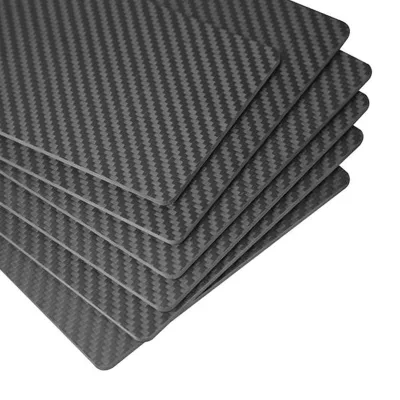


Eco-Friendly Carbon Crystal Board Panel for Sustainable Home Spaces
$2.50 - $2.65
MOQ: 30 Square Meters

Durable Carbon Fiber Flat Panel with Enhanced Lightweight Design
$2.90 - $4.35
MOQ: 1000 Square Meters


Comprehensive Sourcing Guide
Customized Indoor Carbon Fiber Panels Sourcing Guide
Procuring Customized Indoor Carbon Fiber Panels requires distinguishing between true carbon fiber composites and the prevalent PVC-based wall panels often marketed under similar names. The supplied data indicates a market dominated by products labeled as "Carbon Crystal Panels" or "PVC Plastic Sheets" with bamboo charcoal and calcium powder compositions. Buyers must verify the actual material composition to ensure the product meets the specific mechanical and aesthetic requirements of their project, as the term "carbon fiber" in listings may refer to surface textures rather than the structural material itself.
When evaluating suppliers, focus on the specific customization capabilities listed, such as grain, cloth, marbling, and metal surface finishes. The observed product range includes thicknesses from 5mm to 12mm and lengths extending up to 4 meters, which allows for seamless installation in large commercial spaces. It is critical to confirm that the customization options align with the project's design style, particularly for modern applications in hospitals, schools, and hotels where specific visual textures are mandatory for the interior design scheme.
Product Scope and Observed Listing Signals
The observed product listings reveal a wide range of specifications, with standard sizes typically starting at 1220mm by 2440mm and extending to lengths of 3200mm. Thickness options vary between 6mm and 8mm in some listings, while others offer a broader range from 5mm to 12mm. Buyers should carefully cross-reference the specific model numbers, such as TJB0001, with the requested dimensions to ensure the supplier can deliver the exact panel size required for the wall decoration scope, as standard sizes may not cover all custom height requirements up to 4 meters.
Listing signals also highlight the installation method, which is often described as direct application onto the wall, suggesting a need for compatible adhesives or mounting systems. The surface treatment options include 3D wood grain and various textures, which are crucial for achieving the desired aesthetic in dining areas, living rooms, and office buildings. Procurement teams must verify if the "Carbon Crystal" designation refers to the visual finish or the core material, as the material composition often lists PVC, bamboo charcoal powder, and calcium powder rather than pure carbon fiber.
Technical Specifications to Verify
Technical verification must prioritize the mechanical properties and physical performance metrics provided in the product data. Key attributes to confirm include tensile strength, which ranges from 81 to 130MPa, and water absorption rates between 1.5% and 3.5%. These figures are essential for applications in moisture-prone areas like bathrooms and kitchens, ensuring the panels maintain structural integrity and do not degrade under humid conditions. Buyers should request specific test reports to validate these mechanical properties against the project's environmental demands.
Surface characteristics and fire resistance are equally critical for indoor safety compliance. The observed data indicates a Class B1 fire resistance rating and a formaldehyde-free composition, which are vital for public spaces such as schools and hospitals. Additionally, the surface coating process using PUR hot melt adhesive film contributes to the durability and cleanability of the panels. Procurement specialists must ensure that the texture options, including wood, stone, and metal grains, are applied consistently across the batch to maintain visual uniformity throughout the installation.
Compliance and Safety Documentation
Safety documentation for these panels must explicitly address fire ratings and chemical emissions. The listings mention a Class B1 fire resistance and a formaldehyde-free characteristic, which are significant for indoor air quality and building code compliance. Buyers should request the specific SGS testing report referenced in the product data to verify the "a+" rating and confirm that the formaldehyde emissions meet the strictest international standards for residential and commercial interiors. Without this documentation, the safety claims remain unverified and pose a risk to project approval.
Environmental and material safety certifications are also necessary to validate the eco-friendly claims associated with the product. The manufacturing process involves high-temperature extrusion of PVC, bamboo charcoal powder, and calcium powder, which requires verification of the raw material sourcing and the absence of hazardous additives. Procurement teams should ensure that the supplier can provide documentation confirming the product is free from harmful substances and meets the relevant environmental standards for the target market, particularly for projects in sensitive environments like schools and healthcare facilities.
Cost Drivers and Commercial Terms
Cost drivers for customized indoor panels are heavily influenced by the material composition, thickness, and surface treatment complexity. The observed price range of 0.4 to 58 USD suggests significant variation based on the specific model, finish, and order volume. Buyers must understand that higher thicknesses, such as 12mm, and specialized textures like metal grain or skin sensory surfaces will command a premium over standard wood grain finishes. Additionally, the customization of panel lengths up to 4 meters may incur extra processing costs compared to standard 2440mm lengths.
Commercial terms regarding Minimum Order Quantity (MOQ) and logistics are critical for budget planning. While some listings indicate an MOQ of 200 square meters, others show a range from 1 to 1000 units, requiring careful negotiation to align with project needs. The packaging standard involves seaworthy pallets with film protection, which impacts shipping costs and handling requirements. Buyers should clarify the Incoterms and whether the direct port logistics mentioned in the data cover inland transportation to the final construction site to avoid unexpected freight expenses.
Supplier Qualification and Quality Control
Supplier qualification should focus on the manufacturing process and origin verification. The data indicates production in Hebei, China, utilizing high-temperature extrusion for PVC-based panels. Buyers must verify the supplier's capacity to maintain consistent quality across large batches, especially when customizing surface textures and colors. The presence of a "Project Solution" capability for graphic design suggests the supplier may offer value-added services, but the core manufacturing quality must be validated through site audits or third-party inspections.
Quality control protocols must address the consistency of the surface coating and dimensional accuracy. The standard size of 1220mm by 2440mm is common, but custom lengths require precise cutting and finishing to ensure a seamless installation. Buyers should request samples to test the tensile strength and contraction percentage, which are listed as less than 0.4%, to ensure the panels will not warp or shrink after installation. Establishing a clear quality acceptance criteria based on the observed mechanical properties is essential before committing to a large-scale order.
Long-Term Procurement Checks
Long-term procurement strategies should include regular audits of the supplier's ability to maintain the specified material composition and performance standards. As the market for carbon crystal and PVC panels evolves, suppliers may alter their formulations or surface treatments, which could impact the fire resistance and durability of the product. Buyers must establish a protocol for periodic re-testing of samples to ensure that the Class B1 fire rating and formaldehyde-free status remain consistent over time.
Supply chain resilience is another critical factor for long-term projects. The observed logistics model relies on direct port shipping, which can be susceptible to global shipping disruptions. Procurement teams should develop contingency plans for alternative logistics routes or local stockpiling to mitigate delays. Additionally, maintaining a relationship with the supplier for ongoing technical support and design assistance will ensure that future project requirements can be met efficiently without compromising on the quality or customization of the indoor wall panels.
FAQs
How are Customized Indoor Carbon Fiber Panels installed on walls?
These panels install directly onto the wall without a substructure, which keeps installation fast and simple. Surfaces should be clean, dry, and level before mounting. The panels come in thicknesses of 6 or 8 millimeters, and standard sheets measure 1220 by 2440 millimeters, so larger walls can be covered efficiently with minimal cutting or joining work.
What sizes and thicknesses are available for Customized Indoor Carbon Fiber Panels?
Standard sheets are 1220 millimeters wide with lengths of 2440, 2600, 2800, 3000, or 3200 millimeters. Thickness options include 5, 6, 8, 9, and 12 millimeters depending on the listing. Customizable panel height can reach up to 4 meters for projects that need tall, seamless wall coverage in modern interior designs.
Which certifications or testing support these carbon crystal panels?
Listed panels carry an A+ rating from SGS testing, and fire resistance is rated Class B1. Buyers planning hospitals, schools, or office buildings should confirm that the certification documents shown on each product page match their project requirements before ordering, since attributes are listed per listing and may vary between individual panel models.
Can these panels be customized in color, texture, and surface finish?
Yes, color is customizable and texture options include wood grain, stone grain, and metal grain. Listed surface lines cover grain, cloth, marbling, metal surface, and skin-sensory finishes, often produced with a 3D wood grain treatment. Project graphic design support is available, so buyers can align panel appearance with a modern design style for their interiors.
What is the minimum order quantity for Customized Indoor Carbon Fiber Panels?
The listed MOQ is 200 square meters for this product line. Actual minimums can vary by listing, with observed values across the category ranging from 1 to 1000. Buyers should confirm the exact MOQ, pricing, and any customization surcharges with the supplier before placing a first order or requesting a formal quotation.
What materials and manufacturing process are used for these panels?
The panels are composed of bamboo charcoal powder, calcium powder, and PVC, formed by high-temperature extrusion. The surface coating uses a PUR hot melt adhesive film. Listed characteristics include fireproof, waterproof, and formaldehyde-free performance, and WPC variants are also offered, so buyers can match material composition to indoor wall decoration needs.
How are the panels packed and shipped for export orders?
Panels are packed on standard seaworthy pallets with film on each panel, and logistics are arranged via direct port. This packaging protects surfaces during container transport and simplifies handling at destination. Buyers should confirm pallet counts, container loading quantities, and destination port arrangements with the supplier when planning delivery schedules.
Which application scenarios suit these indoor wall panels?
Listed applications include hospitals, schools, office buildings, hotels, and apartments, with use focused on indoor wall decoration. Because the panels are waterproof, fire-resistant to Class B1, and formaldehyde-free, they fit commercial and residential interiors such as living rooms, dining areas, bathrooms, and hotel lobbies where durable wall cladding is required.