Source Customized Inflatable Snow Globe Tent with Blower for Holiday, Party, Camping
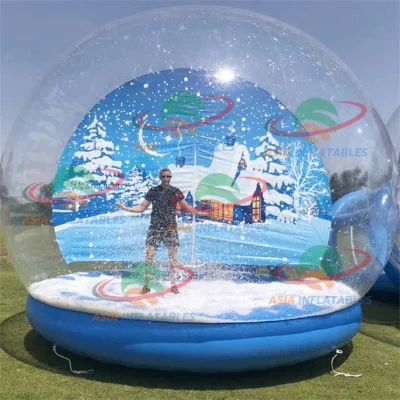
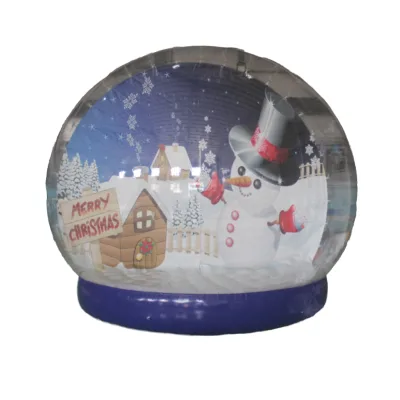
Find 30 listings for the Customized Inflatable Snow Globe Tent with Blower to compare specifications like size, material, and shipping options. Buyers can evaluate suppliers offering CE/SGS certifications and 3-year warranties for Christmas, indoor, or outdoor applications.
Key considerations
Products List
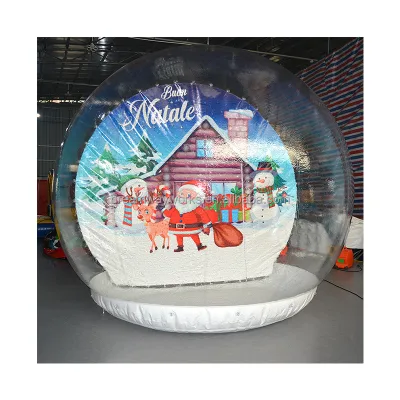


Christmas Airblown Clear Inflatable Snow Globe Tent with Blowing Snow
$790.00 - $1999.00
MOQ: 1 Pieces


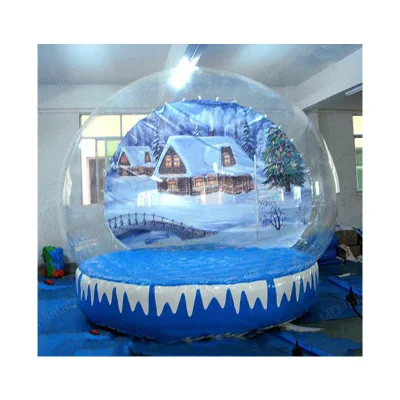
Customized Background Snow Globe Inflatable, Inflatable Snow Globe with Blowing Snow
$100.00 - $560.00
MOQ: 1 Minimum


inflatable balloon tents, inflatable tents for events, inflatable winter tent
$2000.00 - $3000.00
MOQ: 1 Pieces

Good Quality Inflatable customize large Balloon dome Tents for Event
$1500.00 - $5000.00
MOQ: 1 Pieces
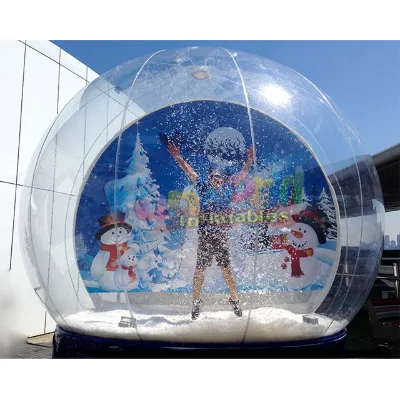


Factory Custom Excellent Sealing Windproof Rainproof Inflatable Tent
$321.00 - $374.00
MOQ: 100 Pieces


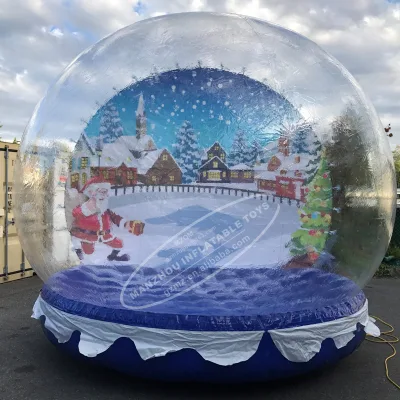


Comprehensive Sourcing Guide
Strategic Sourcing Guide for Customized Inflatable Snow Globe Tents with Blowers
Understanding Product Specifications and Core Attributes
When sourcing a customized inflatable snow globe tent with a blower, buyers must first establish a clear understanding of the product's fundamental technical specifications. The core item is an inflatable structure designed to mimic the aesthetic of a snow globe, often utilized for festive displays or promotional events. The primary material identified in the market is high-quality PVC, which is selected for its durability and ability to maintain structural integrity under pressure. While some listings reference "Best PVC," the specific grade and thickness should be verified during the supplier evaluation phase to ensure suitability for the intended environment.
The dimensions of these units are highly flexible. Market data indicates that standard sizes often include a 3-meter or 4-meter diameter, but the "Customized" attribute is a dominant feature. Buyers can request specific dimensions to fit their venue constraints, with production times typically ranging between 5 to 7 working days for custom orders. The physical packaging is equally critical for logistics planning; units are generally packed in cartons or strong PVC bags, with package dimensions varying from approximately 65x40x40 cm to 100x80x82 cm depending on the specific model and size. The weight of the packed unit can reach up to 25 kg, which directly influences shipping cost calculations.
The blower is an essential accessory included in the standard package. Sourcing guides should note that the blower is not merely an add-on but a functional requirement for the tent's operation. The system typically includes repair kits and D-ring tie-downs to ensure stability during use. The color options are extensive, ranging from standard colorful palettes to fully customized selections based on a color card or specific client requests. This level of customization extends to the branding, with OEM and ODM services generally accepted, allowing companies to imprint logos or specific designs onto the PVC surface.
Compliance, Certification, and Safety Standards
Safety and regulatory compliance are paramount when importing inflatable structures, particularly those intended for public use or children's environments. The supply chain for these products, predominantly originating from Guangdong, China, or specifically Guangzhou, must adhere to rigorous international standards. Buyers should verify that the supplier possesses valid certifications that align with the destination market's regulations.
The most frequently observed certifications in this category include CE, RoHS, SGS, and ASTM. These marks indicate compliance with European safety directives, restrictions on hazardous substances, and general quality assurance protocols. For products intended for the North American market, ASTM certification is a critical verification point. Additionally, EN71 standards are often cited, which specifically address safety requirements for toys and recreational equipment, a relevant category if the snow globe is used in family-oriented events. Other potential certifications to verify include UL for electrical safety regarding the blower and EnCE, which may denote specific regional compliance.
It is important to distinguish between the certifications of the tent material and the electrical components. While the PVC structure may carry CE and RoHS marks, the blower itself must meet local electrical safety standards. Buyers should request copies of these certificates before placing an order and ensure they are current. The absence of a specific certification does not necessarily disqualify a supplier, but it requires a deeper due diligence process to confirm that the product meets the legal requirements of the importing country.
Cost Drivers and Pricing Dynamics
The pricing structure for customized inflatable snow globe tents is influenced by several variable factors rather than a fixed unit cost. The observed market price range is broad, spanning from approximately $51 to $5,000 USD. This significant variance is driven primarily by the scale of the order, the complexity of the customization, and the specific material thickness required.
The Minimum Order Quantity (MOQ) is a critical cost driver. Many suppliers offer a low entry point, with an MOQ of just 1 piece, making these products accessible for single-event purchases or small businesses. However, larger orders may benefit from economies of scale, potentially reducing the per-unit cost. The customization level also impacts pricing; a standard 3-meter unit will cost significantly less than a bespoke 4-meter or larger structure with complex printing, specific color matching, or integrated lighting features.
Shipping costs represent another substantial portion of the total landed cost. The product is bulky, and while it deflates for transport, the package dimensions and weight (up to 25 kg) necessitate careful logistics planning. Buyers must evaluate the trade-off between air freight, express services like DHL, FedEx, and UPS, and sea freight. Air freight offers a lead time of 5 to 7 days but incurs higher costs, whereas sea freight is more economical for large volumes but extends the delivery timeline. Payment terms, which typically include T/T, Western Union, Bank Transfer, and Credit Card, also affect cash flow and should be negotiated based on the order value and supplier relationship.
Typical Applications and Usage Scenarios
The versatility of the customized inflatable snow globe tent allows for a wide array of applications across different sectors. The primary usage scenarios are festive and promotional. During the Christmas and holiday seasons, these structures serve as eye-catching attractions in shopping malls, public squares, and corporate events. Their "Festival" theme makes them ideal for creating immersive holiday experiences that draw crowds and enhance brand visibility.
Beyond seasonal events, these tents are utilized for advertising and corporate branding. Companies can leverage the "Advertising Tent" classification to display logos and messages on the exterior of the inflatable structure. The "Customized" nature of the product allows for seamless integration with corporate identity guidelines. In the retail sector, the tents function as temporary pop-up stores or display booths, offering a unique and memorable shopping environment.
The product also finds application in private and recreational settings. The "Home Decoration" and "Office" usage categories suggest that these items can be used for private parties, garden events, or as unique decor elements in corporate lobbies. For the hospitality and event management industry, the "Camping Tent" and "Beach Tent" applications indicate potential use as temporary shelters or themed attractions at outdoor festivals. The "Relief" and "Party" classifications further highlight their role in community gatherings and emergency response setups where rapid deployment is necessary. The inclusion of accessories like repair kits ensures that the tent remains functional throughout its intended lifespan, whether used for a single-day event or a longer-term installation.
Supplier Evaluation and Operational Capabilities
Selecting the right supplier requires a thorough evaluation of their operational capabilities and track record. Given that the majority of these products originate from Guangdong, China, buyers should verify the specific location of the manufacturing facility, as Guangzhou is a known hub for such production. A reliable supplier should demonstrate transparency regarding their production timeline, which is typically cited as 5 to 7 working days for custom orders.
Buyers should assess the supplier's ability to handle customization requests. The acceptance of OEM and ODM services is a positive indicator of flexibility. It is essential to confirm that the supplier can manage the entire process, from design approval to final packing. The "Customized" attribute implies that the supplier must have the technical capacity to modify the mold or printing process to meet specific client requirements.
The quality of the accessories provided is another key evaluation metric. A reputable supplier will include a complete set of accessories, such as the blower, repair kits, and D-ring tie-downs, as standard. The availability of "Repair Kits for Free" is a significant value-add that reduces long-term maintenance costs. Buyers should also inquire about the warranty terms, with a 3-year warranty being a common offering that signals confidence in product durability.
Quality Control and Long-Term Procurement Considerations
Ensuring consistent quality is a continuous process that extends beyond the initial purchase. Buyers should implement a quality control protocol that includes pre-production sample approval and post-production inspection. The material, specified as PVC, must be tested for tensile strength and resistance to tearing, especially if the tent is intended for outdoor use where weather conditions can be harsh.
Long-term procurement considerations involve building a sustainable relationship with the supplier. This includes negotiating favorable payment terms and establishing clear communication channels for future orders. The "Production Time" of 5 to 7 days suggests a relatively agile supply chain, but buyers should account for potential delays during peak seasons, such as the lead-up to Christmas.
Maintenance and storage are also critical for the longevity of the product. The "Strong PVC Bag" or carton packaging provided by the supplier should be sufficient for storage, but buyers should verify the conditions under which the tent can be stored to prevent degradation. Regular inspection of the blower and the integrity of the seams is necessary to ensure safety during subsequent uses. By focusing on these operational aspects, buyers can maximize the return on investment and ensure that the customized inflatable snow globe tent remains a reliable asset for their events and marketing strategies.
FAQs
What certifications do the inflatable snow globe tents have?
The tents typically carry CE, RoHS, SGS, ASTM, and EN71 certifications. These marks ensure compliance with international safety standards for materials and electrical components like the included blower.
Can I customize the size and color of the tent?
Yes, customization is available for both size and color. Buyers can select standard dimensions like 3 meters or 4 meters, or request specific measurements, and choose colors from a card or custom options.
How long does production take for a custom order?
Production time is typically about 5 to 7 working days for custom orders. This timeline applies to manufacturing the customized PVC structure and packing it with accessories like the blower and repair kits.
What is the minimum order quantity for this product?
The minimum order quantity is 1 piece for most suppliers. This low entry point allows buyers to purchase single units for events or small businesses without needing to meet large volume thresholds.
Which shipping methods are available for delivery?
Shipping is available via DHL, FedEx, TNT, UPS, air freight, sea freight, and train. The choice depends on urgency and budget, with express services offering faster delivery than sea freight options.
What accessories are included with the inflatable tent?
Standard accessories include an air blower, repair kits, and D-ring tie downs. Some suppliers also provide repair kits for free to ensure the tent remains functional throughout its usage period.
Where are these products manufactured?
Products originate from Guangdong, China, with specific manufacturing hubs in Guangzhou. This region is a known center for producing PVC inflatable structures and related festive decorations.