Source Human Breast Anatomy Model with Common Pathologies for schools, hospitals, and training
Compare 30 Human Breast Anatomy Model with Common Pathologies from verified Chinese manufacturers. These educational tools feature life-size designs, advanced PVC or resin materials, and CE ISO certifications for medical science training in schools and hospitals.
Key considerations
Products List
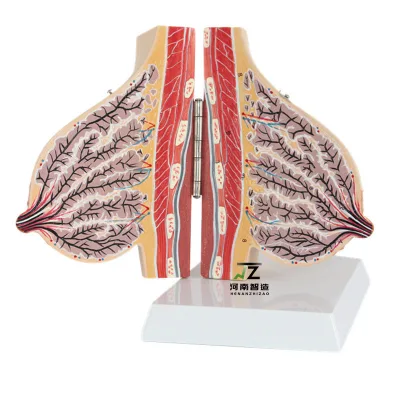


Normal Single Breast Lateral Section Anatomical Model for Medical Science for Schools
$34.00 - $45.00
MOQ: 1 Pieces




Comprehensive Sourcing Guide
Strategic Sourcing Guide for Human Breast Anatomy Models with Pathologies
The procurement of human breast anatomy models featuring common pathologies represents a critical investment for medical education institutions, surgical training centers, and healthcare training facilities. These specialized anatomical tools are designed to bridge the gap between theoretical knowledge and practical clinical application, allowing students and professionals to visualize and interact with complex breast structures and disease states. When sourcing these educational assets, buyers must navigate a landscape defined by specific material requirements, rigorous certification standards, and diverse supplier capabilities. The following guide outlines the essential factors for evaluating and acquiring high-quality breast anatomy models, ensuring that the selected equipment meets the highest standards of educational efficacy and safety.
Technical Specifications and Material Composition
The physical attributes of a breast anatomy model are paramount in determining its utility for both teaching and demonstration purposes. In the current market, models are predominantly constructed from advanced polyvinyl chloride (PVC) or high-grade resin. Advanced PVC is frequently cited as the material of choice due to its durability, flexibility, and ability to mimic the texture of human tissue. This material allows for the creation of realistic surface features while maintaining the structural integrity required for repeated handling in a classroom or laboratory setting. Conversely, resin models offer a different tactile experience, often providing a more rigid structure that may be preferred for specific static display purposes.
Size is another critical technical specification. Models range from compact, small-scale representations to life-size replicas. Life-size models are particularly valuable for simulating real-world surgical scenarios, providing students with a sense of scale that smaller models cannot replicate. The dimensions of these units vary significantly; some standard configurations measure approximately 20x22x16 cm for portable units, while others may extend to dimensions like 95cm x 27cm x 8.5cm or 89x46x28 cm for larger, more detailed anatomical studies. Buyers should verify the specific dimensions against their available display space and the intended teaching methodology. Furthermore, the internal structure of the model must accurately represent the breast anatomy, including glandular tissue, fat, and connective tissues, with clear differentiation of pathological features such as tumors or cysts.
Compliance and Certification Verification
In the medical education sector, compliance with international safety and quality standards is non-negotiable. When sourcing breast anatomy models, buyers must rigorously verify the certification status of the products. The supply chain for these educational tools often includes certifications such as CE, ISO 9001, RoHS, and CCC. These marks indicate that the manufacturer adheres to specific regulations regarding electrical safety (if applicable), environmental restrictions on hazardous substances, and quality management systems.
It is essential to distinguish between different certification types. For instance, ISO 9001 certifies the quality management system of the manufacturer, ensuring consistent production processes. CE marking indicates conformity with health, safety, and environmental protection standards for products sold within the European Economic Area. RoHS compliance ensures that the materials used do not contain specific hazardous substances like lead or mercury, which is crucial for the safety of students and staff handling the models. Buyers should request valid certification documents directly from the supplier and verify their authenticity. Relying on generic claims without documented proof can lead to procurement of substandard equipment that may not meet institutional accreditation requirements.
Cost Drivers and Pricing Dynamics
The pricing of breast anatomy models is influenced by a complex array of factors, including material quality, level of anatomical detail, size, and the complexity of the pathology representation. Market observations indicate a wide price range, with unit costs varying significantly based on the specific configuration and customization options. While some basic models may be available at lower price points, high-fidelity life-size models with detailed pathological features command a premium.
The minimum order quantity (MOQ) also plays a significant role in the total cost of ownership. Suppliers may offer flexible MOQs ranging from a single unit to several thousand sets, depending on the production capacity and the nature of the order. For institutions requiring a single unit for demonstration, the per-unit cost may be higher due to the lack of economies of scale. Conversely, bulk purchases for large educational programs can significantly reduce the average cost per unit. Buyers should also consider the packaging and shipping costs, as the gross weight and carton dimensions of these models can impact logistics expenses. For example, a single package might weigh 1.2 kg with dimensions of 20x22x16 cm, while bulk cartons can weigh up to 12 kg and contain multiple units, affecting freight calculations.
Typical Applications in Medical Education
The primary application of breast anatomy models with common pathologies is in medical and nursing education. These models serve as indispensable tools for teaching students about breast health, diagnostic techniques, and surgical procedures. They are utilized in university medical schools, vocational training centers, and hospital-based training programs. The ability to visualize and palpate different pathological conditions allows students to develop the tactile skills necessary for clinical examinations.
Beyond academic settings, these models are increasingly used in patient education. Healthcare providers can use them to explain complex medical conditions to patients, helping them understand the nature of their diagnosis and the proposed treatment plan. The realistic representation of pathologies facilitates better communication and informed consent. Additionally, the models are suitable for research and development in the field of medical device testing, providing a standardized platform for evaluating new surgical instruments or diagnostic tools. The versatility of these models makes them a valuable asset across various sectors of the healthcare industry.
Supplier Evaluation and Selection Criteria
Selecting the right supplier is a critical step in the procurement process. Buyers should prioritize suppliers who demonstrate a clear understanding of medical education needs and possess a track record of delivering high-quality anatomical models. Key evaluation criteria include the supplier's location, production capacity, and history of customization. Many manufacturers, such as those based in Henan, China, offer factory-direct pricing and the ability to customize models to specific institutional requirements.
When evaluating potential suppliers, buyers should assess their response to specific inquiries regarding material composition, certification validity, and after-sales support. A reputable supplier will provide detailed product specifications, including model numbers, dimensions, and weight, rather than vague descriptions. They should also be transparent about their production lead times and shipping methods. It is advisable to request samples or virtual tours of the manufacturing facility to verify the quality of the products before placing a large order. Furthermore, suppliers who offer customization services, such as specific pathology representations or branding, can provide added value to the educational program.
Quality Control and Long-Term Procurement Considerations
Ensuring the long-term durability and educational value of breast anatomy models requires a robust quality control strategy. Buyers should establish clear acceptance criteria based on the model's physical integrity, color accuracy, and the clarity of pathological features. Regular inspections upon delivery are necessary to verify that the products match the agreed-upon specifications and are free from defects. The condition of the models should be "New," and any signs of wear or damage during transit should be addressed immediately.
For long-term procurement, buyers should consider the scalability of their orders and the potential for future customization. As educational curricula evolve, the need for updated models or new pathological representations may arise. Suppliers who offer flexible customization options and maintain a consistent supply chain are better positioned to support these changing needs. Additionally, buyers should evaluate the availability of replacement parts or accessories, such as removable components or instructional guides, which can extend the lifespan and utility of the models. Establishing a long-term relationship with a reliable supplier can also facilitate better pricing and priority support in the future.
Comparative Analysis of Model Configurations
To assist buyers in making informed decisions, the following table compares common model configurations based on available specifications. This comparison highlights the variations in size, material, and certification that influence the selection process.
| Feature | Configuration A | Configuration B | Configuration C |
|---|---|---|---|
| Primary Material | Advanced PVC | PVC | Resin |
| Size Category | Life Size | Small Size | Standard (28cm) |
| Dimensions | 20x22x16 cm | 28cm | 95cm x 27cm x 8.5cm |
| Weight | 1.2 kg | 0.6 kg | 1.5 kg |
| Certifications | CE, ISO, RoHS | RoHS, ISO9001 | CE, ISO9001 |
| Customization | Available | Non-Customized | Available |
| Typical Use | School & Hospital | Medical Education | General Anatomy |
This table illustrates that while all configurations serve educational purposes, the choice depends heavily on the specific needs of the institution. Life-size models with advanced PVC are ideal for surgical training, while smaller resin models may be more suitable for introductory courses or portable demonstrations. Buyers must align their selection with their specific pedagogical goals and budget constraints.
In conclusion, sourcing human breast anatomy models with common pathologies requires a meticulous approach that balances technical specifications, compliance requirements, and cost considerations. By adhering to the guidelines outlined in this guide, buyers can ensure the acquisition of high-quality educational tools that enhance medical training and patient care. The focus should remain on verifying facts, avoiding unverified claims, and selecting suppliers who demonstrate a commitment to quality and safety.
FAQs
What materials are used for Human Breast Anatomy Model with Common Pathologies?
Advanced PVC is the primary material used for these models due to its durability and tissue-like texture. Some variations may utilize high-grade resin for a more rigid structure suitable for static display purposes in educational settings.
Which certifications are standard for Human Breast Anatomy Model with Common Pathologies?
Standard certifications include CE, ISO 9001, RoHS, and CCC to ensure safety and quality compliance. These marks verify adherence to international regulations regarding hazardous substances and quality management systems for medical education tools.
Can Human Breast Anatomy Model with Common Pathologies be customized for specific needs?
Customization is available for many models to meet specific institutional requirements or pathology representations. Buyers should verify with the supplier whether the specific model number supports customization or if it is a non-customized standard item.
How large are the life-size Human Breast Anatomy Model with Common Pathologies?
Life-size models are designed to simulate real-world surgical scenarios with accurate scale. Dimensions vary significantly, with some portable units measuring 20x22x16 cm and larger detailed models reaching 95cm x 27cm x 8.5cm.
What is the minimum order quantity for Human Breast Anatomy Model with Common Pathologies?
The minimum order quantity can range from 1 set for single unit purchases to 5000 sets for bulk orders. Flexible MOQs allow institutions to acquire single demonstration units or stock large educational programs depending on their budget.
Where are Human Breast Anatomy Model with Common Pathologies typically manufactured?
These models are typically manufactured in Henan, China, by factories offering direct pricing. The origin location is a key factor for logistics planning and verifying the supplier's production capacity and lead times for international shipping.