Source D-Allulose for Yogurt, Beverages, and Baked Goods
Find and compare 30 verified D-Allulose suppliers from China. Evaluate options based on purity levels, packaging formats, and delivery times to secure food-grade sweetener for your manufacturing needs.
Key considerations
Products List




Comprehensive Sourcing Guide
D-Allulose Sourcing Guide
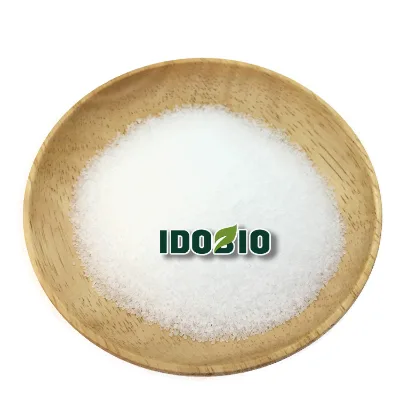
D-Allulose, also known as D-psicose, is a rare sugar that has gained significant traction in the global food and beverage industry due to its unique metabolic profile. With a CAS number of 551-68-8, this compound is chemically distinct from common sweeteners, offering a sweetness profile similar to sucrose while providing minimal caloric impact. For procurement professionals, understanding the specific physical and chemical characteristics of D-Allulose is essential for selecting the right grade for formulation needs. The product is typically observed as a white crystalline powder, though variations in appearance such as dark yellow, light yellow, or transparent colors may exist depending on the processing method and purity levels. Buyers must carefully evaluate these visual attributes against their specific application requirements to ensure product consistency and aesthetic compatibility in the final consumer good.
The primary value proposition of D-Allulose lies in its nutritional attributes, specifically its low caloric content of approximately 0.2 Kcal/g, which is roughly one-tenth that of sucrose. This characteristic makes it an ideal ingredient for products targeting weight management, diabetes care, and blood sugar regulation. As a natural resource-derived sweetener, it serves as a functional ingredient that can replace traditional sugars without significantly altering the taste or texture of foods. Procurement teams should recognize that while the sweetness is comparable to table sugar, the functional behavior in baking and processing may differ, requiring careful integration into existing supply chains and production lines.
Product Scope and Observed Listing Signals
The market for D-Allulose presents a wide range of product listings, with observed prices varying significantly from $1 to $3,100 USD. This broad price spectrum reflects differences in purity, packaging, order volume, and supplier positioning. Minimum Order Quantities (MOQs) also vary widely, ranging from single units to 5,000 units, indicating that suppliers cater to both small-scale R&D trials and large-scale industrial manufacturing. Buyers should interpret these signals as indicators of market segmentation, where lower MOQs and higher per-unit prices often correspond to premium packaging or smaller batch production, while bulk orders benefit from economies of scale. Understanding these market dynamics helps in negotiating terms that align with the company’s inventory management and cash flow strategies.
Packaging options for D-Allulose are diverse, with common formats including 25kg bags, kraft paper bags, and palletized configurations. Some listings specify 25kg PP bags, while others mention kraft paper bags on pallets, suggesting that suppliers offer flexible logistics solutions to meet different storage and handling requirements. The standard packaging size of 25kg per bag is prevalent, facilitating easier handling in industrial settings. However, buyers must verify the specific packaging material and structural integrity to ensure moisture protection and product stability during transit. The availability of customization options allows companies to tailor packaging to their specific branding or logistical needs, adding value to the procurement process.
Technical Specifications to Verify
Purity is a critical technical specification for D-Allulose, with observed content levels on a dry basis reaching up to 98% or 99%. Buyers must verify the exact purity grade required for their application, as higher purity levels may be necessary for pharmaceutical or high-end dietary supplement uses, while food-grade applications might tolerate slightly lower purity. The ignition residue is typically observed at 0.1%, and loss on drying is generally less than 1.0%, indicating low moisture content which is crucial for shelf stability and processing efficiency. These parameters directly impact the product’s performance in formulations, particularly in terms of solubility and crystallization behavior. Procurement teams should request detailed Certificates of Analysis (CoA) to confirm these values for each batch.
The pH range of D-Allulose is typically between 3.0 and 7.0, which influences its compatibility with various food matrices. This neutral to slightly acidic range makes it suitable for a wide array of applications, including yogurt, ice cream, beverages, and baked goods. The product’s function extends beyond sweetening, offering stabilization effects that can improve the texture and mouthfeel of final products. Additionally, its usage as a sweetener is complemented by its role in anti-obesity and diabetes management products, appealing to health-conscious consumers. Buyers should assess how these technical properties align with their product development goals, ensuring that the D-Allulose grade selected supports the desired functional outcomes in their specific food or beverage formulations.
Compliance and Safety Documentation
Certification is a key factor in supplier selection, with common certifications including Halal, Kosher, ISO22000, and Mui. These certifications demonstrate that the supplier adheres to specific religious, quality, and safety standards, which is essential for accessing diverse global markets. Buyers must verify the validity and scope of these certifications, ensuring they cover the specific production facilities and product lines being sourced. The presence of these certifications reduces regulatory risk and facilitates smoother customs clearance in countries with strict import requirements. Additionally, suppliers may adhere to specific inspection standards, such as Q/371426fy 007, which provides a framework for quality control and product consistency.
Safety and regulatory compliance extend beyond certifications to include adherence to food-grade standards. The product is explicitly labeled as food grade, indicating its suitability for human consumption. Buyers should ensure that the supplier provides documentation confirming compliance with relevant food safety regulations in the destination market, such as FDA regulations in the United States or EFSA guidelines in Europe. The natural resource origin of D-Allulose may also require verification to ensure it meets organic or natural labeling claims if applicable. Procurement teams should maintain a comprehensive file of all safety and compliance documents to support audits and regulatory inspections.
Cost Drivers and Commercial Terms
The cost of D-Allulose is influenced by several factors, including raw material availability, production capacity, and packaging requirements. Suppliers with a production capacity of 3,000 tons or 3,000 metric tons per year can offer competitive pricing for large orders, leveraging economies of scale. However, buyers should be aware that prices can fluctuate based on market demand and supply chain dynamics. The observed price range of $1 to $3,100 USD highlights the importance of negotiating volume-based discounts and long-term contracts to secure favorable pricing. Understanding the cost structure helps buyers make informed decisions about inventory levels and supplier relationships.
Commercial terms, including payment and delivery, are critical components of the procurement agreement. Common payment terms include 50% TT in advance and 50% TT against the copy of the Bill of Lading, which balances risk between buyer and supplier. Delivery times typically range from 5 to 10 days after receiving the order, with some suppliers offering expedited shipping options. The loading port is often specified as Xingang Port, which affects logistics planning and transit times. Buyers should negotiate clear terms regarding delivery schedules, penalties for delays, and responsibilities for shipping costs to avoid unexpected expenses. Flexibility in commercial terms can enhance supply chain resilience and operational efficiency.
Supplier Qualification and Quality Control
Supplier qualification involves assessing the manufacturer’s capabilities, including their production capacity, customization services, and export experience. Many suppliers identify as both manufacturers and exporters, offering OEM and ODM services to meet specific customer requirements. Buyers should verify the supplier’s production facilities and quality control processes to ensure consistent product quality. The ability to customize packaging and product specifications adds value, allowing companies to tailor solutions to their unique needs. Evaluating the supplier’s track record and customer references can provide insights into their reliability and service quality.
Quality control is paramount in D-Allulose procurement, with suppliers implementing rigorous testing protocols to ensure product consistency. Buyers should request regular quality audits and sample testing to verify that the product meets specified standards. The supplier’s adherence to inspection standards and their ability to provide detailed test results are key indicators of their commitment to quality. Establishing a clear communication channel for quality issues and implementing a robust feedback loop can help maintain high standards. Procurement teams should work closely with quality assurance departments to define acceptance criteria and resolve any discrepancies promptly.
Long-Term Procurement Checks
Long-term procurement success depends on continuous monitoring of supplier performance and market trends. Buyers should regularly review supplier metrics, including on-time delivery rates, product quality, and responsiveness to issues. Building a strong relationship with suppliers can lead to better pricing, priority service, and access to new product developments. Staying informed about regulatory changes and market dynamics ensures that procurement strategies remain aligned with business objectives. Regularly updating supplier qualification criteria and conducting periodic audits helps maintain a high-performing supply base.
Risk management is essential for mitigating potential disruptions in the D-Allulose supply chain. Buyers should diversify their supplier base to reduce dependency on a single source and ensure business continuity. Developing contingency plans for supply shortages or quality issues can minimize operational impact. Additionally, monitoring the sustainability and ethical practices of suppliers aligns with corporate social responsibility goals. By implementing a proactive approach to supplier management, companies can secure a stable and reliable supply of D-Allulose, supporting their long-term growth and market competitiveness.
FAQs
What is the calorie content of D-Allulose compared to sucrose?
D-Allulose provides only approximately 0.2 Kcal per gram, which is about one-tenth the calories of sucrose. This low caloric value makes it a suitable sweetener for dietary management. It retains a sweet taste while significantly reducing energy intake in food applications.
What certifications are available for D-Allulose products?
Products are available with Halal, Mui, Kosher, and ISO22000 certifications. These credentials ensure compliance with international food safety and religious dietary standards. Buyers can verify these documents to meet specific regulatory requirements for their target markets and end consumers.
How is D-Allulose typically packaged for shipment?
The product is commonly packed in 25kg Kraft Paper Bags or PP Bags, often placed on pallets for stability. This packaging protects the white crystalline powder from moisture and contamination. The 25kg standard facilitates efficient handling and storage in industrial food processing environments.
What are the primary applications for D-Allulose in food?
It is widely used in yogurt, ice cream, beverages, and baked foods as a sweetener. Its stability and sweet taste allow it to replace sugar in various formulations. This versatility supports manufacturers in creating low-calorie versions of popular consumer goods without compromising flavor.
What is the typical delivery time for D-Allulose orders?
Delivery typically occurs within 5 to 10 days after receiving the order. This lead time allows for efficient supply chain planning. Buyers should confirm specific schedules with suppliers, as production capacity and logistics may influence exact dispatch dates for bulk quantities.
What is the purity level of D-Allulose powder?
The D-Allulose content on a dry basis is typically 98% to 99%. This high purity ensures consistent performance in food applications. The product meets food grade standards, making it suitable for direct use in human consumption products requiring precise ingredient specifications.