Source D4CB Engine for Hyundai for Cars, Trucks, and SUVs
Find 30 listings for the D4CB Engine for Hyundai with varying specifications like 2.5L displacement and 90kW power. Buyers can compare prices, MOQs, and customization options from verified suppliers in China.
Key considerations
Products List


D4bf D4bb D4CB D4bh G4js G6da D4bb D4bh Hb Long Block Engine for Korean Hyundai Motor
$866.00 - $1250.00
MOQ: 1 Pieces

Brand New D4EA D4CB D4BH 4D56 Diesel Oil Engine for Hyundai Korea Car Motor Engine
$840.00 - $1030.00
MOQ: 1 Pieces


Auto Engine Part D4hb D4CB D4bh Long Block for Hyundai KIA 2.2t Diesel Car Engine
$680.00 - $700.00
MOQ: 3 Pieces


Auto Parts Diesel Engine Long Cylinder D4CB Engine for Hyundai Starex KIA Sorento Car Engine
$1110.00 - $1150.00
MOQ: 1 Pieces

One Year Warranty Car Engine Inline Four Cylinder Hyundai D4eb Diesel Engine Assembly
$400.00 - $408.00
MOQ: 1 Pieces


One Year Warranty Car Engine Hyundais KIA D4hb Diesel Engine Long Block Assembly
$400.00 - $408.00
MOQ: 1 Pieces

Car Engine G4na G4kd G4FC G4la G4gc G4ED Hyundai KIA Car Engine Long Block Assembly.
$450.00 - $500.00
MOQ: 1 Pieces
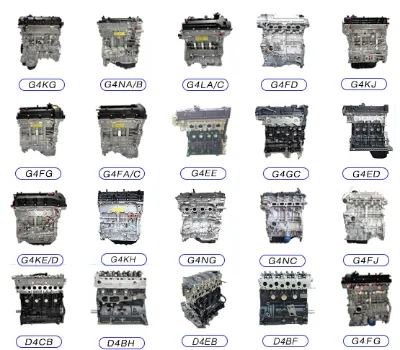
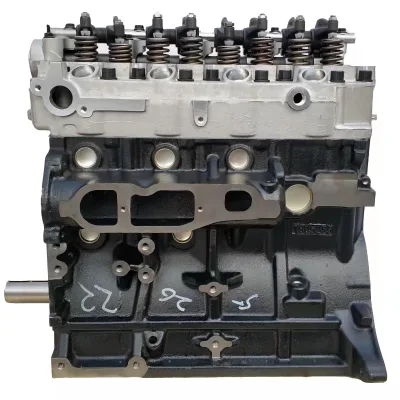
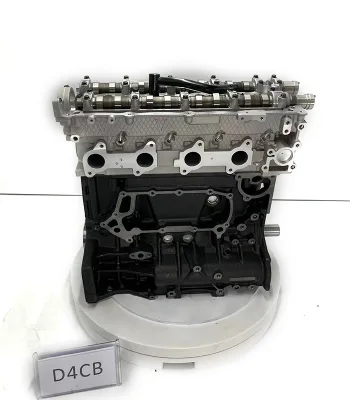


D4CB Cylinder Block Assy Factory Hot Sale Short Block Auto Engine for Hyundai KIA
$500.00 - $800.00
MOQ: 2 Pieces


Comprehensive Sourcing Guide
Strategic Sourcing Guide for D4CB Engine for Hyundai
Understanding the D4CB Engine Architecture and Core Specifications
The D4CB engine represents a critical powertrain component specifically engineered for Hyundai vehicle applications. When sourcing this unit, buyers must first distinguish between the complete engine assembly and specific internal components, as the market often lists both under the same core keyword. The primary configuration observed in current listings is a four-cylinder, four-stroke internal combustion engine. This architecture utilizes an L-cylinder arrangement, which is a standard inline configuration known for its balance and compact footprint, suitable for a wide range of Hyundai models.
The fuel system for the D4CB engine is primarily identified as gasoline-fueled in many commercial listings, though some data points indicate diesel variants exist within the broader D4 series family. Buyers must verify the specific fuel type against their vehicle's requirements, as the ignition mode is listed as electric ignition, and the cooling system is water-cooled. The engine displacement is typically cited around 2.5 liters, delivering an engine power output of approximately 90 kilowatts. Torque figures observed in the market hover around 142 Newton-meters, indicating a performance profile suited for standard passenger vehicle operations.
It is essential to note that the term "D4CB" is sometimes applied to specific sub-components, such as the crankshaft iron or the engine block itself. For instance, some listings specify the product as a "D4CB Crankshaft Iron" or a "For Hyundai D4BH engine block," which suggests that the D4CB designation may be used loosely in broader cataloging. A precise procurement strategy requires confirming whether the purchase order is for the bare engine assembly, a specific block, or a complete unit with ancillary parts. The piston movement is reciprocating, and the engine type is classified as an external combustion engine, operating at high speeds.
Technical Compliance and Certification Verification
In the realm of automotive procurement, technical compliance is not merely a formality but a prerequisite for vehicle registration and operational safety. The D4CB engine listings frequently reference the ISO9001 certification, which indicates that the manufacturing process adheres to international quality management standards. However, buyers should not assume that every listed unit carries this certification without explicit verification from the supplier. The presence of ISO9001 on a product page suggests a commitment to consistent quality but does not guarantee that the specific engine unit meets local emission standards.
Emission compliance is another critical area of scrutiny. Some product data references the Euro V discharge standard, which is a significant benchmark for environmental regulations in many regions. If the engine is intended for use in markets with strict emission controls, the buyer must confirm that the specific unit matches the Euro V specification or the equivalent local standard. The absence of a specific discharge standard in a listing should trigger a request for documentation rather than an assumption of compliance.
Furthermore, the "OEM Standard" application tag implies that the engine is designed to meet original equipment manufacturer specifications. This suggests that the dimensions, mounting points, and electrical interfaces should align with factory requirements. However, the "OEM Standard" label is a general descriptor and does not replace the need for a technical cross-reference. Buyers must ensure that the engine's physical attributes, such as the cylinder arrangement and mounting flanges, match the specific Hyundai model they are servicing. The product origin is listed as China, specifically from the Zhejiang province, which is a major hub for automotive component manufacturing. Understanding the origin helps in assessing logistics costs and potential supply chain risks.
Cost Drivers and Pricing Dynamics
The pricing landscape for the D4CB engine is influenced by several variables, including the condition of the unit, the level of customization, and the specific configuration purchased. The observed price range in the market spans from 400 to 1,880 USD. This wide variance indicates that the "D4CB" keyword covers a spectrum of products, from bare engine blocks to fully assembled units with accessories. A unit priced at the lower end of the spectrum is likely a bare engine or a specific component like a crankshaft, whereas the higher price points likely correspond to complete, tested, and ready-to-install engines.
The condition of the engine is a primary cost driver. Listings consistently describe the product as "Brand New," which commands a premium over used or remanufactured units. The "100% Test" quality claim is another factor that influences price; engines that undergo rigorous testing protocols before shipment are priced higher due to the added labor and equipment costs. Customization availability is also a significant variable. If the buyer requires specific modifications to fit a non-standard application, the cost will increase accordingly.
Payment terms play a role in the overall cost structure as well. Standard payment methods observed include T/T with a 30% deposit, Western Union, and PayPal. The requirement for a deposit indicates a level of financial commitment and risk management by the supplier. Buyers should be aware that the final landed cost will include shipping expenses, which vary based on the weight and dimensions of the packaging. The product packing is described as a wooden box or wooden package, with dimensions ranging from 624665 cm to 706290 cm. These dimensions are crucial for calculating freight charges, especially when shipping via air freight or consolidated sea freight.
Typical Applications and Market Fit
The D4CB engine is primarily designed for Hyundai applications, making it a direct replacement or upgrade option for specific Hyundai vehicle models. The "Application" attribute is explicitly listed as "for Hyundai," confirming its intended use case. However, the versatility of the engine allows it to be used in various scenarios, including OEM standard replacements, aftermarket upgrades, and potentially in industrial or marine applications if the power output and mounting configurations permit.
The engine's 90kW power output and 2.5L displacement make it suitable for mid-to-large size passenger vehicles. The high-speed nature of the engine suggests it is optimized for performance and efficiency in road-going vehicles rather than heavy-duty industrial machinery. The "Naturally Aspirated" intake pressure impulse indicates that the engine does not utilize forced induction, which simplifies the maintenance profile and reduces the complexity of the intake system. This makes the D4CB an attractive option for buyers seeking reliability and ease of maintenance.
It is important to note that while the engine is designed for Hyundai, the "OEM Standard" application tag suggests that it may also be compatible with other vehicles that share similar chassis and powertrain architectures. Buyers should verify compatibility with their specific vehicle model year and trim level. The "Customization: Available" attribute further expands the potential applications, allowing for modifications to fit unique requirements. However, any customization must be performed by qualified professionals to ensure that the engine's integrity and safety are not compromised.
Supplier Evaluation and Quality Assurance Protocols
Selecting the right supplier is paramount when sourcing automotive engines. The market data indicates that suppliers often highlight "100% Test" and "100% Tested" as quality assurances. While these claims are positive, buyers must verify the testing protocols used. A robust quality assurance program should include compression tests, leak-down tests, and dynamometer testing to ensure the engine meets performance specifications. The "Quality: 100% Test" attribute suggests that the supplier claims to test every unit, but the buyer should request test reports or certificates of conformity to validate this claim.
The supplier's location in Zhejiang, China, is a significant factor in the evaluation process. Zhejiang is a well-established manufacturing region with a mature supply chain for automotive parts. However, buyers should assess the supplier's logistical capabilities, including their ability to handle the "1-7 Working Days" delivery time for domestic orders and the "7-15 Weekdays" lead time for international shipments. The availability of shipping options such as DHL, UPS, EMS, and FedEx indicates a flexible logistics network, which is beneficial for urgent procurement needs.
Service availability is another critical criterion. The "24 Hours Online" service attribute suggests that the supplier offers round-the-clock support, which is valuable for troubleshooting and technical inquiries. Buyers should test this service before placing a large order to ensure responsiveness. Additionally, the "Brand: Tosen" is mentioned in some listings, which could indicate a specific manufacturer or a rebranding of a generic product. Buyers should verify the authenticity of the brand and its reputation in the market.
Long-Term Procurement Considerations and Risk Management
Sourcing the D4CB engine is not a one-time transaction but part of a long-term procurement strategy. Buyers must consider the availability of spare parts and the longevity of the supply chain. The "Customization: Available" attribute suggests that the supplier can accommodate future needs, but buyers should establish a long-term agreement to ensure consistent supply and pricing. The "Lead Time: 7-15 Weekdays" indicates that there may be delays in production or shipping, which buyers must factor into their inventory planning.
Risk management is also essential. The "Product Name: D4CB Bare Engine for Hyundai" suggests that the unit may require additional assembly or integration. Buyers should assess their internal capabilities to handle such tasks or factor in the cost of third-party integration services. The "Packing: Wooden Box" and "prod_packing: 624665cm" details highlight the need for proper handling and storage to prevent damage during transit. Buyers should ensure that their logistics partners are equipped to handle heavy and fragile automotive components.
Finally, buyers should monitor market trends and regulatory changes that could impact the D4CB engine's relevance. As emission standards evolve, the "Euro V" standard may become obsolete in certain markets. Buyers should stay informed about upcoming regulations and ensure that their procurement strategy aligns with future compliance requirements. By maintaining a proactive approach to supplier evaluation, quality control, and risk management, buyers can secure a reliable supply of D4CB engines that meet their operational needs.
Summary of Key Procurement Parameters
To facilitate a clear understanding of the D4CB engine specifications and procurement parameters, the following table summarizes the key attributes observed in the market data. This summary serves as a quick reference for buyers to verify the essential details before engaging with suppliers.
| Attribute Category | Observed Value / Range | Verification Requirement |
|---|---|---|
| Engine Model | D4CB | Confirm compatibility with specific Hyundai model |
| Cylinder Configuration | 4-Cylinder, L-Form | Verify physical dimensions and mounting |
| Fuel Type | Gasoline / Diesel | Confirm fuel system requirements |
| Power Output | 90 kW | Validate performance against vehicle needs |
| Displacement | 2.5 L | Check against engine bay constraints |
| Condition | Brand New | Request proof of new condition |
| Quality Assurance | 100% Test | Request test reports or certificates |
| Certification | ISO9001 | Verify current certification status |
| Emission Standard | Euro V | Confirm local regulatory compliance |
| Origin | Zhejiang, China | Assess logistics and import requirements |
| MOQ | 1 PC | Confirm minimum order quantity |
| Price Range | $400 - $1,880 USD | Verify final price including shipping |
| Lead Time | 1-7 Days / 7-15 Weeks | Plan inventory accordingly |
| Payment Terms | T/T, Western Union, PayPal | Ensure secure payment methods |
By adhering to these guidelines and verifying the specific details against the supplied context, buyers can navigate the complex landscape of D4CB engine procurement with confidence and precision.
FAQs
What is the typical price range for a D4CB Engine for Hyundai?
The observed price range spans from 400 to 1880 USD. This variance depends on whether the listing is for a bare engine, a specific component like a crankshaft, or a fully assembled unit with accessories.
Can I customize the D4CB Engine for Hyundai to fit specific needs?
Yes, customization is available for this engine model. Buyers can request specific modifications to fit unique applications, though any changes must be performed by qualified professionals to ensure safety and integrity.
How long is the lead time for shipping a D4CB Engine for Hyundai?
Delivery times vary from 1 to 7 working days for domestic orders and 7 to 15 weekdays for international shipments. The actual duration depends on the supplier's location and the selected shipping method.
Which certification does the D4CB Engine for Hyundai typically hold?
Some listings reference ISO9001 certification, indicating adherence to international quality management standards. Buyers should verify this explicitly as not every unit may carry this certification without direct confirmation from the supplier.
What is the minimum order quantity for a D4CB Engine for Hyundai?
The minimum order quantity is 1 piece per unit. This low MOQ allows buyers to purchase single units for testing or immediate replacement needs without requiring bulk commitments.
How is the D4CB Engine for Hyundai packaged for shipping?
The engine is packed in a wooden box or wooden package with dimensions ranging from 62 by 46 by 65 cm to 70 by 62 by 90 cm. Proper handling is required to prevent damage during transit.
What fuel type does the D4CB Engine for Hyundai use?
The engine is primarily identified as gasoline-fueled in many listings, though some data points indicate diesel variants exist within the broader D4 series family. Buyers must verify the specific fuel type against their vehicle requirements.