Source Decorative Plastic Seat Lock Cover for Home, Office, and Chair
Find and compare 30 Decorative Plastic Seat Lock Cover options for home, office, and chair applications. These products feature slow-close mechanisms, customizable logos, and various plastic materials like PP, with lead times ranging from 15 to 30 days; compare the available evidence and request quotations based on your requirements.
Key considerations
Products List


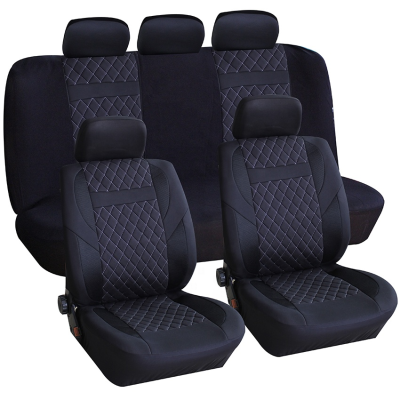


Car Disposable Plastic Seat Covers Universal Transparent Seat Protective
$0.07 - $0.08
MOQ: 20000 Pieces

Comprehensive Sourcing Guide
Decorative Plastic Seat Lock Cover Sourcing Guide
Buyers evaluating decorative plastic seat lock covers must first distinguish between general toilet seat components and specialized locking mechanisms for chairs or office furniture. The observed product data reveals a mix of items labeled as toilet seat covers with slow-close features alongside distinct chair applications involving iron frames and specific plywood components. This distinction is critical because a lock cover designed for a residential toilet seat may lack the structural integrity required for high-traffic office chairs or heavy-duty cabinet applications.
Procurement teams should verify whether the "decorative" aspect refers to the aesthetic finish of the plastic shell or the functional integration of a locking mechanism. The supplied facts indicate products with "Slow-Close" features and "Customized" logos, suggesting that aesthetic customization is a primary driver for these items. However, the presence of iron materials and specific gaslift mechanisms in the data implies that some listings may actually describe complete chair assemblies rather than simple plastic covers, requiring careful filtering to isolate the specific component needed.
Product Scope and Observed Listing Signals
The market for these components shows a wide variance in material composition, ranging from pure plastic units to assemblies incorporating iron and plywood. Listings explicitly mention "Plastic Custom Made Toilet Seat Cover" and "Economic Plastic Selling Lid," yet other entries describe "Iron" materials with "Fixed Armrest" functions and "Gaslift" mechanisms. This inconsistency signals that buyers must scrutinize the item name and material field to ensure the product is a standalone decorative cover rather than a complex furniture assembly with integrated locking hardware.
Observations of "Multi Color" options and "Customized" logos indicate that aesthetic flexibility is a standard expectation in this category. Buyers should expect to find products with specific dimensions, such as the 45537550mm standard noted in the data, but must remain vigilant as other listings show different measurements like 497*470mm. The presence of "Slow Down" attributes suggests that soft-close functionality is a common feature, but this should not be assumed for all decorative covers unless explicitly stated in the product specifications.
Technical Specifications to Verify
Dimensional accuracy is paramount when sourcing decorative covers, as the supplied data lists multiple conflicting standard sizes ranging from 435mm to 497mm in width. Buyers must confirm the exact length, width, and thickness requirements for their specific seating application, as a cover designed for a 450mm seat will not fit a 470mm model. The "Round" shape is observed in some listings, while others imply rectangular or custom profiles, making it essential to validate the geometric compatibility before placing an order.
Material composition and structural integrity must be verified against the intended load and usage environment. While many items are described as "Plastic" with "Slow-Close" features, other entries specify "Iron" and "PP" (polypropylene) components for chair structures. Buyers should request detailed material data sheets to confirm that the plastic used is suitable for the intended environment, particularly if the cover requires resistance to wear, chemicals, or heavy mechanical stress associated with office or public seating.
Compliance and Safety Documentation
Safety compliance for plastic seat components often involves verifying that materials meet specific chemical safety standards for indoor use, particularly in residential or office settings. Although the provided facts do not list specific certification numbers, buyers should request documentation confirming that the plastic and any metal reinforcements are free from harmful substances like lead or phthalates. This is especially important for products intended for "Home" or "Office" use where prolonged contact with skin is expected.
Warranty terms serve as a proxy for manufacturer confidence in product durability and safety. The observed data includes a "3 Year" warranty for certain items, which suggests a baseline expectation for product longevity. Buyers should ensure that the warranty explicitly covers defects in the locking mechanism and the decorative shell, as these are the most common points of failure. A lack of clear warranty terms or a discrepancy between the warranty period and the product's intended heavy-duty application should raise immediate red flags.
Cost Drivers and Commercial Terms
Pricing for these components is influenced heavily by the level of customization and the complexity of the locking mechanism. The observed price range of 0.07 to 40 USD reflects a spectrum from basic, unbranded plastic lids to specialized, slow-close units with custom logos and specific dimensions. Buyers should anticipate that "Customized" logos and unique color combinations will incur higher unit costs compared to standard "Multi Color" or generic options, and this should be factored into the total budget.
Minimum Order Quantities (MOQ) and lead times vary significantly based on the customization level and production capacity. The data indicates MOQs ranging from 2 to 20,000 units, with sample times as short as 3 days and lead times extending to 30 days. Buyers must align their order volume with the supplier's capacity, noting that larger orders may benefit from lower unit prices but require longer production windows. Payment terms such as T/T, L/C, and Trade Assurance are standard, and buyers should negotiate terms that protect their cash flow during the production cycle.
Supplier Qualification and Quality Control
Supplier qualification should focus on verifying the origin and production consistency of the manufacturing facility. The data points to "Xiamen, China" and general "China" origins as common sources, but buyers must confirm that the specific factory has a track record of producing high-quality plastic and metal assemblies. Requesting a facility audit or video tour can help validate that the supplier has the necessary machinery to produce precise dimensions and consistent finishes for decorative covers.
Quality control protocols must be established to ensure that the "Slow-Close" and locking features function correctly across the entire batch. Buyers should insist on pre-shipment inspections that test the mechanical durability of the lock and the aesthetic quality of the plastic surface. Given the variation in observed specifications, such as different standard sizes and material mixes, a rigorous inspection plan is essential to prevent the receipt of non-conforming goods that do not match the agreed-upon technical drawings.
Long-Term Procurement Checks
Sustaining a reliable supply chain requires regular re-evaluation of supplier performance against the initial quality benchmarks. Buyers should monitor the consistency of lead times, as the observed range of 15 to 30 days can fluctuate based on raw material availability and production load. Establishing a schedule for periodic quality audits and sample testing ensures that the supplier maintains the "New" condition and structural integrity expected for long-term use in commercial or residential environments.
Future-proofing the procurement strategy involves maintaining flexibility to adapt to changing design trends and material standards. As the market for "Fashion Innovative Design" and "Ultrathin" products evolves, buyers should maintain open communication with suppliers regarding new material technologies and design capabilities. Regularly reviewing the warranty claims and return rates will provide valuable data to assess the long-term reliability of the components and inform future sourcing decisions.
FAQs
What materials are used for the plastic toilet seat covers?
The product is primarily manufactured using durable plastic materials, specifically Polypropylene (PP) for both the seat and back cover components. Some variants may incorporate iron for structural support in chair applications. The material choice ensures longevity and resistance to daily wear, providing a reliable surface for home or office use while maintaining a lightweight profile for easy handling and installation.
Can I customize the logo on the plastic seat covers?
Yes, customized logos are available for these plastic seat covers. Buyers can request specific branding to be applied to the product surface. This customization service allows businesses to enhance brand visibility and create a unique product identity. The customization process is integrated into the standard production workflow, ensuring that the final product meets specific aesthetic and marketing requirements without compromising structural integrity.
What is the lead time for ordering these plastic seat covers?
The standard lead time for production is typically between 15 to 30 days, depending on the specific model and order volume. Sample preparation usually takes 3 to 5 days. These timelines ensure quality control and proper manufacturing scheduling. Buyers should account for these durations when planning inventory, as the production window allows for thorough inspection and packaging before shipment from the origin location.
What are the standard dimensions for the plastic toilet seat models?
Standard dimensions vary by model, with common sizes including 455x375x50mm, 435x360mm, and 470x360x55mm. These specifications cater to different toilet seat shapes, primarily round designs. The precise measurements ensure a proper fit for standard fixtures. Buyers should verify the exact model number, such as JET-1002 or H209, to match the required dimensions for their specific installation needs and ensure compatibility with existing bathroom hardware.
Does the plastic seat cover feature a slow-close mechanism?
Yes, many of the plastic seat covers feature a slow-close mechanism to prevent slamming and reduce noise. This functional attribute enhances user experience by providing a gentle, controlled closing action. The slow-close feature is integrated into the hinge or mechanism design, ensuring durability and consistent performance. This characteristic is particularly valued in home and office environments for its quiet operation and extended lifespan of the seat components.
What is the minimum order quantity for these plastic seat covers?
The minimum order quantity ranges from 2 to 20,000 units, offering flexibility for both sample testing and bulk procurement. This wide range accommodates small businesses seeking initial stock as well as large distributors requiring substantial inventory. The MOQ structure allows buyers to scale their orders based on demand forecasts. Specific MOQ requirements may vary by model and customization options, so direct confirmation is recommended for precise planning.