Source Deep Water Lead Jig Head for Lake, Ocean Beach, and River Fishing
Explore 30 listings for the Deep Water Lead Jig Head, featuring options in metal, PVC, and lead materials with various hook types. Buyers can compare specifications including weights from 40g to 400g, packaging styles, and customization availability for diverse fishing environments.
Key considerations
Products List
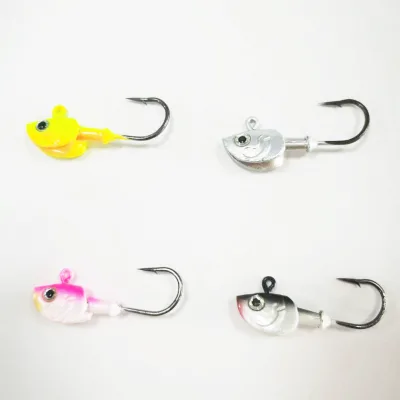


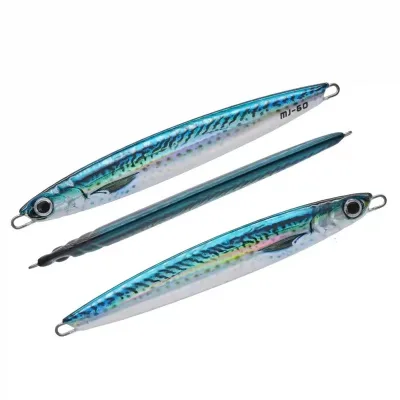


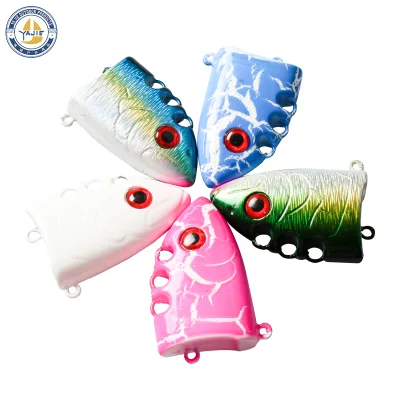
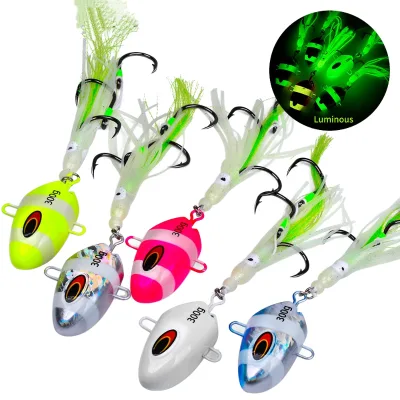
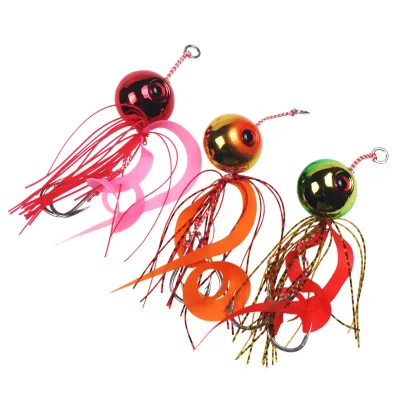
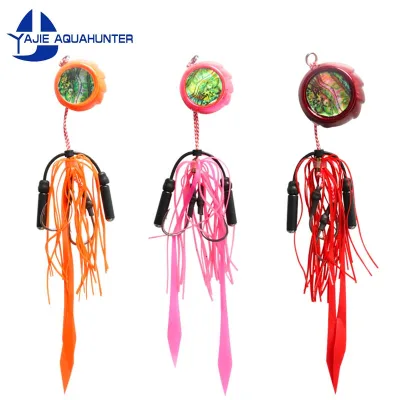
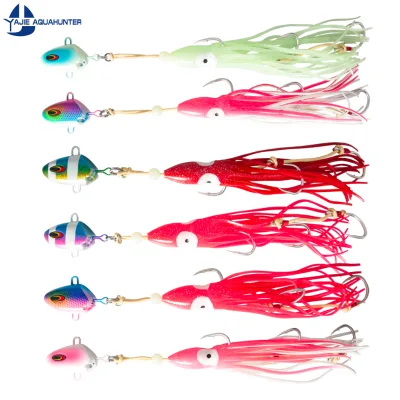


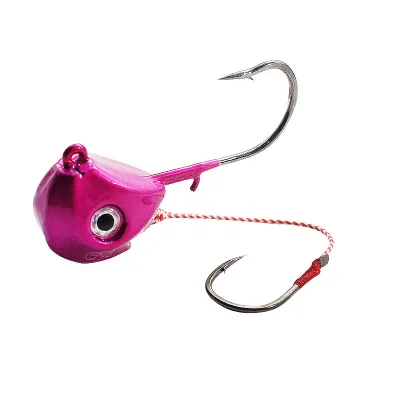
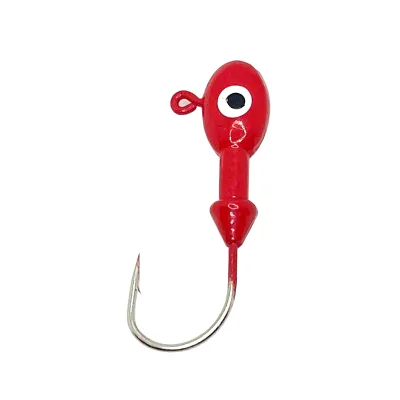


Big Weight Jig Head Round Jig Head Jig Lure Lead Head Fishing Lure Kabura Lure
$1.65 - $1.90
MOQ: 1000 Pieces


Jig Heads, 1/64 Oz, 1/32oz All Different Colors Lead Jig Head Fishing Lure
$0.22 - $0.35
MOQ: 3000 Pieces


Comprehensive Sourcing Guide
Strategic Sourcing Guide for Deep Water Lead Jig Heads
Understanding Product Definitions and Core Specifications
The term "Deep Water Lead Jig Head" refers to a specific category of artificial fishing tackle designed to function effectively in vertical or near-vertical presentations where gravity and density are critical for reaching target depths. Based on the available product data, these items fall under the broader classification of "Artificial Bait" and "Artificial hard bait," with a specific material composition of "Lead" or "Metal." The primary function of these jigs is to serve as a base for attaching soft plastics or natural baits, allowing anglers to target species in diverse environments ranging from "STREAM, River, Lake, Ocean Beach Fishing" to "Ocean Boat Fishing" and "Ocean Rock Fshing."
A critical distinction in sourcing these items is the variation in material composition observed in the market. While the core keyword specifies "lead," the supplied data indicates that some products in this category utilize "PVC" or general "Metal" as the primary material. Buyers must verify the specific material composition of the unit they intend to purchase, as lead offers superior density for deep-water applications, whereas PVC or lighter metals may require different retrieval speeds or sink rates. The product attributes also highlight that these jigs are often categorized under "Lure Accessories" or "Integrated Bait," suggesting they are frequently sold in bulk or as part of a larger kit.
The structural design of these jigs often includes specific features such as "3D Eyes" to enhance visual attraction to predatory fish, and the hook configuration is a vital component. The data notes the presence of "Chinese Hook" and "Reinforcing Hook" types. For deep-water applications, the hook strength is paramount, as the fish targeted in these environments often possess powerful jaws and require a hook that can withstand high tension without bending or breaking. The "Reinforcing Hook" attribute suggests a design intended to increase durability during the fight, which is a significant consideration for buyers targeting large species in ocean or deep reservoir environments.
Technical Standards and Weight Variations
When evaluating technical specifications for deep water lead jig heads, weight is the most decisive factor. The supplied context provides a range of standard weights that buyers should expect to encounter in the market. These standards include increments such as "100g, 150g, 200g, 250g, 300g, 350g, 400g," with specific listings also mentioning "420g" and "150g 200g 250g 300g 350g 400g." This wide range indicates that the market offers solutions for various depths and currents, from moderate depths to extreme deep-water scenarios where heavy weights are necessary to counteract strong tidal flows.
The weight standards provided are not merely suggestions but represent the actual production specifications found in the supply chain. Buyers should note that while some listings specify a single weight, others offer a "Customise" option for packaging and potentially for weight specifications, allowing for tailored solutions. The "prod_standard" attribute lists specific gram values, which serves as a baseline for quality control. However, it is essential to verify that the actual weight of the received product matches the stated standard, as even minor deviations can affect the sink rate and presentation in deep water.
In addition to weight, the physical dimensions and packaging standards play a role in the logistics of procurement. The data indicates that single package sizes can be as large as "20X15X2 cm," and the gross weight of a single unit is recorded as "0.300 kg." These figures are crucial for calculating shipping costs and storage requirements, particularly when ordering in bulk. The packaging formats vary significantly, ranging from "Bulk" and "in PP Bag" to "PVC Box" and "Nice Packing." For deep water jigs, which are often sold in high quantities, the "Bulk" packaging is common, but buyers requiring retail-ready units should specify "PVC Box" or custom packaging options.
Compliance, Certification, and Material Safety
Navigating the compliance landscape for lead-based fishing tackle requires careful attention to environmental and safety regulations. The supplied data mentions "Reach" as a certification in the low-confidence background section. Reach (Registration, Evaluation, Authorisation and Restriction of Chemicals) is a European Union regulation that governs the use of hazardous substances in products. While the data does not confirm that all listed lead jig heads are Reach-compliant, it highlights the importance of verifying this status, especially for buyers targeting European markets where lead restrictions are stringent.
Buyers must explicitly request documentation regarding the material safety of the lead used in the jig heads. Lead is a heavy metal that poses environmental risks if not managed correctly, and many jurisdictions have specific regulations regarding the leaching of lead into water bodies. The presence of "Customisation" and "OEM&ODM" attributes suggests that suppliers are willing to work with buyers to meet specific regulatory requirements. However, buyers should not assume compliance based on the product listing alone. It is necessary to request a Certificate of Analysis (CoA) or a Declaration of Conformity that specifically addresses the lead content and any coatings applied to the metal to prevent corrosion and leaching.
Furthermore, the "Low-confidence background" regarding certifications implies that while some suppliers may claim compliance, the data does not provide a definitive list of certified products. Buyers should treat any certification claims with verification. The "Service: 24 Hours" attribute indicates a level of responsiveness, which can be leveraged during the compliance verification process. Suppliers who can provide immediate answers regarding their material sourcing and compliance status are generally more reliable partners for B2B procurement.
Cost Drivers and Minimum Order Quantities
The cost structure for deep water lead jig heads is influenced by several factors, including material costs, manufacturing complexity, and order volume. The observed price range in the market is broad, spanning from "0.08" to "40" USD. This wide variance suggests that the final price is heavily dependent on the specific model, weight, hook quality, and packaging. The lower end of the price range likely corresponds to basic, bulk-packaged units with standard hooks, while the higher end may reflect premium features such as "3D Eyes," reinforced hooks, or custom packaging.
Minimum Order Quantities (MOQ) are a significant driver in the procurement strategy for these items. The data presents a wide range of MOQs, from as low as "10pcs" to as high as "3000" units. Specific listings indicate MOQs of "100," "50," and "1000." This variability allows buyers to scale their orders based on their immediate needs and cash flow. For buyers testing the market, an MOQ of "10pcs" or "50" units provides a low-risk entry point. However, for established buyers seeking economies of scale, the "1000" unit MOQ may offer better per-unit pricing, although the total capital outlay will be higher.
The "MOQ: 100" and "MOQ: 1000" entries suggest that suppliers have tiered pricing structures. Buyers should negotiate based on their projected annual volume rather than just the initial order size. Additionally, the "OEM: Acceptable" and "Customisation: Available" attributes indicate that suppliers are open to custom orders, which may come with different MOQ thresholds. Customization often involves additional tooling or setup costs, which can affect the initial price point. Buyers should factor these potential costs into their total cost of ownership calculations when evaluating suppliers.
Typical Applications and Target Environments
Deep water lead jig heads are designed for a diverse array of fishing environments, as indicated by the "prod_prop.position" attribute. These include "STREAM, River, Lake, Ocean Beach Fishing, Ocean Boat Fishing, Ocean Rock Fshing, Reservoir Pond." The versatility of these jigs makes them suitable for both freshwater and saltwater applications. In freshwater settings, they are effective for targeting species such as "Bream," "Grass Carp," "Carp," "Silver Carp & Bighead Carp," and "Wheat Protein Bait" targets. In saltwater environments, they are used for "Squid Lures," "Seabass Lures," "Perch Lures," "Zander Lures," "Pike Lures," and "Crankbait Lures."
The "fishing_lure_type" attribute further categorizes the usage into specific techniques such as "Freshwater Casting," "Freshwater Trolling lure," "Jigging Lures," "Saltwater Catsing," "Trout Lures," and "Saltwater Trolling Lure." This indicates that the Deep Water Lead Jig Head is a multi-purpose tool capable of adapting to various retrieval methods. The "Jigging Lures" classification is particularly relevant for deep water applications, where the vertical motion of the jig is essential for attracting bottom-dwelling fish. The "Saltwater Catsing" (likely a typo for Casting) and "Saltwater Trolling Lure" categories suggest that these jigs can also be used in dynamic, moving water scenarios.
The "Location: Sea" and "Location: Lake" attributes confirm the dual-environment capability of these products. Buyers should consider the specific water conditions of their target market when selecting the weight and hook type. For example, ocean rock fishing often requires heavier jigs to maintain position in strong currents, while lake fishing might benefit from lighter weights for a more subtle presentation. The "assorted" color attribute allows for a wide range of visual options to match the local forage and water clarity conditions.
Supplier Evaluation and Quality Control Protocols
Evaluating suppliers for deep water lead jig heads requires a focus on consistency, material integrity, and service reliability. The "Brand Name: VTAVTA" is mentioned in the data, serving as an example of a branded product, but buyers should not limit their search to specific brands. Instead, they should look for suppliers who demonstrate a commitment to quality through their product attributes. The "Product Features: 3D Eyes" and "Hook: Reinforcing Hook" are tangible indicators of attention to detail that buyers should verify through sample inspection.
Quality control should begin with the verification of the "prod_standard" weights. Buyers must ensure that the actual weight of the jig heads matches the stated standard (e.g., 100g, 200g, etc.) within an acceptable tolerance. Variations in weight can significantly alter the sink rate and performance of the jig in deep water. Additionally, the "Material: Lead" specification must be confirmed, as some products may use cheaper, less dense metals that do not perform as well in deep water applications.
The "Sample: Samples Avaliable" attribute is a critical component of the supplier evaluation process. Buyers should always request samples before committing to a large order. This allows for a physical inspection of the hook sharpness, the durability of the "Reinforcing Hook," and the quality of the "3D Eyes." The "Service: 24 Hours" attribute suggests that suppliers are responsive, which is essential for resolving any quality issues that may arise. Buyers should also verify the "Single gross weight" and "Single package size" to ensure that the logistics of shipping and storage align with their operational requirements.
Long-Term Procurement and Market Considerations
Long-term procurement of deep water lead jig heads involves more than just securing a single order; it requires building a sustainable supply chain that can adapt to market changes and regulatory shifts. The "OEM&ODM: Aviailable" attribute indicates that suppliers are capable of custom manufacturing, which can be a strategic advantage for buyers looking to differentiate their product offerings. By working with suppliers on custom designs, buyers can create unique products that are less susceptible to price competition.
The "Customisation: Available" and "prod_packing: Customise" attributes highlight the flexibility of the supply chain. Buyers should leverage these options to create packaging that meets their specific branding and retail requirements. Whether it is "PVC Box" packaging for retail or "Bulk" packaging for wholesale, the ability to customize the presentation can add significant value to the final product.
Furthermore, the "Low-confidence background" regarding certifications like "Reach" underscores the need for ongoing vigilance. As environmental regulations evolve, buyers must stay informed about changes in lead usage restrictions. Building a relationship with suppliers who are proactive about compliance and willing to adapt their production processes will be crucial for long-term success. The "Number of Items: 1" attribute suggests that some suppliers offer single-item sales, which can be useful for testing new markets or fulfilling small, urgent orders without the commitment of a large MOQ.
In conclusion, sourcing deep water lead jig heads requires a comprehensive understanding of the product specifications, market standards, and supplier capabilities. By focusing on the technical details, verifying compliance, and evaluating supplier reliability, buyers can build a robust supply chain that meets the demands of the fishing tackle market. The wide range of weights, materials, and customization options available provides ample opportunity for buyers to find products that align with their specific needs and strategic goals.
FAQs
What materials are used for deep water lead jig heads?
These jigs are primarily made from lead or metal, though some variants use PVC. Buyers must verify the specific material composition as lead offers superior density for deep water, while PVC or lighter metals require different retrieval speeds.
Which hook types are available for these jig heads?
The products feature Chinese Hooks and Reinforcing Hooks designed for durability. Reinforcing hooks are particularly important for deep water applications to withstand high tension from powerful fish in ocean or reservoir environments.
Can buyers customize the packaging for bulk orders?
Yes, customization is available for packaging formats ranging from bulk and PP bags to PVC boxes. Buyers can specify custom packaging to meet retail requirements or specific logistical needs for their target market.
What is the minimum order quantity for these jigs?
Minimum order quantities vary significantly, ranging from 10 pieces to 3000 units depending on the supplier. Specific listings show MOQs of 50, 100, and 1000 units, allowing buyers to scale based on their immediate needs.
Which fishing environments are suitable for these lead jigs?
These jigs are designed for streams, rivers, lakes, ocean beaches, boat fishing, and rock fishing. They are effective for both freshwater species like carp and saltwater targets such as seabass and squid in diverse water conditions.
What weight standards are available for deep water applications?
Standard weights include 100g, 150g, 200g, 250g, 300g, 350g, 400g, and 420g. Buyers should verify that the actual weight matches the stated standard to ensure the correct sink rate for their specific depth requirements.
Are samples available for testing product quality before bulk orders?
Samples are available for buyers to verify product features like 3D eyes and hook strength. This allows purchasers to assess the quality of the lead material and construction before committing to larger order volumes.