Find Defensive Type Badminton Rackets for Clubs, Schools, and Training
Source 30 Defensive Type Badminton Rackets featuring carbon shafts and soft rods for light tips. Buyers can compare specifications, materials, and prices from verified Chinese manufacturers to find the right equipment for amateur and professional players.
Key considerations
Products List



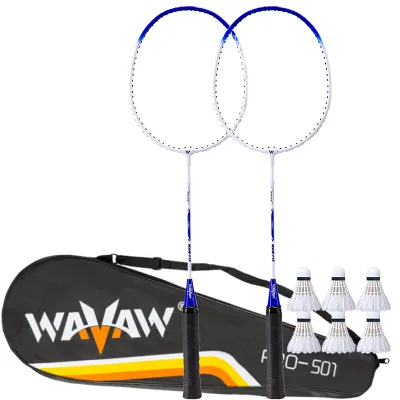
Children's Badminton Racket Outdoor Parent-Child Pair Badminton Racket Set
$1.00 - $1.20
MOQ: 1000 Sets




Comprehensive Sourcing Guide
Strategic Sourcing Guide for Defensive Type Badminton Rackets
Understanding Defensive Racket Architecture and Technical Specifications
Sourcing Defensive Type Badminton Rackets requires a precise understanding of the engineering principles that distinguish them from offensive or all-around models. In the context of the current market data, defensive rackets are characterized by a specific design philosophy: a light tip and a soft rod. This configuration is explicitly noted in the product attributes as "Defensive Type (Light Tip & Soft Rod)." The primary objective of this architecture is to enhance control and facilitate rapid defensive maneuvers, such as net play and clears, rather than maximizing smash power.
When evaluating potential suppliers, buyers must verify the physical specifications that align with this defensive profile. The shaft material is a critical component; the available data indicates that carbon is the standard material used for the shaft. Carbon construction offers the necessary balance of flexibility and strength required for a soft rod that can absorb impact without breaking. The racket length is standardized at 690±2mm, a dimension that ensures compliance with international play standards while maintaining the leverage needed for defensive coverage.
The weight of the racket is another pivotal specification. While some product listings indicate a weight of 300g, others suggest 80g, which likely refers to the net weight of the frame alone or a specific lightweight variant. For a defensive player, a lighter frame (often in the 80g range for the head or lower overall weight classes) allows for quicker reaction times at the net. However, the total package weight, including the handle and grip, is often listed around 3.000 kg for a gross package, which includes the carry bag and carton. Buyers should request the specific net weight of the racket head to ensure it matches the player's preference for maneuverability.
Furthermore, the handle thickness varies, with options including S5 (3.624 inches), S4 (3.5 inches), and S3 (3.375 inches). For defensive players who rely on wrist action and quick changes in grip, a slightly thinner handle (S3 or S4) is often preferred to reduce fatigue and increase agility. The strings themselves are a vital interface between the player and the shuttlecock. The observed string diameter ranges from 0.65mm to 0.70mm. Thinner strings generally offer better feel and control, which is essential for the delicate touch required in defensive play, while the string features are described as "Elastic & Durable" and "Playing Sound," indicating a focus on feedback and longevity.
Compliance, Certification, and Safety Standards
In the B2B procurement of sports equipment, verifying compliance with international safety and quality standards is non-negotiable. The provided product data highlights specific certifications that buyers should look for to ensure the rackets meet rigorous safety benchmarks. The observed certifications include NSCC, CE, and GS. The CE mark indicates conformity with health, safety, and environmental protection standards for products sold within the European Economic Area. The GS mark (Geprüfte Sicherheit) is a German safety certification that is widely recognized globally for its stringent testing requirements. The NSCC certification suggests adherence to specific national or industry safety standards, likely related to the manufacturing origin in China.
When sourcing defensive rackets, buyers must ensure that the supplier can provide valid documentation for these certifications. It is not sufficient to rely on a product listing claiming compliance; the actual test reports and certificates must be verifiable. This is particularly important for rackets intended for professional or semi-professional use, where equipment failure could lead to injury. The product standard dimensions listed in the data, such as 66cm * 20cm * 3cm or 65.5X20.5CM, likely refer to the packaging dimensions rather than the racket itself, but they serve as a baseline for logistics planning.
Buyers should also verify the material safety of the carbon fiber and grip materials. The grip material is specified as Carbon Fiber in some contexts, which is unusual for a grip (typically rubber or synthetic), suggesting a possible data entry variation or a specific high-tech grip composition. Standard verification should confirm that the grip material is non-toxic, sweat-resistant, and provides adequate friction. Additionally, the product origin is listed as Anhui, China, for some models and generally China for others. Sourcing from this region requires a thorough vetting of the factory's quality management systems to ensure consistent adherence to the claimed certifications.
Cost Drivers and Pricing Dynamics
The pricing structure for Defensive Type Badminton Rackets is influenced by several factors, including material quality, customization options, and order volume. The observed price range in the market spans from $0.11 to $22.50 USD. This wide disparity suggests a significant variation in product tiers, from basic training models to high-performance equipment. The lower end of the spectrum likely represents bulk-order items or entry-level rackets with standard specifications, while the higher end may include premium carbon fiber shafts, advanced stringing, or custom branding.
The Minimum Order Quantity (MOQ) is a primary cost driver. The data indicates an MOQ range of 10 to 2000 units, with specific listings showing MOQs of 1000 and 2000 units. Higher MOQs generally correlate with lower unit costs, as the supplier can amortize setup and production costs over a larger volume. Buyers must balance their budget constraints with their inventory needs. For a defensive racket line, which may require specific color variations (Multi, Dark Gray, Navy Blue, Army Green, Violet), the ability to order smaller batches of specific colors without hitting a prohibitive MOQ is a significant advantage.
Customization is another major factor affecting cost. The product attributes confirm that customization is available and that the "Custom" attribute is marked as "Yes." This includes options for branding, logo placement, and potentially custom packaging (Carry Bag/Custom or Bag/Custom). While customization adds value, it often increases the unit price and may require a higher MOQ. Buyers should negotiate these terms early in the procurement process. The selling unit is listed as a "Single item," but the package often includes a carry bag. The inclusion of high-quality packaging can impact the final landed cost, especially if the packaging is designed to protect the racket during long-distance shipping.
Typical Applications and Player Suitability
Defensive Type Badminton Rackets are designed for specific playing styles and player demographics. The product attributes explicitly categorize the "Play Classification" as "Defensive Type (Light Tip & Soft Rod)," which is ideal for players who prioritize control, net play, and defensive clears over aggressive smashes. These rackets are particularly suitable for "Amateur Junior" players, as indicated by the recommended pull pounds of 20-23 lbs. The lighter frame and softer shaft help younger or less experienced players develop proper technique without the strain of a heavier, stiffer racket.
However, the suitability extends beyond juniors. The data lists "Amateur Intermediate," "Amateur Intermediate & Senior," and "Professional Intermediate & Senior" as suitable player categories. For intermediate players, the defensive racket offers a balance of control and power, allowing them to transition from basic strokes to more complex defensive tactics. Professional intermediate players may use these rackets for specific match strategies that require rapid net defense and precise placement. The recommended pull pounds for these categories increase to 25-27 lbs for medium/high pound amateurs and 28 lbs for high pound professionals, indicating that the racket can handle higher string tensions for those with advanced strength and technique.
The "Purpose" is listed as "Outdoor Playing" and "Outdoor Sports," which is an interesting distinction. While badminton is traditionally an indoor sport, the mention of outdoor suitability suggests the rackets may be constructed with materials resistant to weather variations or are intended for recreational outdoor play. Buyers should verify the durability of the frame and strings in outdoor conditions, as exposure to wind and sun can affect the performance of carbon fiber and synthetic grips. The "Exercise Kind" is noted as "Anaerobic," which aligns with the high-intensity, short-burst nature of badminton rallies.
Supplier Evaluation and Operational Due Diligence
Evaluating suppliers for defensive badminton rackets requires a multi-faceted approach that goes beyond price and specifications. The first step is to verify the supplier's location and production capacity. The data points to Anhui, China, as a primary place of origin. Buyers should confirm the factory's location and assess its logistics capabilities, as the single package size is substantial (73X43X37 cm) and the single gross weight is 3.000 kg. These dimensions and weights impact shipping costs and storage requirements.
Supplier reliability is paramount. The "Service Life" of the product is estimated at 1-4 years, which is a key metric for buyers to assess the durability and value proposition. A supplier that stands behind a 1-4 year service life is likely to have robust quality control processes. Buyers should request evidence of this service life claim, such as wear-and-tear testing data or customer testimonials. Additionally, the "Customization" capability must be validated. The ability to offer custom branding and packaging is a significant competitive advantage, but it requires a supplier with flexible production lines and a strong design team.
Communication and responsiveness are also critical factors. The "Selling Units" are listed as "Single item," but the "MOQ" varies widely. A supplier that can accommodate both small trial orders and large bulk orders demonstrates operational flexibility. Buyers should inquire about the lead time for production, although specific lead times are not provided in the data. A reliable supplier should be able to provide a clear timeline from order confirmation to shipment. Finally, the "Product Name" and "Type" must be consistent across all documentation to avoid confusion in the supply chain. The product is clearly identified as a "Badminton Racket" or "Badminton Speed Racket Set," and the model numbers (e.g., T002, EZ-WQ24, EZ-HW016) should be tracked meticulously to ensure the correct defensive specifications are delivered.
Quality Control Protocols and Long-Term Procurement Strategy
Implementing a rigorous quality control (QC) protocol is essential for sourcing Defensive Type Badminton Rackets. Given the specific requirements of a "Light Tip & Soft Rod" design, the QC process must focus on the balance and flexibility of the racket. Buyers should establish a sampling plan that includes testing the racket's weight distribution, shaft flexibility, and string tension consistency. The "Strings Feature" of being "Elastic & Durable" and "Durable Type" must be verified through stress testing to ensure the strings do not break prematurely under the recommended pull pounds.
Long-term procurement considerations involve building a sustainable relationship with the supplier. The "Customization" option allows for brand differentiation, which is crucial for long-term market positioning. Buyers should plan for future product iterations, such as new color schemes or updated models, to keep the product line fresh. The "Product Name" variations, such as "Badminton Racket Set" or "Badminton Speed Racket Set," suggest that the supplier offers bundled options. Buyers should evaluate the cost-effectiveness of these sets versus individual rackets for their target market.
Sustainability is another emerging consideration. The use of carbon fiber and the "Service Life" of 1-4 years suggest that the rackets are durable, which reduces waste. However, buyers should inquire about the recyclability of the materials and the environmental impact of the manufacturing process. The "Place of Origin" in China offers access to a mature supply chain, but buyers should ensure that the supplier adheres to ethical labor practices and environmental regulations.
In conclusion, sourcing Defensive Type Badminton Rackets requires a careful balance of technical specifications, compliance verification, cost management, and supplier evaluation. By focusing on the unique characteristics of the defensive design—light tip, soft rod, and specific weight classes—buyers can secure high-quality products that meet the needs of amateur and professional players alike. The wide range of available models and customization options provides flexibility for diverse procurement strategies, ensuring that the final product aligns with both performance requirements and business objectives.
FAQs
What materials are used for the shaft and grip of these rackets?
The shaft is made of carbon, while the grip material is specified as carbon fiber in some listings. This combination provides the necessary flexibility and strength for defensive play, ensuring the rod remains soft and durable during rapid net maneuvers.
Which racket handle thickness options are available for purchase?
Buyers can choose from three handle thicknesses: S5 at 3.624 inches, S4 at 3.5 inches, and S3 at 3.375 inches. The thinner S3 or S4 options are often preferred for defensive players to reduce fatigue and increase wrist agility during matches.
Can I customize the racket with my own brand logo?
Yes, customization is available for these badminton rackets, including branding and custom packaging options like carry bags. Buyers should note that custom orders may require a higher minimum order quantity, typically starting at 1000 or 2000 units depending on the model.
What certifications do these rackets hold for safety compliance?
The products carry NSCC, CE, and GS certifications to ensure they meet international safety and quality standards. These marks verify that the equipment adheres to health and environmental regulations, particularly for markets in Europe and regions requiring strict safety testing.
How does the weight of the racket affect defensive play?
The racket frame weight is listed as 80g, which supports quick reaction times essential for defensive positioning. A lighter frame allows for faster net play and clears, though the total package weight including the bag is approximately 3.000 kg for logistics planning.
What is the standard length of the badminton racket frame?
The standard length is 690±2mm, which complies with international play standards for leverage and coverage. This dimension ensures the racket provides adequate reach for defensive clears while maintaining the structural integrity required for a soft rod design.