Source Desktop Phone Book Display Stand for Stores, Offices, and Homes
Explore 30 options for the Desktop Phone Book Display Stand available from suppliers in China. Buyers can compare customized sizes, materials like acrylic and wood, and features such as moisture proofing to find the right unit for retail or office use.
Key considerations
Products List

Plate Display Stands Anti-Slip Iron Photo Holder Stands Book Display Stand
$15.00 - $30.00
MOQ: 100 Pieces


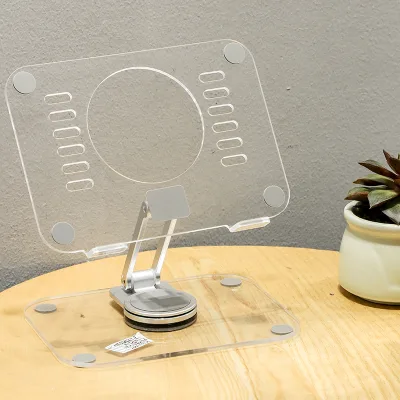

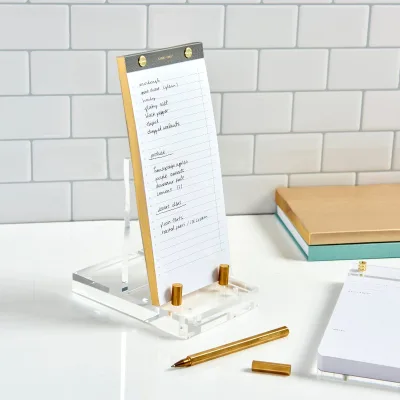


Versatile Acrylic Tablet Holder Featuring 360-Degree Rotation and Stability
$4.50 - $5.41
MOQ: 500 Pieces


Comprehensive Sourcing Guide
Strategic Sourcing Guide for Desktop Phone Book Display Stands
Procuring desktop phone book display stands requires a nuanced understanding of the specific constraints and opportunities within the acrylic and alloy display market. Unlike large-scale retail fixtures, desktop units demand precision in material thickness, stability, and aesthetic integration with office or retail environments. The following guide synthesizes available product data and industry standards to assist procurement professionals in navigating the selection process, ensuring that the final acquisition meets both functional and compliance requirements.
Technical Specifications and Material Selection
The foundation of a successful desktop display stand lies in its material composition and structural design. Based on observed market data, the primary material for these units is acrylic, often selected for its clarity, durability, and ability to be molded into custom shapes. For desktop applications, the material thickness is a critical specification; observed data indicates a standard thickness of 3mm for acrylic units, which provides a balance between rigidity and weight. However, buyers must verify this specification for every potential supplier, as some models may utilize different thicknesses depending on the intended load capacity.
In addition to acrylic, alloy materials are present in the market, offering a different aesthetic and structural profile. These units often feature specific design elements such as single-style configurations or upright column builds. The build method is another vital technical consideration. While some desktop stands utilize a "Connect" build method for modular assembly, others may employ an "Upright Column" design. The choice between these methods impacts the final footprint and the ease of assembly on-site.
Size specifications vary significantly across the product range. While some units come in standard dimensions such as 8x6.7 inches, the market heavily favors "Customized Size" options. This flexibility allows buyers to tailor the display to specific phone book dimensions or branding requirements. The color is similarly customizable, with "Customized Color" being a standard offering. When evaluating technical specs, procurement teams should request detailed drawings or CAD files to confirm that the customized dimensions align with the physical space available on the desktop.
Design Flexibility and Customization Options
One of the most compelling aspects of sourcing desktop display stands is the high degree of customization available. The data confirms that "Customized Logo" and "Offer Design and Drawing Artwork" are standard capabilities for suppliers in this sector. This allows businesses to integrate their branding directly into the display structure, turning a functional item into a marketing tool. The design process typically begins with the submission of artwork, which the manufacturer then translates into the physical product.
The style of the display also offers significant variation. While the core keyword focuses on "desktop" units, the market includes "Floor-type" and "Hanging" styles that may share similar material properties. For desktop applications, the "Single" style is prevalent, but "Desktop" specific designs often feature a "Folded" or "Unfolded" configuration depending on the storage and transport needs. It is important to note that while some units are designed to be folded for compact storage, others are intended to remain in a fixed, unfolded state for permanent display.
Customization extends beyond the visual to the functional. The "Feature" attribute often includes "Recycled" materials, appealing to sustainability goals, or "Moisture Proof" properties, which are essential for environments with varying humidity levels. Buyers should explicitly state their requirements for these features during the initial inquiry, as not all standard models may include them without modification. The ability to offer design and drawing artwork ensures that the final product can be tailored to specific ergonomic needs or space constraints.
Compliance, Certification, and Standards Verification
Navigating the compliance landscape is essential for B2B procurement, particularly when dealing with international suppliers. The observed data highlights several certifications and standards that are relevant to this product category. Specifically, "SGS" and "ISO9001:2000" (also noted as ISO9001-2000) are frequently cited certifications. These indicate that the manufacturer adheres to specific quality management systems and that their products have undergone third-party testing.
However, buyers must exercise caution when interpreting these certifications. The presence of "SGS" as a standard or certificate suggests that the product has been tested against certain criteria, but the specific test results or the scope of the certification should be verified. Similarly, the "Bear GREEN" standard is mentioned in the context of some products, which may imply environmental compliance, though the exact nature of this standard requires clarification from the supplier.
It is crucial to distinguish between general company certifications and product-specific standards. While a supplier may hold an ISO9001 certification, this does not automatically guarantee that every batch of desktop stands meets the same quality threshold. Procurement teams should request valid, current copies of these certificates and verify their scope to ensure they cover the specific manufacturing processes used for the desktop stands. Additionally, while "FSC" is mentioned in background knowledge, it should not be assumed as a standard unless explicitly confirmed by the supplier for the specific product line.
Cost Drivers and Pricing Dynamics
Understanding the cost structure of desktop phone book display stands is vital for budget planning. The observed price range in the market spans from $0.13 to $59.99 USD. This wide variance is driven by several factors, including material costs, customization complexity, and order volume. Acrylic units with 3mm thickness and custom logos will naturally command a higher price point than standard, off-the-shelf alloy models.
The Minimum Order Quantity (MOQ) is another significant cost driver. The observed MOQ range is between 2 and 1000 units. For small businesses or those testing a new design, suppliers with an MOQ of 2 or 50 units offer a lower barrier to entry. However, larger orders often benefit from economies of scale, reducing the unit cost. Buyers should negotiate based on their projected volume, keeping in mind that customization often requires a higher MOQ to justify the setup costs for design and tooling.
Packing methods also influence the final cost. Standard packing includes "Bubble Bag Foam Pad and Five Layers Master Carton" or "Plastic Film and Foam and Carton." These robust packaging solutions ensure the product arrives undamaged but add to the overall shipping weight and cost. Buyers should evaluate whether the standard "Safe Package" or "OPP" packing is sufficient for their logistics chain or if enhanced protection is necessary to prevent damage during transit.
Typical Applications and Usage Scenarios
Desktop phone book display stands are versatile tools designed for a variety of commercial and residential settings. The primary usage scenarios include "Exhibition Show," "Speciality Stores," "Supermarkets and Stores," and "Home" environments. In retail settings, these stands are ideal for displaying phone books, directories, or promotional literature in a way that maximizes visibility without cluttering the counter space.
The "Display Place" is typically "Indoor," which aligns with the material properties of acrylic and alloy. These materials are not inherently weather-resistant, making them unsuitable for outdoor use without specific treatment. The "Display Products" attribute often lists "Jewelry," indicating that these stands are frequently repurposed for small, high-value items, though their primary function remains the display of printed materials.
For office environments, the "Application" attributes of "Home," "Gift," and "Office" suggest a dual-purpose utility. A desktop stand can serve as a functional organizer for phone books while also acting as a branded gift or office accessory. The "Antitheft" feature is noted as "Not Antitheft" in the observed data, meaning these stands do not include built-in security mechanisms. Buyers requiring security features must look for additional accessories or custom modifications.
Supplier Evaluation and Quality Control
Selecting the right supplier is critical for ensuring consistent quality and timely delivery. The observed data indicates that suppliers are located in various regions of China, including "Xiamen," "Xiamen Fujian," "Dongguan, Guangdong," "Zhejiang," and "Shanghai." Each region may have different strengths; for example, Xiamen is known for acrylic manufacturing, while Dongguan often specializes in alloy and metal products.
When evaluating suppliers, buyers should verify the "prod_model" numbers, such as "NCT-187," "AD-81615," "AD-81612," "SYJC-BE1," and "MX-DS002." These model numbers serve as unique identifiers for specific product configurations. Requesting samples based on these model numbers allows buyers to assess the quality of the material, the precision of the customization, and the durability of the build.
Quality control should focus on the "Build Method" and "Material Thickness." For acrylic stands, checking for bubbles, scratches, or uneven edges is essential. For alloy units, inspecting the finish and the stability of the base is crucial. The "prod_packing" method should also be inspected to ensure that the "Five Layers Master Carton" or "Plastic Film and Foam" packaging is sufficient to protect the product during shipping. Buyers should establish clear quality acceptance criteria before placing large orders to minimize the risk of receiving substandard goods.
Long-Term Procurement Considerations
Sourcing desktop phone book display stands is not just a one-time transaction but a strategic partnership that requires long-term planning. The availability of "Customized Logo" and "Design and Drawing Artwork" services means that suppliers can grow with the buyer's needs. As branding requirements evolve, the ability to update designs without changing the core product structure is a significant advantage.
Buyers should also consider the sustainability aspect. The "Recycled" feature observed in some products aligns with corporate social responsibility goals. However, verifying the source of these recycled materials and the extent of their use is necessary to ensure genuine sustainability claims. Additionally, the "Moisture Proof" feature is a long-term investment that can extend the lifespan of the display stands in humid environments, reducing the need for frequent replacements.
Finally, maintaining a relationship with suppliers who offer flexible MOQs and robust customization services will provide agility in the market. As the demand for phone books and similar printed materials fluctuates, the ability to adjust order quantities and designs quickly will be a key differentiator for successful procurement strategies. By focusing on these long-term factors, buyers can secure a reliable supply chain that supports their operational and branding objectives.
FAQs
Can I get a customized logo on the Desktop Phone Book Display Stand?
Yes, suppliers offer customized logos on these stands. This feature allows businesses to integrate branding directly into the display structure, turning a functional item into a marketing tool for exhibitions and specialty stores.
What materials are used for desktop phone book display stands?
The primary materials observed are acrylic and alloy. Acrylic units often feature a standard thickness of 3mm for rigidity, while alloy options provide a different aesthetic profile suitable for office and home applications.
Which certifications do these display stands typically hold?
Common certifications include SGS and ISO9001:2000. These indicate adherence to quality management systems and third-party testing, though buyers should verify specific test results and scope for each batch ordered.
How flexible are the size and color options for these stands?
Buyers can request customized sizes and colors for these units. While standard dimensions like 8x6.7 inches exist, the market heavily favors custom options to tailor the display to specific phone book dimensions or branding requirements.
What is the typical price range for desktop phone book display stands?
The observed price range spans from 0.13 to 59.99 USD. This variance is driven by material costs, customization complexity, and order volume, with acrylic units and custom logos often commanding higher prices.
Can I find suppliers with a low minimum order quantity?
Yes, minimum order quantities range from 2 to 1000 units. Suppliers with lower MOQs like 2 or 50 units offer a lower barrier to entry for small businesses testing new designs or requiring smaller initial stock.
Where are the manufacturers of these stands located?
Manufacturers are located in regions such as Xiamen, Dongguan, Zhejiang, and Shanghai. Xiamen is known for acrylic manufacturing, while Dongguan often specializes in alloy and metal products for these display fixtures.