Source Desktop Needle Flame Tester for Component, Material, and Access Fire Hazard Testing
Find and compare 30 desktop needle flame testers from verified Chinese manufacturers. These machines support flammability testing for component materials and access fire hazards with adjustable flame durations and standard accuracy.
Key considerations
Products List

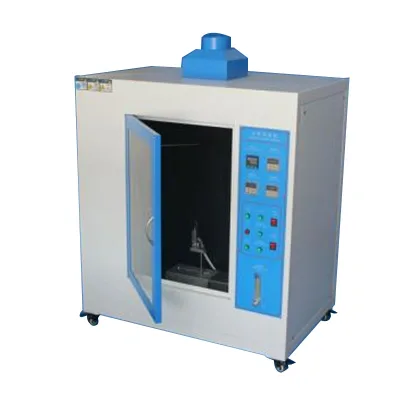


Flame Test Lab Equipment for IEC 60695 Needle Flame Testing/Test Machine
$1000.00 - $9000.00
MOQ: 1 Pieces


Electronic Plastic Flammability Analyzer Needle Flame Tester IEC 60695
$1000.00 - $2000.00
MOQ: 1 Pieces


Combustion Testing Equipment Needle Flame Tester for Plastic with Touch Screen
$2300.00 - $4000.00
MOQ: 1 Pieces


Needle Flame Test Chamber Needle Flame Burning Tester Price HT-5169T-N
$1599.00 - $2399.00
MOQ: 1 Pieces


IEC60695 Needle Flame Tester for Material and Solid Combustible Testing
$2000.00 - $5000.00
MOQ: 1 Pieces
Comprehensive Sourcing Guide
Strategic Sourcing Guide for Desktop Needle Flame Testers
Understanding the Core Technical Architecture and Specifications
When sourcing a Desktop Needle Flame Tester, buyers must first distinguish between the general category of flammability testing equipment and the specific operational parameters of the needle flame apparatus. The device is designed to simulate the thermal effects of small flames, such as those from a match or a defective electrical component, on materials used in electrical and electronic equipment. The core functionality relies on a precise burner assembly that generates a controlled flame of specific dimensions and duration.
Based on observed market data, the technical architecture of these units typically involves a digital control interface rather than manual analog dials. The display is digital, allowing operators to input precise time parameters for the ignition duration. Common adjustable settings for the ignition duration include intervals of 5, 10, 20, 30, 60, and 120 seconds. This digital capability is critical for ensuring repeatability in test results. The power supply requirements are standardized, with most units operating on an AC220V electrical supply at 50Hz. The working power supply is often rated at 220V AC 50Hz, with a test power supply capacity of 0.5kVA.
The physical dimensions of the equipment vary, but typical overall dimensions for a desktop unit might be approximately 1000mm in width, 65mm in depth, and 1300mm in height. However, buyers should verify the specific footprint against their laboratory space, as some models may differ. The weight of the unit is a significant factor for stability; observed ranges indicate weights between 0 and 100kg for lighter desktop models, while more robust industrial versions may weigh between 100kg and 500kg. The construction material is predominantly stainless steel, often housed in a stainless steel cabinet to ensure durability and resistance to corrosion from repeated exposure to flame and combustion gases.
The burner nozzle is a critical component where precision is paramount. The inner hole diameter of the nozzle is typically specified as 0.5mm ± 0.1mm. This tolerance ensures that the flame height remains consistent, usually observed at 12mm ± 1mm, which is adjustable. The flame is generated using butane as the combustion gas. The device is designed to be self-calibrated, often featuring a copper block of 44mm with a mass of 0.58 ± 0.01g to verify the heat transfer characteristics of the flame. The load way for the workpiece is mechanical, allowing for the secure positioning of the test sample.
Compliance Standards and Certification Verification
In the realm of flammability testing, adherence to international standards is not merely a recommendation but a prerequisite for the validity of test results. Buyers must verify that the equipment is designed to meet specific international standards. The observed product data indicates compliance with IEC60695-11-5 and IEC60695-2-2. These standards define the needle flame test method for assessing the flammability of solid electric and electronic components.
The IEC60695 series addresses the fire hazard of materials. Specifically, the needle flame test simulates the ignition of materials by small flames. When evaluating a supplier, the buyer should request documentation proving that the machine's flame dimensions, gas flow, and temperature rise characteristics align with these standards. The accuracy class of the equipment is typically listed as "Standard Accuracy," but buyers should understand that this refers to the manufacturing tolerance of the device itself.
Certification is another critical layer of verification. The market data shows that suppliers often provide calibration certificates from recognized bodies. Two specific types of calibration support were observed: CNAS Calibration and ISO17025 Calibration. CNAS refers to the China National Accreditation Service for Conformity Assessment, while ISO17025 is the international standard for the competence of testing and calibration laboratories. The presence of a CNAS or ISO17025 calibration certificate provided with the machine is a strong indicator of quality assurance. However, buyers must distinguish between the calibration of the machine upon delivery and the ongoing accreditation of the testing laboratory that will use the machine. The machine itself should come with a warranty, typically observed as a 1-year warranty, which covers manufacturing defects but not wear and tear from operation.
Buyers should also verify the "Accuracy Grade" of the equipment. While some listings mention an accuracy grade of 0, this terminology can be ambiguous. It is safer to rely on the explicit calibration certificates and the adherence to the IEC standards mentioned above. The standard compliance ensures that the test results generated by the machine are defensible in regulatory audits and international trade disputes.
Cost Drivers and Pricing Dynamics
The pricing of desktop needle flame testers is influenced by several factors, including the level of automation, the precision of the digital controls, and the inclusion of calibration services. The observed price range in the market is extensive, spanning from $1 to $9,000. This wide variance suggests that the market includes both basic manual units and highly automated, computer-controlled systems.
The primary cost driver is the control system. Units with "Computer Control" capabilities, which allow for automated data logging and precise timing sequences, will naturally command a higher price point compared to those with "Manual Control." The digital display is a standard feature in the mid-to-high range, but the integration of software for data management adds value. Another significant cost factor is the calibration service. Machines that come with a pre-delivery CNAS or ISO17025 calibration certificate often have a higher upfront cost, but this eliminates the need for the buyer to arrange third-party calibration immediately, saving time and logistical costs.
The packaging and shipping requirements also impact the final cost. The observed product packing options include "Fumigation-Free Standard Export Wooden Box," "Plywood Carton," and "Wooden Case." Wooden cases are more expensive and provide better protection for heavy machinery, which may be reflected in the shipping and handling costs. The origin of the product, typically China (with specific mentions of Hebei and Guangzhou, Guangdong), influences the base manufacturing cost, but shipping distances and import duties for the buyer's location will be the final determinants of the landed cost.
Buyers should be wary of prices that seem too low, as they may indicate a lack of compliance with IEC standards or the absence of necessary calibration certificates. Conversely, the highest-priced units should be scrutinized to ensure the added cost corresponds to genuine value, such as advanced software integration or extended warranty periods. The minimum order quantity (MOQ) is generally low, often 1 PC, which allows for the purchase of a single unit for testing purposes without the need for bulk buying.
Typical Applications and Material Compatibility
The primary application of the Desktop Needle Flame Tester is to evaluate the flammability of component materials used in electrical and electronic equipment. The device is designed to check access to fire hazards of component materials, simulating the effects of small flames that might occur due to electrical faults. This makes it an essential tool for manufacturers of appliances, lighting, and electronic components.
The usage scenarios are diverse. The machine is used for "Universal Testing" of various materials to determine their resistance to ignition and their ability to self-extinguish. The test is particularly relevant for materials that are not expected to be self-extinguishing under normal conditions but must not propagate fire in a specific manner. The application covers the assessment of the fire hazard of component materials, ensuring that products meet safety regulations before they reach the market.
The workpiece compatibility is defined by the physical constraints of the machine. The maximum diameter of the workpiece is typically less than 500mm, and the mass scope of the workpiece can be up to 900kg, depending on the specific model's load capacity. This allows for the testing of a wide range of sample sizes, from small circuit boards to larger housing components. The load way is mechanical, which means the sample is held in place by a mechanical fixture, ensuring stability during the flame application.
Buyers should consider the specific materials they intend to test. The needle flame test is suitable for solid materials, including plastics, textiles, and composites. The test determines whether the material ignites, burns, or drips flaming particles. The results are crucial for product safety certification, particularly in industries where fire safety is a regulatory requirement. The device is not intended for testing liquids or gases but focuses on solid electric and electronic components.
Supplier Evaluation and Quality Assurance
Evaluating a supplier for a Desktop Needle Flame Tester requires a multi-faceted approach. The first step is to verify the supplier's ability to provide the necessary documentation. Buyers should request proof of compliance with IEC60695-11-5 and IEC60695-2-2. This documentation should include detailed test reports or calibration certificates that confirm the machine's performance meets the standard requirements.
The customization capabilities of the supplier are also important. Many suppliers offer OEM, ODM, and OBM support, allowing buyers to brand the equipment or request specific modifications. The availability of customization is a positive indicator of a supplier's flexibility and technical capability. However, buyers must ensure that any customizations do not compromise the machine's compliance with international standards.
The origin of the product is a key factor in the supply chain. Most observed products originate from China, with specific manufacturing hubs in Hebei and Guangzhou, Guangdong. While this is a common source for such equipment, buyers should verify the specific factory location and its quality control processes. The lead time for delivery is another critical consideration. Observed delivery times range from 20 to 30 days, with some suppliers offering delivery within 25 working days. Buyers should factor in this lead time when planning their procurement schedule.
The warranty period is a standard metric for supplier confidence. A 1-year warranty is typical, but buyers should clarify what is covered. Does it include parts, labor, and calibration? The after-sales support is equally important. Buyers should inquire about the availability of technical support, spare parts, and the process for handling calibration renewals. The packaging method, such as the use of fumigation-free wooden boxes, also reflects the supplier's attention to detail and compliance with international shipping regulations.
Long-Term Procurement and Operational Considerations
Sourcing a Desktop Needle Flame Tester is not just a one-time purchase; it involves long-term operational considerations. The maintenance of the equipment is crucial for ensuring consistent test results. The burner nozzle, which has a precise inner diameter of 0.5mm ± 0.1mm, can become clogged or damaged over time. Buyers should establish a maintenance schedule that includes regular cleaning and inspection of the nozzle and the flame generation system.
The calibration of the machine is a recurring requirement. While the machine may come with a CNAS or ISO17025 calibration certificate upon delivery, this certification has an expiration date. Buyers must plan for periodic recalibration to maintain the validity of their test results. The cost of recalibration and the availability of certified calibration services should be factored into the long-term cost of ownership.
The training of personnel is another essential aspect. The machine features digital controls and adjustable parameters, which require trained operators to ensure accurate and repeatable results. Buyers should verify that the supplier provides comprehensive training materials or on-site training sessions. The user manual should be clear and detailed, covering all aspects of operation, safety, and maintenance.
Finally, the scalability of the procurement strategy should be considered. If the buyer anticipates an increase in testing volume, they may need to acquire additional units or upgrade to a more robust model. The observed MOQ of 1 PC allows for flexible purchasing, but bulk orders may offer cost savings. Buyers should also consider the compatibility of the machine with their existing laboratory infrastructure, including power supply requirements and space constraints. By addressing these long-term considerations, buyers can ensure that their investment in a Desktop Needle Flame Tester remains a valuable asset for years to come.
Summary of Key Specifications and Compliance
To assist buyers in their decision-making process, the following table summarizes the key specifications and compliance factors observed in the market for desktop needle flame testers.
| Feature Category | Observed Specifications / Standards | Verification Requirement |
|---|---|---|
| Power Supply | AC220V, 50Hz; Test Power: 0.5kVA | Confirm voltage compatibility with local grid. |
| Flame Characteristics | Height: 12mm ± 1mm; Gas: Butane | Verify nozzle diameter (0.5mm ± 0.1mm) and flame stability. |
| Control System | Digital Display; Manual or Computer Control | Check software integration and data logging capabilities. |
| Standards Compliance | IEC60695-11-5, IEC60695-2-2 | Request test reports proving adherence to these standards. |
| Calibration | CNAS or ISO17025 Calibration Provided | Verify the validity and scope of the calibration certificate. |
| Dimensions | Width 1000mm * Depth 65mm * Height 1300mm (Typical) | Measure laboratory space to ensure fit. |
| Material | Stainless Steel Cabinet | Check for corrosion resistance and durability. |
| Warranty | 1 Year | Clarify coverage for parts, labor, and calibration. |
| Lead Time | 20-30 Days | Plan procurement schedule accordingly. |
| MOQ | 1 PC | Confirm if bulk discounts are available. |
By carefully evaluating these specifications and compliance factors, buyers can make informed decisions that align with their technical requirements and regulatory obligations. The Desktop Needle Flame Tester is a critical tool for ensuring product safety, and selecting the right equipment is the first step in maintaining high standards of quality and compliance.
FAQs
What standards does the Desktop Needle Flame Tester comply with?
The device complies with IEC60695-11-5 and IEC60695-2-2 standards for flammability testing. This ensures the equipment simulates small flames accurately for component material safety assessments.
Can the ignition duration be adjusted on this testing machine?
Yes, the ignition duration is adjustable with settings of 5, 10, 20, 30, 60, and 120 seconds. This digital control allows operators to precisely match specific test requirements for repeatability.
What is the typical lead time for delivery of this equipment?
Delivery typically occurs within 20 to 30 days after order confirmation. Specific timelines may vary between 20-25 days or 25-30 days depending on the manufacturer and customization needs.
Which certifications are provided with the Desktop Needle Flame Tester?
Suppliers often provide CNAS or ISO17025 calibration certificates with the machine. These documents verify the equipment meets accuracy requirements for valid fire hazard testing results.
How is the flame height controlled and measured?
The flame height is set to 12mm ± 1mm and is adjustable using butane gas. A self-calibrated copper block of 44mm verifies the heat transfer characteristics for consistent performance.
What is the minimum order quantity for purchasing this tester?
The minimum order quantity is one piece, allowing for single unit purchases. This low MOQ supports buyers who need immediate testing capabilities without bulk commitments.