Source DF Cylinder Manual Pallet Jack for Warehouse, Logistics, and Retail
Compare 12 DF Cylinder Manual Pallet Jack options from verified Chinese manufacturers. Buyers can evaluate lifting capacities, wheel types, and customization features to find the right equipment for indoor and outdoor operations.
Key considerations
Products List




Comprehensive Sourcing Guide
Strategic Sourcing Guide for DF Cylinder Manual Pallet Jacks
Understanding the Core Hydraulic Architecture
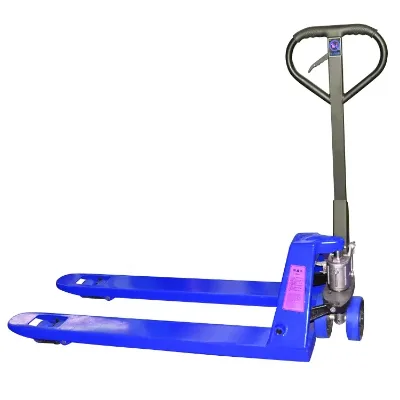
The manual pallet jack, often referred to as a hand pallet truck, represents a fundamental piece of material handling equipment in modern logistics. When sourcing a unit described as a "DF Cylinder Manual Pallet Jack," the buyer is specifically targeting a hydraulic system configuration where the cylinder type is designated as "Df" or "AC." This distinction is critical because the cylinder type dictates the lifting mechanism's efficiency, maintenance requirements, and overall lifting smoothness. Based on observed market data, the cylinder block for these units is frequently described as a "White cylinder block," indicating a specific finish or coating that may offer corrosion resistance in varied warehouse environments.
The hydraulic pump mechanism is a central component of the DF cylinder system. In the observed product listings, the pump is explicitly identified as "AC," which aligns with the cylinder type designation. This configuration suggests a robust internal gear pump system designed for manual operation. The lifting capacity for these units varies significantly across the market, with observed ratings ranging from 1 Ton to 5 Tons, and specific models rated at 2 Tons or 3 Tons. The "DF" designation often implies a specific internal seal design or piston arrangement that enhances durability under repeated lifting cycles. Buyers must verify that the cylinder block and pump assembly are constructed from high-grade materials, such as carbon steel or general steel, to ensure they can withstand the mechanical stress of lifting heavy loads repeatedly without failure.
Technical Specifications and Dimensional Analysis
When evaluating a manual pallet jack, dimensional compatibility with existing warehouse infrastructure is paramount. The fork dimensions are a primary variable that dictates which pallets the jack can accommodate. Observed specifications indicate fork outer widths of 550mm and 685mm, with corresponding fork lengths of 1150mm and 1220mm. These dimensions align with standard European and American pallet sizes, but the "Load center" for these units is observed to be greater than 500mm. This metric is crucial for stability; a load center exceeding 500mm implies that the center of gravity for the load must be positioned carefully to prevent tipping, especially when the forks are fully extended.
The physical footprint of the unit is determined by its overall length, which is observed to be 1533mm or 1603mm depending on the specific model configuration. The wheel assembly is another critical technical specification. These units typically feature a "Wheel Amount" of 6, which includes both the load-bearing wheels and the steering wheels. The wheel types vary, with observations noting "Pneumatic Wheel" options as well as "PU wheel" (Polyurethane) options. The small wheel size is consistently observed at 8070mm, while the big wheel size is 18050mm. The choice between pneumatic and PU wheels depends heavily on the terrain adaptability required. PU wheels are generally preferred for smooth indoor flooring to prevent marking, while pneumatic wheels may be necessary for outdoor pavement or uneven surfaces.
The structural integrity of the jack is supported by the steel plate thickness, which is observed to be 3.5mm. This thickness is a key indicator of the chassis strength and its ability to resist bending under maximum load. Additionally, the presence of "Double Rollers" is a notable feature in some models, which can enhance the smoothness of the lifting action and reduce friction within the hydraulic system. The surface handling is typically "Paint," which provides a protective layer against rust and wear, though the specific paint quality should be verified during the inspection phase.
Compliance, Certification, and Safety Standards
In the B2B procurement of industrial equipment, compliance with international safety standards is non-negotiable. The observed product listings frequently cite "CE" certification, which is a mandatory conformity mark for products sold within the European Economic Area. This certification indicates that the manufacturer claims the product meets EU safety, health, and environmental requirements. However, buyers should not assume that a CE mark on a listing guarantees compliance for all specific jurisdictions. It is essential to verify that the Machinery Test Report is provided by the supplier, as this document offers empirical evidence of the product's performance and safety testing.
The "prod_standard" for these units often references the fork dimensions, such as "5501150/6851220(mm)," which serves as a baseline for dimensional compliance. Furthermore, the product origin is consistently listed as "Baoding, Hebei, China," a region known for manufacturing heavy machinery. While the origin is a factual observation, buyers must ensure that the specific batch of equipment being purchased adheres to the standards claimed. The "After-Sales Service" is typically offered for a period of 12 months, which is a standard industry practice for warranty coverage. This period covers potential defects in the hydraulic system or structural components. Buyers should also note that the "Customization" of these units is available, allowing for specific branding or minor design adjustments, but such customizations must not compromise the core safety certifications.
Cost Drivers and Procurement Economics
The pricing for manual pallet jacks with DF cylinders exhibits a wide range, observed between 3 USD and 173.54 USD. This significant variance is driven by several factors, including the load capacity, material quality, and the specific configuration of the hydraulic system. A unit priced at the lower end of the spectrum may utilize standard carbon steel and basic PU wheels, while a unit at the higher end might feature enhanced steel plate thickness, superior paint finishes, or specialized wheel configurations for rougher terrain. The "Selling Units" are typically listed as "Single item," but the "Packing" method often involves 6 pieces per pallet, which can influence shipping costs and logistics planning.
The "Load Capacity" is a primary cost driver, with models ranging from 1 Ton to 5 Tons. Higher capacity units generally require more robust hydraulic cylinders, thicker steel plates, and larger wheels, all of which increase the manufacturing cost. The "Brand Name" also plays a role in pricing, with established brands like "Janz" potentially commanding a premium over generic manufacturers. However, the brand name should be viewed as a marker of reputation rather than a sole determinant of quality. Buyers should focus on the technical specifications, such as the "Steel Plate Thickness" and "Cylinder Type," to justify the price point. The "MOQ" (Minimum Order Quantity) ranges from 1 to 100 units, offering flexibility for small businesses and large enterprises alike. Understanding these cost drivers allows buyers to negotiate effectively and select a unit that balances budget constraints with performance requirements.
Supplier Evaluation and Quality Assurance
Selecting the right supplier for DF cylinder manual pallet jacks requires a rigorous evaluation process. The supplier's ability to provide a "Machinery Test Report" is a critical indicator of their commitment to quality. This report should detail the results of load testing, pressure testing, and durability assessments. Buyers should also verify the "Surface Handling" process, ensuring that the paint application is uniform and free from defects that could lead to corrosion. The "Wheel Type" and "Wheel Amount" should be cross-referenced with the intended application; for instance, a supplier offering "Pneumatic Wheel" options for outdoor use demonstrates a broader product range and understanding of diverse operational needs.
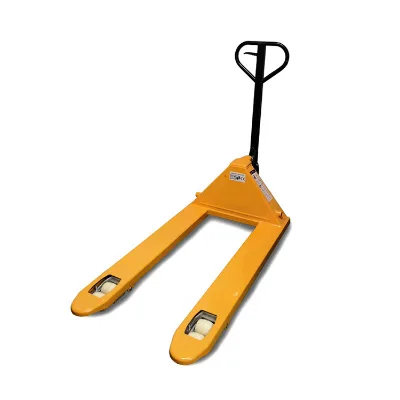
The "Condition" of the products is observed as "New," which is standard for new procurement. However, buyers must ensure that the "New" status refers to the manufacturing condition and not a refurbished unit. The "Style" of the jack, often described as "Unfolding," refers to the assembly process, and suppliers should provide clear instructions for assembly if the unit is shipped in a partially disassembled state to save on shipping volume. The "Color" options, including yellow, blue, and orange, are often used for safety coding in warehouses, and suppliers should be able to accommodate specific color requests if customization is required.
Long-Term Procurement and Operational Considerations
Long-term procurement of manual pallet jacks involves more than just the initial purchase price; it encompasses maintenance, operational efficiency, and total cost of ownership. The "After-Sales Service" of 12 months is a baseline, but buyers should inquire about the availability of spare parts, particularly for the hydraulic cylinder and pump assembly. The "DF" cylinder type suggests a specific design that may require specialized seals or maintenance procedures, and the supplier should be able to provide technical support for these components.
The "Terrain Adaptability" of the jack is another long-term consideration. Units designed for "Indoor Flooring, Outdoor Pavement, other" offer versatility, but the wear and tear on wheels and forks will vary based on the surface conditions. Buyers should assess the "Double Rollers" feature as a potential longevity enhancer, as it reduces friction and wear on the lifting mechanism. The "Product Name" variations, such as "New Df 2t/2.5t/3t Hydraulic Hand Pallet Truck," indicate that the market offers a range of capacities, and selecting the right capacity for the specific application can prevent over-engineering or under-performance.
Finally, the "Packing" method, typically "Pallet Package" with 6 pieces per pallet, affects the logistics chain. Efficient packing reduces shipping costs and minimizes the risk of damage during transit. Buyers should verify that the packaging is robust enough to protect the "White cylinder block" and other critical components. By considering these long-term factors, buyers can ensure that their investment in DF cylinder manual pallet jacks delivers sustained value and operational reliability.
Comparative Analysis of Key Specifications
To facilitate decision-making, the following table summarizes the key technical specifications observed in the market for DF cylinder manual pallet jacks. This comparison highlights the variability in dimensions, capacities, and features that buyers must consider.
| Specification Category | Observed Value/Range | Application Note |
|---|---|---|
| Load Capacity | 1 Ton - 5 Ton (Specific: 2T, 3T) | Select based on max load weight. |
| Fork Outer Width | 550mm / 685mm | Match to pallet width (Euro vs. Standard). |
| Fork Length | 1150mm / 1220mm | Ensure sufficient support for pallet depth. |
| Cylinder Type | Df / AC | Determines hydraulic efficiency and lift smoothness. |
| Wheel Type | Pneumatic / PU | PU for indoor; Pneumatic for outdoor/rough terrain. |
| Wheel Size (Small) | 80*70mm | Affects maneuverability in tight spaces. |
| Wheel Size (Big) | 180*50mm | Impacts load-bearing stability and rolling resistance. |
| Steel Plate Thickness | 3.5mm | Indicator of chassis strength and durability. |
| Certification | CE | Mandatory for EU markets; verify test reports. |
| Warranty Period | 12 Months | Standard coverage for defects. |
| Origin | Baoding, Hebei, China | Regional manufacturing hub for this equipment. |
| Surface Finish | Paint | Protects against corrosion; verify quality. |
This table serves as a reference point for buyers to compare different models and ensure that the selected unit meets the specific operational requirements of their facility. By carefully analyzing these specifications, buyers can make informed decisions that optimize their material handling operations.
FAQs
What is the typical load capacity range for these jacks?
The load capacity ranges from 1 Ton to 5 Tons, with specific models rated at 2 Tons or 3 Tons. Buyers should verify the exact rating against their heaviest expected load to ensure safe operation and prevent structural failure during lifting cycles.
Which fork dimensions are available for standard pallets?
Available fork outer widths are 550mm and 685mm, with corresponding lengths of 1150mm and 1220mm. These dimensions align with standard European and American pallet sizes, ensuring compatibility with most warehouse inventory configurations.
Can the cylinder type be identified as DF or AC?
Yes, the cylinder type is designated as Df or AC, which dictates the hydraulic system's efficiency and lifting smoothness. This configuration typically involves a robust internal gear pump designed for manual operation and repeated lifting cycles.
How does the wheel type affect terrain adaptability?
Units offer either Pneumatic or PU wheels to suit different surfaces. PU wheels are preferred for smooth indoor flooring to prevent marking, while pneumatic wheels provide better adaptability for outdoor pavement or uneven surfaces.
What certifications are typically provided with these units?
Products frequently cite CE certification, indicating compliance with EU safety and environmental requirements. Buyers should also verify that a Machinery Test Report is provided to confirm empirical performance and safety testing results.
Which customization options are available for branding?
Customization is available for specific branding or minor design adjustments. However, any customizations must not compromise the core safety certifications or the structural integrity of the hydraulic cylinder and pump assembly.
What is the standard after-sales service period?
The standard after-sales service is offered for a period of 12 months. This warranty typically covers potential defects in the hydraulic system or structural components, ensuring support for the initial operational phase.