Source Diesel Lubricating Oil Injector for Engines, Pumps, Generators
Find and compare 30 Diesel Lubricating Oil Injector options from verified suppliers. Evaluate specifications like OE codes, certifications, and MOQs to select the right fuel injection components for your industrial or automotive needs; compare the available evidence and request quotations based on your requirements.
Key considerations
Products List


Engine Oil Pump Pneumatic Oil Pump 60L-208L Lubricating Oil Injection Tool
$230.00 - $260.00
MOQ: 10 Sets


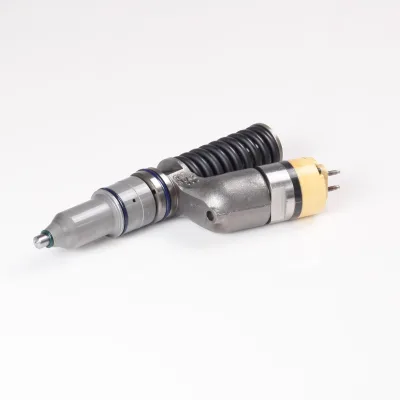


Comprehensive Sourcing Guide
Diesel Lubricating Oil Injector Sourcing Guide
Procurement professionals must first distinguish between the fuel injection device and the lubricating oil components, as the market data indicates a convergence of these systems in specific diesel applications. The observed listings reveal products labeled as "Fuel Injection" devices that also feature "Engine Oil" attributes, suggesting a specialized category where lubrication and injection mechanisms are integrated or sold as a paired solution. Buyers should verify whether the specific unit requires a separate lubrication system or if the "Grease Lubrication" method noted in the data applies to the injector's internal moving parts.
Understanding the physical configuration is critical before initiating a supplier search, as the data shows a mix of "Horizontal Draught" carburettor types and "Multi-cylinder" engine compatibility. This variation implies that a single injector model may not fit all diesel engine architectures, necessitating a precise match between the buyer's engine specifications and the supplier's "OE Code" or "prod_model" data. The presence of both "New" and "Remanufacture" conditions in the listings further requires buyers to define their quality tolerance, as the performance and longevity of remanufactured units may differ significantly from brand-new components.
Product Scope and Observed Listing Signals
The market signals indicate a diverse range of product models, including specific identifiers like "295050-1200" and "0445120472," which serve as primary verification points for compatibility. These model numbers often correspond to specific "OE Code" references such as "500339059" or "Ha1145," allowing buyers to cross-reference their existing inventory or engine requirements against supplier catalogs. The "Electronic" fuel saver type and "High Pressure" performance attributes suggest these are advanced components designed for modern diesel efficiency, rather than older mechanical systems.
Buyers must also account for the variability in packaging and origin, as listings show products shipped in "Carton" or "Plywood" cases from "China" and specifically "Shanghai." This logistical diversity impacts shipping costs and handling requirements, particularly for heavy steel-bodied components that may require specialized crating. The "Customization" availability for logos and outer packaging offers an opportunity for branding, but it also extends the production timeline, requiring careful coordination with the supplier's "Etd" of 7-15 work days to ensure timely delivery.
Technical Specifications to Verify
Technical verification begins with the fundamental "Stroke" and "Cylinder" configuration, as the data confirms a "4 Stroke" design and "Multi-cylinder" compatibility. These specifications are non-negotiable for ensuring the injector functions correctly within the target engine block, as a mismatch can lead to catastrophic failure or inefficient combustion. Buyers should request detailed schematics to confirm the "Lubricating Method" is indeed "Grease Lubrication" and that the "Power Supply" is compatible with the vehicle's "Electric" system, ensuring seamless integration with the engine's control unit.
The physical dimensions and material composition are equally critical, with the "Body Material" identified as "Steel" and the "Shape" described as "Liquid" for associated lubricants. While the injector itself is a solid component, the "Source" of the lubricant is noted as "Liquid Mineral Lubricants" with a "Base Oil" composition, which must be compatible with the steel body to prevent corrosion. Buyers should verify the "Standard" dimensions, such as the "470470880MM" reference found in some listings, to ensure the component fits within the designated engine bay space without requiring modification.
Compliance and Safety Documentation
Compliance verification requires a rigorous review of the "Certification" documents provided by the supplier, which include "ISO," "CE," "SAE," and "ISO 9001-2015" standards. These certifications are essential for validating that the manufacturing process meets international quality and safety benchmarks, particularly for high-pressure fuel injection devices. The presence of "ISOComponent:Fuel Injection Device" and "ISOComponent:Fuel Injection" tags in the data suggests that specific component-level certifications are available, which buyers should request to confirm the product's adherence to industry safety protocols.
Safety documentation must also address the "Condition" of the product, whether "New" or "Remanufacture," and the associated "Warranty" terms ranging from "3months-1year." Buyers should ensure that the supplier provides a clear "After-Sales Service" agreement, specifically the "One Year" service mentioned in the listings, to mitigate risks associated with potential defects. Additionally, the "Standard" classification of the product should be cross-referenced with local regulatory requirements to ensure the "Protective Lubricant" properties and "High Pressure" performance do not violate any regional safety or environmental regulations.
Cost Drivers and Commercial Terms
Cost structures are heavily influenced by the "MOQ" requirements, which vary significantly from as low as "1" to as high as "1000" units, with specific listings showing thresholds of "4" and "6." This variability allows buyers to negotiate based on their volume needs, but it also means that unit prices will fluctuate depending on the order size. The observed price range of "0.8-2800" USD reflects this disparity, indicating that buyers must clearly define their quantity requirements to avoid unexpected cost escalations or minimum order penalties.
Commercial terms are further complicated by the "Customized Services" available, such as logo printing and pattern changes, which likely incur additional fees and extend the "Etd" beyond the standard 7-15 work days. Buyers should clarify whether the "Carton" or "Plywood" packaging is included in the base price or if it is an add-on service, as this affects the total landed cost. The "Process" of "Customized Processing" being marked as "No" in some listings suggests that standard models are the most cost-effective option, while custom modifications require a separate negotiation of time and cost.
Supplier Qualification and Quality Control
Supplier qualification should prioritize those who explicitly offer "Customization" and "After-Sales Service," as these capabilities indicate a mature supply chain capable of handling complex B2B requirements. The presence of specific "OE Code" and "prod_model" data in the listings suggests that suppliers have access to original equipment manufacturer specifications, which is a strong indicator of technical competence. Buyers should verify the "Condition" of the products, ensuring that "Remanufacture" units undergo rigorous testing to meet the "High Pressure" performance standards expected of new components.
Quality control protocols must be established to validate the "Lubricating Method" and "Composition" of the lubricants used in the assembly process. Since the data mentions "Liquid Mineral Lubricants" and "Base Oil," buyers should request test results or material safety data sheets to confirm that these substances do not degrade the "Steel" body or compromise the "Electronic" fuel saver type. The "Standard" classification and "ISO" certifications provide a baseline, but on-site audits or third-party inspections may be necessary to ensure consistent quality across batches, especially given the "New/Remanufacture" mix in the market.
Long-Term Procurement Checks
Long-term procurement success depends on establishing a reliable relationship with suppliers who can consistently meet the "Etd" of 7-15 work days and maintain the "Warranty" coverage of up to one year. Buyers should monitor the supplier's ability to fulfill "Customized Services" without compromising the "Standard" quality of the "Fuel Injection" devices, as repeated delays or quality issues can disrupt production schedules. The "One Year" after-sales service is a critical metric for long-term planning, ensuring that any performance issues with the "High Pressure" injectors can be addressed promptly.
Continuous verification of the "prod_model" and "OE Code" alignment is essential to prevent obsolescence or compatibility issues as engine technologies evolve. Buyers should maintain a database of the specific model numbers, such as "0445120484" or "HA1145," to ensure future orders match the exact specifications of their fleet. Regular reviews of the "Certification" status and "Standard" compliance will help maintain the integrity of the supply chain, ensuring that the "Diesel Lubricating Oil Injector" components continue to meet the rigorous demands of modern diesel engines.
FAQs
What certifications do diesel lubricating oil injectors have?
Diesel lubricating oil injectors typically hold ISO 9001-2015, ISO, CE, and SAE certifications. These standards ensure the fuel injection device meets international quality and safety requirements. Buyers should verify specific certification documents with the supplier to confirm compliance with their regional regulations and operational needs.
Can these injectors be customized for branding?
Yes, customization is available for logo, outer packaging, and pattern. Manufacturers offer tailored services to meet specific branding requirements. This allows buyers to maintain brand consistency across their supply chain. Customized processing options help distinguish products in the market while adhering to standard manufacturing protocols.
What is the typical lead time for orders?
The estimated time of delivery is 7-15 work days. This timeframe applies to standard production runs. Buyers should confirm exact schedules with suppliers, as lead times may vary based on order volume and customization requirements. Planning for this window ensures smooth inventory management and project timelines.
Which OE codes are supported for replacement?
Supported OE codes include 500339059, Ha1145, and 0 445 110 298. These codes correspond to specific fuel injection models like 295050-1200 and ZPU. Buyers should match their equipment requirements with these codes to ensure compatibility. Accurate code verification prevents installation errors and ensures optimal engine performance.
What is the minimum order quantity for these parts?
The minimum order quantity ranges from 1 to 1000 units, with specific listings showing MOQs of 4 or 6. This flexibility accommodates both small trial orders and large bulk purchases. Buyers can select suppliers based on their required volume, ensuring cost-effective sourcing without excessive inventory commitment or stockouts.
How are these injectors packaged for shipping?
Products are packaged in cartons or plywood cases. Carton packaging is common for standard units, while plywood provides extra protection for heavier or sensitive components. Proper packaging ensures safe transit and prevents damage during handling. Buyers should specify packaging preferences to meet their logistical and storage requirements effectively.