Source Digital Control Upright Compact Freezer for Cold Storage, Freezing, and Food Production
Find 30 Digital Control Upright Compact Freezer options with single or dual temperature zones, auto or manual defrost, and gas or electric power sources. Compare models like SR60 and SF40V for cold storage, freezing, and factory food production needs.
Key considerations
Products List


European Standard Upright Chiller/Freezer with Digital Thermostat Control
$235.40 - $246.10
MOQ: 5 Pieces

Multi-Purpose Upright Chiller/Freezer with Digital Control and Shelving
$407.00 - $425.50
MOQ: 5 Pieces


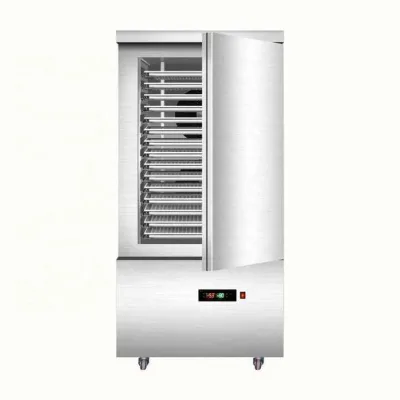


Mechanical Digital Temperature Control Single Arc Ice Cream Display Freezer
$226.00 - $1126.00
MOQ: 2 Sets


Comprehensive Sourcing Guide
Strategic Sourcing Guide for Digital Control Upright Compact Freezers
Navigating the global market for digital control upright compact freezers requires a disciplined approach that balances technical precision with rigorous supplier vetting. For procurement professionals, the term "digital control" implies a specific level of automation and monitoring capability, yet the actual product landscape is defined by a diverse array of specifications, from single-temperature units to complex dual-function systems. This guide synthesizes observed market data to provide a framework for evaluating these units, ensuring that buyers can make informed decisions based on verified attributes rather than speculative claims. The following sections detail the technical parameters, compliance requirements, cost structures, and operational considerations essential for successful procurement.
Technical Specifications and Operational Parameters
The technical foundation of any upright compact freezer lies in its refrigeration cycle and temperature management capabilities. Market observations indicate a significant variance in temperature ranges, which directly dictates the unit's suitability for specific storage needs. Buyers must distinguish between units designed for cold storage and those intended for deep freezing. Data shows that some models operate within a narrow band of 0 to 8 degrees Celsius, suitable for chilled food preservation, while others are engineered for a broader range of -18 to 22 degrees Celsius, catering to frozen goods and general storage. This distinction is critical; a unit optimized for 2 to 8 degrees Celsius may not maintain the stability required for long-term freezing applications.
The cooling system architecture is another pivotal specification. The observed market includes units utilizing a ventilated cooling system, which often correlates with frost-free or auto-defrost mechanisms. This contrasts with manual defrost requirements found in other segments. The defrost type is a primary driver of operational efficiency; auto-defrost and frost-free models reduce maintenance labor but may consume slightly more energy. Conversely, manual defrost units, while potentially more energy-efficient in specific high-load scenarios, require scheduled downtime for maintenance. The compressor is the heart of the system, with specific observations noting brands like "Zel" and power outputs ranging from 3 to 12 horsepower. The refrigerant type also varies, with R600A and R290 being common choices, alongside general references to Freon. R600A and R290 are generally preferred in modern contexts for their environmental profiles, though the specific application must align with local safety regulations regarding flammability.
Physical dimensions are equally important for space-constrained environments. The standard footprint for these units varies significantly, with observed dimensions ranging from compact models measuring approximately 595 by 653 by 870 millimeters to larger units reaching 775 by 723 by 1840 millimeters. The door configuration is typically single-door for compact models, though customization is available to meet specific spatial or functional requirements. The material construction is predominantly painting steel, offering durability and a professional aesthetic. Buyers should verify that the internal structure is assembled rather than modular, as this impacts the ease of installation and long-term structural integrity.
Compliance and Certification Verification
In the B2B procurement of refrigeration equipment, compliance is not merely a formality but a prerequisite for market access and operational safety. The observed certification landscape is robust, with many units carrying a comprehensive suite of marks including CE, RoHS, EMC, ETL, ISO, CCC, CB, SASO, and GS. The presence of these certifications indicates adherence to specific regional and international standards. For instance, CE and RoHS are essential for entry into the European market, ensuring electromagnetic compatibility and the restriction of hazardous substances. ETL certification is particularly relevant for North American markets, signifying that the product meets safety standards.
However, buyers must exercise caution when interpreting certification claims. While the data lists these certifications as available attributes, they are not guaranteed for every listed product. A unit marketed with "CE, RoHS, EMC" may differ from one listing "ISO, CCC, SASO." Procurement teams must request valid, current certificates for the specific model number being purchased. The standard "7757231840mm" or "595653870mm" dimensions often accompany specific certification profiles, suggesting that the certification may be tied to a specific configuration. Furthermore, the "Smart Thermostat" feature mentioned in some listings implies a level of digital control that may require additional EMC compliance to ensure it does not interfere with other electronic equipment.
Cost Drivers and Pricing Dynamics
The pricing structure for digital control upright compact freezers is highly variable, reflecting the diversity in specifications, capacity, and origin. Observed price ranges span from 1 USD to 38,000 USD, a disparity that underscores the difference between basic single-door units and complex, high-capacity industrial systems. This wide range is driven by several key factors. First, the power source is a significant cost determinant; units powered by gas versus electricity will have different manufacturing costs and operational efficiencies. Second, the complexity of the temperature control system, such as the inclusion of a smart thermostat versus a basic mechanical dial, influences the final price.
The minimum order quantity (MOQ) also plays a role in the effective unit cost. The observed MOQ range is 1 to 63 units. For buyers seeking a single unit for testing or small-scale deployment, the unit price may be higher due to the lack of volume discounts. Conversely, larger orders may unlock lower per-unit costs but require significant capital outlay. The packing method, whether standard container shipping or customized packaging, adds another layer of cost variability. Additionally, the origin of the product, specifically Zhengzhou, Henan, China, suggests a supply chain that may offer competitive labor costs but requires careful logistics planning to manage lead times and shipping expenses. Buyers should calculate the total landed cost, including freight, insurance, and customs duties, rather than focusing solely on the factory gate price.
Typical Applications and Usage Scenarios
The versatility of digital control upright compact freezers allows them to serve a wide array of industrial and commercial applications. The primary usage category identified is "Food," indicating their suitability for restaurants, supermarkets, and food processing facilities. However, the data also points to "Factory" suitability, suggesting these units are employed in manufacturing environments for storing raw materials or finished goods. The "Production" use nature implies that these freezers are often integrated into active production lines or storage facilities that require continuous operation.
The climate type "N-St" (Normal-Subtropical) is a specific technical detail that buyers must match to their operating environment. Units designed for this climate type are optimized for ambient temperatures typical of temperate to warm regions. If a buyer operates in a tropical or arctic environment, they must verify if the unit's compressor and insulation are rated for those extreme conditions. The "New" condition of the products ensures that buyers are receiving fully functional, warrantied equipment, which is crucial for minimizing downtime. The warranty period, observed to be between 1 and 2 years, provides a baseline for expected reliability, though this should be confirmed in the final contract.
Supplier Evaluation and Sourcing Strategy
When evaluating suppliers for these units, the focus must be on their ability to provide customization and maintain consistent quality. The "Customization: Available" attribute is a critical differentiator. Suppliers who offer custom dimensions, such as the "Customized to Client Requirements" standard, can tailor the freezer to fit unique spatial constraints or specific functional needs. This flexibility is often a sign of a mature manufacturing capability. Buyers should prioritize suppliers who can demonstrate a track record of meeting these custom requirements without compromising on the core refrigeration performance.
The location of the supplier, specifically Zhengzhou, Henan, China, provides context for the supply chain. While this region is a known manufacturing hub, buyers should verify the supplier's logistics capabilities to ensure timely delivery. The "Container" packing method suggests that the supplier is experienced in international shipping, but the buyer must confirm the specific packing details to prevent damage during transit. Additionally, the "Selling Units: Single item" attribute indicates that the supplier is flexible regarding order sizes, which is beneficial for small businesses or pilot projects. However, for large-scale procurement, buyers should negotiate terms that align with their volume requirements to optimize the MOQ and pricing structure.
Quality Control and Long-Term Procurement Considerations
Ensuring the long-term reliability of digital control upright compact freezers requires a robust quality control (QC) strategy. The "Structure: Assembled" nature of the units means that the integrity of the assembly process is paramount. Buyers should request detailed QC reports that cover the welding of the steel frame, the sealing of the refrigerant lines, and the calibration of the digital controls. The "LED" lighting feature, while seemingly minor, is an indicator of the attention to detail in the product's design and should be tested for longevity and brightness.
Long-term procurement considerations also involve the availability of spare parts and service support. The "Warranty: 1-2 Years" is a starting point, but buyers should inquire about the availability of replacement compressors, thermostats, and seals after the warranty period expires. The "Smart Thermostat" feature, if present, may require specialized software updates or diagnostic tools, making the supplier's technical support capability a key factor. Furthermore, the "Refrigerant: Freon" or specific types like R600A and R290 must be managed according to environmental regulations. Buyers should ensure that the supplier can provide documentation on refrigerant handling and disposal to remain compliant with local laws.
In conclusion, sourcing digital control upright compact freezers demands a meticulous review of technical specifications, certifications, and supplier capabilities. By focusing on the observed data points—such as temperature ranges, power sources, and customization options—buyers can navigate the complex market to find units that meet their specific operational needs. The wide price range and diverse certifications highlight the importance of due diligence, ensuring that the selected equipment not only fits the budget but also delivers the performance and reliability required for long-term success.
FAQs
What temperature ranges do these freezers support?
These units support ranges from 0 to 8 degrees Celsius for cold storage or -18 to 22 degrees Celsius for freezing. The specific range depends on the model, such as SR60 or SF40V, and the intended application for food preservation.
Which certifications are available for these freezers?
Available certifications include CE, RoHS, EMC, ETL, ISO, CCC, CB, SASO, and GS. Buyers must verify that the specific model number holds the required certifications for their target market, as not all units carry the full suite of marks.
Can I customize the dimensions of the freezer?
Yes, customization is available to meet specific client requirements for dimensions. While standard sizes like 595 by 653 by 870 mm exist, manufacturers can produce units tailored to unique spatial constraints or functional needs.
What power sources are used for these units?
Units are available with either electricity or gas power sources. The choice affects operational efficiency and manufacturing costs, so buyers should select the source that aligns with their facility's infrastructure and energy availability.
How is the defrost process managed in these models?
Defrost types vary between auto defrost, frost-free, and manual defrost options. Auto and frost-free systems reduce maintenance labor, while manual defrost units may offer different energy efficiencies depending on the specific load and usage scenario.
What is the minimum order quantity for purchasing?
The minimum order quantity ranges from 1 to 63 units depending on the supplier and model. Single-item orders are possible for testing, but larger volumes may unlock better pricing and shipping terms for bulk procurement.
Where are these freezers manufactured?
These units originate from China, with specific manufacturing hubs located in Zhengzhou, Henan. Buyers should consider this location when calculating logistics costs and lead times for international shipping and customs clearance.