Source Digital Controller Island Freezer for Retail, Supermarkets, and Cold Storage
Compare 30 Digital Controller Island Freezer options featuring smart thermostats, air cooling, and customizable capacities. Buyers can evaluate specifications like voltage, defrost types, and temperature ranges from verified Chinese manufacturers.
Key considerations
Products List

Adjustable Temperature Digital Control Frostless Display Island Freezer
$699.00 - $2869.00
MOQ: 1 Pieces
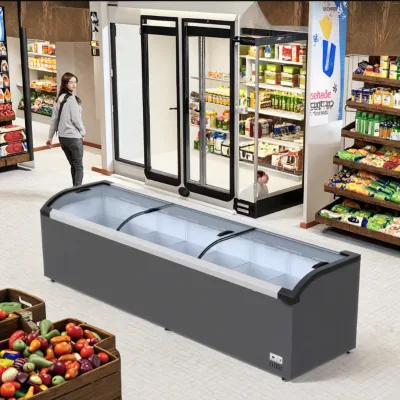


Industrial Grade Sliding Door Island Freezer with Removable Baskets Island Freezer
$199.00 - $399.00
MOQ: 1 Pieces


Long Lasting European Island Freezer for Frozen Food Display Island Freezer
$199.00 - $399.00
MOQ: 1 Pieces


Supermarket Combine Island Freezer/Meat Freezer Showcase
$1400.00 - $2600.00
MOQ: 1 Pieces
Guangzhou Junjian Kitchen Appliances & Refrigeration Equipment Co., Ltd.


Comprehensive Sourcing Guide
Strategic Sourcing Guide for Digital Controller Island Freezers
Understanding the Digital Controller Island Freezer Market
The global demand for commercial refrigeration solutions has driven the evolution of display units, with the Digital Controller Island Freezer emerging as a critical asset for modern retail environments. These units are specifically designed to offer superior temperature management and energy efficiency compared to traditional mechanical systems. The core keyword "Digital Controller Island Freezer" points to a category of equipment where the primary differentiator is the electronic management of cooling cycles, ensuring precise thermal stability for frozen goods.
Based on current market observations, these units are predominantly manufactured in China, with significant production hubs located in regions such as Shandong. The product landscape is diverse, ranging from single-temperature models to double-temperature configurations, catering to varied storage needs. The observed market includes products with capacities spanning from approximately 250 liters to over 500 liters, with specific models like the DP4-15 and various SD-series units (e.g., SD-750Z, SD-350Z) representing common industry configurations. Buyers must recognize that while the form factor is consistent, the internal specifications, such as cooling methods and defrost types, vary significantly between suppliers and models.
Technical Specifications and Performance Parameters
When evaluating a Digital Controller Island Freezer, the technical specifications form the backbone of the procurement decision. The defining feature of this category is the temperature control mechanism. Unlike older mechanical thermostats, digital controllers offer enhanced precision, often displaying real-time temperature data and allowing for programmable setpoints. The observed temperature ranges for these units typically span from -22°C to +5°C, with specific models capable of maintaining a stable -18°C or lower for deep freezing applications.
The cooling method is another critical technical parameter. Most island freezers in this category utilize air cooling systems, which provide fast and uniform refrigeration without frost accumulation in many configurations. However, buyers must verify the specific defrost type, as the market includes both frost-free automatic systems and manual defrost models. The choice between these depends on the volume of traffic and the specific operational constraints of the retail space.
Refrigeration fluid is a vital component of the technical profile. Modern units increasingly utilize eco-friendly refrigerants such as R290 and R134A, which offer high efficiency and lower environmental impact. The voltage requirements are generally flexible, with many models supporting dual voltage inputs of 220/110V or specific regional standards like 220V-240V/50Hz and 110V/60Hz. This flexibility is essential for international procurement. Furthermore, the noise levels are a key performance indicator, with high-quality units featuring brand compressors designed for low-noise, stable operation. The physical dimensions also vary widely, with standard widths ranging from 1200mm to 2500mm and depths around 757mm, requiring careful spatial planning during the sourcing phase.
Compliance and Certification Verification
In the B2B procurement of commercial refrigeration, compliance is non-negotiable. The Digital Controller Island Freezer market is characterized by a rigorous adherence to international safety and quality standards. Buyers must verify that the specific unit they are sourcing carries the necessary certifications. The most common certifications observed in this sector include CE, RoHS, ISO, CCC, CB, SASO, EMC, GS, and ETL. These certifications indicate that the product meets specific requirements regarding electrical safety, electromagnetic compatibility, and environmental restrictions.
For instance, the CE mark is essential for products entering the European market, confirming compliance with health, safety, and environmental protection standards. Similarly, the RoHS directive ensures that the product is free from specific hazardous materials. The ISO certification, particularly ISO 9001, indicates a commitment to quality management systems, though buyers should verify the specific scope of the certification for the manufacturing facility. In regions like the Middle East, the SASO certification is often mandatory, while the CCC mark is required for the Chinese domestic market.
It is crucial to note that not every listed product may possess every single certification. Procurement teams must request valid, up-to-date certificates for the specific model number being purchased. Relying on general claims without verifying the certificate's validity against the specific batch or model can lead to regulatory hurdles and customs delays. The presence of multiple certifications, such as CE, ISO, and ETL on a single unit, suggests a higher level of quality assurance and market readiness for global distribution.
Cost Drivers and Pricing Structures
The pricing of digital controller island freezers is influenced by a complex interplay of factors, including capacity, technology, and customization. The observed price range in the market spans from $100 to $3,000 USD, reflecting the vast diversity in unit size and feature sets. A primary cost driver is the capacity of the unit. Models with capacities exceeding 501 liters, such as large chest or deep freezers, command higher prices than smaller units in the 251-300 liter range. The cooling system technology also impacts cost; units with advanced air cooling and frost-free capabilities are generally more expensive than those with static cooling or manual defrost mechanisms.
Customization is another significant factor. Many suppliers offer available customization options, allowing buyers to tailor the unit to specific branding or operational needs. This can include modifications to the shelving, such as thickened adjustable dual-purpose shelves, or changes to the door type, such as sliding doors versus standard hinged doors. The inclusion of high-brightness LED energy-saving lamp tubes and digital controllers adds to the base cost but offers long-term operational savings through energy efficiency.
The Minimum Order Quantity (MOQ) also plays a role in the total cost of ownership. The observed MOQ range is between 1 and 39 units, providing flexibility for both small retailers and large distributors. Buyers should be aware that while single-unit purchases are possible, larger orders may negotiate better pricing tiers. Additionally, the packaging method, such as wooden cases versus general goods packaging, can influence shipping costs and the final landed price. Understanding these variables is essential for accurate budgeting and total cost analysis.
Typical Applications and Operational Use Cases
Digital controller island freezers are designed for a wide array of commercial applications, primarily in retail and food service environments. The "Island Freezer" designation implies a freestanding unit that can be viewed from multiple angles, making it ideal for high-traffic areas in supermarkets, convenience stores, and hypermarkets. These units are frequently used for displaying frozen foods, ice cream, and other perishable goods that require strict temperature control.
The versatility of these units allows them to serve multiple functions. Some models are dedicated to cold storage and freezing, while others offer double-temperature capabilities, allowing for the simultaneous storage of frozen and chilled items. This dual functionality is particularly valuable in grocery stores where space is at a premium. The presence of features like glass food lids and adjustable baskets enhances the display quality, making the products more attractive to consumers while maintaining the necessary thermal integrity.
In terms of operational use, the digital controller ensures that the temperature remains stable even during frequent door openings, which is common in retail settings. The low-noise operation of brand compressors ensures that the units do not disrupt the shopping environment. The energy-saving LED lighting not only reduces electricity costs but also improves the visibility of the products, enhancing the overall shopping experience. Whether used in a standalone freezer section or integrated into a larger refrigeration system, these units provide a reliable solution for maintaining product quality.
Supplier Evaluation and Quality Control
Selecting the right supplier for digital controller island freezers requires a rigorous evaluation process. Buyers should prioritize suppliers who can provide transparent documentation regarding their manufacturing processes and quality control measures. The origin of the product, often China or specifically Shandong, should be verified, along with the specific factory standards. A reputable supplier will have a clear track record of meeting the certifications mentioned earlier, such as CE, ISO, and RoHS.
Quality control should be a central part of the procurement strategy. Buyers must verify the cooling method, ensuring that the air cooling system is efficient and the defrost type matches the operational requirements. The temperature controller, whether mechanical or digital, should be tested for accuracy and reliability. The use of high-quality refrigerants like R290 and R134A is a positive indicator of environmental compliance and efficiency. Additionally, the structural integrity of the unit, including the door type and shelving, should be assessed to ensure durability.
When evaluating suppliers, it is essential to check the lead times and shipping terms. While specific lead times may vary, understanding the production capacity and the ability to meet delivery deadlines is crucial for supply chain planning. The packaging method, such as wooden cases, should be sufficient to protect the unit during transit. Buyers should also inquire about after-sales support, including warranty terms and the availability of spare parts, to ensure long-term operational stability.
Long-Term Procurement Considerations
Sourcing digital controller island freezers is not just a one-time transaction but a long-term investment. Buyers must consider the total cost of ownership, which includes energy consumption, maintenance costs, and potential downtime. The digital controller technology offers the advantage of precise temperature monitoring, which can help prevent product loss due to temperature fluctuations. The energy-saving features, such as LED lighting and efficient compressors, contribute to lower utility bills over the life of the unit.
Maintenance is another critical consideration. Units with frost-free systems generally require less maintenance than those with manual defrost, reducing the labor costs associated with upkeep. The availability of spare parts, such as compressors and controllers, should be confirmed before purchase to minimize downtime in case of failure. The customization options available from suppliers can also extend the lifespan of the unit by allowing for upgrades or modifications as business needs evolve.
Finally, buyers should stay informed about evolving regulations and standards. As environmental regulations tighten, the shift towards more eco-friendly refrigerants and energy-efficient designs will continue. Selecting a supplier who is proactive in adopting these changes ensures that the procurement remains compliant and future-proof. By focusing on these long-term factors, buyers can secure a reliable and efficient refrigeration solution that supports their business growth and operational goals.
FAQs
How does the temperature control work on these units?
These units utilize a digital controller for precise thermal management, though some models still use mechanical thermostats. The system maintains temperatures between -22 and 22 degrees Celsius, ensuring stable storage for frozen goods in commercial settings.
What certifications do these freezers typically hold?
Common certifications include CE, RoHS, ISO, CCC, CB, SASO, EMC, GS, and ETL. Buyers must verify that specific models carry these documents, as not every listed product satisfies every single certification requirement for all regions.
Which cooling methods are available for these freezers?
Most units employ air cooling for fast and uniform refrigeration without frost, while others use static cooling methods. The defrost type varies between frost-free automatic systems and manual defrost options depending on the specific model configuration.
Can I customize the shelving and door types?
Customization is available for features like thickened adjustable dual-purpose shelves and sliding door configurations. Buyers should confirm specific customization options with suppliers, as standard units may come with fixed shelving and hinged doors.
What is the voltage range for these commercial units?
The voltage supports 220/110V inputs, with some models accepting 220V-240V at 50Hz or 60Hz. This flexibility allows the units to operate in various international markets without requiring external voltage converters for standard installations.
How much capacity do these island freezers offer?
Capacities range from approximately 251 liters to over 501 liters, with specific models offering 314L or 420L storage. The size selection depends on whether the buyer needs a compact unit or a large chest freezer for high-volume storage.
What refrigerants are used in these cooling systems?
Modern units increasingly utilize eco-friendly refrigerants such as R290 and R134A for high efficiency. These fluids are selected to meet environmental standards while ensuring reliable cooling performance for frozen food display applications.