Source Digital Output PLC Module for Control, Protection, Monitoring
Find 30 available Digital Output PLC Module options for industrial control, protection, and monitoring tasks. Buyers can compare specifications, certifications, and pricing across multiple models including 6ED1052-1FB08-0BA1 and PHM-7204 variants.
Key considerations
Products List

$50.00 - $100.00
MOQ: 1 Pieces

$50.00 - $100.00
MOQ: 1 Pieces


$50.00 - $100.00
MOQ: 1 Pieces


PLC Programmable Logic Controller Do801-3bse020510r1 Digital Input Module New
$1000.00 - $5000.00
MOQ: 1 Pieces


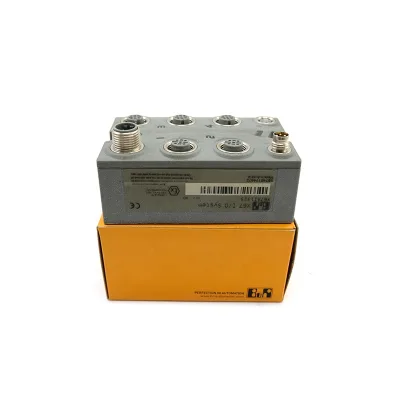

$60.00 - $200.00
MOQ: 1 Pieces


Programmable Logic Controllers PLC Controlling System
$1000.00 - $5000.00
MOQ: 1 Pieces
LIAONING XINLAI INTELLIGENT EQUIPMENT MANUFACTURING CO LIMITED


Comprehensive Sourcing Guide
Strategic Sourcing Guide for Digital Output PLC Modules
Navigating the procurement landscape for digital output PLC modules requires a disciplined approach that balances technical compatibility, regulatory compliance, and supply chain reliability. These components serve as the critical interface between a programmable logic controller and external actuators, ensuring precise control over machinery and industrial processes. The market presents a diverse array of options, ranging from standard stock items to customized solutions, each with distinct attributes regarding signal type, packaging, and origin. Buyers must rely on verified product data rather than generalized marketing claims to make informed decisions. This guide outlines the essential factors for sourcing these modules effectively, drawing upon observed market data and established procurement principles.
Technical Specifications and Signal Characteristics
The primary technical differentiator for digital output modules lies in their signal type and mathematical modeling. In the observed market, modules are categorized by whether they handle continuous or discrete signals. Digital output modules typically manage discrete signals, which represent binary states such as on/off or high/low. This is distinct from analog input modules, which process continuous data. When evaluating a specific unit, buyers should verify the signal classification to ensure it matches the control logic requirements of their application. For instance, a module designed for discrete signal processing is essential for switching relays or solenoids, whereas continuous signal handling is reserved for analog applications.
Furthermore, the mathematical model of the module influences its behavior under load. Data indicates the existence of both linear and non-linear models within the supply chain. A linear mathematical model suggests a proportional relationship between input commands and output states, which is often preferred for predictable automation tasks. Conversely, non-linear models may be required for specific compensation or complex control loops. The structure of the module, whether described as a combination or a standard unit, also dictates its physical integration capabilities. Buyers must confirm that the module's structure aligns with the physical constraints of their control panel or rack system.
| Attribute Category | Observed Variations | Procurement Verification Step |
|---|---|---|
| Signal Type | Discrete, Continuous | Confirm discrete signal support for digital output tasks. |
| Mathematical Model | Linear, Non-Linear | Verify model type against control algorithm requirements. |
| Function | Protection, Automatic Control, Monitoring | Ensure the module supports the specific control logic needed. |
| Structure | Combination, Standard | Check physical compatibility with existing hardware. |
Compliance, Certification, and Regulatory Standards
Regulatory compliance is a non-negotiable aspect of industrial procurement. The supply chain for PLC modules includes various certifications that validate safety and environmental standards. Observed data highlights the presence of CCC (China Compulsory Certification), ISO, and CE certifications. The CE mark indicates conformity with health, safety, and environmental protection standards for products sold within the European Economic Area. Similarly, RoHS (Restriction of Hazardous Substances) compliance is frequently cited, ensuring that the module does not contain specific hazardous materials.
Buyers must treat these certifications as observations of specific listings rather than universal guarantees for all products in the category. When sourcing, it is imperative to request current certification documentation for the specific batch or model number being purchased. Additionally, export control regulations play a significant role in international trade. Some products are classified under specific export control codes, such as ECCN 9n9999, which dictates the legal requirements for shipping the item across borders. Understanding these regulations prevents logistical delays and legal complications. The origin of the product, whether from China, the United States, or Korea, also influences the applicable regulatory framework and quality expectations.
Cost Drivers and Pricing Dynamics
The pricing structure for digital output PLC modules is influenced by several variables, including customization, condition, and packaging. The observed market shows a wide price range, from nominal values to several thousand dollars. This variance is often driven by the complexity of the module, its brand reputation, and whether it is a standard stock item or a customized solution. Standard products, which are often available as stock items, tend to have more predictable pricing compared to custom-engineered units.
Condition is another critical cost driver. Modules listed as "New" or "Original and New" typically command a premium over refurbished or used units. The packaging method also impacts the final cost; standard exporting cartons or specific box packaging may incur different handling fees. Buyers should note that small orders are often accepted, which can affect the unit price due to the lack of economies of scale. The minimum order quantity (MOQ) is another factor, with observed ranges starting as low as one piece. While low MOQs offer flexibility, they may result in higher per-unit costs. Understanding these drivers allows buyers to negotiate more effectively and budget accurately for their projects.
Typical Applications and Functional Requirements
Digital output PLC modules are integral to a wide range of industrial applications, primarily serving as the execution layer for automated systems. The core functions observed include automatic control, protection, monitoring, and measurement. In an automatic control scenario, the module translates logical decisions from the PLC into physical actions, such as energizing a motor starter or opening a valve. Protection functions ensure that the system shuts down safely in the event of a fault, preventing damage to equipment or personnel.
The specific application dictates the required task of the module. For instance, some modules are designed for "adjust" tasks, allowing for fine-tuning of process variables, while others are optimized for "program" tasks, executing complex sequences. The product family, such as the SM 531 Analog Input Modules, often includes complementary digital output units that share similar mounting and communication standards. Buyers should match the module's function to the specific needs of their machinery. A module with protection capabilities is essential for high-risk environments, whereas a monitoring-focused module might be suitable for data logging applications.
Supplier Evaluation and Product Lifecycle Management
Evaluating suppliers requires a focus on product lifecycle status and availability. The market data indicates that many products are in the "Active Product" phase, specifically under lifecycle codes like Pm300. This status suggests that the manufacturer is actively supporting the product, providing spare parts, and maintaining documentation. Conversely, products in end-of-life phases may pose risks for long-term maintenance. Buyers should verify the lifecycle status of the specific model number, such as 6ED1052-1FB08-0BA1 or PHM-7204, to ensure long-term compatibility.
Supplier reliability is also assessed through their shipping and payment terms. Common shipping methods include DHL, FedEx, and UPS, which offer varying levels of speed and tracking capabilities. Payment terms like T/T (Telegraphic Transfer) and PayPal provide flexibility but require verification of the supplier's financial stability. The origin of the product, whether from Beijing, the US, or Korea, can influence the perceived quality and lead time. Buyers should prioritize suppliers who offer clear communication regarding stock availability and lead times, as these factors directly impact project schedules.
Quality Control and Packaging Standards
Quality assurance in the procurement of PLC modules extends beyond the initial purchase to include packaging and physical inspection. The observed packaging standards vary, with options ranging from standard exporting cartons to specific box or carton packing. The dimensions of the packaging, such as 8, 10 x 9, 30 x 7, 30 cm, are critical for logistics planning and storage. Proper packaging ensures that the module arrives in "New" condition, free from physical damage or environmental exposure.
The net weight of the product, observed at 0.274 kg for certain models, is a key factor in calculating shipping costs and handling requirements. Buyers should verify that the packaging quantity matches the order, typically listed as 1 unit per package. Quality control checks should include verifying the model number against the physical label and inspecting the condition of the module upon receipt. The presence of certifications like CCC and ISO on the packaging or documentation serves as an additional layer of quality assurance. Ensuring that the product is "Original and New" is essential to avoid issues related to counterfeit or refurbished goods.
Long-Term Procurement Considerations
Sourcing digital output PLC modules is not merely a transactional activity but a strategic decision that impacts long-term operational efficiency. Buyers must consider the availability of spare parts and the potential for future upgrades. The "Active Product" status is a strong indicator of long-term support, but buyers should also inquire about the manufacturer's roadmap for the product family. Customization options, such as the availability of customized modules, can provide a competitive advantage by tailoring the solution to specific needs.
Warranty terms are another critical long-term consideration. A standard warranty of one year is commonly observed, but buyers should verify the specific terms for their selected model. This warranty covers defects in materials and workmanship, providing a safety net against early failures. Additionally, the flexibility of the supplier to accept small orders allows for a phased procurement strategy, reducing inventory costs and risk. By focusing on active products with robust support structures and clear warranty terms, buyers can ensure a stable and reliable supply chain for their automation needs.
FAQs
What signal types are available for digital output PLC modules?
Digital output modules typically handle discrete signals, representing binary on or off states. Some listings also show continuous signal capabilities, but discrete is standard for switching tasks like relays or solenoids.
Which certifications are commonly found on these PLC modules?
Common certifications include CCC, ISO, CE, and RoHS. Buyers should verify specific documentation for the batch purchased, as these are observations of individual listings rather than universal guarantees for all products.
Can I find customized digital output PLC modules?
Yes, customization is available for some products in this category. However, many items are standard stock items, so buyers must check specific model listings to confirm if a customized solution is offered.
What is the typical minimum order quantity for these modules?
The minimum order quantity can be as low as 1 piece. This flexibility allows for small orders, though it may result in higher per-unit costs compared to bulk purchases due to a lack of economies of scale.
How are these modules packaged for shipping?
Modules are typically shipped in standard exporting cartons or specific boxes. Packaging dimensions vary, such as 8, 10 x 9, 30 x 7, 30 cm, ensuring the unit arrives in new condition without damage.
What warranty is provided for new PLC modules?
A standard warranty of one year is commonly observed for these products. This covers defects in materials and workmanship, providing a safety net against early failures for new and original units.