Source Digital Pressure Controller for Gas and Fluid Applications
Find 30 verified Digital Pressure Controller for Gas and Fluid options suitable for water, natural gas, and liquid systems. Compare specifications, accuracy, and customization support from manufacturers in China to select the right flow and pressure control solution.
Key considerations
Products List


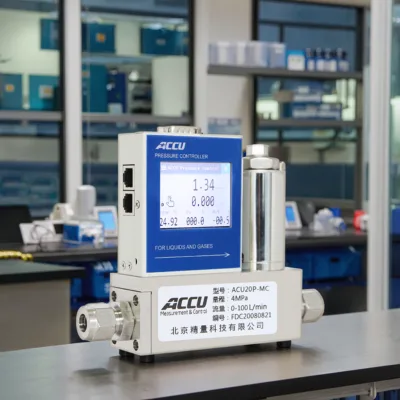
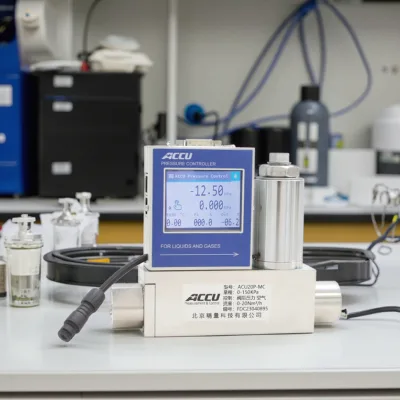
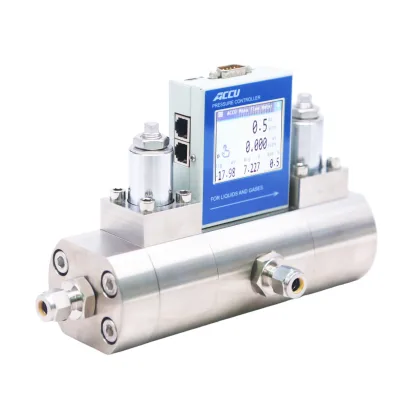
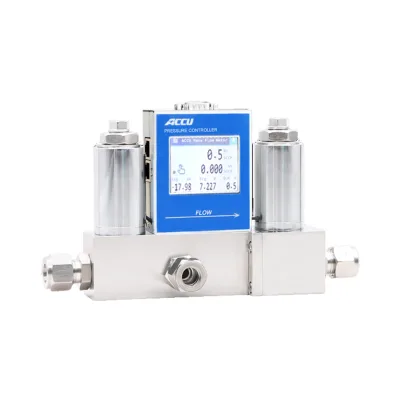


Comprehensive Sourcing Guide
Strategic Sourcing Guide for Digital Pressure Controllers for Gas and Fluid
Understanding Core Technical Specifications and Performance Metrics
When sourcing digital pressure controllers for gas and fluid applications, buyers must first establish a rigorous understanding of the technical parameters that define device suitability. The market offers a diverse array of units, ranging from simple volume type flow meters to complex mass flow controllers designed for precise regulation. A critical observation in the current product landscape is the variation in measuring principles. While some devices operate on electrical principles to measure gas flow, others are specifically engineered as digital pressure regulators or differential pressure regulators. Buyers should verify whether the specific model utilizes a plug-in sensor architecture, as this configuration often dictates installation flexibility and maintenance requirements in closed pipeline systems.
The operational envelope of these devices is another primary consideration. The observed data indicates that operating temperatures can range from -10°C to +70°C, which is a vital specification for applications involving extreme environmental conditions. Furthermore, the pressure measurement capabilities vary significantly across models. Some units are rated for specific ranges such as 3MPa or 10MPa, while others offer customized measurement ranges to accommodate unique process demands. The accuracy of these controllers is a decisive factor; observed specifications include tolerances of ±0.5% F.S and ±1% F.S. For high-precision applications, such as those involving nitrogen at 1 L/min, control stability metrics as tight as ≤±0.05% F.S have been documented. Buyers must cross-reference these figures against their specific process requirements, ensuring the selected controller maintains stability under the intended medium, which may include water, liquid, gas, or air.
Response time is another critical performance metric. In dynamic systems where rapid adjustments are necessary, a sensor response time of 0.2 seconds represents a high-performance threshold. Additionally, the leakage rate is a non-negotiable safety and efficiency parameter. Specific models have demonstrated leakage rates as low as 1*10 Pa m3/S, a figure that must be verified against industry standards for the specific gas being handled, such as oxygen or natural gas. The pressure span ratio, observed at 1:100 for certain digital pressure gauges, further illustrates the dynamic range capabilities of the device. When evaluating a potential supplier, procurement teams should request detailed datasheets that explicitly confirm these numerical values rather than relying on general marketing claims.
Compliance, Certification, and Regulatory Standards
Navigating the compliance landscape is essential for ensuring that digital pressure controllers meet international safety and quality standards. The supply chain for these industrial components is heavily influenced by certification requirements. Verified product attributes indicate that many manufacturers adhere to a robust set of certifications including ISO, RoHS, CE, ANSI, DIN, and JIS. These certifications are not merely decorative; they serve as proof that the manufacturing processes and product designs have undergone rigorous third-party evaluation.
ISO certification generally implies adherence to quality management systems, ensuring consistent production quality. RoHS compliance is critical for electronic components, restricting the use of hazardous substances and ensuring environmental safety. CE marking indicates conformity with health, safety, and environmental protection standards for products sold within the European Economic Area. Meanwhile, ANSI, DIN, and JIS standards represent specific national or regional technical specifications that govern dimensions, materials, and performance testing. Buyers must verify that the specific model number they intend to purchase carries these certifications for the relevant markets in which they operate.
In addition to product certifications, the manufacturing origin plays a role in regulatory compliance. Products originating from regions such as Anhui or Beijing, China, are subject to specific export regulations and quality control protocols. The "Standard Specifications or Customized" nature of the product standards suggests that while baseline compliance is common, specific customizations may require additional validation. For applications involving sensitive gases like oxygen or natural gas, it is imperative to confirm that the materials used in the controller construction are compatible with the medium and do not introduce contamination risks. Buyers should request valid certification documents for each batch of equipment to ensure ongoing compliance, as these documents are often required for customs clearance and final site acceptance testing.
Cost Drivers and Pricing Structure Analysis
The pricing structure for digital pressure controllers is influenced by a complex interplay of technical specifications, customization levels, and order volumes. The observed market data reveals a significant price variance, with listed prices ranging from approximately $23.80 to $4,576.00 USD. This wide spectrum reflects the diversity of the product category, spanning from basic digital pressure gauges to high-end mass flow controllers with advanced display and control capabilities.
Several key factors drive these cost variations. First, the complexity of the measuring principle and the precision of the sensor technology directly impact the unit price. Devices offering high accuracy (±0.5% F.S) and superior control stability (≤±0.05% F.S) typically command a premium over standard units. Second, the inclusion of features such as digital displays, plug-in sensors, and specialized packaging (carton packing or customized) adds to the manufacturing cost. Third, the level of customization required is a major cost driver. While standard models are available, the "Customization: Available" attribute indicates that OEM, ODM, and OBM support can significantly alter the price point. Customized models often involve non-recurring engineering costs and longer lead times, which are reflected in the final quotation.
The Minimum Order Quantity (MOQ) also plays a crucial role in the total cost of ownership. The observed MOQ range spans from 1 to 100 units. For small-scale projects or prototyping, suppliers offering an MOQ of 1 allow for low-risk testing, though the per-unit cost may be higher. Conversely, bulk procurement with an MOQ of 100 can yield substantial volume discounts. Buyers should analyze their total annual volume requirements to determine the optimal order strategy. Additionally, the warranty period, observed as 2 years in some cases, should be factored into the cost-benefit analysis. A longer warranty or comprehensive after-sales support package may justify a higher initial purchase price by reducing long-term operational risks and maintenance costs.
Typical Applications and Industry Use Cases
Digital pressure controllers for gas and fluid are integral to a wide array of industrial sectors, each with distinct operational requirements. The primary application domains identified include energy metering, water treatment, and natural gas distribution. In the energy sector, these devices are frequently employed as mass flow controllers to ensure precise measurement and regulation of gas flow, which is critical for billing accuracy and process efficiency. The "Volume Type Flow Meter" classification highlights their utility in measuring the volume of gas passing through a closed pipeline, a fundamental requirement for energy metering applications.
In the water and fluid handling industries, the versatility of these controllers is evident. The ability to measure media such as water, liquid, gas, and air makes them suitable for diverse process control scenarios. For instance, in natural gas pipelines, the combination of high-pressure capabilities (up to 10MPa) and low leakage rates ensures safe and efficient transport. The "Plug-in" sensor type is particularly advantageous in these applications, allowing for easy installation and replacement without the need to shut down the entire pipeline system.
Furthermore, the "Mass Flow Controller" designation points to specialized applications in semiconductor manufacturing, chemical processing, and laboratory environments where precise gas mixture ratios are essential. The "Suitable gas" attributes, including oxygen and natural gas, indicate that these controllers are designed to handle reactive and flammable media safely. The "Digital Pressure Gauges" and "Differential Pressure Regulators" types are also used in HVAC systems and pneumatic control loops, where maintaining stable pressure is vital for equipment longevity and process consistency. Buyers should map their specific application requirements against these use cases to select a controller that aligns with their operational environment and safety protocols.
Supplier Evaluation and Quality Assurance Protocols
Selecting a reliable supplier for digital pressure controllers requires a multi-faceted evaluation strategy that goes beyond price comparison. The first step is to verify the supplier's ability to provide the specific certifications mentioned earlier, such as ISO, RoHS, and CE. Buyers should request copies of these certificates and verify their validity with the issuing bodies. Additionally, the "Customized support" attributes, including OEM, ODM, and OBM capabilities, indicate the supplier's flexibility and technical competence. A supplier that can offer customized packaging and standard specifications suggests a mature manufacturing process capable of adapting to unique client needs.
Quality assurance is another critical pillar of supplier evaluation. Buyers should inquire about the supplier's internal quality control processes, including testing procedures for accuracy, leakage rates, and response times. The observed specifications, such as the "Azimuth impact" of < 0.03KPa and "Temperature sensitivity" of 0.1%F.S/℃, should be validated through independent testing or third-party audit reports. The "Warranty" period of 2 years is a strong indicator of the supplier's confidence in their product quality, but buyers should also clarify the terms of the warranty, including coverage for parts, labor, and response times for service requests.
Geographic location is another factor to consider. While products originate from locations like Anhui and Beijing, China, buyers should assess the supplier's logistics capabilities and lead times. The "Single package size" and "Standard Packaging or Customized" options should be evaluated for their impact on shipping costs and product protection. Finally, buyers should seek references from other clients in similar industries to gauge the supplier's track record for reliability, technical support, and after-sales service. A comprehensive supplier evaluation ensures that the selected partner can deliver high-quality digital pressure controllers that meet all technical and operational requirements.
Long-Term Procurement and Lifecycle Management
Sourcing digital pressure controllers is not a one-time transaction but a long-term partnership that requires careful lifecycle management. The "2 Years" warranty period sets a baseline for the expected product lifespan, but buyers should plan for maintenance, calibration, and eventual replacement. Regular calibration is essential to maintain the accuracy of ±0.5% F.S or ±1% F.S over time, especially in harsh operating environments. Buyers should establish a schedule for periodic checks to ensure that the "Control stability" remains within the specified limits of ≤±0.05% F.S.
The "Customization: Available" attribute suggests that buyers may need to adapt their procurement strategy as their operational needs evolve. For example, a facility that starts with a standard model may later require a customized version with different pressure ranges or sensor types. A supplier with strong OEM and ODM capabilities can support this evolution without requiring a complete system overhaul. Additionally, the "Preheating time: ignore" specification indicates that some models are ready for immediate use, which can reduce downtime during installation or replacement.
Procurement teams should also consider the obsolescence of specific model numbers, such as the ACU20P-LC or ACU20PCD-B. Ensuring a steady supply of spare parts and compatible accessories is crucial for maintaining system uptime. Buyers should negotiate long-term supply agreements that guarantee the availability of specific models and components. Finally, the "Package: Carton Packing" and "Standard Packaging or Customized" options should be reviewed to ensure that the products are protected during storage and transport, minimizing the risk of damage before installation. By adopting a proactive approach to lifecycle management, buyers can maximize the value of their investment in digital pressure controllers and ensure continuous, reliable operation of their gas and fluid systems.
FAQs
What certifications do digital pressure controllers for gas and fluid have?
These devices typically hold ISO, RoHS, CE, ANSI, DIN, and JIS certifications. Buyers should verify specific model documentation to confirm compliance with regional safety and quality standards before procurement.
How accurate are the digital pressure controllers for gas and fluid?
Accuracy ranges from ±0.5% F.S to ±1% F.S depending on the model. High-precision units for nitrogen applications can achieve control stability as tight as ±0.05% F.S under specific flow conditions.
Which operating temperature range do these controllers support?
The standard operating temperature range is -10°C to +70°C. This envelope ensures reliable performance in various industrial environments while maintaining measurement stability for gases and liquids.
Can suppliers customize the digital pressure controllers for gas and fluid?
Yes, customization is available for specifications, packaging, and branding including OEM, ODM, and OBM support. Buyers can request tailored measurement ranges and standard specifications to fit unique pipeline requirements.
What is the response time for the sensor in these controllers?
The sensor response time is typically 0.2 seconds for rapid system adjustments. This speed supports dynamic control applications requiring immediate feedback on pressure changes within closed pipeline systems.
How is the leakage rate defined for these digital pressure controllers?
Specific models demonstrate leakage rates as low as 1*10 Pa m3/S. This metric is critical for ensuring safety and efficiency when handling sensitive media like oxygen or natural gas.