Source Disk Station for Servers, NAS, and Data Centers
Explore 30 Disk Station options available from verified suppliers. Buyers can compare specifications like capacity, interface types, and dimensions to find the right solution for server or NAS applications.
Key considerations
Products List
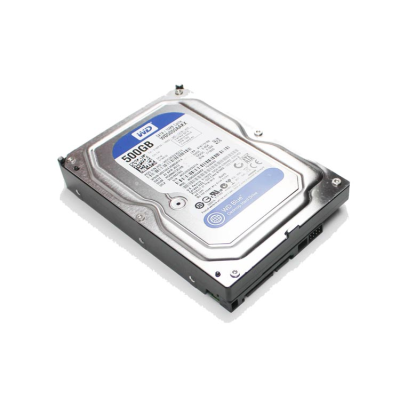
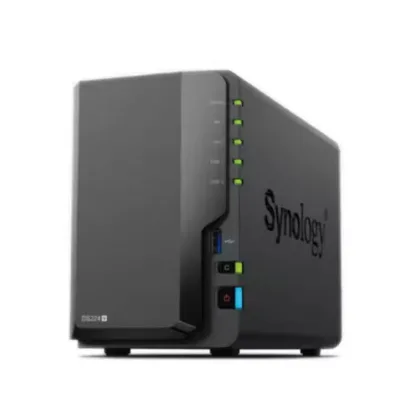
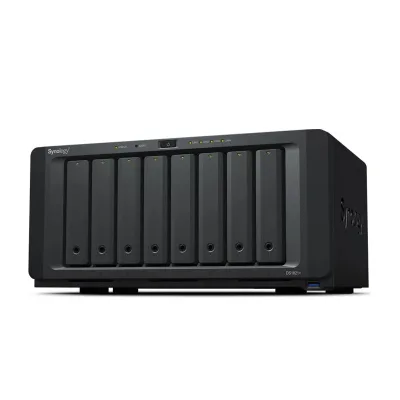
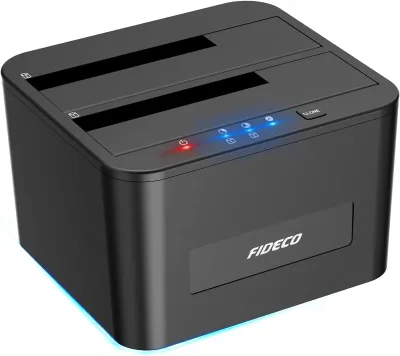


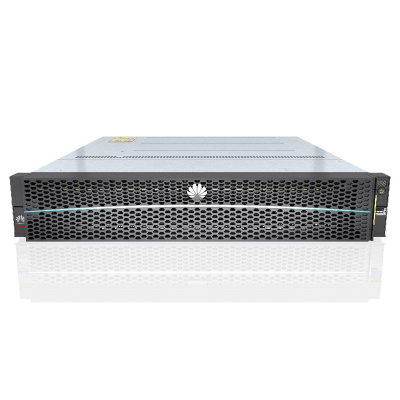


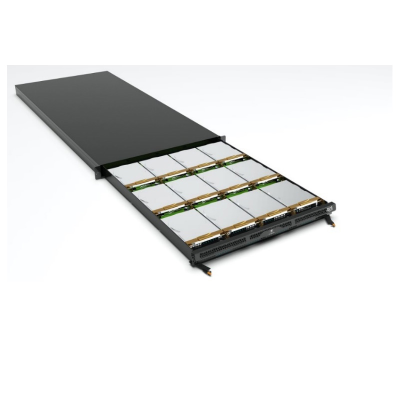


New Storage Disk Array Me5012 \ Me5024 Me5012: Dual Control 16g (12 * 3.5) Storage
$11000.00 - $12000.00
MOQ: 1 Sets


Fast Processing Server, Workstation, Computer Server for Data Centers
$950.00 - $1110.00
MOQ: 1 Pieces

Video Processing Workstation for Computer Processing with PC Computing Support
$499.00 - $899.00
MOQ: 1 Pieces


Comprehensive Sourcing Guide
Strategic Sourcing Guide for Disk Station Solutions
Understanding the Core Product Ecosystem
The term "Disk Station" in a B2B procurement context often refers to a specific class of network-attached storage (NAS) devices or the hard disk drives (HDDs) that serve as the foundational storage media for such systems. Buyers must first distinguish between the complete appliance and the individual storage components. The supplied market data indicates a diverse range of products, from standalone hard drives with specific interface standards to complete server units. For instance, product attributes explicitly list "Diskstation Ds224+" and "DS1821+" as model numbers, suggesting that procurement inquiries may target specific Synology-branded appliances or compatible third-party equivalents. Simultaneously, the data highlights standalone HDDs with capacities ranging from 500GB to 12TB, featuring interfaces like SATA 2.0 and USB. A clear understanding of whether the requirement is for the storage media itself or the integrated network appliance is the first critical step in defining the scope of the tender. The observed product status as "Stock" and "Brand-new" suggests a market where immediate availability is a common selling point, yet the variation in "Place of Origin" between Guangdong, China, and Beijing, China, necessitates careful verification of the specific manufacturing location for each lot ordered.
Technical Specifications and Interface Compatibility
When evaluating Disk Station solutions, technical compatibility is the primary determinant of success. The supplied facts reveal a mix of interface standards that buyers must align with their existing infrastructure. One set of observations lists "SATA 2.0" as the interface, while another explicitly mentions "USB" as an interface type. This discrepancy underscores the need for buyers to verify the exact port requirements of their target system. Furthermore, rotational speed is a critical performance metric; the data cites a speed of "5900 RPM," which is typical for high-performance enterprise drives, whereas other entries mention read speeds in the range of "100-200MB/S." Buyers should not assume that all listed "Diskstation" products share these exact specifications. Physical dimensions also vary significantly; some products are described as "3.5 inch" drives, while others list a size of "1.8 inch," and complete chassis units are noted with dimensions of "442 mm x 420 mm x 43.6 mm." The "Chassis height" is specified as "1U" for certain server-grade units, which is essential for rack-mount compatibility. Additionally, the "Single package size" of "20X15X9 cm" and a "Single gross weight" of "1.000 kg" provide logistical data for smaller units, whereas larger server units will have different shipping profiles.
Compliance, Certification, and Origin Verification
In the global supply chain, verifying the origin and compliance status of Disk Station components is vital for risk management. The provided data presents conflicting "Place of Origin" entries, listing "Guangdong, China," "Beijing, China," and "Taiwan, China." This variation indicates that a single supplier may source from multiple manufacturing hubs, or that different product lines originate from different regions. Buyers must explicitly request the country of origin for the specific batch they intend to purchase, as this impacts customs duties, trade compliance, and supply chain resilience. Regarding certifications, the supplied text does not explicitly list any third-party compliance marks such as CE, FCC, or RoHS. Consequently, buyers cannot assume that a product labeled "Brand-new" or "New and original" automatically meets specific international safety or environmental standards. The absence of listed certifications in the source data means that procurement teams must include a mandatory verification step in their supplier evaluation process to confirm that the products meet the regulatory requirements of the destination market. The "Warranty" period is noted as "1 Year" for some items, but the duration and terms of coverage must be confirmed in the final contract, as warranty policies can vary by supplier and region.
Cost Drivers and Pricing Structures
The pricing landscape for Disk Station solutions is highly variable, as evidenced by the observed listed price range of "0.16-200000" USD. This vast spread suggests that the market includes both individual low-cost components and high-value enterprise server systems. The "MOQ" (Minimum Order Quantity) ranges from "1" to "5000," indicating that buyers can source single units for prototyping or small deployments, but bulk orders may require negotiating terms for larger quantities. The "Supply Ability" is noted as "1000 pieces per Day" for specific models like the DS1821+, which serves as a baseline for production capacity but does not guarantee availability for all SKUs. Lead times are also a significant cost driver; the data specifies a "Lead time" of "3~7 Days," which is relatively short for international shipping, yet this should be treated as an estimate rather than a guarantee. Buyers should be aware that the "Shipping" options listed include major carriers like "DHL UPS FEDEX," and the costs associated with these services will vary based on the "Single gross weight" and the final destination. The "Private mold" attribute being "Yes" for some items suggests that custom tooling may be involved, which could impact the unit cost and the feasibility of small batch orders.
Typical Applications and Use Cases
The application of Disk Station products spans several distinct sectors, as indicated by the "Application" and "Use" fields in the data. The primary application listed is "Server," implying that these units are designed for data center environments, cloud storage infrastructure, or enterprise file sharing. Another specific use case mentioned is "FTTH" (Fiber To The Home), which suggests that some Disk Station variants may be integrated into telecommunications infrastructure for residential or small business broadband distribution. The "Type" is described as "Senovate," a term that may refer to a specific product line or a branding strategy, but its exact definition requires supplier clarification. The "Expansion port" is identified as a "Gigabit Network Interface," which is standard for modern network storage but must be verified against the network infrastructure of the buyer. The "Noise level" is cited as "1.5Gb/s," which appears to be a data transfer rate rather than an acoustic measurement, highlighting the importance of precise terminology when reviewing technical datasheets. For applications requiring high reliability, the "Condition" is consistently listed as "Brand-new" or "New and original," ensuring that buyers receive units that have not been previously deployed or refurbished.
Supplier Evaluation and Quality Control
Selecting the right supplier requires a rigorous evaluation process that goes beyond the surface-level product attributes. The "Brand Name" varies between "BESNT" and "Synology," indicating that buyers may encounter both original equipment manufacturer (OEM) products and third-party branded alternatives. The "Feature" is described as "Fast and efficient," but this is a qualitative claim that must be substantiated through performance testing. Quality control should focus on verifying the "Average seek time" of "12.0ms" and the "Cache" size of "2MB" for the specific drives being sourced. Buyers should also inspect the "Shell Material," which is listed as "ABS" for some units and "Metal" for others, as this affects durability and heat dissipation. The "Waterproof" attribute is explicitly stated as "no," meaning these devices are not suitable for outdoor or harsh environmental conditions without additional housing. The "Single Disk Capacity" is noted as "7GB" in one instance, which contrasts sharply with the "HDD Capacity" of "1TB" or the "optional" capacities of up to "12tb." This inconsistency reinforces the need for buyers to request a detailed bill of materials (BOM) to ensure the selected components match the required storage density.
Long-Term Procurement Considerations
Sourcing Disk Station solutions is not merely a transactional event but a strategic decision with long-term implications. The "Products Status" being "Stock" implies immediate availability, but buyers must plan for future scalability. The "Capacity" range of "1.5TB - 4TB" for certain models suggests that upgrades may be necessary as data volumes grow. The "Warranty" of "1 Year" is a standard baseline, but for mission-critical server applications, buyers should negotiate extended warranty terms or service level agreements (SLAs) that cover hardware replacement and technical support. The "Package" is described as "Carton Packing," which is standard for shipping, but buyers should verify if additional protective packaging is available for high-value units to prevent damage during transit. The "Interface type" of "USB" and "SATA 2.0" indicates legacy or specific compatibility needs; as technology evolves, buyers should consider the obsolescence risk of these interfaces. Finally, the "Lead time" of "3~7 Days" allows for agile procurement, but supply chain disruptions can affect this timeline. Buyers should maintain a relationship with suppliers who can provide transparent updates on production status and inventory levels to mitigate the risk of stockouts in the future.
FAQs
What interfaces are available for Disk Station drives?
Disk Station drives typically feature SATA 2.0 or USB interfaces depending on the specific model. Buyers must verify the exact interface type required for their system compatibility before purchasing.
Which storage capacities are offered for these hard drives?
Optional capacities range from 500GB up to 12TB for standard models. Some specific units may list capacities between 1.5TB and 4TB or as low as 7GB per disk.
How fast do these Disk Station drives rotate?
The observed rotational speed for these drives is 5900 RPM. This speed supports fast and efficient data access suitable for server applications and high-performance storage needs.
Can I order a single Disk Station unit?
Yes, the minimum order quantity can be as low as 1 unit for single item purchases. Stock availability is confirmed for brand-new units ready for immediate shipment.
What is the lead time for delivery?
The standard lead time for these products is between 3 to 7 days. Shipping is handled via major carriers like DHL, UPS, or FedEx depending on the destination.
Where are these Disk Station products manufactured?
Products originate from locations including Guangdong, Beijing, and Taiwan in China. Buyers should verify the specific place of origin for the batch they intend to purchase.