Source Disposable Cell Culture Flask for Lab, Hospital, University
Find 30 options for the Disposable Cell Culture Flask designed for laboratory, hospital, and university applications. Buyers can compare specifications including volume, surface treatment, and sterilization methods from verified manufacturers in China.
Key considerations
Products List




Comprehensive Sourcing Guide
Strategic Sourcing Guide for Disposable Cell Culture Flasks
Procuring disposable cell culture flasks requires a disciplined approach that balances technical performance with supply chain reliability. These vessels are fundamental to biological research, tissue engineering, and pharmaceutical development, serving as the primary interface for cell growth and expansion. Buyers must navigate a complex landscape of material specifications, surface treatments, and sterilization methods to ensure experimental integrity. The following guide outlines the critical factors for sourcing these essential laboratory consumables, focusing on verified attributes and industry-standard evaluation criteria.
Technical Specifications and Material Composition
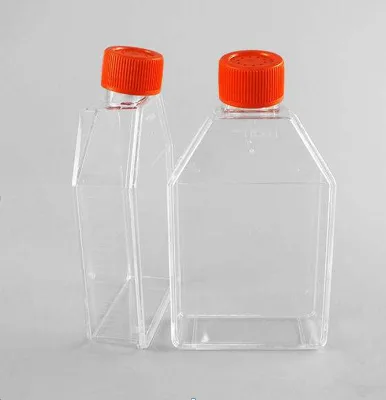
The foundation of a successful procurement strategy lies in understanding the precise technical specifications of the product. The primary material for disposable cell culture flasks is typically polystyrene (PS), chosen for its optical clarity and chemical resistance. This material allows researchers to observe cell morphology and confluency without interference. The market offers flasks in various volumes, with common capacities ranging from 50ml to 600ml, catering to different stages of cell expansion. Specific models often feature a total volume of 250ml with a working volume of 25ml, while others may be designed for larger scale applications with capacities up to 600ml.
Surface treatment is a critical differentiator that directly impacts cell adhesion. Flasks are available in both non-treated and treated variants. Treated surfaces are engineered to enhance the attachment of anchorage-dependent cells, which is essential for many mammalian cell lines. The surface treatment process is often verified by the manufacturer's claim of a "Yes" status for surface treatment, indicating a specific chemical modification to the polystyrene. Buyers must verify that the specific model they select matches the biological requirements of their cell lines, as non-treated flasks are generally reserved for suspension cultures.
The design of the flask also includes specific cap configurations. Options typically include sealed caps and vented caps. Vented caps often incorporate a filter, usually made of polypropylene or similar material, to maintain sterility while allowing gas exchange. This feature is vital for maintaining the pH balance and oxygen levels required for healthy cell growth. The bottle top is frequently a screw-top design, ensuring a secure seal that prevents leakage during transport and incubation. The culture area is another key metric, with standard sizes including 75cm², which is a common benchmark for mid-scale experiments.
Compliance, Certification, and Sterilization Standards
Ensuring regulatory compliance is paramount when sourcing laboratory equipment. The disposable nature of these flasks implies that they must be sterile upon delivery to prevent contamination. Gamma irradiation is the standard sterilization method observed in the market, providing a reliable means of eliminating microbial life without leaving chemical residues. Buyers should confirm that the product is explicitly marked as "Sterile" and that the sterilization process follows recognized protocols.
Certification plays a significant role in validating the quality management systems of the supplier. Reputable manufacturers often hold ISO certifications, including ISO 9001 for general quality management and ISO 13485 specifically for medical devices. These standards indicate that the supplier adheres to rigorous production controls and traceability requirements. Additionally, certifications such as CE and RoHS may be present, signaling compliance with European safety and environmental directives. While specific certification statuses should be verified against current documentation, the presence of these marks is a strong indicator of a supplier's commitment to quality.
The production environment is also a critical compliance factor. High-quality flasks are manufactured in controlled environments, such as a 100,000-level dust-free clean workroom. This level of cleanliness minimizes the risk of particulate contamination, which can be detrimental to sensitive cell cultures. Buyers should request evidence of the manufacturing facility's environmental controls to ensure that the flasks meet the necessary purity standards for laboratory and medical applications.
Cost Drivers and Pricing Dynamics
The pricing of disposable cell culture flasks is influenced by several variable factors, including material quality, surface treatment, and order volume. The observed price range in the market spans from $0.01 to $10,000, reflecting the diversity of product configurations and order sizes. While individual unit costs are generally low, the total cost of ownership depends heavily on the Minimum Order Quantity (MOQ) and the specific customization requirements.
MOQs can vary significantly, ranging from as low as 1 unit for sampling to 5,000 units for bulk industrial procurement. Larger orders typically benefit from economies of scale, reducing the per-unit cost. However, buyers must balance cost savings with inventory management, as storing large quantities of sterile consumables requires adequate space and strict environmental controls to maintain sterility. Customization options, such as specific branding or unique volume configurations, can also impact pricing. While customization is available, it may introduce additional lead times and costs.
Packaging is another cost driver. Flasks are commonly packed in bags containing 5 or 10 pieces, which are then placed into carton cases. The unit of measure often ranges from 5 pieces per pack to 20 packs per case. Efficient packaging not only protects the product during shipping but also optimizes storage density. Buyers should evaluate the packaging specifications to ensure they align with their laboratory's storage capabilities and workflow efficiency.
Typical Applications and Usage Scenarios
Disposable cell culture flasks are versatile tools used across a wide range of applications in the life sciences sector. Their primary use is in laboratory settings for cell propagation, screening, and maintenance. The transparent nature of the polystyrene material allows for easy visual inspection of cell health and growth patterns. These flasks are suitable for use in medical and hospital environments, where they support diagnostic testing and therapeutic cell production.
In university research facilities, these flasks are indispensable for fundamental biological research. The availability of different culture areas, such as 25cm², 75cm², 125cm², and 225cm², allows researchers to scale their experiments from small-scale pilot studies to larger production runs. The specific model numbers, such as YM-K6023TC or C111025, often correspond to specific volume and surface area combinations tailored to these diverse needs.
The application extends beyond basic research to include pharmaceutical development and biotechnology. In these sectors, the consistency and reliability of the flasks are critical for reproducibility. The manual power source of the handling process ensures that the user maintains full control over the culture conditions, which is essential for sensitive experiments. Whether used for viral vector production, antibody generation, or stem cell culture, the flask must provide a stable and contaminant-free environment.
Supplier Evaluation and Origin Verification
Selecting the right supplier involves a thorough evaluation of their capabilities and geographical origin. The supply chain for these products is concentrated in specific regions of China, with notable manufacturing hubs in Zhejiang, Jiangsu Province (specifically Changzhou City), and Shanghai. These locations are known for their robust manufacturing infrastructure and expertise in plastic molding and medical device production.
When evaluating suppliers, buyers should verify the brand name and model specifications. Common brands include Yingmed and SHUOHUA, though many suppliers offer OEM services. The presence of a specific brand name does not guarantee quality; rather, the supplier's track record and adherence to standards are the true indicators of reliability. Buyers should request documentation that confirms the place of origin and the specific manufacturing facility used for their order.
Supplier evaluation should also include an assessment of their product range and flexibility. A supplier offering a wide array of models, from 50ml to 600ml, and various culture areas demonstrates the capacity to meet diverse client needs. Additionally, the availability of customization services indicates a supplier's willingness to adapt to specific client requirements. Buyers should prioritize suppliers who can provide detailed product data sheets and technical support to assist in the selection process.
Quality Control and Long-Term Procurement Considerations
Quality control is the final gatekeeper in the procurement process. Buyers must implement a rigorous inspection protocol to ensure that received flasks meet the specified standards. This includes verifying the sterility status, checking for physical defects such as cracks or cloudiness, and confirming the accuracy of the volume and culture area markings. The use of standard packaging, such as cartons with 5 pieces per bag and 20 bags per case, helps in maintaining product integrity during transit.
Long-term procurement considerations involve building a sustainable relationship with suppliers. Consistency in product quality is essential for maintaining the integrity of long-term experiments. Buyers should establish clear communication channels with suppliers to address any issues promptly and to stay informed about product updates or changes in specifications. Regular audits of the supplier's quality management system can help ensure continued compliance with ISO and other relevant standards.
Furthermore, buyers should consider the environmental impact of their procurement choices. While disposable flasks are convenient, the volume of waste generated can be significant. Evaluating suppliers who offer recycling programs or use more sustainable materials can contribute to a more responsible procurement strategy. Ultimately, the goal is to secure a reliable supply of high-quality flasks that support scientific advancement while minimizing operational risks and costs.
Summary of Key Product Attributes
To facilitate quick reference, the following table summarizes the key attributes observed in the market for disposable cell culture flasks:
| Attribute Category | Specific Details |
|---|---|
| Material | Polystyrene (PS) |
| Sterilization | Gamma Irradiation |
| Surface Treatment | Non-Treated / Treated |
| Cap Types | Sealed Cap, Vent Cap (with Filter) |
| Volume Options | 50ml, 250ml, 600ml |
| Culture Area | 25cm², 75cm², 125cm², 175cm², 225cm² |
| Certifications | ISO, CE, ISO 13485, RoHS |
| Packaging | 5 or 10 PCS/Bag, Carton Case |
| Origin | Zhejiang, Jiangsu, Shanghai, China |
| Clean Room | 100,000 Level Dust Free |
By adhering to these guidelines and focusing on verified technical and compliance data, buyers can make informed decisions that ensure the success of their cell culture experiments and the reliability of their supply chain.
FAQs
What material are disposable cell culture flasks made from?
Disposable cell culture flasks are primarily made from polystyrene. This material offers optical clarity for observing cell morphology and chemical resistance suitable for laboratory applications.
Which sterilization method is used for these flasks?
Gamma irradiation is the standard sterilization method used for these flasks. This process ensures the products are sterile upon delivery without leaving harmful chemical residues.
What volume options are available for these culture flasks?
Available volume options include 50ml, 250ml, and 600ml. Specific models may feature a total volume of 250ml with a working volume of 25ml for mid-scale experiments.
Can these flasks be customized for specific branding needs?
Yes, customization is available for specific branding needs. Buyers can request unique configurations, though this may impact lead times and overall pricing depending on the order volume.
What certifications do these flasks typically hold?
These flasks typically hold ISO, CE, and RoHS certifications. Reputable manufacturers also adhere to ISO 13485 standards for medical devices to ensure rigorous quality management.
How are these flasks packaged for shipping?
Flasks are commonly packed in bags containing 5 or 10 pieces. These bags are then placed into carton cases, with options like 20 packs per case for efficient storage.
Where are these flasks manufactured?
These flasks are manufactured in China, specifically in regions like Zhejiang, Jiangsu Province, and Shanghai. The production occurs in dust-free clean workrooms to ensure high purity.