Source Disposable CE Piercing Clamp for tattoo, nose, and lip
Find 30 verified options for the Disposable CE Piercing Clamp suitable for tattoo studios, nose piercings, and lip procedures. Buyers can compare sterilization methods, packaging types, and delivery times from suppliers in China.
Key considerations
Products List


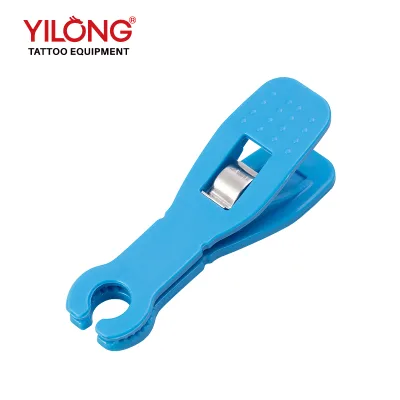
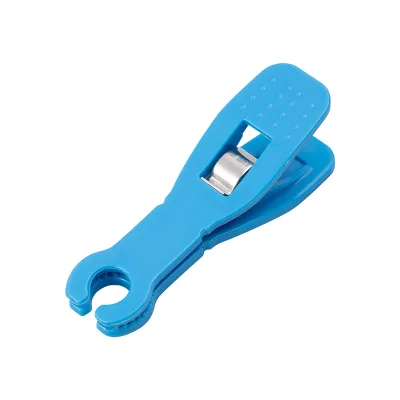


Disposable Clip Manufacturer: Quality Medical Clip for Surgical Applications
$0.95 - $1.10
MOQ: 1 Cartridge

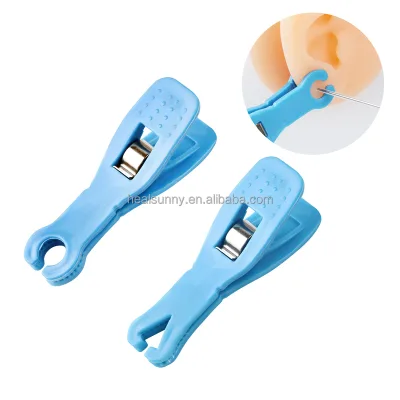

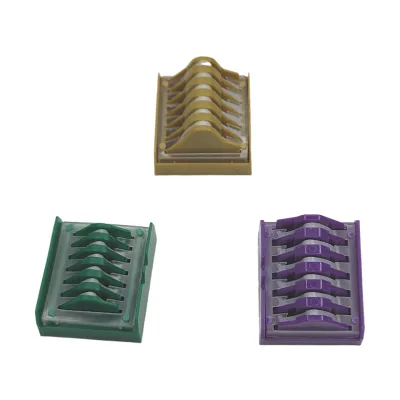
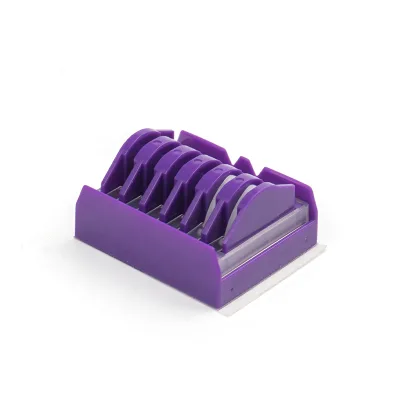
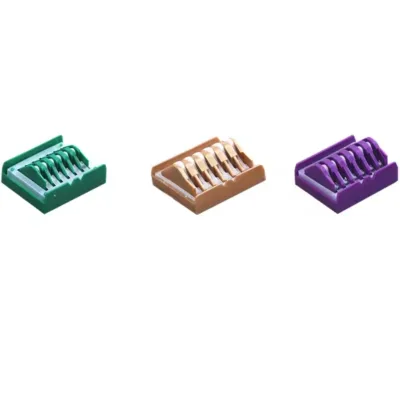

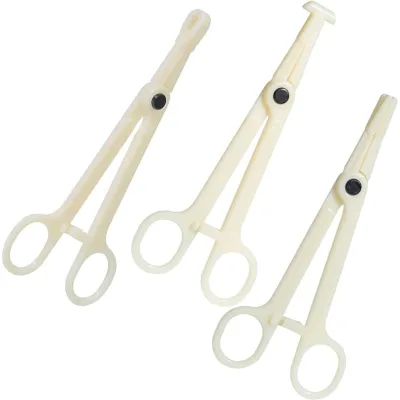
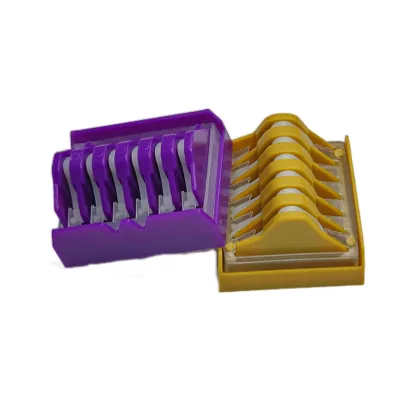

Comprehensive Sourcing Guide
Strategic Sourcing Guide for Disposable CE Piercing Clamps
Understanding the Product Category and Core Specifications
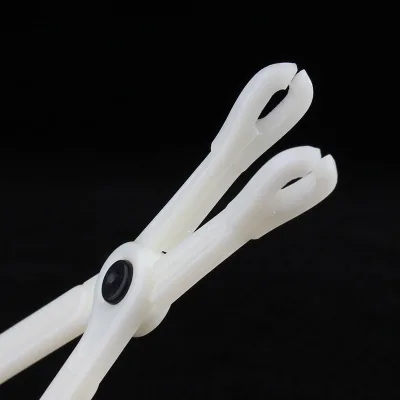
When sourcing a Disposable CE Piercing Clamp, buyers must first distinguish between the specific product attributes observed in the market and general assumptions about the category. The core product identified in current listings is the "Tattoo Piercing Clamp" or "Piercing Tool Forceps," designed specifically for body art applications. These tools are engineered to stabilize tissue during needle insertion for procedures such as nose and lip piercings. The primary material composition observed across multiple listings is plastic, which aligns with the disposable nature of the item. However, a critical observation in the data indicates a divergence in product attributes: while the core keyword emphasizes "disposable," some specific listings describe the product as "Non-Disposable" or "Durable & Permanent." This discrepancy suggests that buyers must carefully verify the intended usage model (single-use vs. reusable) before placing an order, as the term "disposable" in the search query may not apply to every SKU available under the same product name.
The physical specifications for these tools typically include dimensions of approximately 1606710mm, with a weight around 15g. The product style is frequently categorized as "Single Use," reinforcing the disposable intent for hygiene-critical procedures. The color options generally range from white to clear white, which aids in visibility during delicate operations. The functional design is described as "handy," implying an ergonomic grip for the practitioner. It is essential to note that while the product is marketed for "Tattoo and Piercing Studio" applications, the specific item numbers (such as HP32 through HP36) indicate a range of models that may vary slightly in mechanism or size, requiring buyers to cross-reference the specific item number with their clinical needs.
Compliance Verification and Certification Standards
Certification is a paramount consideration when sourcing medical or semi-medical devices like piercing clamps. The keyword "CE" indicates a requirement for conformity with European health, safety, and environmental protection standards. The supplied data confirms that CE certification is a listed attribute for these products. However, buyers must exercise caution and not assume that every listing with the keyword "CE" possesses valid, current certification documentation. The data also references "SGS" as a standard or verification method, alongside options for "Customize & Pre-made Available." This suggests that third-party testing or specific quality standards may be part of the supplier's value proposition, but the exact scope of these certifications must be validated.
Buyers should request the actual Certificate of Conformity (CoC) and verify its validity with the issuing body. The data mentions "Ethylene Oxide Gas Autoclave Sterilization" as a sterilization method for some listings, while others simply state "Individually Sterile Blister Packing." The presence of Ethylene Oxide (EO) gas sterilization is a significant compliance factor, as it is a standard method for achieving sterility in medical devices. However, the data also notes "100% E.O. Gas Steriliz" in some contexts, implying a specific sterilization process. Buyers must ensure that the sterilization method claimed matches the regulatory requirements of their target market. For instance, if the product is intended for the EU, the CE mark is mandatory, but the specific directives (such as the Medical Device Regulation) must be met. The data does not provide specific directive numbers, so buyers must verify that the supplier's CE marking covers the correct classification for piercing tools.
Cost Drivers and Pricing Structure Analysis
The pricing landscape for disposable piercing clamps is characterized by a wide observed range, with listed prices fluctuating between $0.02 and $90 USD. This significant variance is not necessarily indicative of quality differences alone but is heavily influenced by the packaging configuration, order volume, and the specific model features. The "Reasonable & Cheap with High Quality" claim found in listings suggests a competitive market, but the upper end of the price range likely corresponds to specialized models, bulk packaging, or products with additional value-added services like custom logo printing.
The Minimum Order Quantity (MOQ) is another critical cost driver. The observed MOQ range spans from 1 piece to 10,000 pieces. This flexibility allows buyers to test the market with a single unit or secure significant volume discounts. The data explicitly states an MOQ of "1/PC" for some items, which is highly favorable for small studios or initial procurement trials. Conversely, larger orders may benefit from the "5000 boxes/Day" production capacity of suppliers, ensuring supply stability. Payment terms are also a factor in the total cost of ownership, with options including L/C, T/T, D/P, Western Union, and PayPal. Buyers should consider the transaction fees and currency exchange risks associated with these payment methods when calculating the final landed cost.
Packaging, Sterilization, and Logistics
Packaging plays a dual role in this product category: ensuring sterility and facilitating inventory management. The standard packaging observed is "Individual Sterile Blister Packing," which is crucial for maintaining the sterile barrier until the point of use. Some listings specify "Individually Blister Packed 100% E.O. Gas Steriliz," confirming that the sterilization occurs prior to sealing. Other data points mention "Independent Packing, Pre-Sterilized," which reinforces the single-use nature of the product. For bulk handling, the data indicates a secondary packaging of "25 Pieces/Bag" or "50PCS Per Box." This tiered packaging structure allows for efficient storage in a studio environment while maintaining the integrity of the sterile field.
Logistics and delivery times are generally efficient, with a stated delivery time of "1-3 Days After Payment Has Been Cleared." This rapid turnaround is advantageous for studios that need to replenish stock quickly. Shipping is handled via major carriers including TNT, DHL, FedEx, UPS, and EMS, providing buyers with multiple options for speed and cost. The origin of the products is primarily "China" and specifically "Zhejiang China (Mainland)," which is a known manufacturing hub for medical and beauty supplies. Buyers should verify the specific origin to ensure it aligns with their import regulations or trade preferences. The "Waterproof" attribute of the product also suggests durability during transport and storage in varying environmental conditions.
Supplier Evaluation and Service Capabilities
Evaluating a supplier for piercing clamps requires looking beyond the product listing to their service capabilities. The data indicates that "OEM/ODM Service" is accepted, allowing buyers to customize the product with their own branding. This is particularly relevant for large chains or private-label distributors. The "Logo Printing" feature is explicitly mentioned, confirming that customization is a viable option. Additionally, the availability of "Free Samples" and "Trial Orders" provides a low-risk method for buyers to assess product quality before committing to a large order.
The "After-Sales Service" is described as "Assured Reliable & Excellent," though buyers should seek specific details on warranty policies, return procedures, and defect resolution rates. The production capacity of "5000 boxes/Day" suggests that the supplier can handle large-scale orders without significant delays. However, buyers must verify if this capacity is consistent or if it fluctuates based on raw material availability. The "Similar Product" references (HP27, HP28, HP29) indicate that suppliers often offer a range of compatible tools, which can be useful for creating a complete kit. When evaluating suppliers, buyers should prioritize those who can provide transparent documentation regarding their sterilization processes and quality control measures, rather than relying solely on marketing claims like "High Quality" or "Durable."
Quality Control and Long-Term Procurement Strategy
Implementing a robust quality control (QC) strategy is essential for maintaining patient safety and operational efficiency. Given the "Single Use" and "Disposable" nature of the product, QC should focus on the integrity of the sterile packaging and the material quality of the plastic. Buyers should inspect received shipments for any signs of packaging damage, which could compromise sterility. The "Non-Disposable" listings observed in the data highlight the importance of verifying the product type; mixing disposable and reusable items in a procurement order could lead to confusion and potential safety violations.
For long-term procurement, establishing a relationship with a supplier that offers consistent quality and reliable lead times is key. The "1-3 Days" delivery time is a significant advantage, but buyers should confirm if this applies to all regions or if it varies based on shipping destination. The "Customization" availability allows for future scaling, where a buyer might transition from a generic product to a branded one as their business grows. Buyers should also consider the "SGS" and "CE" standards as ongoing compliance checkpoints, ensuring that the supplier maintains these certifications over time. Finally, the "Reasonable & Cheap" pricing should be balanced against the cost of potential product failures; in the context of body art and piercing, the cost of a compromised sterile tool far outweighs the savings from a lower-priced alternative.
Comparative Analysis of Product Attributes
To assist in decision-making, the following table summarizes the key attributes observed in the market for disposable piercing clamps. This comparison highlights the variations that buyers must navigate.
| Attribute | Observation A | Observation B | Observation C |
|---|---|---|---|
| Product Name | Tattoo Piercing Clamp | Piercing Tool Forceps | Wholesale Cheap Body Piercing Tool Clamp |
| Material | Plastic | Plastic | Plastic |
| Usage Type | Disposable | Non-Disposable | Single Use |
| Sterilization | E.O. Gas Sterilization | E.O. Gas Autoclave | Pre-Sterilized |
| Packaging | Individual Sterile Blister | Individually Blister Packed | Independent Packing |
| Certification | CE | SGS | CE |
| MOQ | 1 PC | 1/PC | 1-10000 Range |
| Delivery Time | 1-3 Days After Payment | 1-3 Days After Payment | 1-3 Days After Payment |
| Origin | China | Zhejiang China (Mainland) | China |
This table illustrates that while the core function remains consistent, the specific attributes regarding disposability and packaging can vary. Buyers must use this information to filter suppliers based on their specific operational needs. For instance, a studio requiring strict single-use protocols must avoid "Non-Disposable" listings, even if they appear cheaper. Similarly, the variation in packaging descriptions necessitates a clear definition of "sterile" in the purchase order to ensure compliance with local health regulations. By carefully analyzing these attributes, buyers can mitigate risk and ensure a steady supply of high-quality piercing tools.
FAQs
What is the typical delivery time for these clamps?
Delivery typically occurs within 1-3 days after payment has been cleared. This rapid turnaround applies to orders shipped via major carriers like DHL, FedEx, or UPS from the Zhejiang China mainland origin.
Can I order a single piece as a trial?
Yes, a trial order is accepted with a minimum order quantity of 1 piece. Buyers can also request free samples to verify product quality before committing to larger volumes.
Which sterilization methods are used for these tools?
Products are commonly sterilized using Ethylene Oxide gas or autoclave methods. They are packed in individual sterile blister packs to ensure they remain safe for single-use body art applications.
How much does a single unit cost?
Listed prices range from 0.02 to 90 USD depending on the specific model and packaging. The variation reflects differences in order volume, customization options, and specific product features like waterproofing.
Are these clamps made of plastic?
Yes, the primary material used for these piercing tools is plastic. This material choice supports their design as either disposable or single-use items for tattoo and piercing studios.
What certifications do these products hold?
The products carry CE certification to meet European safety standards. Some listings also reference SGS standards, though buyers should verify specific documentation for compliance in their target regions.
Can suppliers provide custom logo printing?
Yes, OEM and ODM services are available including custom logo printing. This allows buyers to brand the products, which are typically packed individually or in bags of 25 to 50 pieces.