Source Disposable Mesh Beard Cover for food, medical, and industry
Compare 30 listings for the Disposable Mesh Beard Cover designed for food processing, medical facilities, and industrial environments. Buyers can evaluate materials like non-woven or nylon, sizes, and customization options from verified suppliers.
Key considerations
Products List
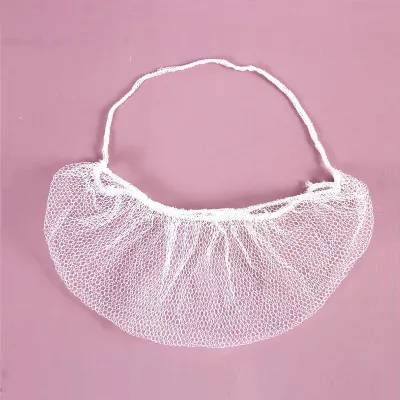
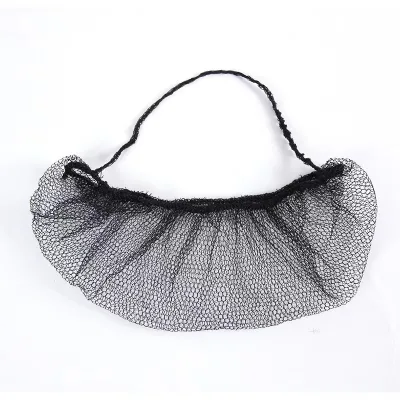


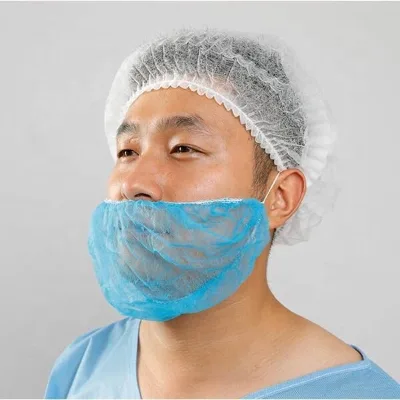

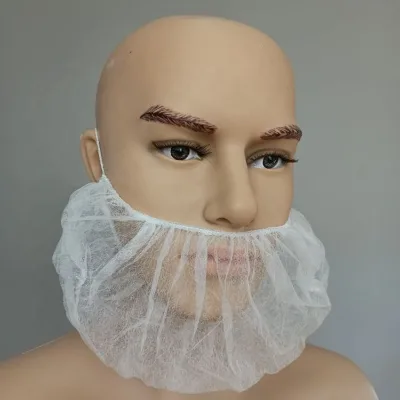
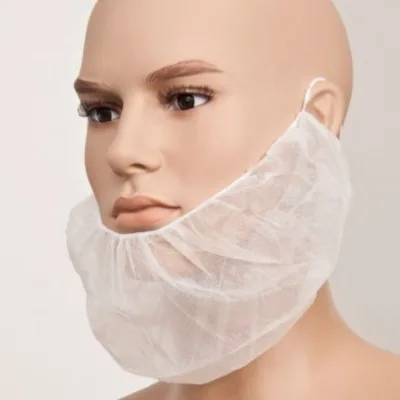
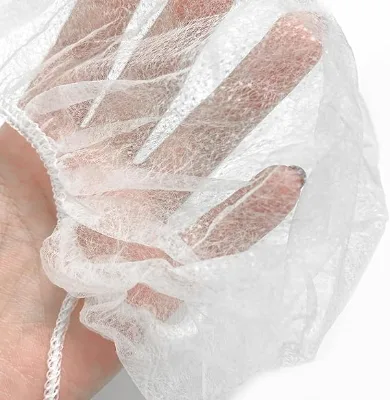
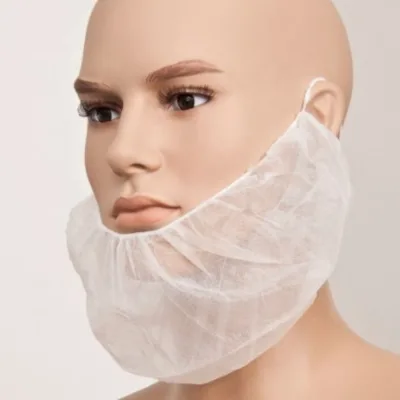
Non-Woven Disposable Hygiene Beard Snood Covers Beard Protector Nets
$0.01 - $0.01
MOQ: 100000 Minimum


Disposable Wholesale Factory Nonwoven Beard Cover Hair and Beard Cover
$0.02 - $0.03
MOQ: 200000 Pieces


Comprehensive Sourcing Guide
Strategic Sourcing Guide for Disposable Mesh Beard Covers
Procuring disposable mesh beard covers requires a nuanced understanding of the intersection between hygiene standards, material science, and supply chain logistics. For buyers in the food processing, medical, and industrial sectors, these protective garments are not merely accessories but critical components of a broader contamination control strategy. The market for "Disposable Mesh Beard Cover" products presents a variety of configurations, from non-woven polypropylene to nylon mesh, each serving specific operational needs. This guide synthesizes available product data and industry knowledge to provide a structured approach for evaluating suppliers, verifying technical specifications, and ensuring long-term procurement success without relying on unverified claims.
Technical Specifications and Material Composition
The foundational decision in sourcing beard covers lies in selecting the appropriate material and dimensions. The observed product landscape indicates a divergence in material composition, with suppliers offering options ranging from non-woven fabrics to nylon mesh. Non-woven materials, often derived from polypropylene (PP), are frequently cited for their cost-effectiveness and ability to provide a barrier against hair and particulate matter. Conversely, nylon mesh options offer superior breathability and flexibility, which may be preferable in environments requiring extended wear or high dexterity.
Size specifications vary significantly across the market, creating a need for precise alignment with operational requirements. Data indicates standard dimensions such as 9"x18", as well as larger variants including 18", 19", 20", 21", and fully customized sizes. Buyers must verify that the selected size accommodates the specific head shapes and beard lengths of their workforce without compromising the seal or comfort. The weight of the product is another critical technical parameter, with observed ranges between 10GSM and 16GSM. This gram-per-square-meter metric directly correlates to the durability and barrier efficiency of the cover; lighter weights may suffice for short-duration tasks, while heavier weights provide enhanced protection for high-risk environments.
Furthermore, the physical state of the product upon delivery is a key specification. While some listings describe the product as "unfolded," others note a folded state for packaging efficiency. The single package size often measures approximately 20x15x8 cm, with a single gross weight around 0.020 kg. Understanding these logistical dimensions is essential for warehouse planning and storage capacity calculations. The color options, typically white or black, or customizable multicolor schemes, also play a role in brand compliance and visibility within the facility.
Compliance, Certification, and Regulatory Alignment
In the food and medical industries, regulatory compliance is non-negotiable. The product data references several high-profile standards, including CE, ISO, and FDA. While these are listed as potential attributes, buyers must treat them as verification targets rather than automatic guarantees. The presence of a "CE" mark implies conformity with health, safety, and environmental protection standards for products sold within the European Economic Area. "ISO" certification suggests adherence to international quality management systems, which is vital for consistent manufacturing processes. "FDA" listing indicates that the materials may be suitable for food contact applications, a crucial requirement for the food processing sector.
Buyers should not assume that every listed product meets these standards without requesting current, valid certificates of compliance. The verification process should involve a direct request for the specific ISO standard number (e.g., ISO 9001 for quality management) and the scope of the FDA registration. Additionally, the "Eco-Friendly" feature mentioned in some product descriptions requires substantiation. Buyers should inquire about the biodegradability of the non-woven or nylon materials and whether the manufacturing process adheres to specific environmental protocols.
The application scope is broad, covering the food industry, medical settings, laboratories, and general industrial use. This versatility means that a single product line may need to satisfy multiple regulatory frameworks. For instance, a beard cover used in a hospital clinic must meet stricter infection control standards than one used in a general warehouse. Therefore, the procurement strategy must prioritize suppliers who can demonstrate a robust quality management system capable of producing compliant goods for diverse applications.
Cost Drivers and Economic Factors
The economic landscape for disposable beard covers is characterized by a wide variance in pricing and minimum order quantities (MOQ). The observed price range in the market is extremely low, spanning from $0 to $0.67 per unit, reflecting the commoditized nature of the product. However, the actual cost per unit is heavily influenced by the MOQ structure. While some suppliers list an MOQ of 10,000 pieces, others may require volumes up to 500,000 pieces to achieve the lowest price points. This disparity necessitates a careful analysis of inventory turnover rates and storage costs.
Material costs are a primary driver of the final price. Non-woven polypropylene is generally less expensive than nylon mesh, but the latter offers distinct performance benefits. The weight of the material (10GSM-16GSM) also impacts cost; higher GSM values typically command a premium due to increased raw material usage. Additionally, customization options such as OEM/ODM services, custom logos, and tailored sizes introduce additional costs. While "Freely Samples Offered" is a common attribute, the cost of shipping samples and the time required for production sampling must be factored into the total cost of ownership.
Lead times also play a significant role in cost management. A typical delivery window is cited as 7-15 working days, but this can fluctuate based on order volume and raw material availability. Buyers should account for potential delays in their production planning to avoid stockouts, which can be costly in terms of operational downtime. The packaging configuration, such as 100 pieces per bag and 1,000 pieces per carton, affects handling efficiency and labor costs, indirectly influencing the overall economic viability of the procurement.
Typical Applications and Operational Requirements
The versatility of disposable mesh beard covers allows them to serve a wide array of industries. In the food processing sector, these covers are essential for preventing hair contamination in products, ensuring compliance with strict hygiene regulations. The "protect beard comes down" function is a primary operational requirement, ensuring that facial hair remains contained within the net. In medical and laboratory settings, the application extends to infection control, where the covers help maintain a sterile environment and prevent cross-contamination between staff and patients or samples.
The "Industry and food processing" application highlights the need for durability and comfort. Workers in these environments often wear the covers for extended periods, making the "Soft, Breathable" features critical for maintaining productivity and reducing fatigue. The "Adult" age specification confirms that the product is designed for the general workforce, but sizing accuracy is paramount to ensure a proper fit. In high-risk environments, the "Eco-Friendly" aspect may also align with corporate sustainability goals, although this must be verified against actual material properties.
The packaging format, typically 100 pcs/bag and 1000 pcs/ctn, is designed for efficient distribution and storage in industrial settings. This standardized packaging facilitates quick access and reduces the time spent on unpacking and distribution. The "Folded" or "Unfolded" state upon delivery can impact the ease of use; pre-folded units may be preferred for rapid deployment in high-volume facilities.
Supplier Evaluation and Vendor Selection Criteria
Selecting the right supplier is a critical step that goes beyond price comparison. The market data indicates a high level of customization, with "OEM/ODM" and "Customized Logo" services being widely available. This suggests that many suppliers are capable of tailoring products to specific brand and operational needs. However, buyers must verify the supplier's capacity to handle large volumes, given the observed MOQs ranging from 10,000 to 500,000 pieces.
The "Place of Origin" is consistently listed as Hubei, China, or generally China. While this provides a geographical baseline, buyers should conduct due diligence on the specific manufacturing facility. Key evaluation criteria should include the supplier's history of compliance with international standards, their ability to provide valid certification documents, and their track record for on-time delivery. The availability of samples is a positive indicator, allowing buyers to physically test the product before committing to a large order.
Buyers should also assess the supplier's responsiveness to customization requests. The ability to offer "Customized Size" and "As your requirement" options indicates flexibility, but the lead time for these customizations must be clearly defined. A supplier that can offer "Freely Samples" but has a rigid MOQ structure may not be suitable for buyers with fluctuating demand. The "Product Type" being listed as "Customized" suggests that the supplier is geared towards B2B contracts rather than off-the-shelf retail sales, which aligns with the needs of large-scale procurement.
Quality Control and Long-Term Procurement Strategy
Ensuring consistent quality is paramount for maintaining hygiene standards. The "Single gross weight" of 0.020 kg and the specific weight range of 10GSM-16GSM serve as baseline metrics for quality control. Buyers should implement incoming quality checks to verify that the received goods match the agreed-upon specifications regarding material, weight, and dimensions. The "Product Model" identifiers, such as F401 or F-401, can be used to track specific product lines and ensure consistency across orders.
Long-term procurement strategies should focus on building a relationship with a supplier who can scale with the buyer's needs. The "Delivery time" of 7-15 working days is a standard benchmark, but buyers should negotiate terms that account for potential supply chain disruptions. Establishing a clear communication channel for quality issues and returns is essential. Additionally, the "OEM/ODM" capabilities should be leveraged to create a unique product identity, which can enhance brand value and differentiate the buyer's operations from competitors.
The "Feature" of being "Eco-Friendly" should be a recurring point of discussion, especially as environmental regulations tighten. Buyers should inquire about the lifecycle of the product, from manufacturing to disposal, to ensure alignment with corporate sustainability goals. Finally, the "Application" scope should be regularly reviewed to ensure the product continues to meet the evolving needs of the food, medical, and industrial sectors. By maintaining a rigorous approach to quality control and supplier evaluation, buyers can secure a reliable supply of disposable mesh beard covers that meet the highest standards of hygiene and performance.
FAQs
What materials are used for disposable mesh beard covers?
Disposable mesh beard covers are typically made from non-woven polypropylene or nylon mesh. These materials provide a barrier against hair and particulate matter while offering breathability for extended wear in food and medical environments.
Which certifications should buyers verify for food industry use?
Buyers should verify CE, ISO, and FDA certifications for food industry applications. These standards indicate conformity with safety and quality management systems, though valid certificates must be requested directly from the supplier to ensure compliance.
How do MOQ requirements vary for beard cover suppliers?
Minimum order quantities vary significantly, ranging from 10,000 pieces up to 500,000 pieces depending on the supplier. Lower MOQs may result in higher unit costs, while larger volumes often secure better pricing and custom options.
Can suppliers provide samples before placing a large order?
Yes, many suppliers offer free samples for evaluation before committing to a bulk order. However, buyers should confirm shipping costs and lead times, as sample availability does not guarantee immediate delivery for large production runs.
What is the typical delivery time for beard cover orders?
The typical delivery time for beard cover orders is between 7 to 15 working days. This timeline can fluctuate based on order volume, customization requirements, and raw material availability at the manufacturing facility in China.
Which size options are available for custom beard covers?
Standard sizes include 9x18 inches, 18 inches, 19 inches, 20 inches, and 21 inches. Suppliers also offer fully customized sizes to accommodate specific head shapes and beard lengths for optimal fit and containment.
How are beard covers packaged for industrial distribution?
Beard covers are typically packaged as 100 pieces per bag and 1,000 pieces per carton. This standardized packaging facilitates efficient storage, handling, and rapid deployment in food processing and medical facilities.