Source BPA-Free PET Foam Pump Bottle for Cosmetics
Compare 30 BPA-Free PET Foam Pump Bottle options from verified Chinese manufacturers. Buyers can evaluate capacities ranging from 50ml to 500ml, shapes including round and square designs, and customization features like silk screen printing for personal care and cosmetic applications.
Key considerations
Products List


Customized Cosmetic Packaging Amber 1oz Plastic Pet Bottle Foam Pump Bottle
$0.10 - $0.50
MOQ: 10000 Pieces


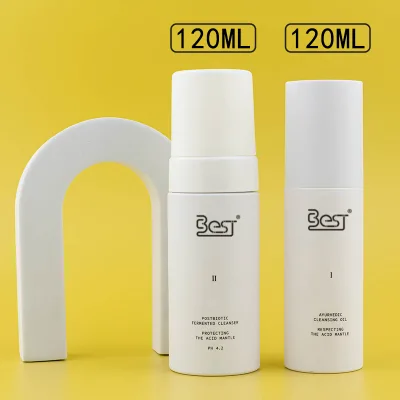


Comprehensive Sourcing Guide
BPA-Free PET Foam Pump Bottle Sourcing Guide
Buyers must first distinguish between general PET foam pump bottles and those explicitly verified as BPA-free, as the supplied data confirms PET material usage but does not universally guarantee the absence of bisphenol A across all listed SKUs. The observed product range includes various capacities from 50ml to 500ml, with specific models like the TEF727-270ml and HS-T056 indicating distinct volume standards that require individual verification against safety claims. Procurement teams should treat the "BPA Free" attribute as a critical filter rather than an inherent property of every PET listing, ensuring that the specific batch selected meets the rigorous chemical safety requirements for cosmetic and personal care applications.
The market signals indicate a diverse inventory of shapes, including round, square, and shaped bottles, which suggests that material composition may vary by design complexity. While the core keyword emphasizes BPA-free status, the available facts highlight a wide array of customization options such as silk screen printing and hot stamping, which can impact the final chemical profile of the product. Sourcing strategies must prioritize suppliers who can provide batch-specific documentation for the exact model number ordered, as the presence of PET does not automatically equate to a BPA-free guarantee without explicit confirmation from the manufacturer for that specific production run.
Product Scope and Observed Listing Signals
The observed product listings reveal a broad spectrum of foam pump bottle configurations, ranging from 50ml to 500ml capacities with specific model identifiers like HS-T067 and HS-T061. Buyers should note that while the material is consistently listed as PET, the physical dimensions and neck sizes vary significantly, with some models featuring a 40/400 neck size and others offering different shoulder heights. This variation necessitates a careful review of the technical specifications for each potential supplier to ensure the bottle dimensions align with the intended packaging machinery and aesthetic requirements of the final cosmetic product.
Commercial signals in the data show a wide range of minimum order quantities, with some listings indicating an MOQ of 10,000 pieces while others suggest lower thresholds. The observed price range of 0-1 USD suggests competitive pricing structures, yet the high MOQ for certain models implies that smaller buyers may need to consolidate orders or negotiate volume tiers. Procurement teams must evaluate whether the listed "Safe Export Pack" and "Carton" packing methods are sufficient for their logistics needs, as the standard packaging may require additional reinforcement for international shipping to prevent damage during transit.
Technical Specifications to Verify
Verification of the bottle neck size and pump compatibility is essential, as the data explicitly lists a 40/400 neck size for specific models while other entries lack this detail. Buyers must confirm that the pump mechanism, described as a PP material pump sprayer, is fully compatible with the specific neck finish of the chosen bottle model to prevent leakage or dispensing failures. The observed output capacity of 0.8 Cc for certain units indicates a specific foam density and volume per actuation, which must be tested to ensure it meets the user experience expectations for the target cosmetic or personal care product.
Physical dimensions and weight are critical factors for logistics and shelf presentation, with observed data citing a bottle weight of 30g and dimensions of D63*H117mm for specific round bottles. However, other models in the catalog feature different shapes, such as square or shaped bottles, with varying full heights and shoulder heights that will impact the overall packaging footprint. Sourcing teams should request detailed dimensional drawings for the exact model selected, as the variation in bottle weight and volume across the 100ml to 500ml range can significantly affect shipping costs and palletization efficiency.
Compliance and Safety Documentation
While the supplied facts mention REACH and RoHS as background certifications, they are not confirmed as active standards for the specific products listed, requiring buyers to demand explicit compliance certificates for the BPA-free claim. Procurement teams must verify that the PET material and PP pump components have been tested for chemical migration and that the finished product meets the safety standards required for cosmetics and personal care applications in the target market. Relying on general material descriptions is insufficient; specific test reports confirming the absence of bisphenol A and other harmful substances must be provided for every batch produced.
The decoration processes, including silk screen printing and hot stamping, introduce additional chemical variables that must be assessed for safety and regulatory compliance. Buyers should ensure that the inks and adhesives used for these surface handling techniques are non-toxic and do not compromise the BPA-free integrity of the bottle. Documentation should explicitly state that all decorative materials are compliant with relevant food and cosmetic contact regulations, as the application of these finishes can alter the chemical safety profile of the final product if not properly managed.
Cost Drivers and Commercial Terms
The minimum order quantity of 10,000 pieces for certain models is a primary cost driver that influences the unit price and overall procurement budget. Buyers with lower volume requirements may face higher per-unit costs or need to negotiate alternative MOQ terms, as the data indicates a significant disparity between the 2-piece and 10,000-piece thresholds observed in the listings. Understanding these volume tiers is crucial for financial planning, as the cost structure likely shifts dramatically once the 10,000-piece threshold is met, offering economies of scale that are not available for smaller orders.
Lead times and production capacity are also significant factors, with the observed lead time of 20 days serving as a baseline for planning. However, the wide range of customization options, such as specific shapes and decoration methods, can extend production schedules beyond the standard timeframe. Procurement teams must account for potential delays when ordering customized models like the HS-T056 or HS-T065, as the complexity of the design and the need for specific tooling can impact the delivery schedule and require earlier commitment to the order.
Supplier Qualification and Quality Control
Supplier qualification should focus on verifying the origin of the products, as the data lists origins in China, Zhejiang, and Ningbo, which are known manufacturing hubs but vary in quality control standards. Buyers must assess the supplier's ability to maintain consistent quality across different bottle shapes and sizes, ensuring that the PET material and PP pump components meet the specified weight and dimensional tolerances. A robust quality control process is essential to prevent defects such as leaks or inconsistent foam output, which can arise from variations in the molding or assembly processes.
The "Safe Export Pack" and "Carton" packing methods mentioned in the data suggest a baseline level of protection, but buyers should verify the specific packaging protocols to ensure product integrity during transit. Quality control checks should include random sampling of finished goods to confirm that the decoration, such as silk screen printing, is durable and does not peel or fade. Additionally, suppliers should be required to provide pre-shipment inspection reports that validate the BPA-free status and overall compliance of the batch before it leaves the factory.
Long-Term Procurement Checks
Establishing a long-term relationship with a supplier requires regular audits of their production processes and quality assurance systems to ensure consistent adherence to BPA-free standards. Buyers should implement a schedule for periodic re-testing of the product to verify that the chemical composition remains stable over time, especially if the supplier changes raw material sources or manufacturing locations. Continuous monitoring is necessary to detect any deviations in the product specifications, such as changes in bottle weight or pump performance, that could affect the final product quality.
Supply chain resilience is another critical consideration, as the observed lead times and MOQs indicate potential vulnerabilities in the procurement process. Buyers should develop contingency plans to address potential disruptions, such as raw material shortages or production delays, by maintaining a diversified supplier base or negotiating flexible order terms. Regular communication with suppliers regarding production capacity and inventory levels will help mitigate risks and ensure a steady supply of high-quality BPA-free PET foam pump bottles for ongoing cosmetic and personal care product lines.
FAQs
What materials are used for the bottle and pump?
The bottle is made of PET plastic and the pump is constructed from PP material. These components ensure durability and chemical resistance for cosmetic applications. The product features a round or square shape depending on the specific model selected by the buyer.
Which capacities are available for these foam pump bottles?
Available capacities range from 50ml up to 500ml, including specific options like 250ml and 300ml. Some models offer a standard output of 0.8 Cc. Buyers can choose from various volume standards to match their specific product requirements.
Can the bottles be customized with specific decorations?
Yes, customization is available for decoration purposes. Buyers can select from silk screen printing or hot stamping to brand their products. This allows for unique visual identities while maintaining the structural integrity of the PET bottle and PP pump.
What is the minimum order quantity for these products?
The minimum order quantity is 10,000 pieces for standard orders. However, observed ranges indicate that some suppliers may accept orders starting from 2 pieces up to 10,000 pieces depending on the specific configuration. Buyers should verify the exact MOQ with their chosen vendor.
How long does it take to receive the order?
The standard lead time for production is 20 days. This duration applies to the manufacturing and preparation of the foam pump bottles. Buyers should account for this timeline when planning their inventory and product launch schedules.
Where are these bottles manufactured and shipped from?
These products originate from China, with specific manufacturing locations in Zhejiang and Ningbo. The items are packed in cartons or safe export packs for secure shipping. This ensures the bottles arrive in good condition for international distribution.
What sealing type is used for these cosmetic bottles?
The sealing type utilized is a pump sprayer mechanism. This design ensures precise dispensing of liquid cosmetics and personal care products. The pump is integrated with the bottle neck size of 40/400 for a secure and leak-proof fit.