Source Disposable Silicone Baking Mat for bakery, cafe, and home
Explore 30 listings for the Disposable Silicone Baking Mat, comparing features like non-stick surfaces, heat resistance, and eco-friendly materials. Buyers can evaluate specifications such as thickness, customization options, and certifications including FDA and LFGB from suppliers in China.
Key considerations
Products List






Comprehensive Sourcing Guide
Strategic Sourcing Guide for Disposable Silicone Baking Mats
The global demand for sustainable and efficient baking solutions has elevated the profile of silicone baking mats, often marketed as "disposable" in the context of single-use convenience or short-lifecycle commercial applications. For procurement professionals, navigating the market for these items requires a disciplined approach that distinguishes between marketing terminology and verifiable product attributes. This guide synthesizes observed market data and technical specifications to provide a framework for sourcing high-quality silicone baking mats, ensuring that buyers can make informed decisions based on factual evidence rather than unverified claims.
Understanding Material Composition and Physical Specifications
The foundation of any successful procurement strategy for baking mats lies in a precise understanding of the raw material and physical dimensions. The primary material identified in the current market supply is silicone. This polymer is selected for its unique thermal stability and non-stick properties, which are critical for bakery and home cooking applications. However, the term "silicone" alone is insufficient for a technical specification sheet. Buyers must verify the specific thickness of the material, as this directly impacts durability and heat distribution.
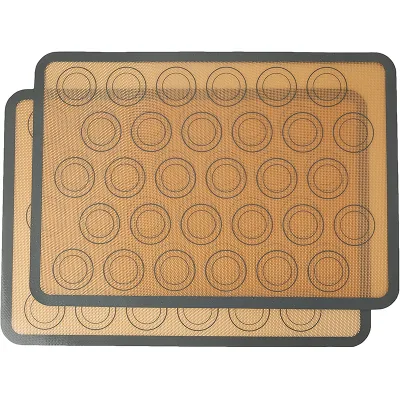
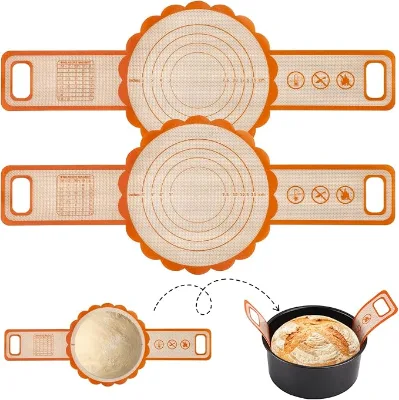
Market observations indicate that silicone baking mats are available with a thickness of 0.4mm, though "Custom" thickness options are frequently listed as a standard capability for suppliers. This variability suggests that the 0.4mm figure represents a common baseline rather than a universal standard. When evaluating potential suppliers, procurement teams should request physical samples to measure the actual gauge of the material. The shape of the mat is another critical variable; while "Square" is a documented shape in the current inventory, "Customized" diameters and shapes are also widely available. This flexibility allows for tailoring the product to specific oven rack dimensions or specialized baking trays.
The physical attributes extend beyond dimensions to include surface characteristics. The "Antiskid" feature is a key specification observed in the product data, ensuring that the mat remains stable on baking sheets during use. Additionally, the color profile varies, with options ranging from "Natural Color" to "Brown" and fully "Customized" colorways. These aesthetic choices often serve functional purposes, such as heat absorption or brand alignment, but they must be verified against the supplier's actual production capabilities. The single package size for these mats is typically compact, with observed dimensions around 12x10x5 cm, which is vital for logistics planning and storage efficiency.
Compliance, Certification, and Safety Standards
In the food contact industry, compliance is not merely a regulatory hurdle but a fundamental requirement for market access. The safety of the silicone material used in baking mats is paramount, as these items are exposed to high temperatures and direct contact with food. The market data highlights specific certifications that serve as indicators of product safety and quality. Notably, "LFGB" (German Food and Feed Code) and "FDA" (U.S. Food and Drug Administration) compliance are explicitly mentioned as available certifications for these products.
Buyers must treat these certifications as verification points rather than automatic guarantees. The presence of an LFGB or FDA mark on a product listing suggests that the supplier has undergone testing for heavy metals, volatile organic compounds, and other safety parameters. However, the "Low-confidence background" section of the data warns against assuming broader certifications like BSCI without explicit confirmation. Procurement teams should request valid, up-to-date certification documents directly from the supplier for every batch of goods. It is essential to verify that the certification covers the specific product model and material thickness being ordered, as certifications are often tied to specific manufacturing processes and facilities.
Furthermore, the "Eco-Friendly" attribute frequently associated with silicone mats requires careful interpretation. While silicone is generally more durable and reusable than single-use paper liners, the "disposable" nature of the product in this context may refer to its end-of-life cycle or specific commercial usage patterns. Buyers should inquire about the specific environmental claims and whether the supplier adheres to any recognized sustainability standards beyond the basic material composition. The "Custom" standard designation in the product data implies that suppliers may not adhere to a single global standard but rather tailor their compliance to the buyer's specific regional requirements. Therefore, the verification process must include a review of the supplier's quality management system and their ability to produce goods that meet the destination market's specific food safety regulations.
Cost Drivers and Economic Considerations
The pricing structure for silicone baking mats is influenced by a complex interplay of material costs, customization levels, and order volume. The observed price range in the market spans from $0.30 to $5.00 USD per unit. This wide disparity is not indicative of a single product tier but rather reflects the significant impact of customization and order quantity on the final cost. A unit priced at the lower end of the spectrum is likely a standard, non-customized item with a basic color and thickness, whereas the higher price points correspond to custom logos, specialized packaging, or unique shapes.
Order Volume is a primary cost driver, as evidenced by the Minimum Order Quantity (MOQ) data. The market shows a broad MOQ range, from as low as 100 pieces to as high as 2000 pieces. Suppliers with an MOQ of 2000 pieces may offer lower unit costs due to economies of scale, while those accepting orders of 100 pieces likely charge a premium for the flexibility and setup costs associated with smaller runs. The "Custom" nature of the product standard and packing further complicates the pricing model. Customization of the logo, packaging box, or tube, as well as the production of custom molds, introduces additional costs that must be factored into the total landed cost.
Supply ability is another economic factor to consider. Suppliers reporting a supply ability of 100,000 pieces per week can generally handle large volume orders with greater stability, potentially offering more competitive pricing for bulk purchases. Conversely, suppliers with lower capacity may have longer lead times or higher costs for rush orders. The "Sample Time" of 3 to 7 days and the "Mold Time" of approximately 15 days are critical lead time components that affect the overall procurement timeline. Buyers must account for these durations when planning inventory levels, as the time required to develop a custom mold can significantly delay the delivery of the first production batch.
Typical Applications and Usage Scenarios
Silicone baking mats are versatile tools designed for a wide array of applications, ranging from professional commercial bakeries to home kitchens. The "Usage" field in the product data explicitly lists "Bakery," "Home," "Office," "Restaurant," and "Cafe." This broad applicability indicates that the product serves multiple market segments, each with distinct requirements. In a commercial bakery setting, the "Non-Stick" and "Heat Resistant" advantages are crucial for high-volume production, reducing the need for parchment paper or greasing pans and streamlining the baking process.
The "Baking Mats & Liners" classification places these products within a specific category of baking tools, distinguishing them from rigid bakeware. The "Creative" style and "Antiskid" characteristics make them particularly suitable for applications where presentation and safety are important, such as in cafes or restaurants where the baking process may be visible to customers. The "Single gross weight" of 0.5 kg and the "Single package size" of 12x10x5 cm suggest that these mats are lightweight and easy to handle, facilitating their use in fast-paced environments.
For home users, the "Eco-Friendly" and "Stocked" attributes are appealing, offering a reusable alternative to disposable liners. The "100% Perfect After-sales Service" promise, while a supplier claim, highlights the importance of customer support in the home market, where users may need guidance on care and maintenance. The "Kit Number" of 1 suggests that these are often sold as individual units, allowing consumers to purchase exactly what they need without committing to a large set. The versatility of the product is further enhanced by the availability of "Custom" shapes and sizes, allowing for specialized applications in niche markets or specific culinary traditions.
Supplier Evaluation and Operational Capabilities
Selecting the right supplier is a critical step in the procurement process, requiring a thorough evaluation of their operational capabilities and service offerings. The market data reveals that suppliers are located in various regions of China, with "Guangdong" and "Fujian" being prominent origins. These regions are known for their robust manufacturing ecosystems, particularly in the silicone and plastic product sectors. The "Port of dispatch" being "SHENZHEN" is a common logistical hub, indicating that suppliers are well-positioned for international shipping.
When evaluating suppliers, buyers should look for evidence of "OEM & ODM" capabilities. The data confirms that suppliers offer "Logo and Packing Box or Tube" customization, as well as "Logo Printing" services. This flexibility is essential for brands looking to differentiate their products. The "OEM/ODM" status being "Walmly Welcomed" suggests a high level of openness to custom orders, but buyers must verify the supplier's actual capacity to handle such requests without compromising quality. The "Sample" availability is another key indicator; suppliers offering samples within 3 to 5 days demonstrate a responsive production environment.
Service quality is also a vital consideration. The claim of "100% Perfect After-sales Service" should be treated as a benchmark for supplier expectations rather than a guaranteed outcome. Buyers should inquire about the supplier's policies for handling defects, returns, and quality disputes. The "Custom" nature of the product standard and packing implies that communication channels must be clear and consistent to ensure that the final product meets the buyer's specifications. Additionally, the "Mold Time" of about 15 days is a critical metric for suppliers offering custom molds; buyers should assess whether this timeline aligns with their project schedules and whether the supplier has a track record of meeting these deadlines.
Quality Control and Long-Term Procurement Strategy
Implementing a robust quality control (QC) strategy is essential for maintaining product integrity and minimizing risk. Given the variability in material thickness and the "Custom" nature of many specifications, buyers should establish clear QC protocols before placing large orders. This includes defining acceptable ranges for thickness, color, and dimensions, as well as setting specific criteria for surface defects and packaging quality. The "Antiskid" and "Non-Stick" features should be tested in real-world scenarios to ensure they perform as expected under various baking conditions.
Long-term procurement considerations involve building a sustainable relationship with suppliers who can consistently deliver high-quality products. The "Supply Ability" of 100,000 pieces per week indicates that some suppliers have the capacity to support growing demand, but buyers should verify this capacity through regular audits or site visits. The "Custom" standard and "Customized" packing options suggest that the market is dynamic, with suppliers frequently adapting to new trends and requirements. Buyers should maintain open communication with their suppliers to stay informed about material availability, price fluctuations, and technological advancements in silicone production.
Finally, the "Eco-Friendly" attribute and the "FDA" and "LFGB" certifications provide a strong foundation for a sustainable procurement strategy. However, buyers should remain vigilant about the environmental impact of the entire supply chain, from raw material sourcing to end-of-life disposal. By focusing on verified facts and maintaining a disciplined approach to supplier evaluation and quality control, procurement professionals can successfully navigate the complex market for silicone baking mats, ensuring that their organizations receive high-quality products that meet both functional and regulatory requirements.
FAQs
What certifications are available for these silicone baking mats?
LFGB and FDA certifications are available for these silicone baking mats. Buyers should verify that the certification covers the specific product model and material thickness being ordered to ensure compliance with destination market regulations.
How thick are the standard silicone baking mats available?
The standard thickness observed for these mats is 0.4mm, though custom thickness options are frequently listed. Procurement teams should request physical samples to measure the actual gauge of the material before placing large orders.
Can I customize the logo and packaging for these mats?
Yes, logo printing and customized packaging boxes or tubes are available for these silicone baking mats. Suppliers typically offer these OEM and ODM services, but buyers must confirm the specific customization capabilities and associated costs.
What is the typical minimum order quantity for these products?
The minimum order quantity ranges from 100 to 2000 pieces depending on the supplier and customization level. Lower MOQs often come with higher unit costs, while larger orders may benefit from economies of scale.
How long does it take to produce a custom mold?
The mold time is approximately 15 days for custom silicone baking mat production. Buyers must account for this duration in their project schedules as it significantly delays the delivery of the first production batch.
Which regions in China manufacture these silicone baking mats?
These mats are primarily manufactured in Guangdong and Fujian provinces within China. The port of dispatch is typically Shenzhen, facilitating international shipping for buyers in various global markets.
What is the weekly supply capacity for these baking mats?
Some suppliers report a supply ability of 100,000 pieces per week for these silicone baking mats. This capacity allows for handling large volume orders with greater stability and potentially more competitive pricing for bulk purchases.