Source Disposable Wooden Knife and Fork Set for Catering
Find and compare 30 listings for the Disposable Wooden Knife and Fork Set, featuring biodegradable materials and custom sizes. Buyers can evaluate options from Chinese manufacturers for restaurants, fast food, and takeaway services, with MOQs ranging from 10 to 100,000 pieces.
Key considerations
Products List


Wooden Cutlery Safe and Practical Disposable Wooden Spoon Knife Fork Set
$0.04 - $0.13
MOQ: 10000 Pieces


$0.04 - $0.13
MOQ: 10000 Pieces


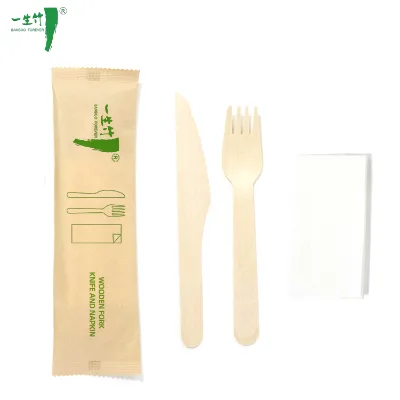


Wooden Fork with Logo Biodegradable Wooden Disposable Eco Cutlery Spoon Fork Knife Set
$0.01 - $0.02
MOQ: 50000 Pieces
Comprehensive Sourcing Guide
Disposable Wooden Knife and Fork Set Sourcing Guide
Sourcing a Disposable Wooden Knife and Fork Set requires a clear understanding of the specific material properties and functional requirements that distinguish these items from plastic alternatives. The core product category encompasses individual utensils and complete sets, often marketed as eco-friendly solutions for restaurants, fast food outlets, and takeaway services. Buyers must recognize that while the material is consistently identified as wood, the specific type of wood and the manufacturing process can vary significantly between suppliers, directly impacting the product's biodegradability and structural integrity.
The procurement strategy should focus on verifying the "Eco-Friendly" and "Biodegradable" attributes that are central to the value proposition of wooden cutlery. These products are designed to replace single-use plastics in environments where sustainability is a priority, yet the physical performance must still meet the demands of serving hot or cold foods. A successful sourcing effort balances the environmental benefits with the practical need for a smooth surface finish and adequate strength to prevent breakage during use, ensuring the final product meets both regulatory expectations and customer satisfaction.
Product Scope and Observed Listing Signals
The market for disposable wooden cutlery presents a diverse range of product types, including dinner forks, dinner knives, spoons, and complete sets that combine these elements. Listings frequently highlight specific model numbers such as WCT-160-#2311 or WCT-160CTY-#37, which often correspond to specific dimensions or configurations like sporks or standard cutlery sets. Buyers should observe that the product scope extends beyond simple utensils to include customizable options where the set composition, such as the inclusion of a knife, spoon, and fork, can be tailored to specific operational needs.
Listing signals also reveal a wide variation in packaging and sizing, with standard lengths observed ranging from 70mm to 160mm and specific models like the 160mm spork being common. The packaging formats vary from individual bundles and bags to bulk carton packaging, with some suppliers offering master cartons or palletized shipments for large orders. It is critical for buyers to note that while some listings mention "Wooden Cutlery" or "Disposable Wooden Knife" as keywords, the actual product may be a set, and the specific dimensions and packing quantities must be confirmed against the supplier's technical data sheet to avoid mismatches in order fulfillment.
Technical Specifications to Verify
When evaluating technical specifications, the primary focus must be on the physical dimensions and surface finish of the wooden utensils. The supplied data indicates standard lengths of 105mm, 140mm, and 160mm, with some models offering custom sizes to meet specific branding or functional requirements. Buyers should verify that the surface finish is described as "smooth" to ensure there are no splinters or rough edges that could compromise user safety or the dining experience, as this is a key quality indicator for wooden products intended for direct food contact.
Material consistency is another critical technical parameter, with the core material identified as wood, though some listings may use terms like "Plastic Type: Wood" which requires clarification to ensure the product is genuinely wood-based and not a composite. The model numbers provided, such as HZ02311115 or WCT-160, serve as unique identifiers for specific product configurations, and buyers must ensure that the ordered model matches the required length and type, whether it is a standalone fork, a knife, or a complete set. Verification of these specifications is essential to maintain consistency across large procurement orders and to ensure the product aligns with the intended application in food service environments.
Compliance and Safety Documentation
While the product is marketed with advantages such as being biodegradable, compostable, and recyclable, buyers must request specific documentation to substantiate these environmental claims. The supply chain often originates from regions like Zhejiang and Guangxi in China, and it is the buyer's responsibility to ensure that the manufacturing processes comply with the environmental regulations of the destination market, such as the USA, Europe, or Singapore. Although certifications like FSC or ISO standards are mentioned in background contexts, they should not be assumed to be present without explicit verification from the supplier for each specific order.
Safety documentation should focus on food contact compliance, ensuring that the wooden cutlery is treated and processed in a manner that prevents contamination. Buyers should verify that the "Smooth Surface" attribute is achieved through a manufacturing process that does not introduce harmful chemicals or residues. Since the product is intended for commercial buyers like restaurants and fast food services, the supplier must provide evidence that the wood used is safe for food contact and that the production facility adheres to hygiene standards required for food service equipment, even if specific certification names are not explicitly listed in the initial product data.
Cost Drivers and Commercial Terms
The cost structure for disposable wooden cutlery is heavily influenced by the order volume, with observed Minimum Order Quantities (MOQ) ranging from 10,000 pieces to as high as 100,000 pieces for certain configurations. Buyers should anticipate that smaller orders may be accepted, but the unit price will likely be higher due to the setup costs associated with customizing the product or running smaller production batches. The commercial terms often include options for OEM and ODM services, allowing buyers to customize the product branding or specifications, which can add to the overall cost but provides a competitive advantage in the marketplace.
Lead times and sample availability are also significant factors in the commercial equation, with sample times typically ranging from 3 to 5 days for custom requests and 4 days for standard samples. The pricing range observed in listings is relatively low, often between 0 and 20 USD, but this likely reflects bulk pricing for large quantities rather than unit costs for small orders. Buyers must negotiate clearly on the packing specifications, as options like carton packaging, woven bags, or palletized shipments can affect shipping costs and the final landed price, making it essential to align the commercial terms with the logistical capabilities of the supply chain.
Supplier Qualification and Quality Control
Supplier qualification should prioritize manufacturers who demonstrate a clear capability for customization and consistent production of wooden cutlery. The presence of specific model numbers and the ability to offer "Custom Packing" or "Custom Size" options indicates a supplier with flexible manufacturing capabilities. Buyers should verify the supplier's origin, noting that production often takes place in Zhejiang or Guangxi, China, and assess their capacity to handle the required order volumes while maintaining the "Smooth Surface" quality that is critical for the product's usability.
Quality control measures must be established to ensure that the "Disposable Wooden Fork" and "Disposable Wooden Knife" meet the expected standards for strength and finish. Since the product is marketed as "Eco-Friendly," buyers should implement a quality check that verifies the biodegradability claims and ensures the wood is free from defects that could compromise the product's integrity. Establishing a clear communication channel for sample approval before mass production is vital, as the sample time of 3-5 days allows for rapid iteration and ensures that the final product matches the buyer's specifications regarding size, material, and surface finish.
Long-Term Procurement Checks
Sustaining a successful procurement relationship for disposable wooden cutlery requires ongoing monitoring of the supplier's ability to maintain consistent quality and supply stability. Buyers should regularly review the supplier's adherence to the agreed-upon specifications, such as the 160mm length or the specific model numbers like WCT-160, to ensure that there are no deviations in the production process over time. This is particularly important given the variability in natural wood materials, which can lead to inconsistencies in color, grain, or strength if not properly managed by the manufacturer.
Long-term checks should also include an evaluation of the supplier's responsiveness to market changes and their ability to adapt to new sustainability requirements. As the demand for eco-friendly products grows, suppliers may need to update their processes to meet new environmental standards or certifications. Buyers should maintain a proactive approach by scheduling regular quality audits and reviewing the supplier's performance against the initial commercial terms, ensuring that the partnership remains viable and that the supply of "Wooden Cutlery" remains reliable for the restaurant and food service clients who depend on these products.
FAQs
What materials are used for the disposable cutlery sets?
The products are made from wood, specifically wooden knives, forks, and spoons. These items are designed to be biodegradable and compostable, offering an eco-friendly alternative to plastic cutlery for various food service applications.
Can I order small quantities of wooden cutlery?
Small orders are accepted for this product line. While the standard MOQ is listed as 10,000 pieces, the supplier indicates flexibility for smaller purchase volumes to accommodate different business needs and initial trial requirements.
Which customization options are available for the sets?
Customization is available including OEM and ODM services. Buyers can request custom sizes, specific packaging like cartons or woven bags, and tailored product models to meet unique branding or functional requirements for their specific market.
How long does it take to receive a sample?
Sample time is typically 3 to 5 days for custom requests and 4 days for standard samples. This allows buyers to verify the smooth surface quality and dimensions before committing to a larger bulk production order.
What are the standard sizes for the wooden cutlery?
Standard sizes include 105mm, 140mm, and 160mm for sporks, as well as 70mm and 95mm for other items. Custom sizes are also available to ensure the cutlery fits specific dining or takeaway packaging requirements.
Where are these wooden cutlery products manufactured?
The products originate from China, with specific production locations in Zhejiang and Guangxi provinces. These facilities supply buyers in regions such as the USA, Europe, Chile, and Singapore with high-quality wooden dining solutions.
What packaging options are provided for the cutlery?
Packaging options include carton packaging, woven bags, bundles, bags, master cartons, and pallets. The standard packing density is often 1000 pieces per carton, but custom packing solutions can be arranged to suit logistics needs.