Source Document Bag for File Storage, Transport, and Protection
Compare 30 Document Bag options featuring waterproof and fireproof materials with customizable sizes and logos. Buyers can review specifications like dimensions, fasteners, and packing details from suppliers in China.
Key considerations
Products List


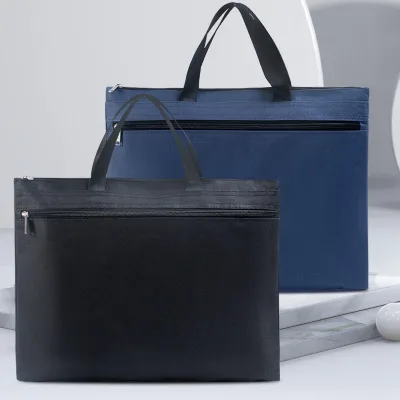


Small Leather Document Bag for Fashionable and Durable File Organization
$0.85 - $1.00
MOQ: 5000 Pieces


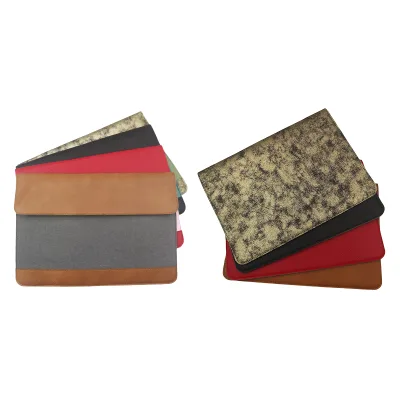

Comprehensive Sourcing Guide
Strategic Sourcing Guide for Fireproof Document Bags
Understanding Product Specifications and Variability
When sourcing document bags, particularly those with fire and water protection capabilities, buyers must navigate a landscape of significant product variability. The core keyword "Document Bag" encompasses a wide range of items, from simple protective sleeves to heavy-duty storage cases designed for critical asset preservation. Based on observed market data, the product category includes items explicitly labeled as "Waterproof Fireproof File Bag" and "Fireproof Document Bag with Fireproof Money Bag." These products are designed to safeguard sensitive materials against environmental hazards, including moisture and high temperatures.
A critical observation in the current market is the lack of uniformity in physical dimensions. Specifications vary widely depending on the intended use case. Some models are defined by precise metric or imperial measurements, such as 13.38 x 9.4 x 0.78 inches, 15 x 11 inches, or 38 x 28 cm. Other listings provide dimensions in centimeters like 20.5 x 2 x 11 cm, while some products are categorized simply by size descriptors like "Medium," "Big," or "Middle." This inconsistency requires buyers to prioritize specific dimensional requirements early in the inquiry process to ensure the bag fits the documents or equipment intended for storage.
The structural design of these bags also varies significantly. Market observations indicate the existence of "Tote" style bags with a "Vertical Square" design, as well as "Case" types. Fastening mechanisms are another variable point; some products feature a "Lock" for enhanced security, while others rely on a "Zipper" or are listed as "Without Lock." The material composition is predominantly Polypropylene (PP), which offers a balance of durability and flexibility. The hardness of the material is often described as "Medium Soft," suggesting a balance between rigidity for protection and flexibility for handling. Understanding these specific attributes is essential before engaging with suppliers, as a mismatch in size or fastener type can render a product unsuitable for its intended application.
Compliance, Certification, and Safety Standards
One of the most critical aspects of sourcing fireproof document bags is verifying compliance with safety standards. While the product listings frequently mention attributes like "Fireproof" and "Waterproof," these terms are often used as marketing descriptors rather than guaranteed certifications. Buyers must understand that "Fireproof" implies resistance to fire, but the specific duration and temperature resistance are not universally standardized across all listed products. The provided data includes references to product standards such as "13.38 x 9.4 x 0.78 inches" and "15*11 inches," which are dimensional standards rather than safety certifications.
In the absence of explicit certification data in the general product listings, buyers should not assume that every listed product meets international fire safety standards. It is imperative to request specific test reports or certification documents from the supplier before placing an order. Common standards in this sector often involve testing for heat resistance and water penetration, but the specific metrics (e.g., resistance to 1000°C for 30 minutes) must be verified on a case-by-case basis. The term "Customized" appears frequently in the product standards, suggesting that many manufacturers offer bespoke solutions that may or may not adhere to pre-existing industry benchmarks.
Furthermore, the origin of the product plays a role in compliance expectations. The data indicates origins in Fujian, Xiamen, Qingdao, and generally "China." Different regions may have varying levels of regulatory oversight and manufacturing capabilities. Buyers should verify if the supplier adheres to the safety regulations of the destination market. For instance, if the bags are intended for use in the United States or the European Union, they must meet specific local fire safety codes. Relying solely on the "Fireproof" label without independent verification is a significant procurement risk. The buyer's due diligence must include a request for third-party laboratory test results that validate the fire and water resistance claims, ensuring that the product performs as advertised under actual stress conditions.
Cost Drivers and Pricing Structures
The pricing structure for document bags is influenced by several key factors, including customization, material quality, and order volume. The observed price range in the market spans from $0.01 to $15.00 USD. This wide variance suggests that the base cost of a standard, non-customized bag is extremely low, while specialized, high-performance, or heavily customized units command a premium. The lower end of the price spectrum likely corresponds to basic PP bags with minimal features, whereas the higher end may reflect advanced fireproofing materials, complex locking mechanisms, or custom branding.
Minimum Order Quantity (MOQ) is a primary driver of unit cost. The observed MOQ range is extensive, stretching from 20 to 50,000 units. A specific product listing indicates an MOQ of 500 units. Buyers with smaller requirements may find it challenging to source at the lowest price points, as suppliers often reserve their most competitive rates for bulk orders. Conversely, high-volume buyers can leverage the upper end of the MOQ spectrum to negotiate better per-unit pricing. The relationship between MOQ and price is inverse; as the order quantity increases, the unit cost typically decreases due to economies of scale in production and shipping.
Customization is another significant cost driver. The product data confirms that "Customization" is available and "Custom" is accepted. This includes options for "Logo Printing," "Logo: Customizable," and "Print: Custom." Adding custom logos, specific colors, or unique dimensions requires additional setup time and resources for the manufacturer, which inevitably increases the unit price. Additionally, the "Thickness: Custom" attribute suggests that buyers can request thicker, more durable materials, which will also impact the final cost. Buyers must balance their need for customization against their budget constraints, understanding that every added feature moves the product away from the base price of $0.01 toward the higher end of the $15 range.
Typical Applications and Usage Scenarios
The versatility of document bags allows them to serve a wide array of applications, ranging from personal document storage to industrial transportation. The product attributes list "Usage" as both "Transportation" and "File Box," indicating dual functionality. In a corporate setting, these bags are often used to transport sensitive financial documents, legal contracts, or employee records between locations. The "Waterproof" and "Fireproof" attributes make them particularly suitable for environments where document loss due to fire or water damage is a risk, such as in disaster-prone areas or facilities with high fire hazards.
The "Money Bag" variant mentioned in the product name suggests specific use cases in financial institutions, casinos, or retail environments where cash and valuables need to be moved securely. The "Lock" fastener option enhances security for these high-value applications, preventing unauthorized access during transit. For general office use, the "Single-ply" type and "Document Bag" classification indicate a lighter-duty application, suitable for organizing and protecting standard A4 or legal-sized papers. The "Unisex" and "All" season attributes imply that these products are designed for universal use regardless of the user's gender or the time of year, making them a staple item for year-round office supply needs.
In industrial or construction contexts, the "Case" type and "Hardness: Medium Soft" characteristics suggest utility in protecting blueprints, safety manuals, or equipment manuals from dust, moisture, and minor impacts. The "Tote" shape and "Vertical Square" design offer ergonomic carrying options, allowing users to transport multiple documents or files comfortably. The "Color: Assorted" option allows organizations to implement color-coding systems for different departments or project types, enhancing organizational efficiency. Whether used for "File Box" storage or active "Transportation," the core value proposition remains the protection of critical information and assets against environmental and physical threats.
Supplier Evaluation and Geographic Considerations
Evaluating suppliers for document bags requires a careful assessment of their geographic location and production capabilities. The data indicates that suppliers are located in various regions of China, including Fujian, Xiamen, and Qingdao, Shandong. These regions are known for their manufacturing clusters, but each may specialize in different aspects of production. Fujian and Xiamen are often hubs for packaging and textile-related manufacturing, while Qingdao has a strong reputation for industrial goods and export logistics. Buyers should verify the specific factory location to ensure it aligns with their quality expectations and logistical needs.
Supplier evaluation should also focus on their ability to handle customization. The repeated mention of "Customization: Available," "Custom: Accept," and "Logo Printing" indicates that many suppliers are willing to tailor products. However, the extent of this customization varies. Some suppliers may only offer simple logo printing, while others might accommodate custom dimensions, thickness, and material compositions. Buyers must clarify the scope of customization during the initial inquiry to avoid misunderstandings. Additionally, the "prod_packing" attribute shows variations such as "1 PCS Is Packed a Poly Bag" or "Cartoon," which can affect shipping costs and product protection during transit.
When selecting a supplier, buyers should also consider the "prod_model" identifiers, such as MH-220714, FP-015, and X-002. These model numbers often correspond to specific product lines or configurations. A supplier with a diverse range of model numbers may offer greater flexibility in meeting specific requirements. However, buyers must ensure that the supplier can consistently reproduce the quality of the specific model selected. The "Fastener" and "Lock" attributes are critical points of verification, as a supplier claiming to offer a lock mechanism must demonstrate that the mechanism is functional and durable. Due diligence in supplier selection involves requesting samples, reviewing past performance, and verifying the supplier's capacity to meet the required MOQ and lead times.
Quality Control and Long-Term Procurement Strategy
Implementing a robust quality control (QC) strategy is essential for ensuring the reliability of fireproof document bags. Given the variability in product attributes and the critical nature of the protection offered, buyers should establish clear QC protocols before production begins. This includes defining acceptable tolerances for dimensions, verifying the integrity of the "Lock" and "Zipper" mechanisms, and confirming the "Waterproof" and "Fireproof" claims through sample testing. The "Thickness: Custom" attribute highlights the need for precise measurement controls, as deviations in thickness can significantly impact the bag's protective capabilities.
Long-term procurement considerations involve building a sustainable relationship with suppliers who can consistently deliver high-quality products. The "All" season attribute suggests that demand for these products may be steady year-round, making it beneficial to secure a reliable supply chain partner. Buyers should consider the "prod_packing" standards, such as "1 Polybag for 1 PCS," to ensure that the packaging protects the product during storage and shipping, preventing damage that could compromise the fireproof or waterproof seals.
Furthermore, buyers should plan for scalability. The wide MOQ range from 20 to 50,000 units allows for flexibility in order sizing, but long-term contracts should be structured to accommodate growth. As the organization's needs evolve, the ability to order larger quantities with consistent quality will be crucial. Buyers should also monitor the "Material" composition, ensuring that the PP material remains consistent and does not degrade over time. Regular audits and periodic re-testing of samples can help maintain quality standards. Finally, buyers should keep abreast of any changes in safety regulations or industry standards that might affect the product's compliance, ensuring that the procurement strategy remains aligned with current legal and safety requirements. By focusing on these aspects, buyers can mitigate risks and ensure a steady supply of high-quality document bags for their specific needs.
FAQs
Can I customize the logo on these document bags?
Yes, logo printing is available and customizable for these products. Buyers can request specific branding options, though this may affect the unit price and minimum order quantity requirements.
What are the standard dimensions for the fireproof bags?
Dimensions vary by model, with common sizes including 13.38 x 9.4 x 0.78 inches and 15 x 11 inches. Some models also feature metric measurements like 38 x 28 cm or 20.5 x 2 x 11 cm.
Which fastener types are available for secure storage?
Available fasteners include locks and zippers, depending on the specific model selected. Some products are listed with a lock for enhanced security, while others utilize a zipper or are noted as without a lock.
How does the minimum order quantity affect pricing?
The minimum order quantity ranges from 20 to 50,000 units, with a specific listing showing an MOQ of 500. Higher order volumes typically result in lower per-unit costs due to economies of scale.
What material is used to construct these document bags?
The primary material used is Polypropylene (PP), which offers durability and flexibility. The hardness is often described as medium soft, balancing protection with ease of handling for transportation.
Where are these fireproof document bags manufactured?
Products originate from various locations in China, including Fujian, Xiamen, and Qingdao, Shandong. Buyers should verify the specific factory location to ensure alignment with quality expectations and logistics.