Source Dobby Fabric Nurse Uniform for Hospitals Clinics Labs
Compare 30 Dobby Fabric Nurse Uniform options from verified suppliers. View details on materials like polyester and cotton blends, customization, and pricing for hospital and clinic use.
Key considerations
Products List


Custom High Quality Nurse Uniform Breathable for Hospital with Printing Logo
$13.89 - $19.69
MOQ: 100 Pieces


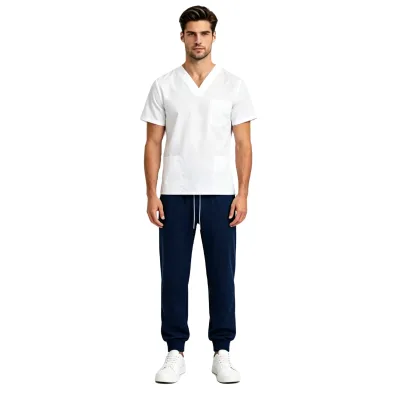


High Temperature Resistant Polyester Cotton Wholesale Hospital Women Nurse Uniform
$7.50 - $15.00
MOQ: 100 Pieces

High Temperature Resistant Polyester Cotton Wholesale Hospital Nurse Scrubs Medical Uniforms
$7.50 - $15.00
MOQ: 100 Pieces


Nurse Hospital Uniforms Medical Scrubs Uniforms Hospital Women Scrub Suit
$5.50 - $7.50
MOQ: 30 Pieces


Anti-Bacterial Hospital Uniforms Nurse Uniform Medical Scrubs Suit Fabric
$1.30 - $1.40
MOQ: 5000 Meters


Comprehensive Sourcing Guide
Strategic Sourcing Guide for Dobby Fabric Nurse Uniforms
Procuring medical apparel, specifically nurse uniforms constructed from dobby fabric, requires a nuanced understanding of textile mechanics, supply chain logistics, and regulatory compliance. Dobby weave is distinct from standard plain or twill weaves due to its small, geometric patterns created by the interlacing of warp and weft threads. In the context of hospital environments, this texture offers functional advantages regarding durability and breathability, yet it introduces specific considerations for sourcing that differ from generic cotton or polyester scrubs. Buyers must navigate a market where material composition, production standards, and customization capabilities vary significantly across suppliers. This guide outlines the critical factors for evaluating suppliers and products to ensure the acquisition of high-quality medical uniforms that meet both operational needs and safety standards.
Technical Specifications and Material Composition
The foundation of any successful procurement strategy lies in the precise definition of technical specifications. When searching for dobby fabric nurse uniforms, the material composition is the primary determinant of performance. The supplied data indicates a diverse range of materials available in the market, including pure Polyester, Cotton, and Polyester-Cotton blends. For medical applications, the choice between these materials dictates the uniform's moisture management, durability, and comfort profile. Polyester offers superior resistance to wrinkles and rapid drying capabilities, which is essential for high-turnover environments. Conversely, Cotton provides superior breathability and skin comfort, though it may require more frequent ironing.
The weave structure itself, specifically the dobby pattern, adds a layer of complexity. Unlike plain weaves, dobby fabrics often feature small, repetitive geometric designs that can enhance the fabric's structural integrity. The observed product attributes highlight features such as "Anti-Wrinkle," "Quick Dry," and "Rip-Stop," which are often associated with synthetic blends used in medical settings. Buyers should verify that the dobby weave does not compromise the fabric's ability to withstand repeated laundering cycles, a critical factor for hospital laundry operations. Furthermore, the "All-in-one" structure and "Overall" style mentioned in the product data suggest that the design must accommodate the ergonomic needs of medical staff, allowing for a full range of motion without restricting movement.
Compliance, Certification, and Safety Standards
In the medical sector, compliance is not merely a formality but a prerequisite for safety and liability protection. While the supplied context mentions "Ethylene Oxide Sterilization" as a specific attribute for certain products, it is crucial to distinguish between sterilized single-use items and reusable uniforms. For reusable dobby fabric nurse uniforms, the focus shifts to hygiene maintenance and fabric safety. The data references standards such as "M" and specific dimensions like "523255 cm," which likely refer to packaging or specific sizing standards rather than international textile certifications.
Buyers must be vigilant regarding certifications that are not explicitly confirmed in the product listings. Background knowledge suggests standards like ISO 13485 for medical device quality management or OEKO-TEX for harmful substance testing are relevant in this industry. However, without explicit confirmation from a supplier, these cannot be assumed. Procurement teams should request current certification documents to verify that the dobby fabric is free from hazardous dyes or chemicals that could irritate sensitive skin or compromise patient safety. The "Hospital" application attribute confirms the intended use, but the burden of proof for safety standards rests on the supplier's documentation.
Cost Drivers and Pricing Dynamics
Understanding the cost structure of dobby fabric nurse uniforms is essential for budgeting and negotiation. The observed price range in the market spans from $0.50 to $32.00 USD, a variance that reflects differences in material quality, customization levels, and order volumes. The lower end of this spectrum typically corresponds to basic polyester blends with minimal customization, while the higher end likely encompasses premium cotton blends, complex dobby patterns, and extensive branding services.
Several factors drive these costs. First, the material composition plays a significant role; high-quality cotton or specialized poly-cotton blends cost more than standard synthetic fibers. Second, customization options, such as logo printing and custom sizing, add to the unit price. The data confirms that "Logo Printing" and "Customization" are available, which are value-added services that increase production complexity. Third, the Minimum Order Quantity (MOQ) significantly impacts the per-unit cost. The observed MOQ range is vast, from 10 to 20,000 units. Suppliers often offer lower per-unit prices for larger orders, but smaller buyers may face higher costs or must accept higher MOQs to achieve competitive pricing.
Typical Applications and Functional Requirements
The application of dobby fabric nurse uniforms extends beyond simple attire; it is a functional tool for medical professionals. The data explicitly lists "Doctors & Nurses" as the applicable user group, indicating that the design must meet the rigorous demands of clinical environments. The "Summer" season attribute suggests that these uniforms are designed for environments where temperature control is a concern, necessitating breathable fabrics. The "V0neck" style and "Unisex" fit further indicate a design philosophy focused on versatility and comfort.
In high-traffic hospital areas, the "Reusable" nature of these uniforms is a key economic and environmental factor. Unlike disposable gowns, reusable uniforms require fabrics that can withstand industrial laundering without degrading. The "Rip-Stop" feature observed in the product data is particularly relevant here, as it prevents small tears from spreading, extending the garment's lifespan. Additionally, the "Quick Dry" attribute is vital for facilities with high turnover, ensuring that uniforms are ready for reuse or redistribution quickly. The "Carton" and "Export Carton" packing methods suggest that these products are designed for international logistics, requiring robust packaging to prevent damage during transit.
Supplier Evaluation and Customization Capabilities
Selecting the right supplier requires a thorough evaluation of their capabilities beyond the basic product listing. The data indicates that "Small Orders" are accepted by some suppliers, which is a significant advantage for smaller healthcare facilities or startups. However, the "MOQ" of 100 PCS is also noted, suggesting a tiered approach to order acceptance. Buyers should assess whether a supplier can accommodate their specific volume needs without compromising quality.
Customization is a major differentiator in the market. The availability of "OEM" (Original Equipment Manufacturer) services and "Customized Size" options allows healthcare facilities to brand their staff and ensure a perfect fit. The "Logo Printing" feature is a common requirement for institutional branding. When evaluating suppliers, buyers should verify the quality of the printing process to ensure logos remain intact after multiple wash cycles. Additionally, the "Sample Time" of 7 days is a critical metric for project timelines. Suppliers who can deliver samples quickly enable faster decision-making and prototyping, which is essential for maintaining operational continuity.
Quality Control and Long-Term Procurement Considerations
Establishing a robust quality control (QC) protocol is the final pillar of a successful sourcing strategy. Given the wide range of materials and finishes, buyers must implement strict QC measures to ensure consistency. This includes verifying the fabric weight, colorfastness, and the integrity of the dobby weave. The "Feature" attributes like "Anti-Wrinkle" and "Quick Dry" should be validated through practical testing rather than relying solely on supplier claims.
Long-term procurement considerations involve building a sustainable relationship with suppliers who can guarantee consistent quality over time. The "Payment" methods listed, including "Paypal," "Western Union," "TT," "Alipay," and "Wechat," offer flexibility but also require careful financial risk management. Buyers should prioritize suppliers who offer secure payment terms and clear return policies. Furthermore, the "Origin" of the products, primarily "China" and specifically "Guangzhou, China," indicates a concentrated supply chain. While this region is a hub for textile manufacturing, buyers should ensure that the specific factory has a track record of meeting international standards.
| Feature Category | Observed Attributes | Procurement Verification Point |
|---|---|---|
| Material | PP, Cotton, Polyester, Poly/Cotton | Verify blend ratio and durability for industrial washing. |
| Style | Overall, V0neck, Regular/Loose/Oversized Fit | Ensure fit matches staff ergonomic needs and mobility. |
| Customization | Logo Printing, Custom Size, OEM | Test print quality and size accuracy on sample batches. |
| Packaging | Carton, Export Carton, 1 PP/Set | Confirm packaging protects goods during international shipping. |
| Lead Time | Sample Time: 7 Days | Verify if bulk production lead times align with project schedules. |
| Payment | TT, Western Union, Alipay, Wechat | Ensure payment terms match organizational financial policies. |
Conclusion
Sourcing dobby fabric nurse uniforms is a complex process that balances technical performance, cost efficiency, and regulatory compliance. The market offers a wide array of options, from basic polyester blends to premium cotton mixes, each with distinct advantages for medical environments. Buyers must carefully evaluate material specifications, verify compliance with safety standards, and assess supplier capabilities regarding customization and quality control. By focusing on these critical areas and utilizing the provided data to inform decision-making, procurement teams can secure uniforms that enhance staff comfort, maintain professional standards, and support the operational efficiency of healthcare facilities. The key to success lies in rigorous due diligence and a clear understanding of the specific needs of the medical team.
FAQs
What materials are available for dobby fabric nurse uniforms?
Available materials include Polyester, Cotton, and Poly/Cotton blends. Some listings also mention PP material for specific applications. Buyers should verify the exact blend ratio to ensure durability for industrial washing cycles.
Can I customize the size and logo on these uniforms?
Yes, customization is available for both size and logo printing. Suppliers offer OEM services and various fit styles like regular or loose fit. Customized sizes are explicitly supported to meet specific staff requirements.
What is the minimum order quantity for these uniforms?
The minimum order quantity ranges from 10 to 20,000 units depending on the supplier. Some vendors accept small orders, while others require a minimum of 100 pieces. Buyers must check specific supplier terms for their volume needs.
How long does it take to receive a sample?
The sample time is typically 7 days for production. This allows buyers to verify fabric quality and print accuracy before placing bulk orders. Quick sample delivery helps maintain project timelines for healthcare facilities.
Which features make these uniforms suitable for hospital use?
Key features include anti-wrinkle, quick dry, and rip-stop capabilities. The fabric is designed for reuse and withstands frequent laundering. These attributes ensure durability and comfort for doctors and nurses in clinical environments.
Where are these uniforms manufactured?
The products originate from China, with specific mentions of Guangzhou. This region is a known hub for textile manufacturing. Buyers should verify factory locations to ensure alignment with their logistics and quality expectations.
What payment methods are accepted for these orders?
Accepted payment methods include PayPal, Western Union, TT, Alipay, and Wechat. These options provide flexibility for international transactions. Buyers should confirm specific terms with the supplier to ensure secure payment processing.