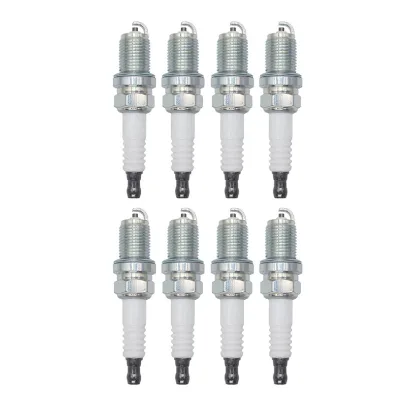
Source Double Iridium Spark Plug for engines, cars, and machinery
Explore 30 listings for the Double Iridium Spark Plug suitable for engines, cars, and machinery. Buyers can compare specifications, certifications, and pricing to find the right component for their needs.
Key considerations
Products List


Double Iridium Spark Plugs, High Quality and Stable, Customized Packaging
$0.50 - $1.30
MOQ: 2000 Pieces

Double Iridium Spark Plugs, Exported Worldwide, High Quality and Stable
$0.50 - $1.30
MOQ: 2000 Pieces


Iridium Spark Plug 90919-01247 Auto Parts Double Iridium Factory Supply
$0.75 - $0.80
MOQ: 1000 Pieces


Original Quality Double Iridium Spark Plug 12122158253 12122158252 Auto Parts
$0.88 - $1.76
MOQ: 5 Pieces




Comprehensive Sourcing Guide
Strategic Sourcing Guide for Double Iridium Spark Plugs
Understanding the Technical Architecture of Double Iridium Components
The core keyword "Double Iridium Spark Plug" refers to a specific class of ignition components designed to optimize combustion efficiency and extend service life. In the context of B2B procurement, it is essential to distinguish these from standard copper or single-platinum variants. The defining characteristic lies in the electrode material composition. The supplied product data explicitly lists "Double iridium" alongside other precious metals such as "Platinum," "Iridium," and "Iridium platinum" under the material specifications. This indicates that the product utilizes iridium alloying on both the center and ground electrodes, a configuration that allows for a finer electrode tip diameter while maintaining structural integrity at high temperatures.
When evaluating the technical specifications for these components, buyers must look beyond the material name to the physical dimensions and electrical characteristics. The provided data includes specific model numbers such as "FCX80WYPB34-1," "EIX-BKR5," and "AIX-LKR7," which serve as unique identifiers for different thread and reach configurations. Furthermore, the standard dimensions provided in the source data, such as "S16M14x19" and "S16M12x26.5," represent critical thread sizes and hex drive dimensions that must match the engine block precisely. A mismatch in these standard specifications can lead to installation failures or engine damage.
The operational environment for double iridium spark plugs is often demanding. The product attributes indicate compatibility with "Two Stroke" and "Four Stroke" engines, with specific mentions of the "Exhaust Stroke" principle. This suggests the components are versatile enough for various internal combustion cycles. The "Thermal Machine" is described as an "External Combustion Type" in the general attribute list, though this is likely a broad categorization error in the source data; in reality, spark plugs are internal components for internal combustion engines. However, the "Feature" list confirms attributes like "High temperature" and "Heat resistant," which are non-negotiable for iridium-based products. The "Energy Transformation" is listed as "Atomic Engine" in the source, which is scientifically inaccurate for spark plugs; buyers should interpret this as a data entry anomaly and focus on the "Ignition System" type classification provided elsewhere in the data.
Compliance Framework and Certification Verification
Navigating the regulatory landscape is a critical step in sourcing double iridium spark plugs, particularly for international trade. The supplied facts provide a robust list of certifications that buyers should use as a baseline for verification. The primary certifications observed include "CE," "ISO," "TSISO9001," and "ROHS." The "CE" mark is a mandatory conformity mark for products sold within the European Economic Area, indicating compliance with health, safety, and environmental protection standards. The "ISO" certification, specifically "ISO9001" and "TSISO9001," points to a quality management system that ensures consistent product manufacturing.
For automotive applications, the "IATF 16949" management certification is a vital indicator of a supplier's capability to meet the rigorous demands of the automotive industry. The source data also lists "CCC" (China Compulsory Certification) and "E/E-MARK," which are essential for products entering the Chinese market and the European automotive sector, respectively. The "BSCI" certification suggests adherence to social compliance standards, which is increasingly important for corporate social responsibility (CSR) requirements in global supply chains.
Buyers must verify that the specific batch of double iridium spark plugs they intend to purchase carries the relevant "Product certifications" such as "FCC" if the product involves any electronic ignition control integration, though this is less common for the plug itself. The "Machinery test report: Provided" attribute is a strong signal that the supplier is willing to share third-party validation of their manufacturing processes. When evaluating a potential supplier, procurement teams should request copies of these certificates and verify their validity dates. It is crucial to note that the source data lists "Standard" as "CE" and "S16*M14x19" in different contexts; buyers must ensure the specific standard cited matches the physical product requirements rather than relying on a generic label.
Cost Drivers and Pricing Dynamics in the Spark Plug Market
The pricing of double iridium spark plugs is influenced by a complex interplay of material costs, manufacturing complexity, and order volume. The observed listed price range in the source data spans from $0.09 to $60 USD. This wide variance suggests that the market includes both low-cost generic components and high-performance, specialized units. The lower end of the spectrum, likely around $0.09, may represent bulk industrial components or older model variants, while the upper end near $60 could indicate premium, high-output models or specialized applications requiring extensive R&D.
Material cost is a primary driver. The "Material" attribute lists "Copper," "Nickel," "Platinum," "Iridium," and "Double iridium." Iridium is a rare precious metal, and its scarcity directly impacts the unit cost. Double iridium configurations require more precise manufacturing processes to ensure the fine electrodes are durable, which increases production costs compared to single-electrode designs. The "Power" range of "50-200kW" mentioned in the data likely refers to the engine power these plugs are designed to support, influencing the thermal and electrical rating of the plug, which in turn affects the price.
Order volume plays a significant role in the final landed cost. The "MOQ range" observed is between 1 and 5000 units. Suppliers offering an MOQ of 1 are likely catering to small businesses or testing phases, while those requiring 5000 units are targeting large-scale OEM contracts. The "Small Orders: Accepted" attribute confirms flexibility in the market, but buyers should anticipate a higher per-unit cost for smaller quantities. Additionally, the "Customization: Available" and "Customized support: OEM, ODM, OBM" options introduce variable costs. Custom packaging ("Carton" is the standard listed) or specific model modifications will increase the price beyond the base rate. Buyers must factor in the "Warranty" period, which ranges from 3 months to 3 years, as longer warranties often correlate with higher initial costs due to the supplier's confidence in product longevity.
Typical Applications and Engine Compatibility
Double iridium spark plugs are engineered for high-performance and high-reliability applications. The "Suitable for Car Brands" attribute explicitly mentions "Nissan," indicating compatibility with specific Japanese automotive manufacturers. However, the "Fuel Type" attribute is extensive, listing "Battery, CNG, Diesel, Dual Fuel, Electric, Gasoline, LPG, Bioethanol." This suggests that the double iridium technology is versatile and can be adapted for various fuel systems, though the specific application must be verified against the engine's requirements.
The "Engine" attribute lists displacement sizes such as "1, 1.4, 1.6, 2.4, 3, 2.5, 1.8, 3.5," which covers a broad spectrum of passenger vehicle engines. The "Cylinder NO.: 1 Cylinder" attribute suggests that some listed products are designed for single-cylinder applications, which are common in small engines, motorcycles, or specific industrial machinery. The "Stroke" options of "Two Stroke" and "Four Stroke" further expand the potential use cases to include lawn equipment, generators, and two-stroke engines.
The "Purpose" attribute clarifies the intended use: "For replace/repair," "For retrofit/upgrade," and "For manufacturing." This means double iridium plugs are suitable for aftermarket replacement to improve engine performance, as well as for original equipment manufacturing (OEM) integration. The "Condition: New" attribute confirms that the market primarily deals in fresh inventory rather than refurbished units. Buyers should cross-reference the "prod_model" numbers with their specific engine requirements to ensure compatibility, as the "Standard" dimensions like "S17.5M1219" must align with the engine block's thread specifications.
Supplier Evaluation and Quality Assurance Protocols
Selecting the right supplier for double iridium spark plugs requires a rigorous evaluation process that goes beyond price comparisons. The "Location" attribute identifies "Shenzhen, Guangdong" and "China" as key production hubs. While this provides geographical context, buyers should verify the specific factory capabilities and logistics infrastructure. The "prod_packing" being "Carton" is standard, but the quality of packaging is crucial for preventing damage during transit, especially for delicate iridium components.
Quality control is paramount. The "Machinery test report: Provided" is a significant differentiator. A reputable supplier should be able to provide detailed test reports that validate the electrical resistance, heat range, and mechanical strength of the spark plugs. The "Feature" list includes "Eco-friendly," "Anti-slip," "Waterproof," and "Durable," which are claims that must be substantiated by test data. Buyers should request evidence for these claims, particularly the "Waterproof" and "High temperature" attributes, as these are critical for engine reliability.
The "Management certifications" such as "ISO," "IATF 16949," and "BSCI" serve as a proxy for the supplier's operational maturity. A supplier with IATF 16949 certification is likely to have a robust quality management system in place, reducing the risk of defects. The "Warranty" options, ranging from 6 months to 3 years, also reflect the supplier's confidence in their product. A supplier offering a 3-year warranty is likely to have higher quality control standards than one offering only 3 months. Buyers should also check the "Lead time" and "MOQ" flexibility, as these impact supply chain resilience. The "Small Orders: Accepted" attribute is beneficial for buyers who need to test the market before committing to large volumes.
Long-Term Procurement Considerations and Market Trends
Sourcing double iridium spark plugs is not just a one-time transaction but a long-term strategic decision. The "Main Market" is identified as "Southeast Asia," which indicates a growing demand in this region. However, the global market for high-performance ignition components is shifting towards electric and hybrid vehicles. The "Fuel Type" list includes "Electric" and "Battery," which might seem contradictory for spark plugs, but it highlights the need for buyers to stay informed about evolving engine technologies. While spark plugs are essential for internal combustion engines, the transition to electrification may eventually reduce the demand for traditional spark plugs.
Buyers should consider the "Customized support" options like "OEM, ODM, OBM" for long-term partnerships. These services allow for branding and product differentiation, which can be crucial for maintaining a competitive edge. The "Color" options, ranging from "White" to "Green," suggest that aesthetic customization is possible, though this is less critical for functional performance. The "Standard" and "Specification" consistency is vital; buyers must ensure that the "prod_standard" and "prod_model" remain consistent over time to avoid supply chain disruptions.
Finally, the "Certification" landscape is dynamic. Buyers should monitor for updates in "CE," "ROHS," and "E/E-MARK" requirements, as regulations can change. The "TSISO9001" and "ISO9001" certifications are baseline requirements, but future-proofing the supply chain may involve seeking suppliers who are already preparing for upcoming environmental or safety standards. The "Feature" list includes "Anti-slip" and "Heat resistant," which are enduring needs, but the specific technologies used to achieve these features may evolve. Buyers should maintain open communication with suppliers to stay ahead of these trends and ensure a steady supply of high-quality double iridium spark plugs.
FAQs
What certifications do double iridium spark plugs have?
These spark plugs typically hold CE, ISO, and TSISO9001 certifications. Additional product certifications may include ROHS, CCC, and E/E-MARK to ensure compliance with international safety and environmental standards for automotive components.
Which engine types are compatible with these spark plugs?
They are designed for both two-stroke and four-stroke engines. The components support various fuel types including gasoline, diesel, CNG, and LPG, making them versatile for different internal combustion engine applications.
Can I order small quantities of double iridium spark plugs?
Yes, small orders are accepted with an MOQ as low as one unit. This flexibility allows buyers to test products before committing to larger volumes, though larger orders up to 5000 units are also available.
What materials are used in the construction of these plugs?
The electrodes and bodies utilize materials like copper, nickel, platinum, and double iridium. Other construction materials include ceramic, stainless steel, and aluminum alloys to ensure durability and high-temperature resistance.
How long is the warranty period for these spark plugs?
Warranty periods range from three months to three years depending on the specific supplier and product model. Longer warranties often indicate higher quality control standards and greater confidence in the product's longevity.
Which car brands are suitable for these spark plugs?
These plugs are explicitly suitable for Nissan vehicles among other brands. Buyers should verify specific model numbers like EIX-BKR5 or AIX-LKR7 against their engine requirements to ensure proper thread and reach compatibility.
What is the price range for double iridium spark plugs?
The listed price range spans from 0.09 to 60 USD per unit. Costs vary significantly based on material composition, order volume, and whether the product includes custom packaging or specific OEM modifications.